Club
"The Failed to remember Library"
Title: "The Failed to remember Library" In the core of a clamoring city stood a failed to remember library, its stupendous veneer darkened by layers of residue and disregard. When a guide of information and learning, it currently grieved in lack of definition, its lobbies abandoned and its racks desolate.
By aftab usmani3 years ago in BookClub
Exploring the Depths of Maha Shivaratri
Maha Shivaratri, a revered Hindu festival, captivates the hearts and minds of millions worldwide with its profound symbolism, rich traditions, and spiritual significance. As the Great Night of Shiva approaches each year, devotees eagerly prepare to embark on a journey of devotion, introspection, and renewal. Let us delve into the enchanting tapestry of Maha Shivaratri, discovering its essence, observances, legends, and global resonance, all woven together in a celebration of light, love, and divine grace. Introduction: The Essence of Maha Shivaratri Maha Shivaratri, meaning 'The Great Night of Shiva,' stands as a testament to the eternal bond between humanity and the divine. It symbolizes the triumph of light over darkness, ignorance, and adversity, inviting devotees to embark on a journey of spiritual awakening and inner transformation. At its core, Maha Shivaratri embodies the essence of devotion, reverence, and surrender to the cosmic forces that govern existence. Observances and Traditions: A Tapestry of Devotion The celebration of Maha Shivaratri is steeped in ancient rituals and sacred practices that reflect the devotion and piety of its devotees. Fasting, self-study, and meditation form the cornerstone of observances, guiding individuals on a path of introspection and spiritual growth. Throughout the night, devotees engage in prayers, chants, and offerings, seeking the blessings of Lord Shiva and invoking his divine grace. The worship of the lingam, a symbolic representation of Shiva's cosmic energy, holds special significance, symbolizing the union of the individual soul with the divine. Legends and Mythology: Tales of Divine Grace Maha Shivaratri is adorned with an array of captivating legends and myths, each adding layers of depth and reverence to the festival. According to one belief, it commemorates the cosmic dance of Lord Shiva, known as the Tandava, symbolizing the eternal cycle of creation, preservation, and destruction. Another legend narrates the divine marriage of Shiva and Parvati, epitomizing the sacred union of masculine and feminine energies. Additionally, Maha Shivaratri is believed to offer devotees an opportunity to cleanse their souls, repent for past sins, and seek redemption in the divine embrace of Lord Shiva. Cultural Significance: Unity in Diversity Across the Indian subcontinent, Maha Shivaratri manifests in diverse cultural expressions, reflecting the unique traditions and customs of different regions. From the vibrant celebrations in Kashmir and Gujarat to the devout observances in West Bengal and Odisha, the festival unites communities in a collective expression of faith and devotion. In Nepal, Maha Shivaratri is celebrated as a national holiday, with thousands of devotees converging at the iconic Pashupatinath Temple to pay homage to Lord Shiva and participate in sacred rituals. Global Observance: A Worldwide Celebration Beyond the borders of South Asia, Maha Shivaratri resonates deeply with the Shaiva Hindu diaspora and Indo-Caribbean communities scattered across the globe. From Mauritius to Trinidad and Tobago, devotees gather in temples, homes, and community centers to celebrate the sacred night with fervor and devotion. In Mauritius, pilgrims embark on a journey to Ganga Talao, a crater-lake revered as a sacred site, where they offer prayers and seek blessings from Lord Shiva. Contemplation and Renewal: The Inner Journey At its essence, Maha Shivaratri beckons individuals to embark on an inner journey of self-discovery, contemplation, and renewal. As devotees engage in prayers, meditation, and acts of devotion, they seek to transcend the limitations of the ego and merge with the divine consciousness of Lord Shiva. Through introspection and surrender, they strive to awaken the dormant divinity within, embracing the light of divine grace and illumination. Conclusion: Embracing the Divine Dance In the tapestry of life, Maha Shivaratri shines as a radiant thread, weaving together the fabric of devotion, spirituality, and transcendence. As devotees gather to honor Lord Shiva on this sacred night, they are reminded of the eternal dance of creation and destruction that governs the cosmos. May the spirit of Maha Shivaratri illuminate our hearts and minds, guiding us on a path of love, compassion, and divine realization.
By Avhishek Agarwal3 years ago in BookClub
Ghost Mansion
Once upon a time in a small town in London, there stood an old mansion that had been abandoned for over two centuries. The mansion had a dark history; an incident had occurred within its walls, causing the townspeople to believe it was cursed. Rumors spread of ghostly apparitions and strange noises emanating from the mansion, deterring anyone from venturing near. One day, a family named the Wilsons moved to the town. Unaware of the mansion's haunted reputation, they decided to make it their new home. Emma, James, Sophie, and Thomas were excited to explore their new house, oblivious to the ghosts that lay dormant within. As the Wilsons settled into their new home, peculiar events began to unfold. Objects would mysteriously move from one place to another, and eerie whispers could be heard in the dead of night. Emma, the eldest daughter, was the first to notice these strange occurrences. She confided in her brother, James, who dismissed her claims as mere imagination. One night, as the family gathered for dinner, the chandelier above the dining table started swaying violently. Plates and glasses crashed to the ground, shattering into pieces. Terrified, the Wilsons huddled together, seeking solace in each other's presence. It was then that they saw them - the apparitions of the mansion's past residents. The ghosts, still tormented by the incident that had occurred two centuries ago, revealed their story to the Wilsons. They had been trapped within the mansion, unable to find peace. Moved by their plight, Emma, James, Sophie, and Thomas decided to help the ghosts find closure. With the guidance of the ghosts, the Wilsons embarked on a journey to uncover the truth behind the incident that had haunted the mansion for so long. Through hidden rooms and secret passages, they discovered a hidden diary belonging to the mansion's previous owner. The diary revealed that the incident had been a tragic accident, not a curse as believed by the townspeople.
By sayed tarek3 years ago in BookClub
Matters of the Heart: Navigating the Modern Dating Scene
In the bustling metropolis of New York City, where skyscrapers reached for the heavens and the streets buzzed with the rhythm of life, lived Emma, a young woman navigating the unpredictable waters of the modern dating scene.
By Amelia West3 years ago in BookClub
Transformation
Title: Embracing Truth: A Journey from Religious Belief to Intellectual Freedom In the silent moments of introspection, I found myself grappling with profound questions about the very fabric of existence. Could it be that everything I had held dear, my deeply ingrained religious beliefs, were merely constructs of societal norms and cultural conditioning? Was the concept of a divine, omnipotent deity nothing more than a comforting illusion, a personification of the values we collectively accept? These unsettling thoughts, ignited by Friedrich Nietzsche's seminal work "The Genealogy of Morals," shattered the foundation of my faith and set me on an arduous journey of self-discovery.
By Suxrob Abirorov3 years ago in BookClub
Grapes of Wrath Review
In Chapters 1-3 of “The Grapes of Wrath” where the Joad family begins their journey to California in hope for a better life is a very intriguing scene. The author John Steinbeck exposes the desperate conditions under which the migratory farm families of America, along with focusing on the hardships and migration from Oklahoma to California of the Joad family during the Great Depression of the 1930s. Set during the Great Depression, the novel focuses on the Joads, a poor family of tenant farmers driven from their Oklahoma home by drought, economic hardship, agricultural industry changes, and bank foreclosures forcing tenant farmers out of work. Due to their nearly hopeless situation, and in part because they are trapped in the Dust Bowl, the Joads set out for California on the "mother road", along with thousands of other "Okies" seeking jobs, land, dignity, and a future.
By Kylecovey Smith3 years ago in BookClub
National Science Day in India
Introduction: National Science Day, observed on February 28th each year in India, holds profound significance as it commemorates the discovery of the Raman Effect by the renowned physicist Sir C.V. Raman in 1928. This monumental breakthrough revolutionized our understanding of light and matter interactions, earning Raman the Nobel Prize in Physics in 1930. Since its inception in 1987, National Science Day has evolved into a celebration of scientific inquiry, innovation, and discovery. This article delves into the rich tapestry of National Science Day, exploring its themes, significance, and impact on fostering scientific awareness and curiosity across India. The Evolution of National Science Day: National Science Day traces its roots back to 1986 when the National Council for Science and Technology Communication (NCSTC) proposed to the Indian government the designation of February 28th as National Science Day. This proposal was accepted, and the inaugural National Science Day was celebrated on February 28, 1987. Since then, it has become an annual event celebrated with enthusiasm and fervor across the country. Themes of National Science Day: Each year, National Science Day is celebrated with a specific theme aimed at promoting scientific awareness and addressing contemporary issues. Over the years, these themes have covered a wide range of topics, reflecting the diverse facets of scientific exploration and innovation. From clean energy and gender equity to sustainable development and space exploration, these themes highlight the relevance of science in addressing societal challenges and shaping our collective future. The theme for National Science Day 2024, "Indigenous Technologies for Viksit Bharat," underscores India's commitment to self-reliance and innovation. It emphasizes the importance of harnessing homegrown technologies to address pressing issues and foster overall well-being. This theme resonates deeply with India's rich heritage of scientific achievements and its aspirations for the future. Significance of National Science Day: National Science Day holds immense significance as it serves as a platform for promoting scientific awareness, curiosity, and innovation. By commemorating the discovery of the Raman Effect, National Science Day celebrates the contributions of Indian scientists to the global scientific community. It also highlights the importance of scientific research and its impact on society. One of the primary objectives of National Science Day is to inspire and engage the youth in scientific exploration. Through a variety of activities such as science fairs, exhibitions, and workshops, young minds are encouraged to explore the wonders of science and consider careers in STEM fields. By showcasing the achievements of eminent scientists and highlighting the relevance of science in everyday life, National Science Day ignites curiosity and fosters a spirit of inquiry among the youth. National Science Day also serves as a platform for recognizing and honoring individuals and organizations that have made significant contributions to science communication and popularization. Through awards and accolades, their efforts are celebrated, inspiring others to actively engage with science and contribute to scientific progress. Impact of National Science Day: The celebration of National Science Day has had a profound impact on fostering scientific awareness and curiosity across India. Through its various activities and programs, National Science Day has succeeded in democratizing science and making it accessible to people of all ages and backgrounds. By showcasing the practical applications of science and highlighting its role in addressing societal challenges, National Science Day inspires individuals to become active participants in the scientific journey. Furthermore, National Science Day has played a crucial role in promoting STEM education and careers in India. By exposing young minds to the wonders of science and providing them with opportunities for hands-on learning and exploration, National Science Day encourages the pursuit of scientific knowledge and innovation. This, in turn, helps nurture a new generation of scientists, engineers, and innovators who will drive India's scientific and technological advancement in the years to come. Conclusion: National Science Day is not just a day of celebration; it is a testament to India's rich scientific heritage and its aspirations for the future. By commemorating the discovery of the Raman Effect and celebrating the achievements of Indian scientists, National Science Day inspires curiosity, fosters innovation, and promotes scientific awareness across the country. As India continues its journey towards scientific excellence and self-reliance, National Science Day serves as a beacon of inspiration, reminding us of the transformative power of science in shaping our collective future.
By Avhishek Agarwal3 years ago in BookClub
"3 Books That Will Help You Discover Your Life's Purpose"
1. The Other Side of Yet: Finding Light in the Midst of Darkness by Michelle D. Hord. In her poignant and heart-wrenching exploration of her husband's unimaginable act of taking their child's life, the author delves deep into the intricate layers of grief, guilt, and confusion that have enveloped every aspect of her existenceEach word she scrawls across the page serves as a poignant reminder of the deep and lasting effects of grief, leaving her adrift in a sea of emotions.In her poignant and evocative writing, she skillfully captures the immense challenge of rebuilding a world left in ruins, grappling with the unknown future that looms ahead, all while acknowledging the irreversible transformation of the familiar life she once cherished. At the core of her narrative is a deeply personal journey towards finding solace amidst the depths of grief, serving as a beacon of hope for those grappling with the purpose of their own existence in the face of profound pain. She gracefully weaves together the themes of loss and love, encouraging her readers to embrace joy once more and to cherish the enduring connections that still thread through their lives. As she navigates the tumultuous waters of her own grief, the author offers a profound reminder of the resilience of the human spirit and the transformative power of seeking meaning within the darkest of moments.
By Akale Mandundu3 years ago in BookClub
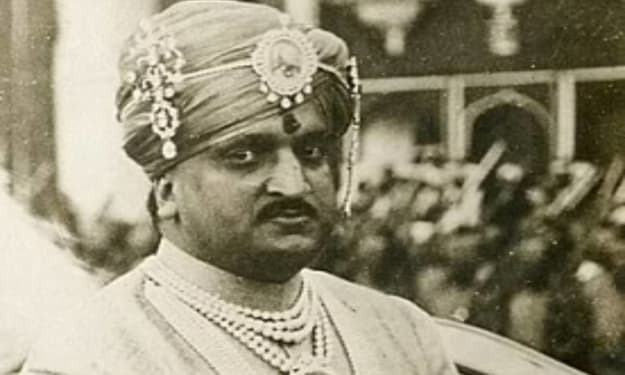
The Last Ruler of Jammu and Kashmir. Content Warning.
Maharaja Sir Hari Singh GCSI GCIE GCVO, born in September 1895, occupies a significant place in the annals of Jammu and Kashmir's history. As the last ruling Maharaja of the princely state, his reign was characterized by both opulence and tumult, culminating in the pivotal decision of accession to the Dominion of India. Let's embark on a comprehensive exploration of the life, legacy, and controversies surrounding this enigmatic figure. Early Life and Education: Hari Singh was born into the esteemed royal family of Jammu and Kashmir, the son of Raja Amar Singh and Bhotiali Chib, at the majestic Amar Mahal Palace in Jammu. His birth in 1895 marked the emergence of a future ruler, as he was designated the heir presumptive to the throne due to the absence of a direct successor. His early years were steeped in privilege and tradition, with an upbringing that reflected the grandeur of his lineage. In 1903, Hari Singh's journey into the corridors of power began as he served as a page of honor to Lord Curzon during the grand Delhi Durbar, a spectacle of imperial grandeur. Subsequently, his educational pursuits led him to Mayo College in Ajmer, where he embarked on a journey of intellectual and personal growth. However, tragedy struck in 1909 with the demise of his father, prompting the British authorities to take a keen interest in his education, appointing Major H. K. Brar as his guardian. Rise to Power: The trajectory of Hari Singh's life took a decisive turn in 1923 following the passing of his uncle, heralding his ascension to the throne of Jammu and Kashmir. His coronation in 1926 at the majestic Mubarak Mandi Palace in Jammu was a spectacle of extravagance, symbolized by the adornment of jewels valued at an astonishing twenty million dollars. However, amidst the pomp and ceremony, challenges loomed on the horizon, foreshadowing the turbulent years that lay ahead. Controversial Rule: The tenure of Maharaja Hari Singh was fraught with challenges and controversies that left an indelible mark on his legacy. Rebellion reared its head in various regions, most notably in Poonch and Gilgit-Baltistan, challenging the stability of his rule. Furthermore, accusations of complicity in the 1947 Jammu massacres tarnished his reputation, casting a shadow over his governance. Despite these tumultuous times, Hari Singh's reign was not devoid of progress. He implemented reforms aimed at modernization, including initiatives to promote education, combat child marriage, and foster social inclusivity. Accession to India: The watershed moment in Hari Singh's reign arrived in 1947 with the dawn of Indian independence. Faced with escalating tensions and external threats, particularly from Pakistan-backed tribal forces, Singh found himself at a crossroads. In October 1947, he made the fateful decision to accede to the Dominion of India, signing the Instrument of Accession. This pivotal moment not only altered the course of Jammu and Kashmir's history but also set the stage for future conflicts and geopolitical dynamics in the region. Legacy and Commemorations: Following the abolition of monarchy in 1952, Maharaja Hari Singh's life took a poignant turn as he retreated from the corridors of power to spend his remaining years in Bombay. His death in 1961 marked the end of an era, but his legacy endured through various commemorations and tributes across Jammu and Kashmir. Parks, statues, and public holidays stand as tangible reminders of his enduring influence, sparking conversations about his complex legacy and the broader historical narrative of the region. Conclusion: Maharaja Hari Singh's reign encapsulates a tumultuous chapter in the history of Jammu and Kashmir, characterized by opulence, controversy, and political upheaval. While his rule was marred by challenges and criticisms, his contributions to the region's development and his pivotal role in shaping its destiny cannot be understated. As the last ruling Maharaja of Jammu and Kashmir, his legacy continues to resonate, prompting reflection on the complexities of governance, identity, and historical legacy in the region. In essence, Maharaja Hari Singh's life and times serve as a poignant reminder of the intricate tapestry of history that defines Jammu and Kashmir's identity. Through commemorative efforts and ongoing discussions about his legacy, his influence endures, underscoring the enduring impact of his rule on the socio-political landscape of the region.
By Avhishek Agarwal3 years ago in BookClub
A Warrior King of Ancient India
In the annals of Indian history, one name that resonates through the ages is that of Prithviraj Chauhan, a valiant king of the Chauhan dynasty. His story is one of bravery, love, and the clash of civilizations. Let's embark on a journey through time to unravel the fascinating tale of this legendary ruler. Prithviraj Chauhan, also known as Rai Pithora, ascended the throne in 1177 CE as a young ruler inheriting a kingdom that stretched far and wide, from Thanesar in the north to Jahazpur in the south. His capital, Ajmer, pulsated with the heartbeat of a thriving empire nestled in the heart of present-day Rajasthan. From the outset, Prithviraj harbored grand ambitions of expanding his realm through military prowess. His conquests were marked by strategic brilliance, notably defeating formidable adversaries like the Chandelas, showcasing his martial prowess and strategic acumen. In 1191, Prithviraj demonstrated his leadership by rallying a coalition of Rajput kings against the Ghurid army led by Muhammad of Ghor. The battleground near Taraori witnessed an epic clash, culminating in a resounding victory for the Rajputs, a testament to Prithviraj's military prowess and the unity of the Rajput clans. However, fate took a cruel turn in 1192 when Muhammad of Ghor returned with a formidable force of Turkish mounted archers. The decisive Battle of Tarain ensued, a momentous clash that would forever alter the course of Indian history. Despite a valiant effort, Prithviraj faced defeat, and the sands of Tarain bore witness to his capture and subsequent execution. The fall of Prithviraj at Tarain marked a pivotal moment in the Islamic conquest of India, echoing through the corridors of time as a watershed event in Indian history. The tale of his defeat reverberates through semi-legendary accounts like the Prithviraj Raso, weaving a tapestry of heroism and tragedy. While historical inscriptions from Prithviraj's reign are scarce, medieval chronicles and epic poems offer glimpses into his life and legacy. Texts like Prithviraja Vijaya and Prithviraj Raso, though embellished with eulogistic flourishes, serve as invaluable windows into the ethos of his era. Prithviraj's upbringing and education are shrouded in legend, with tales of his mastery over languages and diverse subjects permeating through historical narratives. Whether mastering archery or delving into the realms of philosophy and theology, Prithviraj epitomized the multifaceted virtues of a Renaissance ruler. The legend of Prithviraj is not confined to historical chronicles alone but finds resonance in Jain texts like Prabandha Chintamani and Hammira Mahakavya, enriching the tapestry of his legacy with diverse perspectives and interpretations. The circumstances surrounding Prithviraj's downfall are steeped in intrigue and treachery, with accounts of ministerial betrayals and strategic blunders casting a shadow over his final days. Jain texts like Prabandha Chintamani offer vivid accounts of his capture, adding layers of complexity to the narrative. The aftermath of Prithviraj's demise witnessed the ascension of his son Govindaraja as a puppet ruler under Ghurid suzerainty, marking the end of an era for the Chauhan dynasty. Yet, the embers of resistance continued to smolder, with Prithviraj's brother Hariraja's valiant efforts to reclaim their ancestral kingdom serving as a testament to the enduring spirit of the Rajput clans. Beyond the annals of history, Prithviraj's legacy endures in the hearts and minds of the Indian populace, immortalized in memorials, literature, and popular culture. From epic poems to cinematic adaptations, his story continues to captivate the imagination of generations, embodying the timeless virtues of courage, honor, and resilience. In conclusion, the saga of Prithviraj Chauhan transcends the boundaries of time and space, weaving a timeless tale of valor and sacrifice that continues to resonate with audiences across the globe. As we reflect on his legacy, may we draw inspiration from his indomitable spirit and unwavering commitment to duty, echoing through the corridors of history as a beacon of hope and courage for generations to come.
By Avhishek Agarwal3 years ago in BookClub