Analysis
"The Art of Laughter: Unearthing Comedy in Everyday Life"
"Have you ever taken notice of how numerous jokes commence with the phrase, 'Have you ever noticed?' And what's up with, 'What's the deal?' There's an abundance of humor hidden in the everyday, mundane aspects of life that we usually overlook. So, if you're aiming to inject some levity into your tale, presentation, or screenplay, here are a few tips and techniques for unearthing the comical. All exceptional storytelling, comedy writing included, is made up of a handful of fundamental ingredients: who, what, when, where, why, and how. Writers have been probing these questions since at least the 1st century BC, and none of them can be addressed with a mere 'yes' or 'no.' They crave details, and the more precise those details are, the more amusing the narrative becomes. Let's kick off with the 'who,' the comical character. Think about the books, TV shows, and films that tickle your funny bone. They typically feature amusing archetypes. The know-it-all, the endearing underdog, the terrible boss, the neurotic, the scatterbrain. Interestingly, these are all stock characters hailing from Commedia Dell'Arte, the artistic comedy of the late Renaissance Italy, and they've yet to lose their charm. The Commedia principle for crafting comedic characters is simple: find the flaw, then magnify it. Alternatively, you can experiment with opposites. When the smartest person in the room commits the silliest blunder, or the goofball outsmarts the genius, our laughter is triggered because we didn't anticipate it. The ancient Greek humorist Aristotle is reputed to have asserted, 'The key to humor is surprise.' This surprise, or incongruity theory of humor, posits that we laugh at things that appear out of place or defy our expectations, such as a frog dating a pig, a lizard peddling insurance, a baby grooving to disco, a nun dancing to disco, or a feline showcasing any disco-related moves. Actually, just a baby, a nun, or a cat doing pretty much anything, especially involving disco. One fun way to identify incongruities is by forming connections, literally drawing them in a mind map. Begin small; select a word, let's say 'pickle,' jot it down, and then as swiftly as possible, establish connections. What do pickles bring to mind? Who savors pickles? What cherished pickle-related recollections from childhood do I have? Another excellent method for generating comedic content is shifting from observation to imagination. Transition from 'what is' to 'what if.' For instance, what if instead of a horse, you had a pair of coconuts? Now, envision some memorable moments in history, literature, or film and consider how they'd unfold if coconuts were involved. Allow your imagination to run wild, even if an idea seems overdone, too apparent, or just plain daft, jot it down nonetheless. What seems evident to you might not be to someone else, and the most foolish idea could unexpectedly turn out to be the cleverest. Speaking of real-life absurdities, have you ever noticed how much comedy revolves around the exasperating, infuriating, and mortifying experiences we encounter? Will Rogers once quipped, 'Everything is funny as long as it happens to somebody else.' So, if you're having a dreadful morning, imagine it happening to a character you're crafting, and by the afternoon, you might have a humorous story to tell. After you've delineated your characters and plot, here are a few swift and simple comedy writing techniques to make them sizzle. The 'rule of three' or 'zig-zag.' Experiment with setting up an anticipated pattern (zig-zig), then subvert it (zag). A rabbi, a priest, and a coconut stroll into a bar. The 'punchline rule' suggests placing your punchline at the end of the sentence. A rabbi, a priest, and a coconut sashay into a disco. This leads us to the 'rule of K.' For some reason, words with a 'k' sound tend to tickle our ears and are deemed comical. Coconut, disco, pickles, crickets? Well, we don't always elicit a chuckle. Humor is subjective, comedy is an experiment, and writing is all about revising. Keep on trying. Discover the imperfections, uncover the details, introduce incongruities, incorporate 'k' words, and bear in mind the most pivotal rule for crafting comedy: relish the process. As Charles Dickens once mused, 'There is nothing in the world so irresistibly contagious as laughter and good humor.' And disco."
By Alisa İnnokate3 years ago in BookClub
Debunking the Myth: Earth is Not Flat. Content Warning.
Introduction For centuries, the notion of a flat Earth was widely accepted, with beliefs rooted in limited observations and ancient worldviews. However, with the advancement of science, exploration, and technology, we have overwhelming evidence to confidently state that the Earth is not flat. In this article, we will explore the compelling evidence that debunks the flat Earth myth and reaffirms the well-established fact that our planet is an oblate spheroid.
By Alexander jackson3 years ago in BookClub
Ant Vision: Shedding Light on Their Visual World
Ants are fascinating creatures that have evolved over millions of years to become highly specialized and successful insects. One common question that often arises when discussing ants is whether they have eyes. The answer to this question is somewhat complex, as it depends on the specific ant species and their role within the colony. In general, ants do possess visual organs, but the nature and functionality of these organs can vary significantly.
By Alexander jackson3 years ago in BookClub
Lumina: A Celestial Harmony. Content Warning.
In a distant corner of the cosmos, there existed a serene celestial realm known as Lumina, a world where the moon and stars coexisted in perfect harmony. Lumina was a place unlike any other, where celestial bodies sang in unison, painting the night sky with a symphony of light and unity.
By Alexander jackson3 years ago in BookClub
Remembering the Tragedy at COB Speicher : A Glimpse into the Dark Reality of Terrorism. Content Warning.
On June 12, 2014, the world witnessed a horrific tragedy that shook the foundations of humanity. COB Speicher in Iraq, once a symbol of dreams and aspirations, became a haunting ground where the lives of more than 2,000 young student pilots were cruelly cut short, their dreams shattered, and their future stolen. The perpetrators of this unimaginable atrocity were ISIS, a terrorist organization that showed no mercy.
By Alexander jackson3 years ago in BookClub
THE PSYCHOLOGY OF FAILURE
In a 2019 study, over 400 participants were enlisted to learn a mysterious, invented language. Individuals were asked about three pairs of runes, for example, which of these two characters represents an animal? Then, after a brief break, they were asked about the same rune pairs with questions flipped, as in, which of these two runes represents a non-living object?
By Chifuniro chiwaula3 years ago in BookClub
The benefits of Cardamom on human life
Cardamom has been around for centuries, used in both cooking and medicine. It's made from the seeds of different plants, like ginger, and has a unique flavor that can be used in a variety of dishes. It can be found in whole seed pods, pre-ground spice powder, essential oils, and herbal supplements, usually in capsules. Studies have suggested that it may have some health benefits, but more research is needed before it can be used to treat medical conditions.
By Faisal Patel3 years ago in BookClub
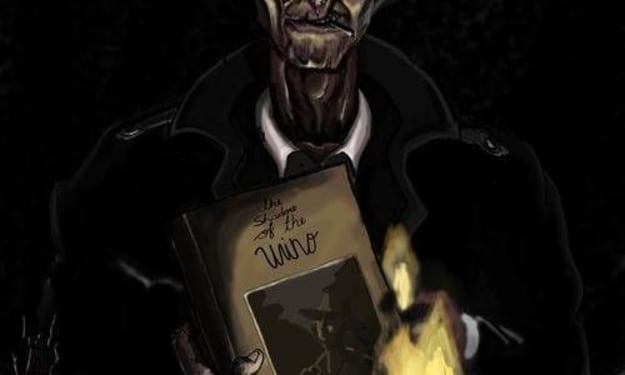
"Unlocking the Enigma: The Mysteries of the Voynich Manuscript"
Nestled within the hallowed confines of Yale University's Beinecke Rare Book and Manuscript Library lies an enigmatic relic—an exclusive copy of a 240-page tome. Recent carbon dating, with estimates around 1420, reveals vellum pages graced with mesmerizing, dream-like illustrations and a flowing script that defies interpretation. This singular manuscript, measuring 24x16 centimeters, goes by the name of the Voynich manuscript, and it ranks among history's most inscrutable enigmas. The enduring riddle? No one has yet unlocked its meaning.
By Alisa İnnokate3 years ago in BookClub
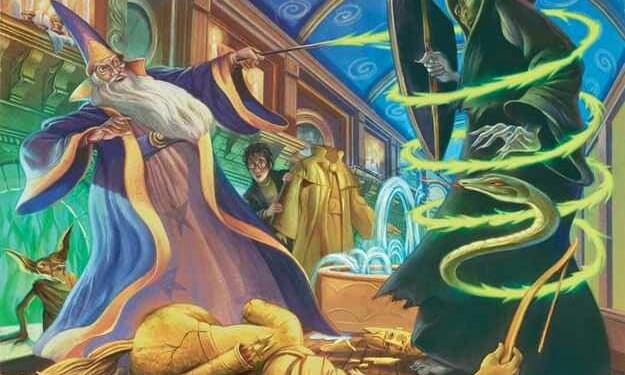
"The Mirzakhani Wand: A Magical Gamble"
"The legendary Mirzakhani wand stands as the most potent magical artifact ever forged, holding immense power within its core. It is this very power that the malevolent sorcerer Moldevort seeks to harness in his bid to conquer the world. In your quest, alongside the enigmatic Drumbledrore, you have finally unveiled the concealed cave where this formidable wand lies hidden. However, accessing it is not as straightforward as it seems.
By Alisa İnnokate3 years ago in BookClub
Land of the prophets
In the depths of history, on the land of the Middle East, a historical story is woven full of challenges and important milestones. It is the story of Palestine and the children of Israel. It is a story that spans thousands of years, carrying within it deep meanings and intertwined relationships between peoples, cultures and civilizations. Palestine, the land of prophets and holy places, was the cradle of many ancient civilizations. Kingdoms and empires succeeded one another on this land, leaving their mark on history. But we will stop here at the modern period, when the major powers of modern times began to struggle over influence in the region. At the beginning of the 20th century, Palestine was part of the Ottoman Empire, which ruled the region for centuries. With the collapse of the empire after World War I, the major powers intervened to divide the region. In 1917, Britain announced its promise to create a “Jewish homeland” in Palestine, which sparked tensions and conflicts between the Arab and Jewish peoples. Palestine witnessed the repercussions of the Arab-Israeli conflict, as attacks and demonstrations against the British Mandate and attacks between the two conflicting peoples began. In 1947, the United Nations approved the decision to divide Palestine into two states: Israel and a Palestinian Arab state. Here began a new phase of tensions and conflicts. On May 14, 1948, Israel declared its independence and began a violent war with neighboring Arab countries. The war continued for several months, and ended with the signing of a truce, as the reality on the ground was different from the dream that the United Nations had drawn in its resolution. Israel expanded and occupied more territory than planned in the resolution. Palestine then lived through long periods of conflict and tension, and witnessed other wars, such as the 1967 war and the 1973 war. Each war had an impact on the two peoples and the entire region. Palestinians suffered displacement and loss of land, while Israel grew, expanded and colonized settlements in the occupied Palestinian territories. Over the decades, the Holy Land has witnessed diplomatic efforts and attempts to find peaceful solutions to the conflict. Important peace agreements were signed, such as the Oslo Accords in 1993, which gave the Palestinians self-rule in parts of the West Bank and Gaza Strip. However, implementing these agreements and achieving a comprehensive and just peace remain major challenges. Today, international efforts continue to reach a peaceful and lasting solution that guarantees the establishment of two independent and secure states, Israel and a Palestinian state, living side by side in peace and stability. Many international organizations and bodies work to promote dialogue, enhance trust between the two parties, and encourage understanding and resolution of disputes in peaceful and legal ways. Palestine and Israel carry within them a rich and complex history, telling a story of hope, resilience and coexistence. They face great challenges, but the real strength lies in their ability to cooperate and build bridges of understanding, tolerance and peace. Let us hope that the coming days will draw a new chapter in this story, in which Palestinians and Israelis live side by side in peace and stability, in a homeland of prosperity, justice and equality.
By Samaah Ali3 years ago in BookClub
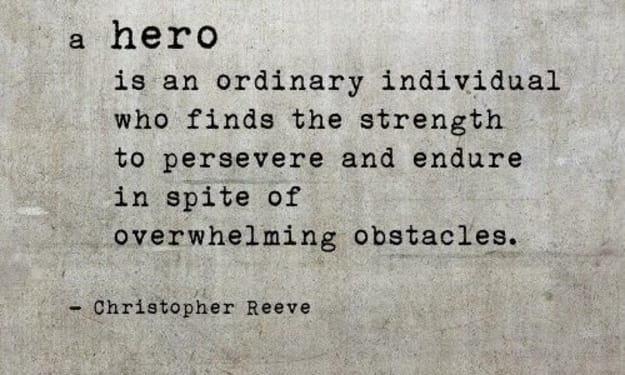
"Unleash Your Inner Hero: The Universal Journey of Transformation"
What's the common thread that ties together Harry Potter, Katniss Everdeen, and Frodo with the heroes of age-old legends? (Roar) If I told you that they all share the DNA of a singular hero, would you believe it? Joseph Campbell certainly did. He embarked on a journey through myths spanning the globe, resulting in his magnum opus, "The Champion with a Myriad Countenances," where he recounted numerous tales and unveiled how each one embodies the monomyth - the Hero's Odyssey.
By Alisa İnnokate3 years ago in BookClub
My First Love. Content Warning.
My First Love Once upon a time, in a small town, I had a love story that will forever be etched in my heart. It was the summer of my sixteenth year when I first laid eyes on her. Her name was Lily, and she possessed an enchanting smile that could light up the darkest room. From that moment, I knew something special was about to unfold.
By Lihle Vilakati3 years ago in BookClub