
One Idiom a Day: Chinese Wisdom in Stories
Day 1: The Old Man Lost His Horse — A Blessing in Disguise?

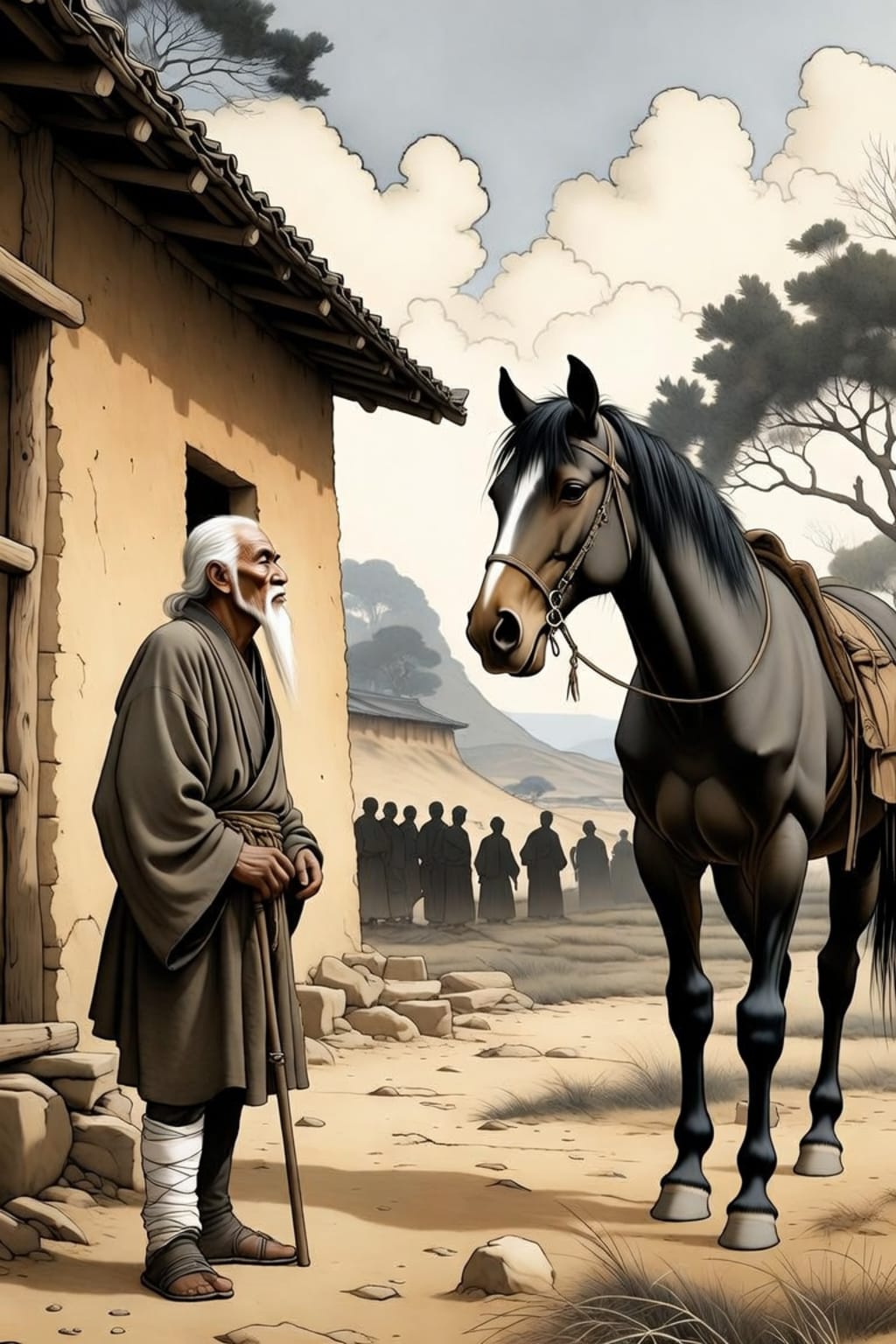
塞翁失马,焉知非福(Sàiwēng shī mǎ, yān zhī fēi fú)
“Sai Weng lost his horse. Who knows if it may not turn out to be a good thing?”
During the Warring States period, an old man lived near the northern border of China. People called him Sai Weng.
Sai Weng had a horse. One day, the horse suddenly ran away and crossed the border into the land of the northern tribes.
When the neighbors heard about it, they came to comfort him. But Sai Weng was not worried at all. Instead, he said: “I lost a stallion, but how do I know this is not a good thing?”
The neighbors thought this was strange. Losing a stallion was clearly a bad thing. How could it possibly be good?
A few months later, the lost horse came back by itself. But it did not come back alone. It brought another beautiful horse from the northern tribes with it.
The neighbors came to congratulate Sai Weng.
“You are so lucky!” they said.
But Sai Weng said: “I got a good horse for free, but how do I know this is not a bad thing?”
Again, the neighbors thought he was saying something strange.
Sai Weng's son loved riding horses. After getting the new horse, he rode it every day for fun.
One day, he accidentally fell off the horse and broke his leg.
The neighbors came to comfort Sai Weng again. But Sai Weng said: “My son broke his leg, but how do I know this is not a good thing?”
The neighbors thought Sai Weng was impossible to understand.
But a year later, the northern tribes launched a major attack on the border. All the young and strong men were forced to join the army and fight in the war. Most of them died in battle.
Sai Weng's son, however, could not join the army because his leg was injured. So he and his father were able to stay alive.
This story teaches us that good luck and bad luck are not always absolute. Under certain conditions, they can change into each other.
A bad thing may turn into a good thing, and a good thing may turn into a bad thing.
So, when something good happens, we should not become too proud or excited. When something bad happens, we should not become too sad or hopeless. We should look at things from a long-term point of view, because things can change over time.
Later, Chinese people began to use the saying: 塞翁失马,焉知非福(Sàiwēngshīmǎ, yān zhī fēi fú)
It is used to describe a situation where a temporary loss or misfortune may eventually bring some benefit. It reminds us that a bad thing can sometimes turn into a good thing, depending on the circumstances.
About the Creator
Frances Gao
Chinese stories, told in English 🇨🇳🌍
🐉 One Chinese idiom at a time
📖 Ancient wisdom • Modern life
Beijing → Poland 🇵🇱
Enjoyed the story? Support the Creator.
Subscribe for free to receive all their stories in your feed.
Comments
There are no comments for this story
Be the first to respond and start the conversation.