
Nabokov's Lolita
How Lolita Shaped My View of Men at Age Ten

My mom taught me to read when I was two. I toddled around the neighborhood reciting Dr. Seuss to anyone who would listen. By six, I had inhaled Nancy Drew, Grimm’s Fairy Tales, and anything Robert Louis Stevenson. By eight, I had blown through my dad’s library of Ian Fleming’s James Bond novels, much of Steinbeck, and a lot of private detective novels like Dashiell Hammett’s The Thin Man and The Maltese Falcon.
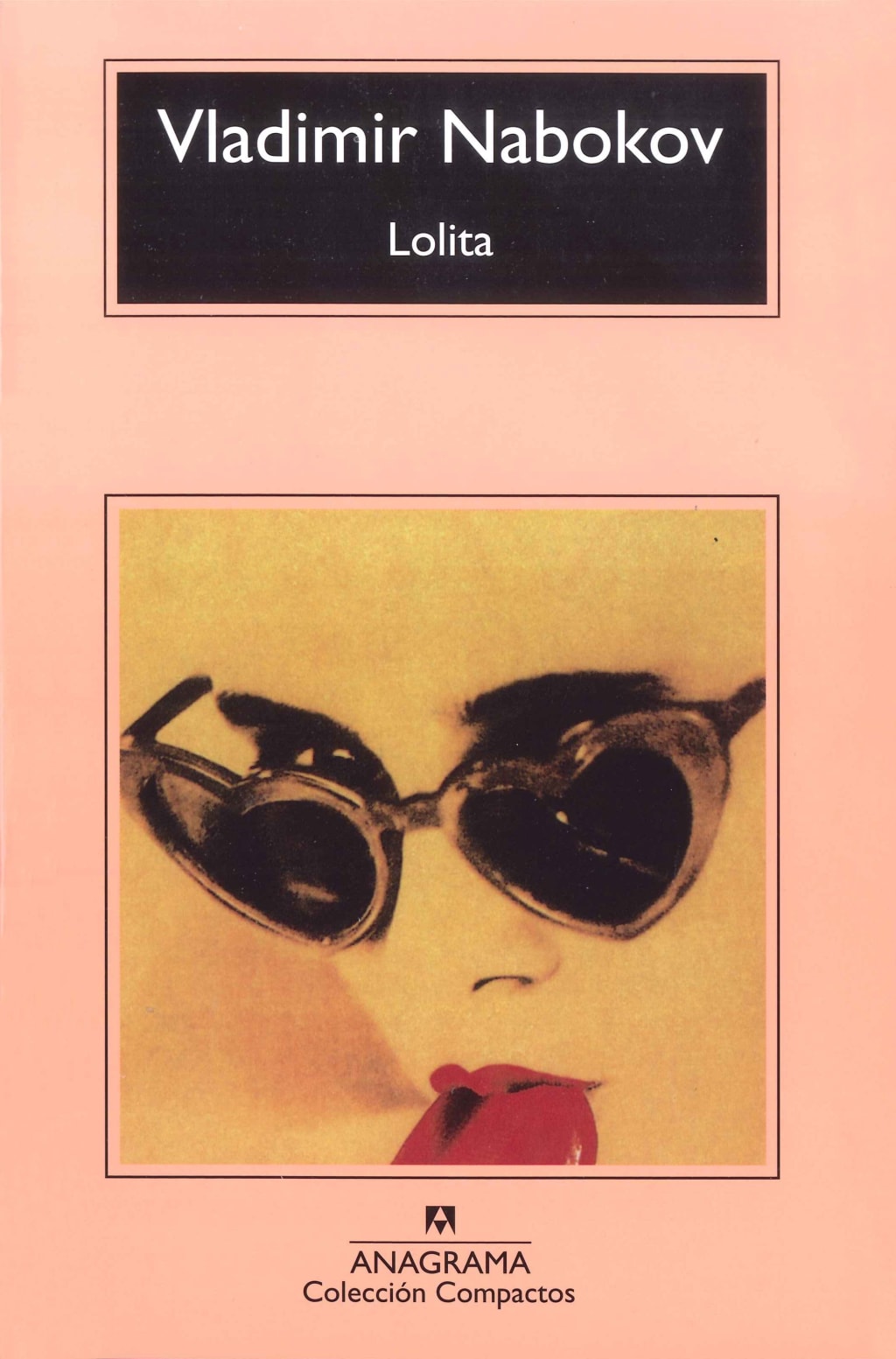
At 10, my mom signed me into the adult section of the public library. She would drop me off on Saturday mornings, which made me feel like a world traveler embarking on an adventure. I loved the hushed tones, the smell of paper and ink, and all the possibilities. And that was the year I discovered Vladimir Nabokov and Lolita.
At 10, I didn’t understand the dynamics of an older man preying on a 12-year-old girl, although I had a basic knowledge of sex after discovering my mom’s manual for telling your child about it, hidden in her nightstand. I was seduced because Nabokov had the ability to fool me with his lilting language. Boys my age seemed clueless while Humbert was adoring, poetic, and strong. The opportunities Lolita seemed to be afforded because of Humbert’s polished and intellectual attention charmed me: Private schools, exotic travels, established fine restaurants. He was obsessed with her, but he loved her, I deduced. And love seemed like life’s ultimate reward. Could there be anything more romantic to a 10-year-old who thought fifth grade boys were smelly and loud and rather uncouth, but men, oh, but men, weren’t they how I would eventually find that ultimate reward, love?
My mom was uncomfortable with my reading choice that week, but she supported it. “Don’t let your father know you are reading that,” she said. I read in my own bedroom, late at night, under the covers with a flashlight. My dad caught me before I finished the book with a copy of a Teen Confessional magazine, Michael Landon on the cover kissing his girlfriend. He ripped it in two and admonished me to stick to library books, never discovering Lolita under my pillow.
When I finished Lolita, I remember feeling sorry for her. She was swollen with child and still a child herself, married to a working man in a cold-water flat and presiding over a typical household of the era: expected to clean, cook, and take care of a husband and his babies. Even then, I knew Humbert’s offer was much more intriguing to me than what Lolita settled for. I hoped she chose it because it was truly what she wanted, not because she had so few choices and felt relief that she didn’t have to make them any longer. She made one when she left Humbert, there is no mistaking that, although most women leave men to go to another man.
The book made me wonder, even at 10, if Lolita ever loved anyone or was living her life to survive because she learned to let men take care of her. I doubted she was ever happy, especially with Nabokov, a magnificent writer who lacked the ability to mine the deep thoughts and feelings of women and girls, in an attempt to define them.
I have read Nabokov’s novel several times over the decades, including last year, and I have a first edition copy on my bookshelves because I have always loved the book. So here is what I learned from Lolita. Since age 10, I have never let a man define me, coerce me, or make me feel like less than I believe about myself, but I always enjoyed loving them, even though some of them along the way were decades older than I, or we were destined to part. Lolita tried but was just not brought to life in an era where women could always decide the trajectory of their lives. She, and Nabokov with his seductive language, tried to tell us, though. Lolita has cost me three husbands who wanted me to be like she was in the end, complacent. unquestioning, and relieved that her ordeal was over at 18. But I pressed on beyond what Lolita settled for. My fourth husband is everything I always wanted, a mix of James Bond, Nick Charles, and Jim Hawkins, with a compelling dose of Humbert. I make my own choices, and he doesn't mind when I act like I'm 10.
About the Creator
Lacy Loar-Gruenler
Lacy Loar-Gruenler worked for a decade as a newspaper journalist and editor. In March 2023, she completed an MFA in Creative Writing and Literature at Harvard University.
Enjoyed the story? Support the Creator.
Subscribe for free to receive all their stories in your feed. You could also become a paid subscriber, letting them know you appreciate their work.
Comments
There are no comments for this story
Be the first to respond and start the conversation.