
Mary Oliver's Tips For Writing Poetry
Lessons from her Poetry Handbook

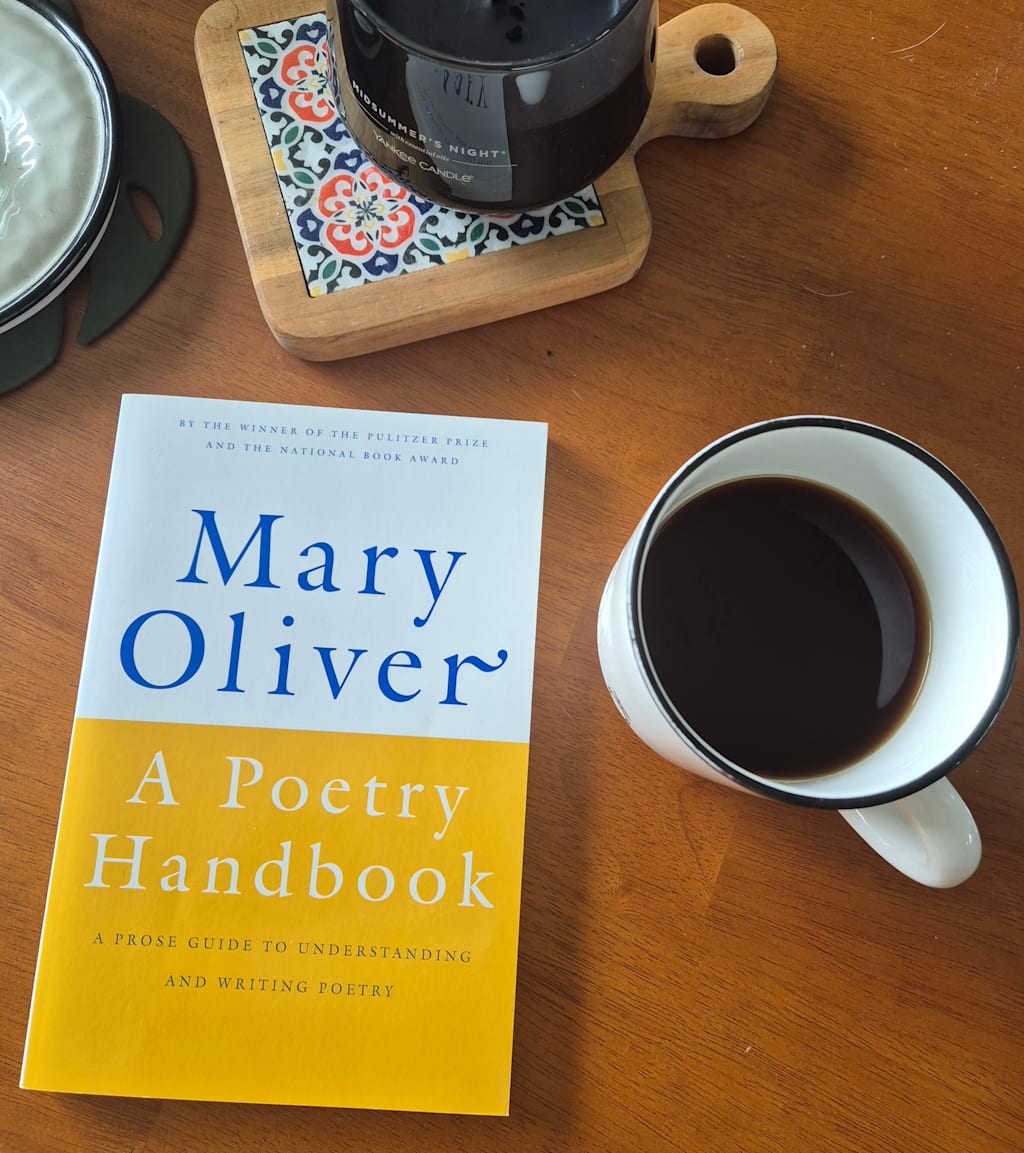
When I walked into my local bookstore and stumbled across this thin, tangerine and cream-colored guide, I was immediately compelled to buy it. I didn’t bother flipping through the pages. I knew Oliver’s name from her poetry collections Upstream and Dream Work.
Her poems are sharp and read like illustrations. I held this handbook in my arms at the checkout line and thought back on how her poems made me feel. I devoured each word and savored the cadence of her lines. Mary Oliver's poetry screamed: pure poetry.
I wanted to learn how to better harness my words to paint vivid pictures in my readers’ heads the way she’s done for me. I had faith that Mary Oliver would be a fine teacher.
I knew this handbook would be a great source of knowledge on meter, classical forms, diction, etc. But I wasn't expecting this book to offer so much more than assistance in form. It was a rich meditation on how poetry shapes the mind and carries with us.
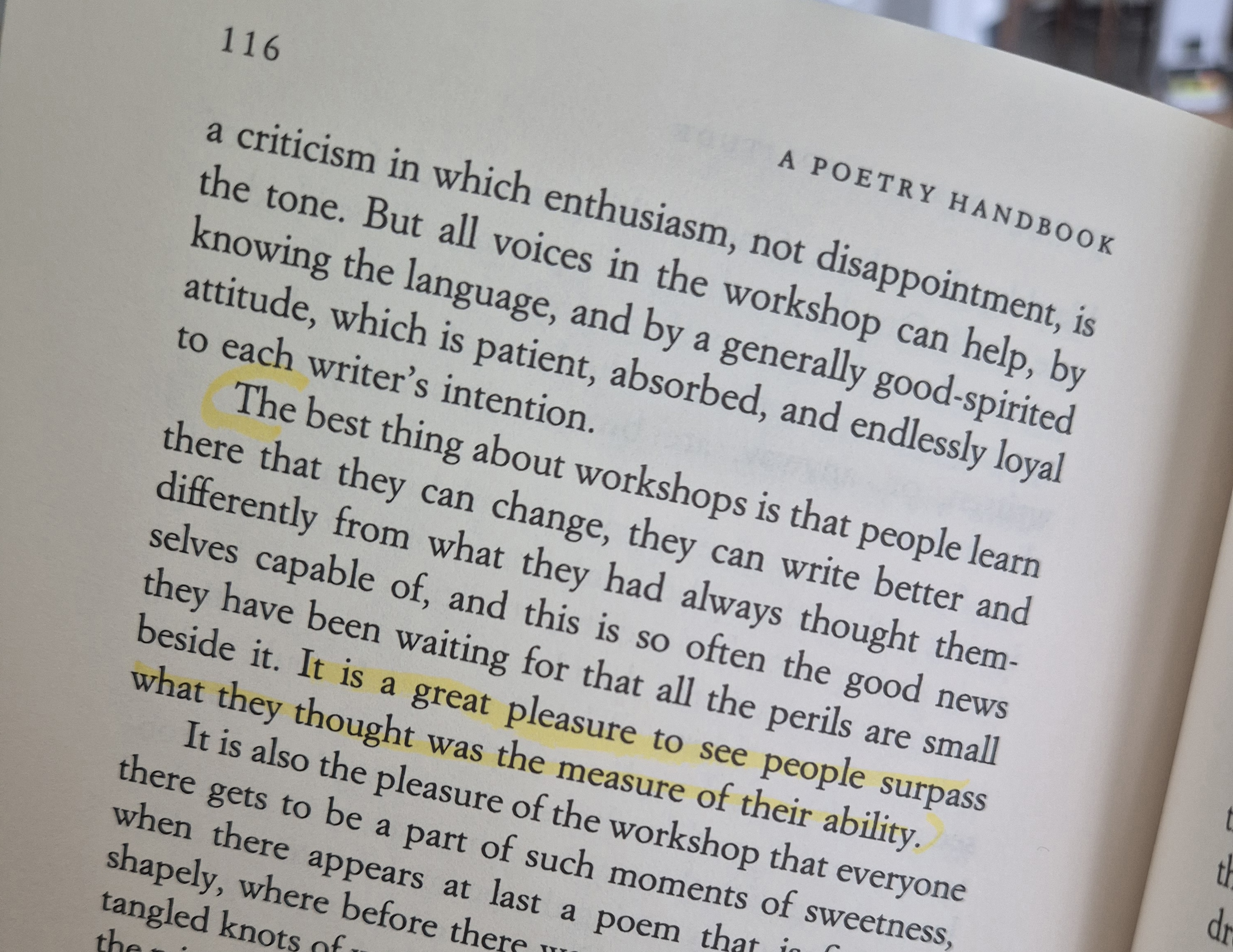
Here are a few of the lessons I learned from her Handbook:
1. The form may change, but the need for poetry does not.
“None is timeless: each arrives in a historical context; almost everything, in the world, passes. But the desire to make a poem, and the world’s willingness to receive it--indeed the world’s need of it--these never pass.”
(Oliver pg. 9)
Poetry comes in all shapes and sizes. Whether it’s Syllabic Verse, Free Verse, or Lyric, there’s something for everyone. What remains the same for all forms of poetry is that it contains the power to touch something within a reader.
Particular forms and their popularity have shifted throughout history. In modern times, free verse tends to be the most popular type of poem. This is the style that I write in most often. From John Milton’s 1667's Paradise Lost to Mary Oliver’s work, free verse or blank verse, has created an interesting opportunity for expression without the restraints of rhyme.
Our cultural context and our need to hear words that reflect our emotions have driven poets and poetry enthusiasts since the days of Homer. It was a great comfort to be reminded of our rich, poetic history as well as our modern communites.
2. A poem’s construction must be reliable, a Poet is a tour guide.
“A meaningful rhythm will invite. A meaningless rhythm will dissuade.”
(pg. 57)
Despite the genre of poetry used, the author must understand not only the basics of construction but the purpose of each form, as well.
Understanding Rhyme and syllabic meter can help novice poets better format their work into a well-constructed piece. On the other hand, Oliver warns that forcing a rhyme or relying too heavily on it, may lead readers to become wary of your work.
Especially modern readers tend to dislike traditional rhyme schemes. But when rhyme is used tactfully as a tool to impact meaning, even the most rigid of readers can be persuaded.
All in all, the key lesson here is: form should not precede content.
3. Free Verse is not actually ‘free.’
“Free verse is not, of course, free. It is free from formal metrical design, but it certainly isn’t free from some kind of design.”
(pg. 67)
Free verse has its own set of rules, and if an author can use the lack of rhyme constraints to their advantage, the poet can unlock unlimited potential of self-expression.
A different set of tools should be utilized in free verse to ensure your poem follows a theme. Repetition of lines and syntax can keep your free verse from wandering too freely away from the point you are attempting to make.
Mary Oliver offers a few examples from her own work to show how to keep your free-verse poem on track. She also breaks down how she uses slant rhyme and repetitive metaphors to guide the reader through her poetry.
4. Observation and communication are the most important skills of the modern poet.
“The poem is not a discussion, not a lecture, but an instance--an instance of attention, of noticing something in the world.”
(pg. 74)
The role of a poet has shifted throughout history. Poets were at one point looked to for information on how to process political and ethical questions. Poets in the modern day are viewed mostly as expressive artists.
This is not a completely bad thing in my opinion. An artist is able to express difficult topics with both beauty and passion that can inspire movement, revelation, and even revolution.
I would say some of the most inspiring works I've ever read on modern politics have been poetry collections. (Citizen by Claudia Rankine comes to mind)
Ultimately, it is up to the reader, the observer, to impose their own meaning onto a piece of art, and the poet can be the match to their flame.
5. Step back and reflect.
“One of the difficult tasks of rewriting is to separate yourself sufficiently from the origins of your poem--your own personal connections to it.”
(pg. 109)
Editing is the hardest part of writing a poem. If you want your writing to inspire and reach others, it has to be both readable and inventive.
‘Kill Your Darlings’ is a well-known editing technique for writing fiction, but it applies to poetry, as well. Sometimes we are too close, too connected to the work to fully comprehend how to push it beyond ourselves.
Oliver recommends the poet to consider their imagery carefully, for the images are what readers will take in first. She also highlighted how important the first and final lines of the poem are. She urges poets to hold equal amounts of energy to the editing process as they have in the first pen stroke.
Mary Oliver is an inspiring modern poet. She has helped me cultivate a deeper love for my new city while keeping my heart grounded in nature.
It was a great pleasure to receive so much advice and insight from her. I would highly recommend this handbook, even if you are a well-experienced poet.
About the Creator
Enjoyed the story? Support the Creator.
Subscribe for free to receive all their stories in your feed. You could also become a paid subscriber, letting them know you appreciate their work.
Comments
There are no comments for this story
Be the first to respond and start the conversation.