
How did ancient Chinese people purify water and what challenges did they face
Interesting discussions on Chinese topics

Ancient people primarily drank well water, although they also consumed surface water such as river water, stream water, and lake water. These water sources are free from modern industrial pollution, but they still pose risks of contamination by microorganisms and parasites.
Here are some ancient methods and engineering techniques for purifying water:
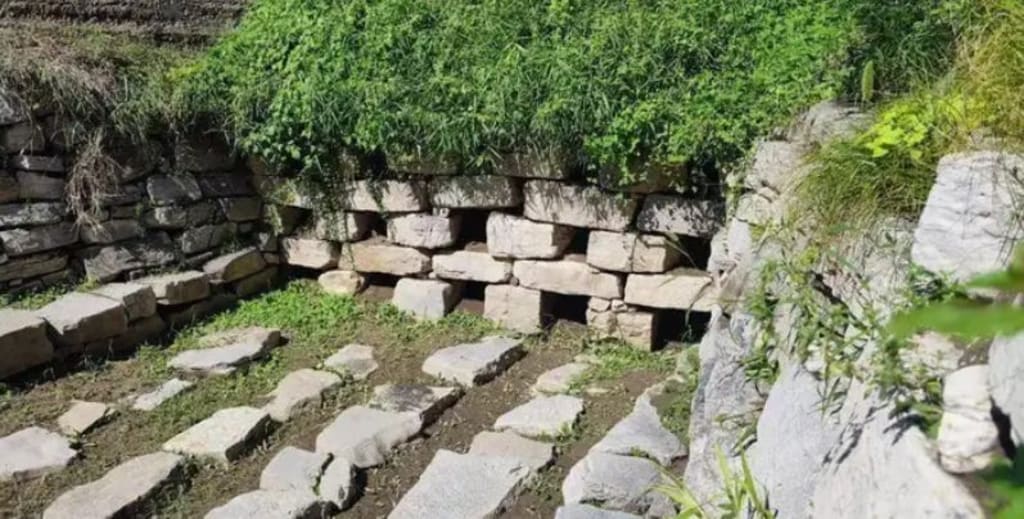
During the Spring and Autumn and Warring States periods, the city of Linzi in Qi had three major drainage systems and four drainage outlets, totaling over 5,000 meters in length. These were connected to canals and city moats and constructed from large stones. The outlet channels were divided into upper, middle, and lower tiers, each with five square water holes. Stones were arranged in alternating layers within the holes, allowing water to flow through the gaps but preventing people from passing through. This system served both as a drainage solution and a defense mechanism, making it remarkably rare among ancient urban drainage systems of its time
The clay drainage pipes in Qin’s Xianyang City even included straight and curved sections. Water flowed through clay funnels into drainage basins, then passed through numerous underground conduits leading in different directions.
This urban drainage system primarily relied on surface waterways, supplemented by underground concealed pipes, but it had a serious drawback: sewage was directly exposed to the open air, continuously emitting foul odors — especially noticeable during hot summer months. If the pipes were damaged, wastewater could seep underground and contaminate well water. In particular, Chang’an, the ancient capital of the Han Dynasty, suffered extensive damage to its infrastructure in the late Western Han period due to frequent warfare. Both surface and underground pipelines were severely compromised, significantly weakening their purification capacity.
Moreover, many common people dumped all household waste near their entrances, and some even dug large pits to bury garbage, causing waste to accumulate underground over time. The decomposition of this waste corroded soil and contaminated groundwater, making well water “salty and unsuitable for drinking” (this occurred because certain water flows passed through polluted underground layers or due to the diffusion of foul gases).
Thus, when Emperor Yang of Sui Dynasty first moved to Chang’an in Han times, he couldn’t stay long and was forced to order the construction of a new capital (Daxing) southeast of the old city. This became the foundation for later Tang Chang’an city.
After the Sui Dynasty, most major cities in history lacked more advanced drainage systems and continued to rely primarily on surface drainage and auxiliary underground pipes. As population grew over time, well water gradually became increasingly salty and bitter, rendering it unusable.
However, this may have been a natural limitation that prevented any dynasty from lasting too long.
Besides large cities, towns and rural areas with better ecological conditions typically have cleaner water quality. This attracted many people from big cities to settle and develop in these smaller places, bringing cultural exchange and contributing to a diverse development of civilization.
About the Creator
Enjoyed the story? Support the Creator.
Subscribe for free to receive all their stories in your feed.
Comments
There are no comments for this story
Be the first to respond and start the conversation.