
A Brief History of Time: Stephen Hawking’s Masterpiece That Made the Universe Accessible Read time
A Brief History of Time: Stephen Hawking’s Masterpiece That Made the Universe Accessible Read time

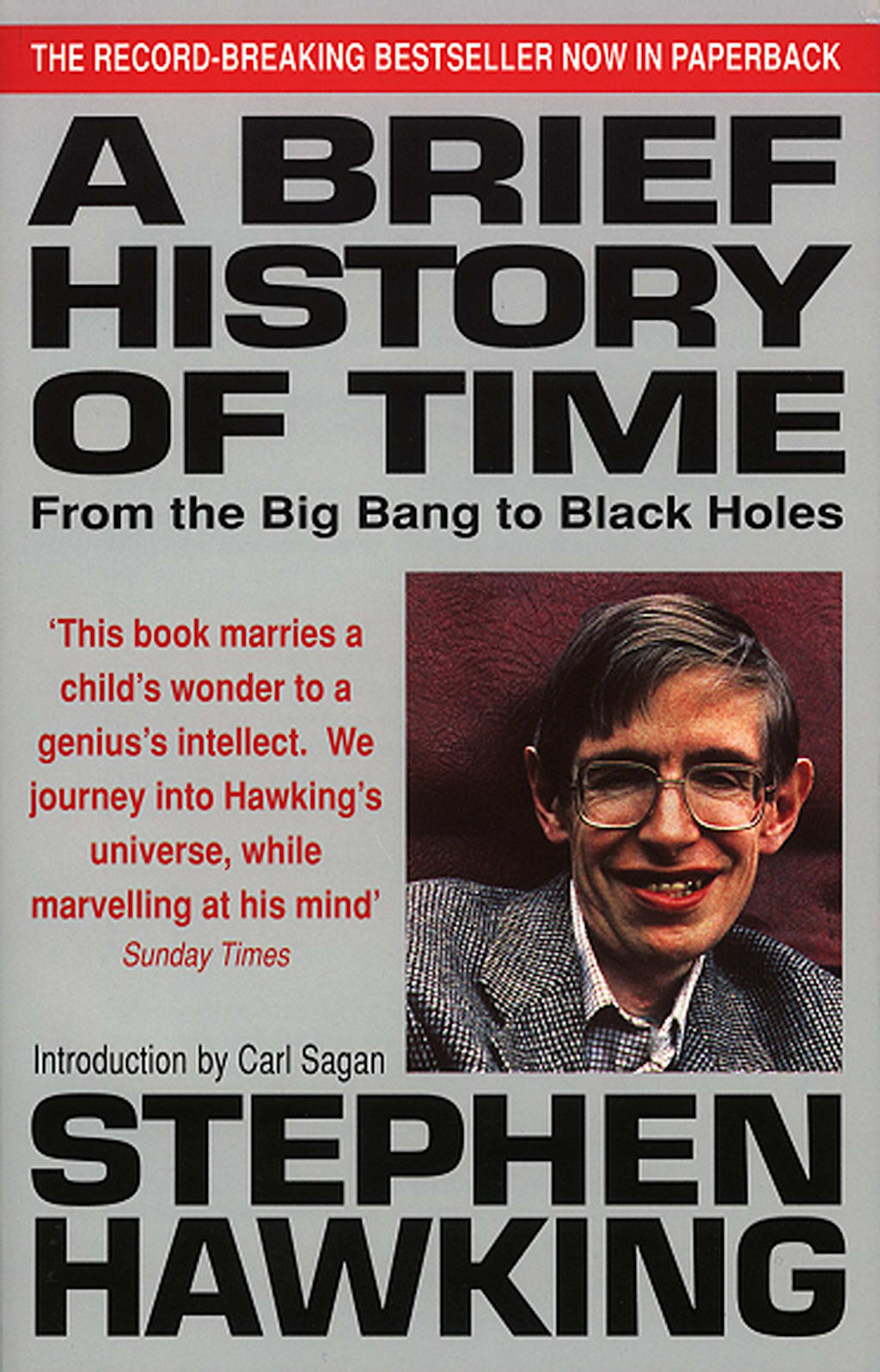
In 1988, a groundbreaking book transformed how millions understood the cosmos. A Brief History of Time: From the Big Bang to Black Holes by Stephen Hawking became an international phenomenon, selling over 25 million copies in more than 40 languages. It spent a record 237 weeks on the London Sunday Times bestseller list and remains one of the most influential popular science books ever written.153f11 Hawking, the brilliant theoretical physicist diagnosed with ALS (motor neuron disease) at age 21, achieved what many thought impossible: explaining complex ideas like black holes, the Big Bang, quantum mechanics, and the nature of time in language accessible to non-scientists — with almost no equations (just one: E=mc²).64a35a This article explores the book’s background, key ideas, cultural impact, and why it still matters in 2026. The Man Behind the Book Stephen William Hawking (1942–2018) was Lucasian Professor of Mathematics at the University of Cambridge. Despite losing nearly all physical abilities, he communicated through a speech synthesizer and continued groundbreaking work on cosmology, black holes, and quantum gravity. Hawking wrote A Brief History of Time with the goal of answering big questions for ordinary readers: How did the universe begin? Does time have a beginning or end? What are black holes really like? He avoided heavy math, focusing on clear explanations and analogies.c134cf The book’s success surprised everyone, including Hawking. It turned him into a global icon, featured in documentaries, The Simpsons, and films like The Theory of Everything. Structure and Key Chapters: A Journey Through the Cosmos The book has 12 chapters that build from historical context to cutting-edge (for 1988) theories. Here’s a chapter-by-chapter overview of the core ideas: Chapter 1: Our Picture of the Universe Hawking starts with humanity’s evolving view of the cosmos — from Aristotle’s Earth-centered model to Ptolemy, Copernicus, Galileo, and Newton. He introduces the quest for a unified theory that explains everything.aef0ff Chapter 2: Space and Time This explores relativity. Newton saw space and time as absolute. Einstein’s special and general relativity showed they are intertwined as “spacetime,” curved by gravity. Time slows near massive objects or at high speeds.167ae9 Chapter 3: The Expanding Universe Evidence from Edwin Hubble showed galaxies moving away from us — the universe is expanding. This points to a beginning: the Big Bang. Hawking discusses Friedmann’s models and the cosmic microwave background radiation as leftover heat from the early universe.e2f0c5 Chapter 4: The Uncertainty Principle Hawking introduces quantum mechanics. Heisenberg’s principle says we cannot precisely know both position and momentum of particles simultaneously. This challenges classical determinism and introduces probability into physics.3d25bc Chapter 5: Elementary Particles and the Forces of Nature Covers quarks, leptons, and the four fundamental forces: gravity, electromagnetism, weak and strong nuclear forces. Hawking explains particle physics and the search for grand unification. Chapter 6 & 7: Black Holes (and “Black Holes Ain’t So Black”) Black holes form when massive stars collapse. Their gravity is so strong that nothing, not even light, escapes the event horizon. Yet Hawking showed they emit radiation (“Hawking radiation”) due to quantum effects near the horizon, eventually evaporating. This was revolutionary.b99744 Chapter 8: The Origin and Fate of the Universe Discusses Big Bang singularities and possible futures — endless expansion, Big Crunch, or a flat universe. Hawking favors no-boundary proposals with imaginary time. Chapter 9: The Arrow of Time Why does time flow forward? Linked to entropy (disorder increasing). The psychological, thermodynamic, and cosmological arrows of time align in our universe.2196de Chapter 10: Wormholes and Time Travel Explores theoretical possibilities of time travel via wormholes, but notes practical barriers like energy requirements and paradoxes. Chapter 11: The Unification of Physics The quest for a “Theory of Everything” combining general relativity and quantum mechanics — perhaps string theory or M-theory. Chapter 12: Conclusion Hawking ends philosophically: understanding the universe through science may be “the ultimate triumph of human reason” — knowing the mind of God.465332 Major Themes and Breakthrough Ideas The Universe Has Rules: Laws of physics govern everything, from quarks to galaxies. Time and Beginnings: The Big Bang suggests time had a start. Singularities challenge classical physics. Black Holes and Quantum Gravity: Hawking’s work bridged relativity and quantum mechanics. Human Curiosity: Science is a collective, evolving endeavor. We may be close to understanding the universe’s fundamental laws.fbc369 The book balances wonder with humility — we still don’t have all answers. Cultural Impact and Legacy A Brief History of Time popularized cosmology like no book before. It inspired generations of scientists, students, and curious readers. It was adapted into a 1991 film and updated editions (including illustrated versions) kept it relevant.63a924 Critics praised its clarity; some noted it remains challenging for absolute beginners. In 2026, while some details (like certain cosmological parameters or pre-Higgs boson understanding) are dated, the core explanations and philosophical questions endure.1ef42b Its success proved complex science can sell if presented with clarity and awe. Why It Still Matters in 2026 With JWST discoveries, gravitational wave detections, and advances in quantum computing, Hawking’s foundational ideas remain a perfect entry point. The search for a unified theory continues. Questions about the multiverse, dark energy, and time’s nature are as alive today as in 1988. Reading it encourages scientific literacy in an era of misinformation and rapid technological change. It reminds us that curiosity about the universe is a deeply human trait. Final Thoughts: The Triumph of Reason A Brief History of Time isn’t just about physics — it’s about our place in the cosmos. Hawking showed that even with immense personal challenges, the human mind can grasp the universe’s deepest secrets. If you haven’t read it, start today. Pair it with newer books on recent discoveries for a complete picture. As Hawking wrote, understanding the universe may be the greatest achievement of all. What did you think of the book if you’ve read it? Which concept fascinated (or confused) you most — black holes, the Big Bang, or time travel? Share in the comments.
About the Creator
Enjoyed the story? Support the Creator.
Subscribe for free to receive all their stories in your feed.
Comments
There are no comments for this story
Be the first to respond and start the conversation.