
Why Direct Sourcing from a China Human Hair Factory is Cheaper for Your Business
Direct Sourcing from China Hair Factories: Cut Costs

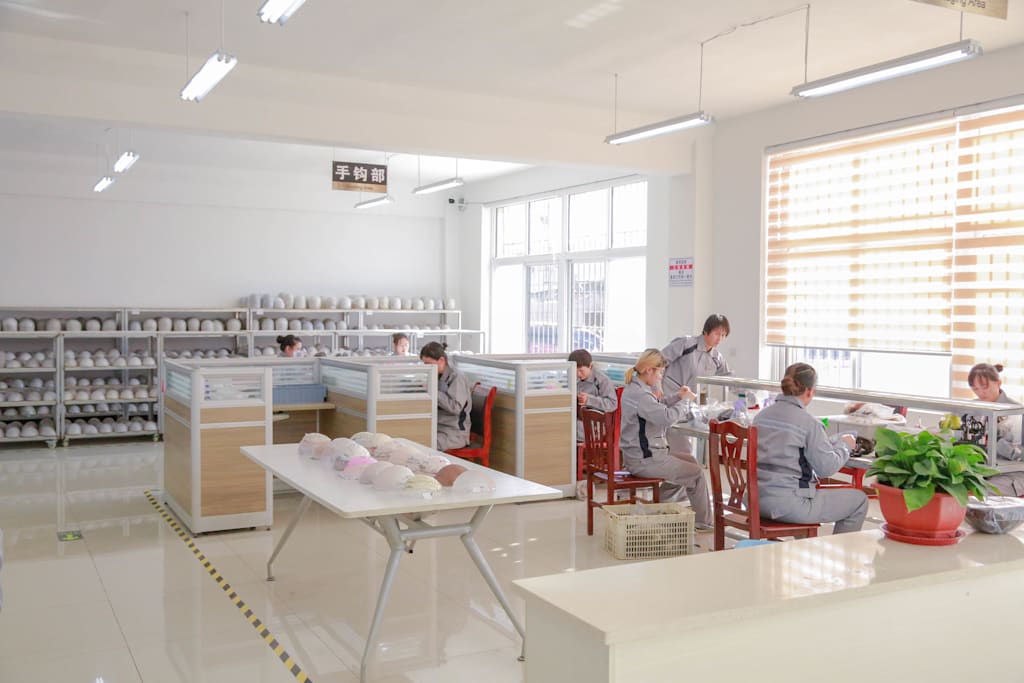
Why Direct Sourcing from a China Human Hair Factory is Cheaper for Your Business
Direct sourcing from a China Human Hair Factory means you're buying straight from large-scale producers—usually based in major hubs like Xuchang or Qingdao—without any middlemen. This strips out the extra markup layers and drastically lowers your COGS. Plus, it gives business owners much tighter control over both pricing and hair quality. But the real payoff shows up in the math. We'll break those numbers down next.
Key Takeaways
- Bypass middlemen and source directly from factories to significantly lower your cost of goods sold.
- Match sourcing to regional hubs: choose Qingdao for luxury Remy hair, Xuchang for bulk volume, or Guangzhou for fast trends.
- Verify authentic factories by checking business licenses for "manufacturing" and demanding live video tours of the production floor.
- Calculate total landed costs—including shipping and duties—and prepare for stricter 2026 US import tariffs.
- Maximize ROI by aligning hair grades with customer expectations and utilizing OEM services for private labeling.
The Economics of the Hair Supply Chain: Breaking the Middleman Markup
Hair prices shoot up the second middlemen get involved. Local distributors tack on markups to cover storage, marketing, and slow-moving inventory. That pushes your COGS way higher than it needs to be. Wholesale Hair Vendors right at the source don’t deal with those extra layers, so they price based on production instead of resale. It's in that gap where most small businesses bleed margin. To see exactly how this stacks up, you just need a clear look at the pricing ladder.
The Price Waterfall: From Factory Floor to Salon Shelf
Factory pricing is your baseline. A bundle made in Xuchang might leave the factory floor at $25 under wholesale pricing. It's built on scale and tight cost efficiency.
Next up are the trading companies. They repackage the goods, handle export logistics, and bump the price to around $40–$55 just to protect their own profit margins.
Local beauty supply stores sit at the very top. By the time that exact same bundle hits a salon shelf, it's often selling for $80 or more. Retail overhead and slower sales cycles drive that number up.
Getting a lower unit price sounds simple, but picking the right region matters just as much.
Why Bono Hair’s Direct-to-Business Model Eliminates Hidden Fees
Bono Hair cuts out two expensive layers by focusing strictly on direct sourcing. That means you buy close to factory pricing while still getting consistent quality control and export support.
You completely dodge those inflated distributor margins and drop your overall COGS without taking on extra operational risk. This kind of balance supports steady business growth, especially if you're a smaller retailer trying to scale your inventory.
But not every factory operates the same way. And where they're located in China absolutely shapes both their pricing and product strengths.
Mapping the Manufacturing Hubs: Qingdao vs. Xuchang vs. Guangzhou
China’s hair business relies on strict regional skills. Qingdao, Xuchang, and Guangzhou all tackle totally different sourcing goals. They handle everything from pure luxury to massive scale and fast-moving trends. If your product line doesn't match the region you pick, your margins and quality will take a hit. Getting the right Manufacturing Hub isn't optional—it shapes your brand from day one. Let's start with Qingdao, where premium quality sets the bar.
Qingdao: The Global Capital for Luxury Remy Hair and HD Lace
Qingdao sits at the top for Luxury Remy Hair Extensions. The factories in this area care deeply about aligned cuticles, strict sorting, and tricky lace work like HD Lace Closure systems. That's exactly why brands like Bono Hair buy from here to get a steady, high-end product.
They handle smaller production runs, but the quality watch is much tighter. You get skilled workers and slower processing times, which really boosts the softness and life of the hair. This makes Qingdao perfect if you're aiming for a premium setup, not just pumping out mass-market volume. Other regions go a different route.
Xuchang and Guangzhou: Volume Production and Trend Sourcing
Xuchang completely owns the bulk output game. It focuses heavily on Synthetic Hair and budget-friendly human hair bundles, using factories made for pure speed and scale. You get lower unit prices and much faster turnarounds. That's the trade-off.
Guangzhou steps in with a completely different job. It's the main center for Trend Sourcing, quick product design changes, and export shipping. Fresh styles usually pop up here first before they hit the rest of the world. Just be super careful when you buy here. You really have to figure out who is an actual factory and who is just a middleman.
Factory vs. Trading Company: How to Verify Your Source
Most Alibaba suppliers swear they're factories, but plenty are just middlemen. It matters because this directly hits your Risk Mitigation, Quality Control, and long-term costs. A real factory gives you stable pricing and reliable output. Trading companies usually tack on a markup and hide production headaches. So you need hard proof, not empty promises—and that starts with their paperwork.
The "Manufacturing Scope" Check: Verifying Business Licenses
A real China Human Hair Factory must actually say “manufacturing” on its Business License. Ask for a clear copy, then dig into the business scope section. If it just lists “trading” or “wholesale,” you're not dealing with a factory. Simple as that.
Look closely for terms like “production,” “processing,” or “manufacturing of human hair products.” This quick step weeds out most middlemen during Sourcing. Once the documents check out, it's time for visual proof.
The Live Video Inspection: A 5-Point Checklist for Salon Owners
A quick video call confirms whether the facility actually exists. Ask them to grab their phone and walk through the workshop in real time.
Keep an eye out for machines, raw hair stock, on-site workers, packaging lines, and labeled inventory. Spotting these things goes a long way toward Quality Assurance for Human Hair Extensions.
If they dodge the live video or only want to show off a polished showroom, treat it as a major red flag. Next up, you’ll need to grasp the true costs behind importing.
The "Hidden" Math: Calculating Your Total Landed Cost
A low factory price means nothing if your Total Landed Cost completely wipes out your margin. You need one clear formula: unit price + shipping + customs clearance + duties + local delivery. Miss any piece of that, and your "profit" vanishes fast. Business Logistics and Shipping usually add 20–40% on top of the invoice price. Plus, Customs Clearance can delay your cash flow if the paperwork is wrong. Before placing any order, run the full math. Then stress test it. After that, you need to factor in the policy shifts coming in 2026.
Navigating 2026 Tariffs and De Minimis Shifts
US import tariffs are set to tighten in 2026, especially for bulk B2B shipments. That directly drives up your landed cost per unit and shifts Market Dynamics. Smaller orders might lose the benefit of de minimis thresholds. Translation? More shipments get taxed.
Lead Times will also stretch out. More inspections and stricter declarations slow down Customs Clearance, which ends up tying up your inventory and cash. Planning larger, well-timed shipments is going to become critical. These changes actually make your product specs more important than ever. That's because quality tiers directly affect both your base price and your tariff exposure.
Virgin, Remy, and Non-Remy: Understanding Technical Specs for ROI
Virgin Hair grabs the highest price tag because it's entirely unprocessed and consistent. Remy Hair keeps the cuticles aligned, giving you a solid balance of durability and cost. Then you have Non-Remy. It's the cheapest option, usually comes from mixed sources, and tangles a lot faster.
From a manufacturing point of view, these aren't just marketing labels. They’re Technical Specs that dictate lifespan and return rates. Paying top dollar for Virgin only makes sense if your buyers demand premium longevity. If they don't, Remy usually brings in a much better ROI. Get this wrong, and you'll overpay for stock that just sits on the shelf. Get it right, and you're perfectly set up to scale through smart customization.
Scaling Your Brand Through OEM and Private Labeling
OEM and Private Labeling give you a real customization edge that goes way past just pricing. You control exactly how your brand looks, feels, and stands out on the shelf. In Xuchang, factories focus on dense, salon-grade bundles. But over in Qingdao, suppliers usually specialize in lightweight textures and fine finishing. That regional expertise lets you match the product design directly to your exact audience.
Custom details show up in ways your buyers notice right away. You can ask for branded packaging, tweak the hair density, or even create signature curl patterns that competitors simply can't copy. Over time, that builds real brand recognition. Not just quick sales.
Working directly with suppliers like Bono Hair also locks in quality. You'll get the exact same texture, color, and construction across every single batch. This cuts down on returns and protects your reputation. It's really that simple. Consistent quality is what turns one-time buyers into loyal repeat customers—and sets the stage for a solid, long-term manufacturing partnership.
Frequently Asked Questions about Chinese Hair Sourcing
Which region in China is known for the highest quality virgin hair?
Qingdao. That is your luxury Remy hub. Xuchang pumps out bulk volume. Guangzhou chases trends. Want top-tier virgin hair? Go to Qingdao.
What is the difference between Indian and Chinese human hair?
Thickness. Chinese hair is coarse and bone straight. Handles heavy bleaching like a tank. Indian hair is finer. Naturally wavy. Depends entirely on the texture your clients want.
What is the standard MOQ when buying from a Chinese hair factory?
Usually 10 to 50 pieces. Real manufacturers need volume. If a vendor offers a 1-piece minimum for production, they are a middleman. Sample orders are the only exception.
How do factories source raw human hair for extensions?
Paid collectors in rural villages. They cut ponytails straight from donors for premium grades. The cheap stuff? Fallen hair swept off floors. Acid-washed to hide the damage.
About the Creator
Leo
Passionate men's hairstylist with a keen eye for detail and a knack for creating on-trend looks. Dedicated to delivering hair restoration education that enhances individual style.
Enjoyed the story? Support the Creator.
Subscribe for free to receive all their stories in your feed.
Comments
There are no comments for this story
Be the first to respond and start the conversation.