
Which hair system should I choose for crown thinning?
Best Hair Systems for Crown Thinning: 2026 Guide

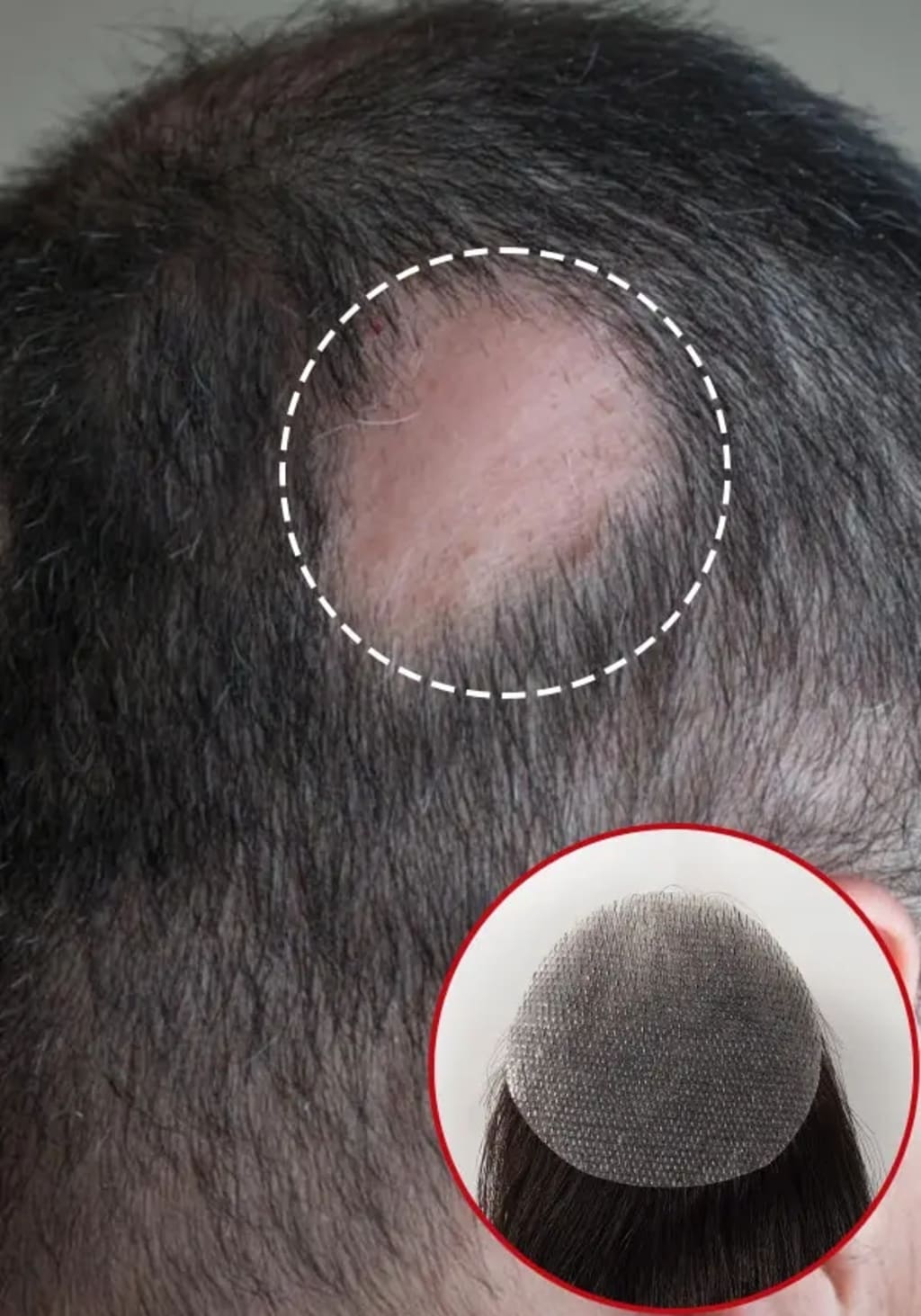
Which hair system should I choose for crown thinning?
Picking a hair system for crown thinning usually comes down to your coverage area, your remaining hair, and the exact look you're going for. A topper easily handles a smaller thin spot, but a larger partial system might be better for broader hair loss. And don't worry—hair systems don't automatically look fake. A solid match will just blend right in with your existing hair. Simple.
Key Takeaways
System size should match thinning spread: patches, toppers, or full systems.
A crown system must follow your natural whorl for seamless blending.
Perimeter bonding protects fragile crown hair by keeping adhesive off weak strands.
Understanding Crown Thinning and the Whorl Challenge
Crown thinning is tougher to hide than frontal loss. Why? Because the crown stays visible from above, and the hair grows in a swirl. Vertex thinning needs a hair system that actually follows that direction, rather than just piling on density.
When the placement and hair flow match the surrounding area, the result looks completely natural. It won't draw unwanted attention to your crown.
The Top-Down Angle
For crown thinning, that overhead view is what matters most. A frontal hairline usually gets judged right at eye level. But scalp visibility at the crown? That shows up when someone stands behind you, looks down from a staircase, or snaps a photo.
A small topper works fine for a contained thin spot. Broader thinning, on the other hand, might need a larger partial system. Just make sure to check top-down photos in regular lighting before you decide. If the added hair lies too flat or fights your existing growth, the edges and scalp contrast will definitely stand out.
Replicating the Natural Hair Whorl
Crown hair doesn't grow straight back. It spirals outward from a center point, creating the natural whorl that gives the crown its shape. Your hair system needs a direction that follows this exact spiral. Otherwise, the new hair will look totally detached from the rest of your style.
The whorl's position and how far the thinning spreads will guide your customization. A small, focused patch works great when the thin spot stays right near the center of the swirl. But when the thinning pushes beyond the whorl, going with broader coverage blends much better with your surrounding hair.
Choosing Your System Type: Partial Patch vs. Topper vs. Full System
Coverage should match the exact spot where your scalp shows, not just the amount of hair you wish you had. A Partial Hair System easily fills a small crown gap. Meanwhile, a topper or full system handles thinning that's spread out a bit more.
Pick too much coverage, and blending gets tricky. Pick too little, and you're left with a weird thin ring around the added hair. So, just make sure the category you pick follows your actual thinning pattern. Simple as that.
Crown-Specific Partial Patches
A crown-specific Partial Hair System works great for a clear thin spot right at the whorl. It works best when your natural hair is still thick enough to hide the edges. It brings back coverage only where Crown Thinning actually lets your scalp peek through.
Just keep the patch inside the sparse zone and match the hair's spiral to your own crown. But remember, a small patch won't fix thinning that crawls into the mid-scalp. Those edges are tough to hide if the hair right next to it is also thinning.
Hair Toppers for Broader Vertex Coverage
Hair toppers are meant for crown thinning that goes beyond just one whorl and bleeds into the mid-scalp. This bigger piece spreads that added Hair Density across a wider space. That way, it doesn't look like a thick island floating in a sea of thin hair.
A topper still needs some solid natural hair around its edges to blend well. It isn't always a better choice than a focused patch. Pick a topper only when the sparse zone is pretty wide, not just because you can see your crown from above.
Full Systems vs. Selective Crown Restoration
A full Hair System is your best bet when thinning isn't just at the crown anymore and there isn't enough hair left to blend a smaller piece. It gives you solid coverage across the top instead of trying to make one thick spot match a bunch of thin areas.
Stick with a partial crown piece if your front and mid-scalp are still thick. Full systems aren't magically more natural. It all comes down to matching the coverage to how you're actually losing hair.
Once you've figured out your coverage style, the Base Material is the real secret to making the system look totally natural from above.
Selecting the Best Base Material for Vertex Realism
The base material controls how a crown system looks from above. But no single option gives the best mix of realism and durability for everyone. That's just the truth.
When asking "Lace vs. Skin base: which is better for vertex hair loss?", the answer really depends on what you care about most. Scalp visibility, airflow, a smooth surface, or a sturdier foundation.
Silk Bases for Unmatched Top-Down Realism
Silk bases usually give the most natural look when viewing the crown right from above. A silk layer sits between the hair and the base, hiding those tiny attachment points where the hair goes into the system. The result looks much closer to real hair growing out of a visible scalp.
This is a big deal when crown thinning makes scalp visibility a major issue. Silk helps a defined whorl or part look much more believable, especially under harsh overhead lighting.
But there's a trade-off. Silk adds layers, so it might not feel as light or sit as flat as other materials. It's great for people who want scalp realism over a barely-there feel.
Thin Skin and Injected Poly Systems
A skin base—often called polyurethane or poly—uses a thin, smooth membrane that mimics a real scalp from above. Injected poly systems place the hair so it looks like it's growing right through the material without any obvious knots. This keeps things looking natural around a thinning crown.
Go with thin skin if you want a clean scalp effect and like a smooth surface. It works great for a small crown patch where the extra hair needs to sit tight against your head.
Still, thin skin isn't always the best pick for highly active wearers. Since it's less breathable, it can feel hotter than lace. You'll want to think about your comfort in the heat and during workouts before making a choice.
Swiss and French Lace Bases
A lace base lets air flow right through. This makes it a smart choice if you want maximum breathability at the crown. It also sits lightly against the scalp, which helps the new hair move and blend with your own hair instead of looking like a solid cap.
Swiss lace is finer and gives a softer, barely-there finish. French lace is generally a tougher option that still lets the air in. Just keep in mind that neither lace gives you that fully covered scalp look like silk does, because the base itself stays pretty open.
Lace is awesome when your own crown hair can blend right through and around the system. If your scalp is highly exposed, the open structure might mean silk or skin is a better visual match.
Monofilament Bases: Is Mono Too Thick for Crown Thinning?
A monofilament (mono) base isn't always too thick for a thinning crown. But it can definitely stand out more if your surrounding hair is super fine or if your scalp shows a lot. Its woven structure gives you a solid foundation, though it won't copy the look of a bare scalp quite as well as silk or thin skin.
Mono can still do the job when the crown needs a secure, structured spot and you have enough natural hair around the edges to hide the transition. The trick is to not just assume a thicker base looks fake. It really just needs to match the amount of visible scalp and your nearby hair density. Simple as that.
Once you pick your base material, getting accurate crown dimensions helps the system blend smoothly into your healthy hair without putting unnecessary stress on it.
How to Measure the Crown Area for a Custom Hairpiece
Getting accurate crown measurements keeps a custom hairpiece from ending too abruptly inside thin hair. If you're sizing a Partial Hair System, make sure to map out the whole area where the density dropped off—not just the most obvious bare spot.
A properly sized crown piece gives the edges enough healthy hair to blend into. It also avoids putting attachment points right on top of weak, sparse strands. Simple.
The "+1 Inch" Sizing Blueprint
Start by marking the outer edge of your crown thinning. Then, measure about 1 inch beyond that line on every side. This creates a wider coverage zone, letting the hairpiece overlap with denser surrounding hair instead of stopping right at the thinnest point.
That extra inch helps the crown hairpiece blend way more naturally. Plus, it keeps attachment pressure completely away from any fragile hair near your thinning zone. Once your dimensions are clear, just pick an attachment method that holds things securely without tugging on your nearby natural hair.
Attachment Strategies to Protect Existing Thinning Hair
Pick an attachment method that won't tug at the hair around your crown. A Partial Hair System needs to sit right over the thinning spot. Whenever you can, put your adhesive or tape directly on a clean scalp instead of sticking it to weak strands.
If you're a beginner, getting a solid hold without tension is everything. But if taking the piece off causes pulling, itching, or breakage, just stop. Go get a qualified hair-system pro to check your fit and attachment plan. Simple as that.
Perimeter Bonding vs. Center Scalp Taping
If you're dealing with crown thinning, stick your adhesive or tape on the stable outer edges of your scalp instead of right over those fragile hairs in the middle. Perimeter bonding gives your hair system a solid anchor without snagging the strands you actually want to keep. Simple as that.
Taping right in the center can easily catch fine, thinning hair when you put it on or take it off. All that pulling often leads to breakage and just makes cleanup a headache. Sticking to the perimeter keeps the tape away from the thinning spots, leaving your natural crown hair mostly untouched under the system. So, it's usually the safest route for beginners.
Clip-In Systems for Non-Shaving Partial Restorations
Pressure-sensitive clips offer a great non-surgical fix for crown thinning, as long as you have enough healthy hair around the sparse spot to hold them tight. A clip-in Hair System doesn't need shaving or messy liquid adhesives. It's perfect for beginners wanting a quick, removable option.
The main rule is simple. Clips need to grab onto the stronger hair nearby, not the fine, delicate hairs right on your crown. This keeps your remaining hair safe and helps your Partial Hair System stay put.
When a Clip-In System Can Work
A crown topper or similar Partial Hair System works great when your thinning is just in one spot and you've got thicker hair around the edges. The clips anchor to that stronger hair, letting the base easily cover the thinner crown.
But clips aren't a good idea if the only hair left to anchor them is weak, sparse, or already breaking. Tugging a clip off fragile hair causes discomfort, and it can definitely lead to more breakage down the line.
What to Check Before Choosing Clips
Make sure the base covers your thinning spot without stretching so far that the clips end up grabbing weak crown hair. Always check where each clip will land before picking a system. This is super important near the back of your head, since thinning can creep up gradually.
A secure fit feels stable, never tight. If the clips pinch, slide around, or force you to snap them shut really hard, you'll need to tweak the placement or change the system size. A clip-in system should never hurt while you wear it. Simple as that.
Common Clip-In Concerns
Clips don't automatically ruin your natural hair. Damage usually happens when you clip onto weak strands, wear a system that's way too heavy for your hair, or yank clips out without actually opening them first.
Always pop open every single clip before lifting off your Hair System. Then, take it off slowly instead of pulling straight up. Keep in mind that daily wear adds friction from hats, moving around, and sleeping. So, having a solid care routine matters just as much as how you attach the piece.
Managing Crown Friction, Sleeping, and Active Lifestyles
Everyday use can cut down a crown hair system's durability. This usually happens when sweat, pillow friction, or tight hats constantly rub against the base and hair. A breathable system might feel a lot better during a workout. But you still have to clean it regularly and handle it with care.
Try sleeping on a smooth pillowcase, and never go to bed with wet hair. After hitting the gym, just blot the sweat instead of rubbing the crown. Then, clean the system like the instructions say. If your piece is meant to be taken off, gently remove the clips before you sleep. Simple. Building these habits helps you spot the real daily issues from the common myths before picking out a system.
Debunking Common Myths About Crown Hair Systems
A crown hair system doesn't have to look obvious, and you definitely don't need to shave your whole head. Can you get a hair system just for the crown area? Absolutely. Toppers and crown-focused pieces cover up thinning at the back while leaving your natural front and side hair right where it is. Simple as that.
Looking natural comes down to a tight color match, the right hair density, and a secure fit. Plus, a properly fitted system shouldn't ruin your healthy hair. But keep in mind that pulling, bad cleaning habits, or using the wrong adhesive will cause trouble. You only need to shave if your attachment method has to sit right on the bare scalp.
How to Blend a Crown Hairpiece with Natural Hair
Making a crown hairpiece blend with thinning hair on the sides and back really starts with getting a close match in color, curl pattern, and density. Human hair usually looks much more natural since you can trim and style it right along with your own hair.
Have a stylist soften the edges by layering the piece into your existing hair instead of leaving a blunt line. Simple. Just keep the crown density modest if your side and back hair is fine. A super full top will just make the contrast way too obvious.
Comparing Costs and Lifespan of Partial Crown Systems
There's no single price tag or set lifespan for a partial crown system. How much you pay comes down to patch size, hair type, base material, and whether fitting is part of the deal. Plus, your ongoing costs might cover adhesives and trips to the salon.
If you're wondering, "What is the cost of a partial hair system for crown thinning?" always ask for an itemized quote. And if you're trying to figure out "How long does a crown hair patch last?" check what kind of wear pattern and care routine they base that estimate on. Then, just compare your options apples to apples.
Hair Systems vs. Surgical Transplants for Vertex Loss
A hair system is usually the smart move when you want to hide vertex thinning without surgery or waiting months for transplanted hair to grow. It gives you instant results. Plus, you can easily tweak it if your crown coverage needs shift over time.
On the flip side, a transplant might work for someone who really wants growing hair and gets the green light from a doctor. Go with a crown topper or a specialized partial system if you're after flexible, non-surgical coverage. If you're leaning toward surgery, just make sure to talk about the real limits and downtime with a qualified clinician first.
Finding Expert Advice and Selection Support at Lordhair
Lordhair helps beginners narrow down a Hair System for crown thinning, so you don't have to assume every thinning pattern needs a full unit. The right choice really just depends on the size and shape of your thin area.
Crown-Focused Partial Options
A Partial Hair System, like a crown topper or a specialized partial piece, easily covers a smaller spot while keeping your existing surrounding hair visible. Just ask the support team at Lordhair about coverage shape, color matching, and how well the piece blends with the hair you already have. Simple.
Frequently Asked Questions About Crown Hair Systems
What is the best hair style for thinning hair on the crown?
Short, textured styles. They reduce scalp contrast.
What is the best hair system for thinning hair?
A topper for wider thinning; partial for a small whorl.
What is the best treatment for thinning hair on the crown?
A properly fitted crown system. It gives immediate coverage.
How to choose the right hair topper for thinning crown?
Match the whorl, color, and density. Measure 1 inch beyond thinning.
How do you hide a thinning crown with a haircut?
Add texture and avoid flat, slicked-back hair.
About the Creator
Leo
Passionate men's hairstylist with a keen eye for detail and a knack for creating on-trend looks. Dedicated to delivering hair restoration education that enhances individual style.
Enjoyed the story? Support the Creator.
Subscribe for free to receive all their stories in your feed.
Comments
There are no comments for this story
Be the first to respond and start the conversation.