
What People Get Wrong About Modern Hair Systems
How real human hair, hand-knotting, and careful base design turn a hair system into something people never notice for the right reasons.

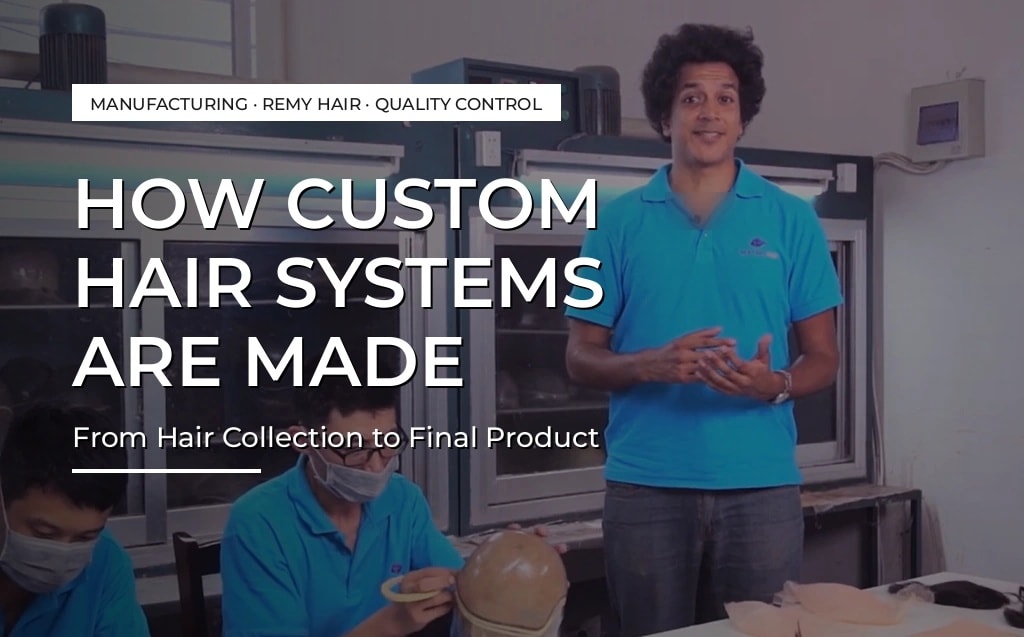
Most people still hear “hair system” and picture it as a bad toupee. The one the wearer puts on their head to be funny, or to simply hide the hair loss, but anyone can tell he's wearing alternative hair that's not his own.
You know the kind. The hair usually looks very shiny. Very thick in the front. Anyway, the hair texture, density, and color simply look too ideal and not necessarily real.
That old image is hard to kill.
But a good modern hair system is almost the opposite of that. It is not meant to hit hard on the onlooker's eyes. It is meant to sit on the person's head and make it look like the person's got a full head of hair. And it looks real.
And that is where the work gets difficult.
You sort the hair. You match the color. Then, you get the base made by the artisans. They then tie or v-loop the hair to the base by hand.
And the hair is supposed to blend perfectly with the wearer's bio hair, and no one should be able to tell he is wearing hair that's not his own.
Good Hair Tells on Itself Eventually
At Newtimes Hair, the process starts with the hair itself. That sounds obvious, but it is where many cheaper systems already go wrong.
Good hair matters because bad hair always tells on itself eventually.
Think about it. There's hair on the person's head, and it is the most noticeable thing people land their eyes on. So the hair needs to look 100% like his own. So, end of the day, it's all about the hair.
It may look fine when it is new. It may even look good in the photograph. Then the client wears it, washes it, brushes it, sleeps in it, styles it too roughly on a rushed Monday morning, and suddenly the truth comes out. It tangles. It dries out. It starts moving like overprocessed fiber instead of real human hair.
That is why Remy hair matters in non-surgical hair replacement. With Remy hair, the cuticles stay aligned in the same natural direction. It sounds like a small technical detail, but it changes everything.
Aligned cuticles create less friction. Less friction means less tangling. Less tangling means the system has a better chance of still looking believable after real wear.
Non-Remy hair often costs less. But mixed cuticles are trouble waiting politely in the corner. There are no cuticles protecting the shaft, and it won't last as long. Your client will find it harder to maintain it.
A salon can do everything right and still end up with a client who thinks the system failed, when really the problem started with the raw material.
Before coloring or knotting happens, the hair has to be sorted. Raw hair does not arrive in neat luxury rows. It arrives in bundles. Workers sort it by length, quality, and thickness. They use hackling tools, pulling strands through metal teeth to organize the hair and keep the direction clean.
It is repetitive work. Not dramatic. Not something anyone would make a glamorous video about for long.
But it matters.
A badly sorted bundle does not magically become premium because someone ties it into lace.
Color Is Where Shortcuts Get Expensive
Clients rarely need the hair in its original shade.
They need a brown that does not turn too warm. A blonde that does not look fried. A gray blend that does not scream, “We added gray because the order form said 30%.” Everything is supposed to mix to just look real.
Color in a hair system has to survive real life. It cannot just look right on day one.
Fast bleaching can lighten hair quickly. But it has a price to pay. It can roughen the cuticles. So the shaft will become weak without the cuticle protection.
So, the hair looks fine at first, but soon the color may fade, and the hair gets weak. The client may not know what went wrong. They just know the system no longer feels as soft or behaves as naturally.
Newtimes Hair uses slower pigment work for this reason. Cold-pigment processing and careful de-pigmentation take more patience, but they are gentler on the hair.
That patience matters.
A hair system is not worn once for a photo. It has to be washed, brushed, styled, cleaned, bonded, and maintained. So you and everyone else can trust it.
Color that damages the hair is not good. It is just a shortcut with a delayed bill. Texture has the same problem. If the wave or curl is wrong, the system feels fake even when the shade is perfect.
Hair does not only need to match in color. It needs to match in behavior.
Technicians use rods and steam to set texture into the hair, whether that means a loose wave, a tighter curl, or a small bend that helps it blend with the client’s own hair. This is one of those details that seems minor until it is wrong. Then it is all you can see.
The Base Is Where the Product Becomes Personal
The base is where the system stops being a product and starts becoming personal.
Stock hair systems have their place. They are faster, simpler, and more useful for many everyday needs. But a stock base is still built from a general shape, and human heads are not general. Hairlines are not general either.
Some people have flatter temples. Some have stronger crowns. Some need a softer front because their natural density is already light. Some need more durability because they work hard in the system every day.
A custom hair system tries to respect those differences.
With a custom mold or template, the base can follow the client’s actual scalp shape. That improves fit, but more importantly, it helps the system settle into the head instead of sitting against it.
There is a big difference between those two things.
A system that fits well is easier to bond. It lifts less. It styles better. It feels less like an object. And that last part matters more than manufacturers sometimes admit.
Nobody wants to be constantly aware of the thing they are wearing.
Base material adds another layer of choice. French lace gives strength and breathability. Swiss lace can look beautifully soft at the edge, but it is more delicate. Thin skin and polymer bases can create a scalp-like appearance and make cleanup easier.
There is no single perfect material. That would be convenient, but it would also be false.
An active client may need airflow more than anything. Another client may care most about an undetectable front hairline. Someone else may want easier maintenance because they remove and reattach often.
This is why professionals should be careful with one-size-fits-all promises. Hair systems are full of tradeoffs. A stronger base may be less invisible. A finer front may need more careful handling. A system that looks unbelievably natural may not be the most durable option for a rough daily routine.
That is not a flaw. That is the reality of the work.
Ventilation Is the Slow Part Nobody Sees
Then comes the slowest part: ventilation.
This is where the hair is attached to the base by hand. One strand, or a few strands, at a time. A technician uses a tiny hook needle and works across the base, building direction, density, and movement.
A single system can take dozens of hours.
That sounds extreme until you look at a real scalp. Natural hair is messy in a very specific way. It changes direction. It grows lighter at the front. It swirls at the crown. It does not sit in perfect rows because perfect rows would look ridiculous on a human being.
A good hair system has to copy that imperfection.
Split knots are useful in areas where the hair needs to stay secure, such as the crown and back. Single knots are better when the front needs to look softer. V-looping can help create a cleaner look on thin skin bases because there is no obvious knot sitting at the root.
None of these techniques is “best” by itself.
That is the part people miss.
The skill is knowing where each one belongs.
The hairline is usually where the piece either passes or fails. If the front is too dense, too dark, too straight, or too perfect, the whole thing becomes suspicious. Real hairlines have space in them. They are uneven. They do not begin like a wall.
So the front has to be handled with restraint. A little less density. Softer knots. Better direction. Sometimes bleached knots. Sometimes single hairs are placed with the kind of patience that would test most people.
But that patience is the difference.
A client can forgive a lot of tiny imperfections in the middle of the system. They cannot forgive a fake-looking front hairline. That is the part they see when they brush their hair back, look in the mirror, stand close to someone, or step outside into bright light.
Quality Control Is Not Just a Final Glance
After all the tying is done, the system still has to be checked.
Quality control is not someone glancing at it and saying, “Looks fine.” At least, it should not be.
Inspectors check density, color, knot security, base shape, hair direction, and shedding. They brush the hair to see what comes loose. They compare the finished piece with the custom order. They look for the kind of small issue that becomes a big issue once a client is wearing the system every day.
This is where consistency matters.
A hair system is not a casual product. If a shirt fits badly, someone may be annoyed. If a hair system looks wrong, the client may feel exposed. That is a different level of pressure.
People outside the industry sometimes talk about hair replacement as if it is only vanity. That is lazy. For many wearers, it is about walking into a room without doing mental calculations. It is about not choosing seats based on lighting. Not avoiding photos. Not checking every reflection.
A well-made hair system gives a person one less thing to manage.
That is why the manufacturing process matters so much. The client may never care about hackling, cold-pigment processing, Swiss lace, split knots, or V-looping. Honestly, they should not have to.
They care about whether the system looks natural, feels comfortable, and holds up after real wear.
But professionals need to care.
Because every invisible detail becomes visible when it is done badly.
The Best Hair System Disappears
The better way to think about a modern hair system is not as a toupee, and not even as a beauty product.
It is a small custom-made structure built from fragile materials, human judgment, and a lot of hand labor.
That is why the cheap version and the premium version can look similar in a quick online photo but feel completely different in real life. One survives the first impression. The other survives the client’s actual day.
And that is the standard that matters.
When a hair system works, nothing dramatic happens. Nobody stares.
Nobody asks awkward questions. Nobody studies the hairline for clues.
The client just looks in the mirror and sees themselves.
That is the whole point.
About the Creator
Natalee Chand
With 10+ years in hair, I specialize in extensions, wigs & systems, crafting trend-savvy content. My blog educates & inspires stylists and salon owners with expertise in techniques, styling & innovations in the evolving hair landscape.
Enjoyed the story? Support the Creator.
Subscribe for free to receive all their stories in your feed. You could also become a paid subscriber, letting them know you appreciate their work.
Comments