
What Parts Are Usually Cut During a Hair System Cut-In? A Step-by-Step Guide for Stylists
What Parts Are Usually Cut During a Hair System Cut-In?

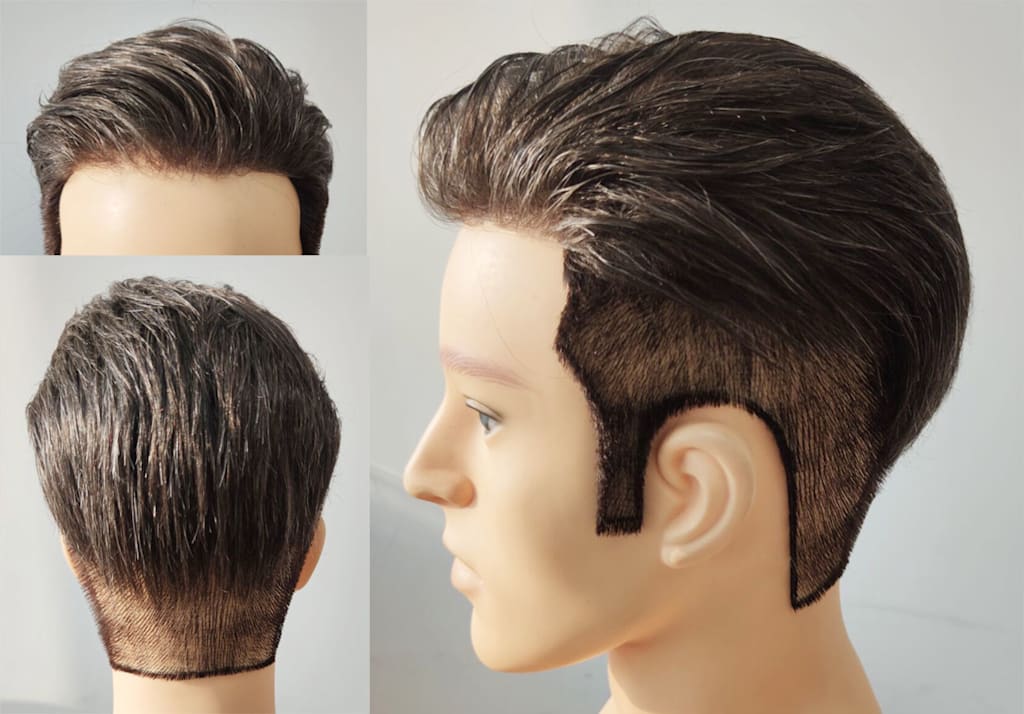
What Parts Are Usually Cut During a Hair System Cut-In? A Step-by-Step Guide for Stylists
A good hair system cut-in dictates exactly how well a unit sits on your client's head and blends right into their natural look. Bono Hair gives salons and distributors a custom-ready starting point. From there, you just tweak the base outline, hair length, and density to match the actual person sitting in your chair.
We'll walk through the specific adjustments needed to keep every single fitting clean, easy to repeat, and ready for business. That's it.
Key Takeaways
Match the base perimeter to a confirmed scalp template before trimming.
Leave a small excess margin for gradual final perimeter refinements.
Blend transition zones gradually to prevent visible shelfing or harsh lines.
What Is a Hair System Cut-In and Why Does Precision Matter?
A Hair System Cut-In is the shaping step in the salon that blends the newly installed unit right into your client's growing hair. When done right, it gets rid of that "freshly placed" vibe and gives the hairpiece a totally natural flow around the hairline, sides, and crown.
Precision matters because even a great custom match will look obvious if the length, density, or direction doesn't actually fit the client. It's that simple. Bono Hair gives B2B partners a custom-ready base, so your team can wrap up fittings faster and hand over a consistent result across repeat orders.
What Parts of a Hair System Are Trimmed During a Cut-In?
You can adjust three main parts during a hair system cut-in: the perimeter, the edge of the base material, and the hair itself. For salons, these tweaks decide if the unit actually matches the client's attachment area. It needs to blend right in with their existing hair so you aren't stuck doing extra re-fit work once they're sitting in the chair.
The Perimeter, Base, and Hair
The perimeter gets shaped to match the attachment area, and any extra base material around the edges gets trimmed off. After that, the hair length and layering are customized to nail the final style.
You only thin out the hair density in spots where extra bulk makes the unit stand out. Don't just thin it automatically across the entire piece. Bono Hair's custom-fitting expertise helps partners get consistent results every time.
What Tools Do Stylists Need for a Precision Hair System Cut-In?
A precision cut-in calls for different tools when working on the base versus the hair itself. Having the right kit means a stylist or tech can shape the system cleanly. No tugging on the foundation, and no taking out more density than the client actually wants.
You'll want small, sharp scissors to trim the lace, plus a totally separate pair just for a Polyurethane (Skin) Base. Dull blades just pull at the material and leave behind rough edges. Grab your barber shears to handle the length and layers. After that, bring in the thinning shears—but only in spots where the bulk is really obvious. Bono Hair's custom-fitting support makes it easy for your team to keep these exact adjustments totally repeatable.
How Do You Trim the Base Perimeter to Match a Scalp Template?
Mark the template line first, then just cut away the extra material. You're aiming for a clean, custom fit that won't mess with the ventilation or the attached hair. Simple.
You'll need a different cutting approach for skin, poly, lace, and monofilament. Think of the base like the edge of a tailored suit. Just trim the spare material, not the part holding the shape together.
Trimming Thin Skin and Poly Bases from the Underside
Put the polyurethane (skin) base hair-side down on a clean, flat table so the clear underside faces up. Hold the extra skin flat, then take some sharp scissors and follow the template mark using small cuts. Cutting from underneath lets you actually see the base boundary instead of accidentally blunt-cutting the hair shafts.
Keep the scissor blades in the extra skin right outside the marked perimeter. Don't pull or stretch the base while cutting. Tension can shift the line and leave you with a jagged edge. Plus, Bono Hair's custom-fitting support helps salons order base shapes that require far fewer last-minute tweaks.
Cutting Lace and Monofilament Bases Around Hair Knots
When dealing with lace front trimming and monofilament edges, only cut the mesh that hangs beyond the intended perimeter. Lay the base flat and grab some small, sharp shears. Keep those blades pointed away from the hair knots. It's exactly like trimming a loose thread without clipping the seam holding a shirt together.
Always leave a tiny margin of mesh outside the outermost knots instead of cutting right up against them. This protects the knots and stops loose hairs from shedding along the edge. A clear scalp template also gives your team an easy, repeatable cutting line for every client's refit or replacement system.
How Do You Use a Scalp Template to Mark Base Trim Lines Accurately?
A scalp template gives your salon a reliable cutting guide before any scissors actually touch the base. You're basically copying the client's approved perimeter right onto the hair system, all while making sure the front, crown, and sides line up perfectly.
To use a template to cut a hair system to size, just lay it flat on the underside of the base. Make sure the front and back match up. Next, trace that outer edge with a fine marker and double-check the line against the client's recorded measurements. It's a straightforward process. Plus, Bono Hair's custom-fitting support can help your team cut down on those annoying re-fit adjustments.
How Much Excess Base Should You Leave During the First Pass?
So, how much extra base should you actually cut off during a hair system install? On your first pass, don't cut it completely flush. Instead, leave a tiny, visible rim of extra lace or skin right outside the marked line. This little margin gives your stylist plenty of room to fix a front edge or side contour without ruining the whole base. That's it.
Remember, a template line is just a guide, not a hard guarantee. Test the system on your client first. Then, trim it down in tiny bits until the outer edge sits perfectly clean. Bono Hair's custom-fitting support actually helps salons keep this whole adjustment process steady and consistent.
How Do You Customize the Frontal Hairline Edge and Contour?
How do you customize the frontal hairline edge and contour? Just keep the front perimeter clean. Then, shape it around your client's natural hairline instead of forcing a stock outline. Simple as that.
Doing a precise lace front trim stops a visible border from showing up, while gradual density work softens the shift from forehead to hair. Plus, having a repeatable method helps salons cut down on re-fits and give a consistent custom fit every time.
Removing Factory Excess Front Lace Overhang
Factory lace usually stretches past the ventilated front. You need to remove that extra overhang outside your approved trim line before you start bonding. Fit the system on your client first. Confirm exactly where the hairline sits, then just trim the unknotted lace in small sections. Keep your scissors close to the edge you want without cutting any anchored hairs, because you can't replace removed hair.
Don't take off all the excess lace or skin allowance in one big sweep. Follow the approved curve, check the system against the forehead again, and trim a little more only where the perimeter lifts or shows. Careful lace front trimming keeps the edge clean. You definitely don't want to turn a minor fitting tweak into a whole new replacement order.
Customizing Frontal Hairline Density and Contour Shape
Hair density at the front should fade right into the forehead, not look like a solid wall of hair. Pick a contour that actually suits the client's age, face shape, and natural recession pattern. A softer curve with a slightly uneven edge usually looks way more believable than a low, perfectly even line.
Slowly drop the excess density from the leading edge backward. Check the hairline after every small tweak. Try to avoid matching gaps or thinning too far behind the front, since both mistakes make the lace stand out. Bono Hair supports B2B custom fitting and styling needs, helping your salon or private-label program keep every frontal contour perfectly consistent.
How Do You Blend the Hair System with the Client's Biological Hair?
Blending a hair system with a client's natural side hair comes down to taking out the bulk and keeping a soft shift in length. The side and back hair needs to guide the cut, instead of fighting against a thick, straight system edge.
For salons and distributors, finding a repeatable blend makes cut-ins way faster. It also helps clients leave without that awkward shelf of hair around the unit.
Thinning the Perimeter Transition Zone and Point Cutting Length
Stay within about 1 inch of the perimeter where the system meets the client's own side and back hair. Use thinning shears carefully right through this transition zone to pull out weight, rather than carving out holes. Think of it like blending paint between two colors. The edge disappears because neither side stops suddenly.
Next, point cut the ends to break up any blunt lines and build a smooth fade from the unit right into the biological hair. Comb it all down, check both sides at eye level, and just take off small amounts before checking again. Bono Hair's custom fitting and styling expertise can help your team set up a consistent cut-in standard across all your client appointments.
How Do You Avoid "Shelfing" and Harsh Lines at the Sides and Back?
Shelfing usually happens when a hair system stops at one thick, blunt length while the client's natural hair starts somewhere else. A clean cut-in really comes down to graduation. You've got to build a gentle rise in length through the sides and back instead of leaving a harsh step.
Finish up the process by blending. Work in small passes and always comb the hair straight down before every check. Point cutting softens the ends nicely. Just remember to remove weight slowly, since going too aggressive with thinning can leave obvious gaps. Bono Hair supports salons and distributors with custom fitting and styling expertise, which helps teams pull off smoother cut-ins and cut down on annoying re-fit corrections.
How Do Base Material Properties Change Your Cutting Technique?
The base material changes how you trim the perimeter, not how you actually cut the hair. Lace tends to fray if your shears are dull. So, keep it flat and make small snips just outside the hairline. A Polyurethane (Skin) Base won't fray. But if you make a wrong cut, that material is gone for good. Always mark the shape first. Simple as that.
Monofilament needs sharp scissors and steady support because the firmer base resists the movement you'd get with lace. Bono Hair's custom fitting and styling expertise helps salons build a repeatable trim process. It cuts down on corrections and lets you train staff across different client profiles.
What Are the Most Common Hair System Cutting Mistakes Stylists Make?
A hair system can lose its shape in just a few minutes if a stylist starts snipping before checking the client's natural growth, density, and intended part. The biggest mistakes? Taking off way too much length, cutting straight into the base around the edges, or leaving a harsh line that just won't blend with the existing hair.
Over-thinning is another huge trap. It can easily expose the base and make the whole setup obvious under everyday lighting. Take it slow and cut gradually. Comb the hair down after every single pass, and always compare both sides before taking off more. Bono Hair backs up salons with custom fitting and styling know-how, helping technicians build a solid, consistent cut-in routine.
What Steps Belong on a Professional Final Inspection Checklist?
A good final check makes sure the Cut-In looks balanced before your client even gets out of the chair. Look at the hairline, perimeter, part, and both side profiles under regular salon lights. Run a comb through the system and the natural hair right next to it. You're just trying to spot uneven lengths, bulky spots, or any part of the base showing through.
Give the hair density one last look, too. It needs to blend smoothly with your client's natural hair without exposing the base or looking too heavy. Have them move their head around a bit to make sure the attachment area feels completely comfortable. Bono Hair helps salons out with custom fitting and styling tips to make this whole routine easy to repeat.
Why Does Pre-Customized Base Manufacturing Save Salon Bench Time?
When a hair system is built straight from a client's template, it doesn't need nearly as much reshaping at the salon bench. If the base shows up in the right size with the contour already set, your stylist can actually focus on blending the cut. They aren't stuck trimming the perimeter over and over.
This saves serious time during every appointment. Plus, it makes the whole service much easier to repeat across your entire team. Bono Hair helps B2B buyers out with custom fitting and styling guidance, so salons can order bases that actually match the client's plan right from the start, long before the cut-in even begins.
How Bono Hair Supports Salons with Custom-Fitted Hair Systems
Getting a custom-fitted hair system cuts way down on the tweaks a stylist or technician has to make before the cut-in. Bono Hair works with B2B buyers on custom fitting and styling guidance, making it easy for your salon to order a base that matches the client's exact template, size, and planned contour.
This gives your team a much cleaner starting point. Instead of wasting bench time trying to fix the perimeter, your technician can just focus on blending the hair and refining the shape. It makes getting consistent results across client appointments so much easier.
Frequently Asked Questions About Hair System Cut-Ins
What is the difference between a hair weave and a hair system?
A weave is sewn, glued, or braided into existing hair. A hair system is a custom base bonded or taped to the scalp, built to cover thinning or bald areas.
How do hair systems work?
They attach a hair-bearing lace, skin, or monofilament base to the scalp. The cut-in trims the perimeter, base edge, and hair, then blends roughly 1 inch into biological hair.
What are the steps involved in cutting hair?
Confirm the template, trace and trim the base gradually, then cut length and remove weight through the transition zone. Never cut lace or mesh directly against the outermost knots.
About the Creator
Leo
Passionate men's hairstylist with a keen eye for detail and a knack for creating on-trend looks. Dedicated to delivering hair restoration education that enhances individual style.
Enjoyed the story? Support the Creator.
Subscribe for free to receive all their stories in your feed.
Comments
There are no comments for this story
Be the first to respond and start the conversation.