
What is the best option for 0.03mm vs 0.06mm thin skin hair system?
Are 0.03mm usually more realistic than 0.06mm systems?

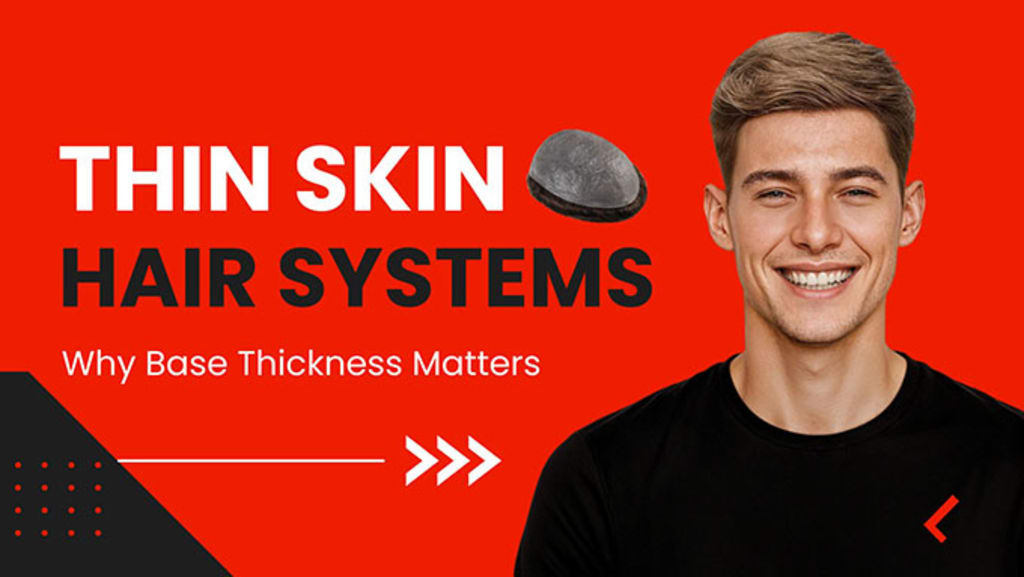
What is the best option for 0.03mm vs 0.06mm thin skin? I'm comparing brands before buying.
Choosing between 0.03mm and 0.06mm thin skin comes down to a clear trade-off. The thinner base gives you a much less noticeable hairline, but the thicker option handles regular wear a lot better. Base thickness impacts durability, upkeep, and your total value. Here's how to pick the Ultra-Thin Skin base that actually fits your routine.
Key Takeaways
A 0.03mm base suits exposed styles where an undetectable hairline matters most.
A 0.06mm base suits durable daily wear.
Neither polyurethane base provides true breathability during heat or heavy sweating.
A 0.03mm base requires slow adhesive removal to prevent tears.
Annual replacement frequency determines which base offers better long-term value.
Quick Verdict: 0.03mm vs 0.06mm Thin Skin Summary
Go with the 0.03mm thin skin if getting an undetectable hairline is your absolute top priority. The thinner Polyurethane (PU) base hugs right against your skin. That means the front edge is much harder to spot. It's perfect for occasional wear, photoshoots, or anyone totally fine with handling a more delicate base.
Pick the 0.06mm option if everyday wear matters to you more than having the most natural hairline possible. That little bit of extra thickness makes the base much tougher for your daily routine. But yes, the hairline might be slightly easier to see if someone looks really closely. When you're weighing durability against realism, the 0.03mm wins on realism. The 0.06mm takes the prize for durability. Simple.
Physical Characteristics: Tactile Feel and Material Thickness
Base thickness changes what you actually feel on your scalp and how well the PU edge blends in. At 0.03mm, the Polyurethane (PU) base feels almost like a thin film. Bump it up to 0.06mm, and it holds a bit more shape.
Neither one feels bulky. But you'll definitely notice the difference when bending the material or touching the front hairline.
What Does 0.03mm Ultra-Thin Skin Feel Like?
The 0.03mm Ultra-Thin Skin base feels super light and flexible right against your scalp. It bends smoothly whenever your skin moves. Plus, there's hardly any stiffness when you press or fold it.
That razor-thin profile keeps the front edge hidden, even up close. Since there's barely any material between the hair and your head, the base looks incredibly clear. This is great for an exposed hairline.
The catch? It's pretty delicate. You'll need to handle this base thickness with care during attachment, removal, and your everyday routine.
What Does 0.06mm Super Thin Skin Feel Like?
A 0.06mm Super Thin Skin Polyurethane (PU) base still feels thin, but it packs a firmer, denser texture than the ultra-thin version. You can actually feel the extra material when running a finger across it or flexing it in your hands.
This extra body helps the whole thing hold its shape while you handle it. It doesn't feel heavy at all. Still, the front edge might show up a tiny bit more than a thinner PU base if your hairline is totally exposed.
For a lot of daily wearers, that added structure makes the 0.06mm option feel a bit more solid. And it does this without feeling bulky on your head.
Technical Spec Comparison: Realism, Durability, and Breathability
A 0.03mm PU base gives you the least noticeable front edge. Meanwhile, the 0.06mm option adds a bit more material for firmer handling. Both are non-porous polyurethane membranes. That means neither one breathes like an open base.
The choice really comes down to durability versus realism. A thinner edge blends easily, but a thicker base isn't quite as delicate.
Hairline Undetectability and Visual Realism
A 0.03mm base usually gives you a more undetectable hairline. Why? Its edge sits closer to your scalp. If you wear an exposed style, there's less polyurethane for the light to catch. This helps the natural front hairline look completely seamless.
A 0.06mm base can definitely still look natural, especially if your hair covers or partly hides the front edge. But its extra thickness might be a bit more noticeable up close. This is especially true if you leave the hairline fully exposed.
Visual realism also relies on a clean attachment. Lifting tape, trapped moisture, or a badly placed front edge will make either thickness completely visible. No exceptions.
Lifespan and Base Durability Expectations
A 0.06mm PU base handles regular attachment and removal much better than a 0.03mm base. It's got twice the material thickness. This added structure fights off stretching and makes the base easier to deal with every day.
But a 0.03mm system needs much gentler handling. Pulling at the edge, ripping off tape too fast, or aggressively scrubbing the adhesive will ruin that ultra-thin membrane way sooner.
We can't give a fixed 2026 replacement schedule without validated wear data for your specific system. Just check the base before every reattachment. Look out for thinning, tears, edge lifting, or any spots that don't lay flat anymore.
Breathability and Heat Performance
Neither the 0.03mm nor the 0.06mm polyurethane offers true breathability. PU just doesn't have ventilation holes. Because of this, sweat and heat stay trapped closer to your scalp than they would with an open base.
The 0.03mm membrane puts less material against your skin, so it might feel a little lighter. Still, that slight difference doesn't magically turn it into a breathable base. If you sweat heavily or live in a hot climate, expect ongoing scalp heat and sweat under either PU option. That's just how it is.
Ventilation Techniques: V-Looping vs Injection and Knotting
Base thickness decides how well a polyurethane hair system holds onto each hair. A 0.03mm membrane usually needs V-Loop Technology. On the flip side, a 0.06mm super thin skin base can handle V-loops, split knots, or Injection Technology.
These methods change how the hairline looks and how the base holds up to everyday wear.
Why 0.03mm Bases Rely on V-Loop Technology
At 0.03mm, the polyurethane membrane is just too fragile to handle normal knots without making a visible bump or stressing the base. V-Loop Technology skips all that bulk. Each hair gets pulled right through the skin and folded back. It creates a loop instead of a tied knot.
This flat setup keeps the front edge hard to spot when you style your hair away from your face. It gives you a really natural frontal hairline. But here's the catch: there isn't much grip around each loop. Pulling, brushing hard at the roots, or taking the system off roughly can loosen the hair or ruin that super thin skin.
Why 0.06mm Bases Offer Greater Ventilation Flexibility
At 0.06mm, the Super Thin Skin base has enough material to handle a few different attachment styles. You can use V-loops for a flatter look, split knots when you need a tied anchor, or Injection Technology. That last one sets the hair right into the polyurethane so it looks like it's growing straight out of your scalp.
This extra thickness gives makers more room to lock the hair down without relying on just one trick. But that doesn't mean every option looks or lasts exactly the same. You'll want to check the hairline and density before making a choice. The ventilation style completely changes how the roots look and how much handling the base can actually take.
Maintenance Reality: Base Tearing Risks and Cleaning Demands
Cleaning is where that thickness difference really matters. A 0.03mm base needs slow, careful adhesive removal. But the 0.06mm Super Thin Skin gives home users a bit more material to grab onto.
Both bases need regular Maintenance & Cleaning. The safest choice really just comes down to how confident you are at removing tape or glue without pulling too hard. Simple.
Cleaning and Adhesive Removal for 0.03mm Ultra-Thin Skin
A 0.03mm Ultra-Thin Skin unit can easily tear if the adhesive is still gripping the base. Take your time. Just lift a tiny edge, hold the polyurethane close to that spot with your fingers, and work the glue loose in short sections. Don't pull the whole thing straight up. And definitely don't scrape the membrane or yank on the V-looped hair.
When you're doing Maintenance & Cleaning, keep the base flat on a solid surface while clearing off the old residue. Use your adhesive remover exactly as directed. If you applied Ghost Bond Platinum, just follow the label instructions before washing. Gently rinse away the remover and any leftover glue, then let the base air dry. Don't twist or stretch it.
Why 0.06mm Is the Ideal DIY Maintenance Sweet Spot
The 0.06mm Super Thin Skin is usually a lot easier for DIY Maintenance & Cleaning. Why? The firmer polyurethane edge is just simpler to hold and keep flat. Beginners can work in small sections, easily spot leftover glue, and avoid accidentally folding the base during the cleanup.
Always use a clean, solid surface. Clear away the residue in stages instead of trying to rush through the entire base all at once. Let the remover do its job, wipe everything gently, and double-check the edges before you put it back on.
This thickness hits the perfect middle ground. It's thin enough to give you a natural, low-profile look, but it's way easier to handle than an Ultra-Thin Skin base when you're doing routine home care. That's it.
Financial Breakdown: Annual Cost-Per-Day Analysis
If a 0.03mm option lasts one month, you'll need 12 hair systems a year. But a 0.06mm option swapped out every three months only requires four. When it comes to Non-Surgical Hair Replacement, this schedule is what really drives your yearly spending.
The yearly break-even point is pretty straightforward. The 0.06mm unit can cost up to three times more than the 0.03mm version before your annual hair-system budget evens out. Simple.
Just run the numbers based on the sticker price. You're looking at 12 times the cost of a 0.03mm unit versus four times the 0.06mm unit. If they both cost exactly the same, replacing them quarterly means buying eight fewer units a year. Keep in mind, this breakdown doesn't factor in extra expenses like adhesives, salon fittings, or delivery.
Lifestyle Considerations: Heat, Sweat, and Exercise
If you work out a lot, sweat heavily, or hit the sauna, you'll usually get more life out of a 0.06mm skin base compared to a 0.03mm one. The thicker option just makes sense when durability beats having the absolute lightest feel.
Sure, a 0.03mm base feels barely there. But constant moisture and frequent cleaning will definitely cut its lifespan short. When you're dealing with a full skin base, breathability isn't actually the main issue. It's really all about managing sweat and keeping a secure hold. Ghost Bond Platinum might fit right into your routine. Just make sure to follow the instructions, and take the system off if your scalp gets irritated. Also, always dry both the base and your scalp completely after a workout or a sauna session.
Buyer Decision Profiles: Choosing Based on Lifestyle and Budget
Your base thickness needs to match how you actually wear your non-surgical hair replacement, not just how good it looks in a product photo. If you're weighing durability against realism, 0.03mm and 0.06mm skin bases handle completely different daily needs.
Go with 0.03mm if you want the least noticeable hairline. But if a solid balance matters more, 0.06mm is your best bet.
The Perfectionist: Prioritizing Maximum Realism
If you regularly show your forehead or style your hair pushed back, you'll want to lean toward the 0.03mm ultra-thin skin. The big draw here is an undetectable hairline. When the front is exposed, this base leaves the smallest possible visible edge.
It's perfect for anyone who treats realism as a dealbreaker and doesn't mind dealing with a more delicate base. Front placement, hair direction, and how you apply the adhesive all matter. Why? Because an ultra-thin edge can't hide poor positioning. A 0.03mm base is built for appearance-focused wear, not for someone looking for a rugged, forgiving daily option.
The Practical Wearer: Prioritizing Longevity and Value
The 0.06mm super thin skin is great for wearers who want a natural-looking base but don't make realism their single biggest priority. When looking at the trade-off between durability and looks, it puts lifespan slightly ahead of that near-invisible edge 0.03mm buyers chase.
Pick this thickness for regular wear if you're after better day-to-day value. Of course, your attachment method, how active you are, and general handling still affect how well the base holds up. For value-focused buyers, 0.06mm hits that practical middle ground between a natural look and a much tougher skin base.
Pre-Purchase Checklist for Thin Skin Systems
Before you buy a thin skin system, make sure the base thickness fits your styling habits and how careful you are with handling. When it comes to non-surgical hair replacement, 0.03mm and 0.06mm skin bases aren't interchangeable. The thinner option gives you a front edge that's much harder to spot. But the thicker one balances things out with better daily durability.
Think about whether you show your forehead, wear the system regularly, and can apply the front with care. Go with 0.03mm when the hairline is your biggest priority. Pick 0.06mm if you want a natural look but need it to hold up better day-to-day. Just double-check the listed Base Thickness before placing your Lordhair order. That's it.
Lordhair Thin Skin Options and Selection Guide
Lordhair gives you two thin skin base thicknesses, depending on what matters most for your hair system. The 0.03mm Ultra-Thin Skin option is all about giving you an invisible front edge. But if you go with the 0.06mm Super Thin Skin, you trade a tiny bit of that delicate look for a lot more everyday durability.
Go with the 0.03mm base if you like to show off your hairline and don't mind handling the piece gently when you put it on or take it off. Need something a bit tougher? Choose the 0.06mm version. It still looks totally natural but handles regular wear much better. Just double-check the base thickness before ordering, keeping your usual hairstyle, daily maintenance routine, and wear habits in mind.
Frequently Asked Questions About Thin Skin Hair Systems
What is the difference between 0.03mm and 0.06mm thin skin systems?
0.03mm looks more invisible at the hairline but tears easier. 0.06mm is tougher for daily wear; neither PU base truly breathes.
What are thin skin hair systems?
They're non-porous polyurethane hair bases bonded to the scalp. Easy to clean, realistic up front, but sweaty workouts expose their lack of breathability.
Which hair system base is the most natural looking?
0.03mm ultra-thin skin. Its front edge is hardest to detect, especially with exposed or swept-back hair. Handle it gently.
About the Creator
Leo
Passionate men's hairstylist with a keen eye for detail and a knack for creating on-trend looks. Dedicated to delivering hair restoration education that enhances individual style.
Enjoyed the story? Support the Creator.
Subscribe for free to receive all their stories in your feed.
Comments
There are no comments for this story
Be the first to respond and start the conversation.