
What Is Niche Fragrance? The Art Beyond the Mainstream
A practical guide to the creativity, craftsmanship, and individuality that set niche perfume apart.


“Niche” is one of the most frequently used—and misunderstood—words in modern perfumery. It appears beside limited releases, unfamiliar house names, elaborate bottles, and high price tags. Yet none of those qualities alone makes a fragrance niche.
Traditionally, the term described independently owned houses built primarily around perfume rather than a wider fashion or beauty business. Their smaller scale often gave founders and perfumers more freedom to pursue unusual ideas without needing to appeal to the broadest possible audience.
As the fragrance industry grew, that definition became less precise. Independent houses expanded, larger groups acquired niche brands, and designer labels introduced experimental private collections. Today, niche describes a creative position as much as a business model.
This distinction matters because niche is not an automatic guarantee of quality. A fragrance does not become more artistic simply because it is expensive, difficult to find, or filled with unfamiliar notes. What deserves attention is the clarity of its idea, the way its materials support that idea, and how convincingly the composition develops on skin.
Understanding those qualities makes niche fragrance easier—and far more rewarding—to explore.
What Does Niche Fragrance Actually Mean?
Unlike terms such as eau de parfum or extrait de parfum, “niche” is not a technical classification. There is no universal requirement based on ownership, price, production volume, or distribution that a fragrance house must satisfy.
It is better understood as a position within perfume culture.
Historically, niche houses tended to be independent, fragrance-first businesses created for a smaller audience. Without fashion, makeup, accessories, or celebrity licensing at the center of the business, scent carried the identity of the house. This often created space for unusual briefs, distinctive visual worlds, and collections that did not need to resemble the current bestseller.
That picture is less tidy today. Some niche houses have grown into global names, while designer brands have introduced private collections with the artistic ambition and selective distribution commonly associated with niche perfumery. Terms such as independent, artisanal, and niche now overlap, but they are not interchangeable.
The most useful question is not whether a brand passes a strict “niche test.” Instead, consider whether fragrance is treated as the house’s main creative expression rather than simply another product category.
A coherent house usually reveals its perspective through more than one release. The compositions, names, bottles, materials, and stories begin to form a recognizable world. That clarity of vision—not obscurity alone—is what makes a niche house worth exploring.

Niche vs. Designer Fragrance: Is One Better?
Perfume discussions often create an easy hierarchy: designer fragrances are described as commercial, while niche fragrances are assumed to be artistic. Neither description tells the complete story.
A designer fragrance comes from a house whose identity extends beyond scent, often into fashion, jewelry, accessories, or cosmetics. A niche house has traditionally built its identity primarily around fragrance. This distinction provides useful context, but it does not measure quality.
Designer releases often operate at a larger scale and are intended to reach a wider audience. Niche perfumery developed through smaller houses that could sometimes take risks outside mass-market expectations. Today, however, the boundary is porous. Independent houses become global names, larger groups acquire niche brands, and designer houses create selective collections with ambitious creative direction.
Authorship makes the comparison even less straightforward. Many perfumers work across both worlds, creating widely available launches as well as experimental compositions for smaller houses. The name on the bottle cannot reveal how original the brief was, how much freedom the perfumer received, or how carefully the idea was developed.
A fragrance is better judged by the clarity of its concept, the balance of its structure, its development on skin, and whether it earns another wear. A label can explain where a perfume sits in the market. It cannot determine what that perfume will mean to the person wearing it.
Creative Freedom Is Only Part of the Story
The romantic image of a perfumer working alone and following nothing but instinct leaves out much of what happens behind a finished fragrance.
Creation often begins as a conversation. A founder or creative director brings an idea, and the perfumer begins translating it into scent. Evaluators and technical specialists may also take part, helping assess and refine the formula for its intended use.
The starting point can be surprisingly abstract. It might be a place, a memory, the texture of a material, or the tension between two moods. The first formula is rarely the final one. Proportions shift, materials are reconsidered, and promising directions may be abandoned before the central idea becomes clear.
Revision is not a retreat from creativity. It is part of the craft.
Natural and synthetic ingredients both belong to that process. Natural extracts can offer complex profiles drawn from flowers, woods, resins, spices, and other sources. Synthetic aroma materials can extend those effects, improve consistency, or create facets that would otherwise be rare, unstable, or impractical to obtain. Modern perfumery depends on the possibilities created by using both.
For the wearer, craftsmanship is usually easier to experience than to identify. It appears in an opening that has purpose, transitions that feel connected, and a drydown that still carries the original idea. An unusual note list may attract attention, but it cannot demonstrate craftsmanship on its own. The composition has to do that.
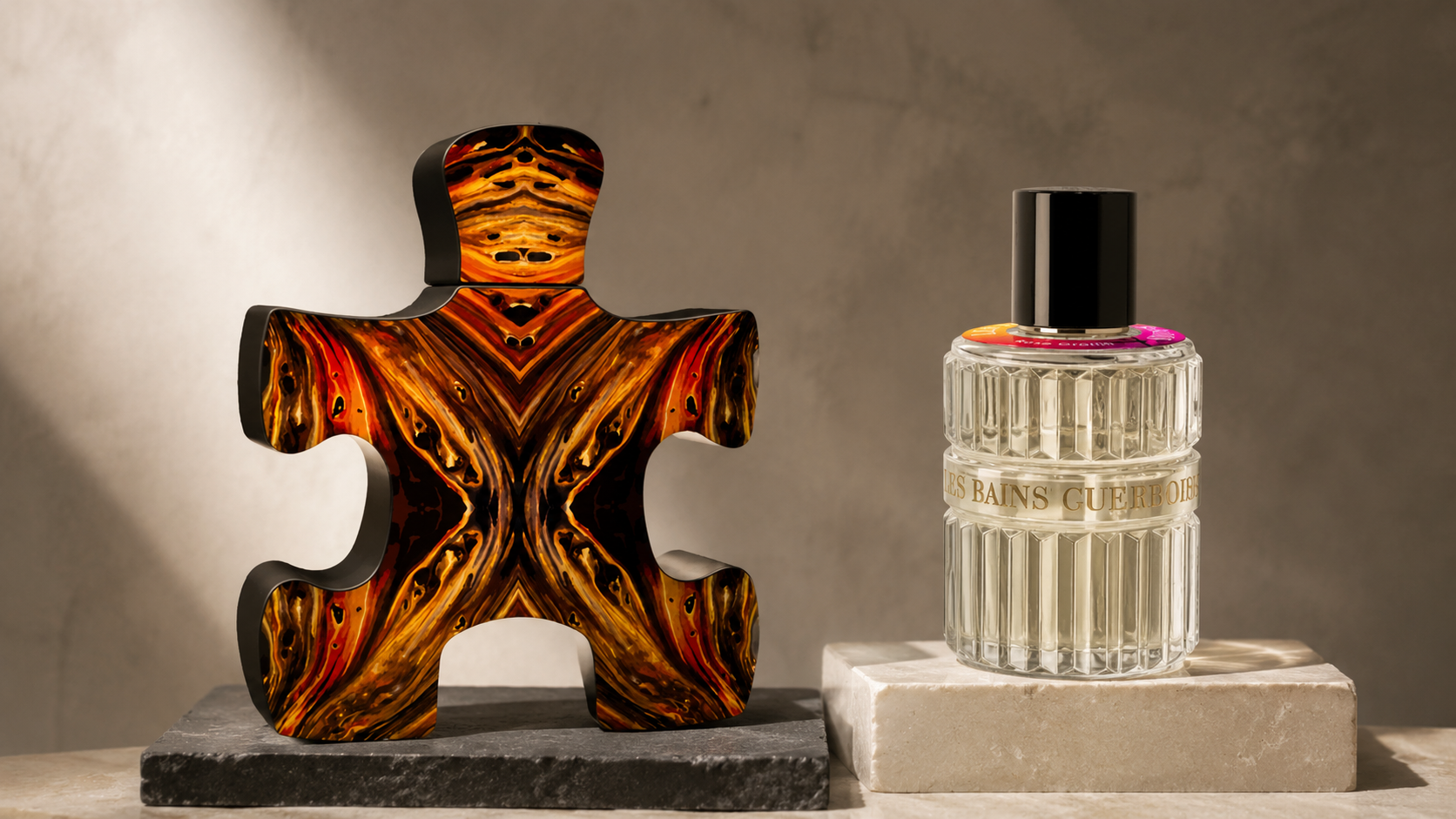
How to Judge a Niche Fragrance
A good niche fragrance does not need to be strange, loud, or challenging. Some are deliberately minimal, familiar, or easy to wear. What matters is whether the creative choices feel intentional.
Begin with the central idea. Can you sense what the fragrance is trying to express, even if you interpret it differently from the official description? A clear idea might appear through a recognizable material, a particular atmosphere, or an unexpected contrast.
Next, pay attention to development. Notice whether the opening, heart, and drydown feel connected. Dramatic changes are not required, but each stage should contribute something to the composition rather than feeling disconnected.
Finally, consider the experience of wearing it. Performance is not simply a contest to determine which fragrance lasts longest or projects furthest. A quiet fragrance may accomplish exactly what its creator intended. The better question is whether its presence suits the idea and whether you want to experience it again.
Personal preference remains essential. A technically impressive fragrance may still be wrong for you, while a simpler composition may become something you reach for constantly. Appreciation and ownership are not the same decision.
How to Explore Niche Fragrance Without Feeling Overwhelmed
The size of the niche fragrance world can make discovery feel like a research project. It does not have to.
A useful starting point is what you already enjoy, described through sensations rather than brand names. Do you prefer brightness or warmth? Transparency or density? Dry woods, clean musk, green leaves, smoke, spice, or sweetness? These questions provide more direction than searching for the bottle receiving the most attention online.
Fragrance notes can help, but they are signposts rather than a complete recipe. Two perfumes that both list vanilla, rose, or sandalwood may smell entirely different because of their proportions, supporting materials, and overall structure. Read the story and note list for context, but do not expect them to predict every stage of the fragrance.
Whenever possible, sample before choosing a full bottle. A blotter provides an initial impression, but skin reveals how the composition develops over time. Give it several hours and, ideally, return to it on another day. The opening may be memorable, but the heart and drydown reveal whether the fragrance truly fits into your life.
It also helps to explore in small groups. Try several fragrances from one house or compare different interpretations of the same fragrance family. Keep simple notes about what you noticed, what changed, and whether you wanted to smell it again.
The goal is not to memorize every ingredient or follow every release. It is to build your own vocabulary and recognize your own taste.
What to Look for When Buying Niche Fragrance Online
Buying fragrance online requires a different kind of attention.
A clear product page should make it easy to confirm the fragrance’s complete name, concentration, bottle size, condition, and other important product details. This matters because collections may contain several fragrances with similar names, bottles, or editions.
Trust should come from transparency rather than price alone. Look for an accessible customer service channel, consistent product information, a clear authenticity policy, and published shipping and return terms. If something important remains unclear, ask before purchasing.
A retailer should also explain how it approaches sourcing and authenticity instead of relying only on vague claims. One example is BeautyLIV’s authenticity information, which outlines the retailer’s position for customers researching a purchase.
These checks cannot tell you whether you will personally enjoy a fragrance, but they can help you make the purchase with clearer expectations.
The Point of Niche Is Discovery
Niche fragrance is valuable not because it is automatically rarer, stronger, or better. Its value lies in its ability to expand the way we experience perfume.
At its best, niche perfumery asks us to slow down, notice the details, and connect scent with a place, material, memory, or idea. It gives perfumers and creative directors room to follow perspectives that may not be designed for everyone.
Discovery does not require rejecting designer perfumery, chasing the most unusual bottle, or collecting every popular release. The right fragrance is simply the one you genuinely want to keep experiencing.
Disclosure: BeautyLIV is the fragrance retailer behind this educational guide. The article was developed with AI assistance and reviewed and edited before publication.
About the Creator
BeautyLIV
BeautyLIV is an NYC-based destination for curated niche fragrances. We explore the artistry, craftsmanship, and stories behind distinctive perfume houses and unforgettable compositions.
Discover more: https://www.beautyliv.com/
Enjoyed the story? Support the Creator.
Subscribe for free to receive all their stories in your feed.
Comments
There are no comments for this story
Be the first to respond and start the conversation.