
Understanding Spider Veins: Causes, Prevention, and Modern Treatment Options
Spider Veins
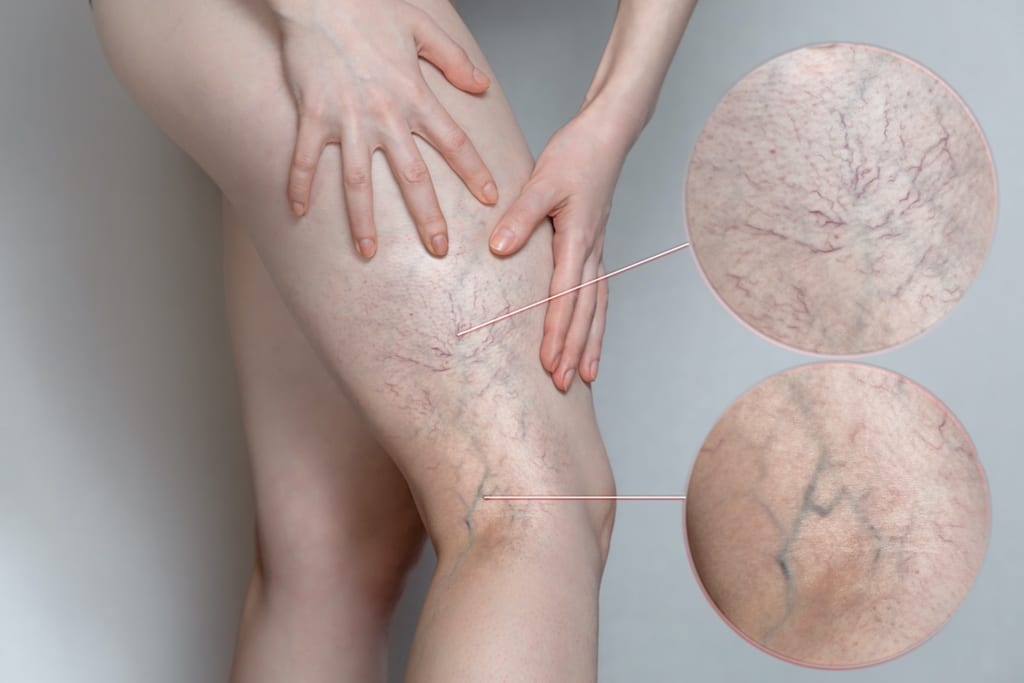
For millions of people, tiny webs of red, blue, or purple lines spreading across the legs or face are a familiar sight. Commonly known as spider veins, or telangiectasias, these small, dilated blood vessels sit close to the surface of the skin (Beneat, 2026). While they are typically harmless and primarily considered an aesthetic concern, they can sometimes cause mild discomfort, such as a dull ache, throbbing, or a heavy sensation in the legs.
If you are looking to clear your skin and improve your vascular health, understanding how these veins form and exploring modern spider veins treatment options can help you make an informed decision.
What Causes Spider Veins?
To understand how to treat spider veins, it helps to know why they appear. Our veins carry blood back to the heart. To prevent blood from flowing backward, these vessels rely on tiny, one-way valves. When these valves weaken or become damaged, blood can struggle to move upward, causing it to pool inside the vessel (Beneat, 2026).
Over time, the increased localized pressure causes the tiny capillaries to expand and become visible through the skin. Several factors increase the likelihood of developing them, including:
Genetics: A family history of venous insufficiency is the strongest predictor.
Prolonged Standing or Sitting: Occupations that require staying in one position for hours restrict healthy blood flow.
Hormonal Fluctuations: Changes during pregnancy, menopause, or the use of hormonal medications can weaken vein walls.
Age and Sun Exposure: As skin thins and loses elasticity over time, underlying vessels become more visible.
Leading Scientific Options for Spider Veins Treatment
Modern dermatology and vascular medicine offer highly effective, minimally invasive treatments that require little to no downtime. Because spider veins lack a substantial impact on the body’s overall circulation, safely closing them allows the body to reroute blood flow naturally through deeper, healthier veins (Rabe et al., 2013).
The primary clinical procedures utilized by specialists today include:
### 1. Injection Sclerotherapy
Sclerotherapy remains the universally recognized gold standard for treating spider veins and reticular (blue feeder) veins on the legs (Beneat, 2026; Tholen, 1997).
The Procedure: A medical professional uses an ultra-fine needle to inject a mild chemical solution—known as a sclerosant—directly into the targeted vessel (Khunger & Sacchidanand, 2011). Commonly used solutions include polidocanol or sodium tetradecyl sulfate (Khunger & Sacchidanand, 2011).
How It Works: The solution irritates the inner endothelial lining of the blood vessel, causing it to swell and stick together (Beneat, 2026). The vein eventually collapses, transforms into a harmless strand of scar tissue, and is naturally reabsorbed by the body over several weeks (Khunger & Sacchidanand, 2011).
What to Expect:The procedure takes roughly 30 to 45 minutes. While highly effective, it typically requires wearing supportive compression stockings for a short period afterward to optimize healing and keep the treated vessel walls compressed (Yang, 2026).
2. Laser and Light-Based Therapies
For very tiny spider veins or those located on delicate areas like the face, surface-level laser treatments are highly effective alternatives.
The Procedure: A specialized vascular laser or Intense Pulsed Light (IPL) device applies targeted wavelengths of light directly over the skin.
How It Works: The energy from the laser is selectively absorbed by the hemoglobin in the blood, heating the vessel without damaging the surrounding skin tissue (Tholen, 1997). This heat causes the vein to clot and gradually fade away.
What to Expect: Laser therapy is popular because it requires no needles or chemical injections. However, it is generally best suited for the smallest capillaries, and achieving complete clearance may take multiple sessions spaced a few weeks apart.
About the Creator
Enjoyed the story? Support the Creator.
Subscribe for free to receive all their stories in your feed.
Comments
There are no comments for this story
Be the first to respond and start the conversation.