
The Ultimate Guide to Choosing Your First Men's Wigs
An essential guide to buying your first men's wig

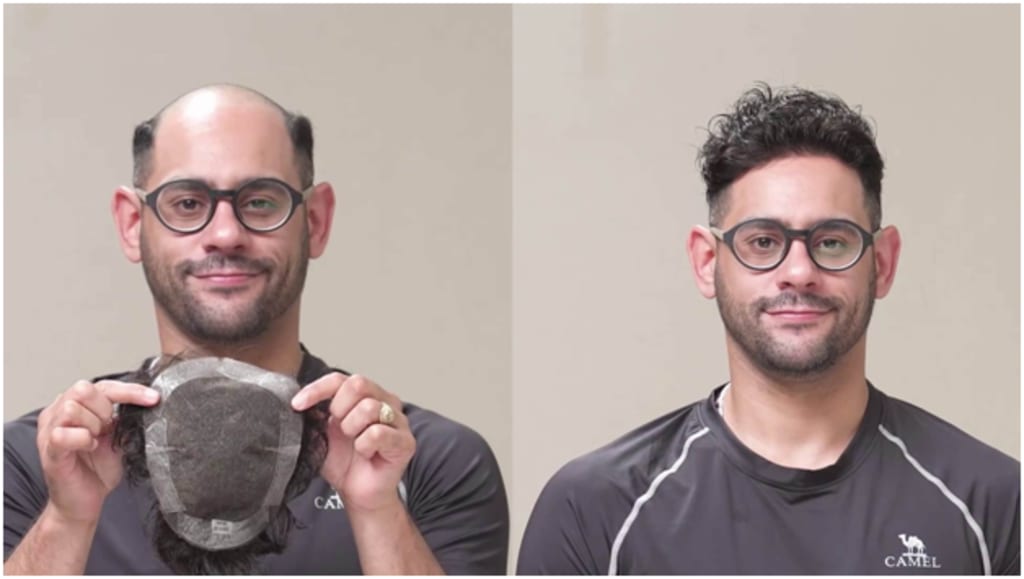
The Ultimate Guide to Choosing Your First Men's Wigs
Men’s wigs, now called hair systems, are modern, high-end solutions built to restore your identity and confidence—they don't just cover up hair loss. Today’s custom options look incredibly natural, hold securely, and fit right into your lifestyle. But the real shift isn’t just physical. It’s mental. Before you buy, you’ll need the right mindset and a clear, practical game plan.
Key Takeaways
- Opt for lace front caps for the most realistic hairline, using human hair for styling or synthetic for easy maintenance.
- Prevent a fake look by choosing medium-light density (90%–110%) and perfectly matching the color to your natural sides.
- Select attachments based on lifestyle: waterproof adhesives for active routines, or tapes for low-sweat convenience.
- Position the hairline four fingers above your eyebrows and always get a professional barber "cut-in" to blend the system.
- Budget beyond the initial purchase, expecting $400–$1,200 annually for replacements, adhesives, and care products.
Understanding the Modern Hair System: More Than Just a Wig
A modern hair system isn’t just a disguise. It's an essential grooming tool for guys dealing with Male Pattern Hair Loss. High-end systems from brands like Lordhair are built to blend in with your natural look, not stand out. That usually gets rid of the biggest fear guys have: getting noticed. When it fits right and matches your personal vibe, it just becomes part of your routine. Almost like getting a fresh haircut. The real payoff here? Much stronger self-confidence in your everyday life. But getting there starts with one major choice—the material.
Human Hair vs. Synthetic Fibers: Which is Right for You?
Deciding between Human Hair vs. Synthetic Fibers really comes down to realism versus daily maintenance. Real human hair looks totally natural under any lighting. Plus, you can style it with hot tools just like your own hair. You'll just need to keep up with regular washing and conditioning to maintain its shape and softness.
On the flip side, synthetic fibers hold their style way longer. Even right after a wash. That makes them a pretty solid choice for beginners. You can find Heat-friendly synthetic options that allow for a little bit of styling, but they still won't quite match the natural flow and movement of real hair.
The route you pick sets your expectations for daily care. And if you go the human hair route, that leads straight into the specific type you'll wear.
The Nuances of European vs. Asian Human Hair
European Human Hair is distinctly finer and a lot softer. This helps it blend flawlessly with lighter, thinner hair types. People often consider it a premium option thanks to that ultra-natural look and its limited supply.
Then you have Asian Human Hair, which is noticeably thicker and stronger. It holds onto fresh styles incredibly well and usually lasts much longer through daily wear and tear. You might just need some processing upfront so it matches up with finer textures.
Both options look incredibly natural if you customize them right. The real difference just boils down to texture and durability. Those are details that tie directly into how the cap construction performs right underneath everything.
Engineering Realism: Choosing Your Cap Construction
Cap construction makes or breaks how natural your system looks and how comfortable it feels all day. The base materials sit right on your scalp, controlling airflow, heat, and how the hair actually appears to grow. A dense base traps heat, while a lighter one just melts into your skin. Get it wrong, and even premium hair looks completely fake. Get it right, and it blends right in. It all starts with the top choice for realistic hairlines.
Why Lace Fronts are the Gold Standard for Men's Hairlines
A lace front builds a soft, faded hairline that looks just like real growth. Every single strand is hand-tied into a sheer mesh. Because of that, the hair gets thicker gradually instead of just hitting a harsh, obvious edge. That subtle transition is exactly what delivers a genuinely Natural look.
The lace itself is super thin and breathes well, helping it sit totally flat. Apply it correctly, and it practically vanishes. Yes, even right up close. That's exactly why high-end systems, including the ones from Lordhair, lean heavily on lace fronts to keep things looking real.
So, how does lace actually compare to skin-style bases?
Skin Bases and Monofilament: Durability vs. Undetectability
A skin base relies on a very thin polyurethane layer meant to look exactly like your scalp. Hair gets injected or looped into it, giving you a “second skin” vibe with a very sharp, clean hairline. It's easy to stick on and taking care of it is a breeze, but it definitely won't breathe as well as lace.
Monofilament bases go a slightly different route. They use a tougher mesh that lets you style your hair in multiple directions, and they hold up incredibly well over time. You basically trade a tiny bit of invisibility for a lot more durability.
Picking between these isn't about finding the "best" material. It's simply about your day-to-day lifestyle.
The Lordhair Lifestyle Match: Selecting a System for Your Routine
Your daily routine needs to drive your Hairpieces choice, rather than passing trends. Because Lordhair systems are built for different lifestyles, finding the exact right match keeps things looking natural without extra effort on your part. If you sweat a lot, your setup simply has to hold up under heat and moisture. But if you work inside, comfort and simple maintenance matter way more. Small choices right here actually dictate how real your hair looks by the end of the day. And it all starts with how you secure it.
The Athlete vs. The Professional: Choosing Your Attachment
Active guys need a Wig attachment that won’t suddenly give out mid-workout. Waterproof Adhesives create a strong, sealed bond that holds firm through sweat, showers, and long hours outside. Sure, they take slightly more time to apply and remove. But they stay put when it really counts.
Office-based routines usually lean toward Tapes. They’re faster, cleaner, and much easier to tweak every few days. You're basically trading a little bit of hold strength for daily convenience and scalp comfort, which fits perfectly in low-sweat environments.
How you attach the piece also plays a role in how natural your system looks as the weeks go by. Heavy bonding can sometimes clash with thicker styles, which leads straight into the next major decision: Hair density.
The Secret to Undetectability: Density and Color Matching
Most “wiggy” results come down to two big things: Hair density and Color matching. High density might look amazing on a 25-year-old, but on a guy who's 45, it usually looks too full and obvious. Your best bet is matching your age and natural thinning pattern. A medium-light density (90%–110%) works perfectly for most men. Color matching needs to blend completely with your existing hair at the sides, not just the top. Even a half-shade mismatch stands out in the sun. Nailing this sets the stage. But placement is what really locks in that natural look.
Where Should a Wig Sit? Measuring the Hairline and the Four-Finger Rule
Getting the placement right starts with the four-finger rule. Just place four fingers flat above your eyebrows. That usually marks a perfect front hairline for most guys. Go lower, and it looks completely fake. Go higher, and you're exposing way too much forehead. This easy trick balances your face shape and keeps the whole setup believable.
Scalp coverage is a huge deal, too. Measure right from your front hairline to the nape of your neck, and then go ear to ear across the top. This makes sure the system fits your exact head shape. A spot-on fit stops the edges from lifting and prevents weird blending. Once your numbers are locked in, your next step is mastering the “stealth transition” to hide that hairline for good.
The "Stealth" Transition: How to Debut Your New Look
A natural debut isn't about hiding forever. It's about controlling the change so nobody questions it. Try starting with discreet wear during low-stakes moments like weekends, running errands, or short meetups. Then gradually wear it more over 1–2 weeks. Keep the style close to your old look. Think same part, similar length, and a realistic hair density. This slow shift protects your self-esteem since reactions stay pretty neutral. People adjust fast when changes feel gradual instead of sudden. The last step is making the hair look like it actually grew out of your scalp. That comes down to one critical move.
The Barber Factor: Why the "Cut-In" is Non-Negotiable
A hair system rarely looks perfect right out of the box. It has to be cut, thinned, and blended into your sides by industry pros. That highlights the difference between Custom vs. Stock systems. Custom units are designed for your head, but both types still need a precise "cut-in" to match how your hair actually grows.
Barbers trained in systems remove the bulk, soften up the hairline, and align the flow with your natural hair. Skip this step, and the result might look obvious under regular room lights. Get it right, and it's completely undetectable from just an arm's length away. This stage also sets your overall expectations. After all, routine maintenance and future replacements turn into an ongoing financial commitment.
Total Cost of Ownership: Budgeting for Your Hair System
Buying a high-quality men's wig doesn’t stop at the upfront price. You'll pay a one-time tag of $200–$800 for most setups. After that? Plan on spending about $20–$40 a month on adhesive, shampoo, and styling products. Replacing an old wig usually happens every 3–6 months, entirely depending on your routine wear and care habits. So, your real yearly cost easily sits closer to $400–$1,200. You need to plan for both the initial buy and the daily upkeep. Next, you just have to choose a brand that makes the entire investment feel worth it.
Why Lordhair is the Preferred Choice for First-Time Buyers
Lordhair stands out because it helps stop beginner mistakes right out of the gate. Their Custom systems match your exact head shape, hairline, and density. This heavily cuts down the risk of looking unnatural. Simple.
Plus, they use top-tier materials that hold up great under daily wear. That means you get fewer early replacements and much more consistent styling over time.
For new buyers, this balance of fit, realism, and durability makes the learning curve so much easier. And once you’re finally set up, your focus shifts from shopping to actually maintaining the unit. This brings us naturally into a few quick FAQs.
Frequently Asked Questions About Men's Wigs
How do you measure the hairline for a men's wig?
Four fingers above your eyebrows. That is the golden rule. Wrinkle your forehead and plant the front edge right where the highest wrinkle stops. Go lower and you look like a caveman.
Can you wear a wig if you have alopecia?
Absolutely. Full cap systems cover everything. You just use medical-grade adhesive directly on the bare scalp. It actually holds better without biological hair getting in the way.
How do I match a wig to my natural hair color and texture?
Send in a physical hair sample. Photos lie. Clip a piece from your sides. Keep density medium-light at 90 to 110 percent. Anything thicker just looks like a helmet.
How often should I replace my hair system?
Every 3 to 6 months. Ultra-thin skin bases look flawless but die in 4 weeks. Thicker lace lasts half a year. Budget 400 to 1200 dollars annually for fresh units.
About the Creator
Leo
Passionate men's hairstylist with a keen eye for detail and a knack for creating on-trend looks. Dedicated to delivering hair restoration education that enhances individual style.
Enjoyed the story? Support the Creator.
Subscribe for free to receive all their stories in your feed.
Comments
There are no comments for this story
Be the first to respond and start the conversation.