
The Norwood Scale Guide: At what hair loss stage should I consider a hair system?
Norwood Scale Guide: When to Get a Hair System

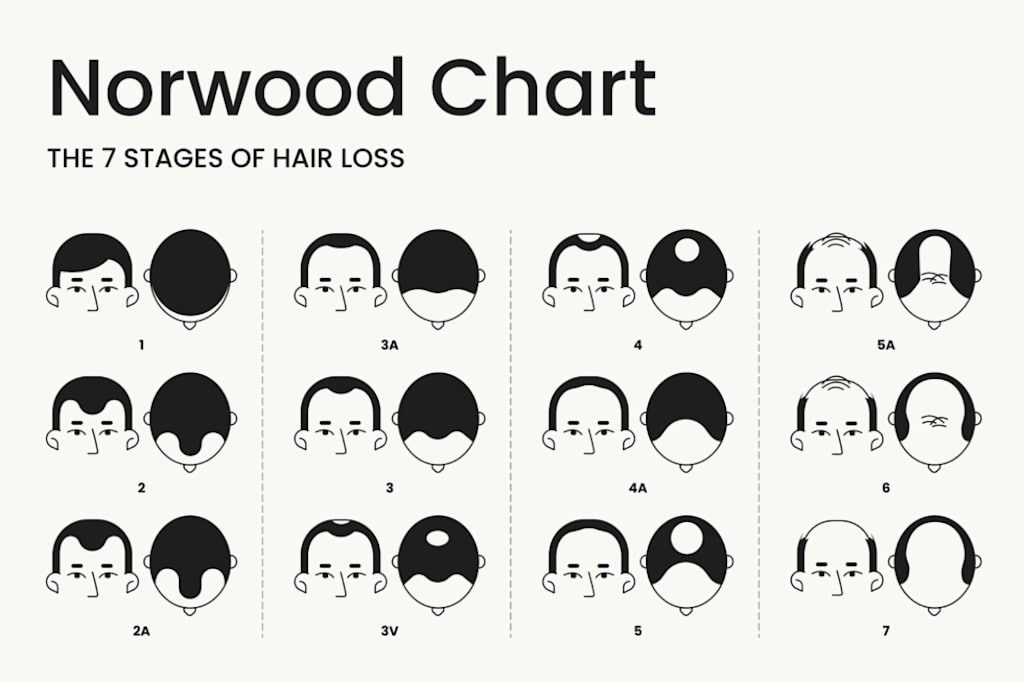
The Norwood Scale Guide: At what hair loss stage should I consider a hair system?
The Norwood Scale is the clinical standard doctors use to measure Male Pattern Baldness (MPB). Also called the Hamilton-Norwood Scale, it does more than just track a receding hairline. It also works as a clear decision-making tool, helping you know exactly when it’s time to move to a Lordhair system before waiting leads to unnecessary psychological stress.
Key Takeaways
- Transition at Norwood Stage 3 to avoid the prolonged anxiety and obvious visual shift of waiting until advanced baldness.
- Use partial hair systems for Stages 3 and 4 to seamlessly blend with your existing healthy hair.
- Choose hair systems over transplants for Stages 5 through 7 to bypass limited donor hair and achieve instant, full density.
- Embrace shaving your thinning top to ensure a secure, flush fit for the system and overcome psychological barriers.
- Evaluate your daily routine; if concealing your scalp causes constant stress or requires hats, it’s time to make a change.
Understanding the 7 Stages of Male Pattern Baldness
The Hamilton-Norwood Scale lays out the clear progression of Androgenetic Alopecia. Hair loss doesn’t just happen at random. It follows a set pattern driven by genetics and hormones. Dihydrotestosterone (DHT) binds to vulnerable follicles and slowly shrinks them over time.
This process is known as miniaturization. Thick hair turns thinner, shorter, and eventually stops growing altogether. Knowing this timeline matters so you don’t wait until the mental strain becomes too much. When you understand where you stand on the scale, you can act early instead of watching your confidence fade.
While the scale is clinical, the move from Stage 1 to Stage 3 is the key shift from “maturing” to “balding.”
Norwood Stage 1 to 2: The Mature Hairline vs. Early Recession
Telling the difference between a mature hairline and real recession isn’t always easy. Most men notice a slight change in their late teens or early twenties. A mature hairline usually moves back about half an inch from the highest forehead wrinkle. That’s normal aging, not hair loss.
But when the hairline pulls further back into the temples, you’re entering Stage 2. Some men also show the Type A Variant, where the entire front hairline moves straight back without leaving a central island of hair.
This is usually when the worry starts. A lot of men rush toward topical treatments or pills to slow the shedding. Medical treatment often begins here, but it doesn’t always stop the process completely.
Norwood Stage 3: The "Tipping Point" for Hair Loss Awareness
Norwood Stage 3 is where clinical baldness officially begins. At this point, it’s hard to blame shedding on a bad haircut or a temporary phase. The temples recede much deeper, forming a clear M-shaped pattern.
Now, the hair in the frontal area looks noticeably thinner. Many men finally see a trichologist for a proper diagnosis. This stage often hits the hardest mentally, as the reflection in the mirror looks very different from just a few years earlier.
Waiting longer only adds to the stress. You’re at a decision point. This visible thinning pushes you to choose between constant cover-ups and finding a real solution. Many start to see that a Lordhair system offers a reliable way to restore density without waiting on treatments that may not work.
When to Consider a Hair System: The Lifestyle Transition Roadmap
Moving beyond clinical scales means paying attention to your day-to-day life. A simple System Readiness Scorecard helps you track how your hair loss is actually affecting you. First, look at the stress you feel when styling your hair. Next, consider how much time you’re wasting trying to hide visible scalp. Finally, do a quick density check under harsh lighting. If your receding hairline has you wearing hats all the time, it’s probably time for a change.
Medical treatments can take months just to show small results. A Lordhair system gives you instant coverage, so you can take control of your appearance right away. This shift moves your focus from hiding to actually living. Now, let’s break down the specific stages where switching to a hair system gives you a better return than endless clinic visits.
Why Norwood Stage 3 Vertex and Stage 4 are the "Confusion Zones"
These middle stages leave men stuck in a frustrating in-between. You still have enough hair to recognize yourself, but not enough to style it how you want. At Stage 3 Vertex, a clear bald spot starts forming at the back of your head. By Stage 4, heavy temple recession meets that thinning crown, leaving just a weak strip of hair across the top.
This kind of partial loss wears you down emotionally. You spend way too much time using concealer powders and careful comb-overs just to hide it. The mirror doesn’t feel honest, but shaving everything off feels like too much. So you stay stuck.
You don’t need to shave your whole head to fix this. Modern options are built to match exactly what you need. Small, targeted partial units blend into your existing sides and back without issue. These systems fill in the gaps, giving you a strong hairline without replacing the healthy hair you still have.
The Psychological Impact of Waiting Until Norwood 6 or 7
Putting this decision off often leads to serious hesitation. A lot of men wait until they reach the final stages of hair loss before doing anything. By Norwood 6 or 7, only that horseshoe-shaped hair around the sides remains.
Waiting that long actually makes things harder. If you go from nearly bald on top to a full head of hair overnight, people notice. It’s the exact kind of attention most want to avoid. And the longer you deal with advanced loss, the more it starts shaping your daily social behavior.
Acting earlier keeps things more subtle. But even if you’ve waited, a premium Lordhair system still gives you an instant boost in confidence with full density restoration. You can wipe away years of aging and step back into your life without constantly trying to hide.
Comparing Solutions: Hair Systems vs. Transplants by Stage
Choosing between a hair transplant and a non-surgical system really comes down to one thing. Simple math. A transplant moves existing hair from the back of your head to the front. But you only have a limited supply of that donor hair. Once you run out of grafts, surgery just isn’t an option anymore. Medical therapy might slow the loss, but it rarely brings dead follicles back.
Both clinical paths take months before you see even small changes. Systems skip these biological limits entirely and give you full control over how you look. When your natural donor supply runs dry, surgery stops being realistic. So understanding your exact stage of loss matters before you commit physically and financially.
Why a Lordhair System Beats a Transplant for Norwood 5-7
Severe hair loss calls for a completely different approach. At Norwood stages 5 through 7, a transplant usually can’t deliver the density you expect. Covering a fully bald crown and hairline takes a huge amount of hair, but your donor supply is already stretched thin. Surgeons work within a strict graft limit. Push past that, and the back of your head can end up looking patchy.
A Lordhair unit ignores those biological limits. You get instant, unlimited density exactly where you want it. Instead of waiting 12 months for thin results from an expensive surgery, you walk away with a full head of hair in about an hour.
This also changes your financial risk in a big way. Surgery asks for a massive upfront cost, often over $10,000, with no guarantee the transplanted follicles will survive. A Lordhair system works on a more predictable ongoing cost instead. You get reliable aesthetic results right away, which makes the cost-benefit clearly favor non-surgical options at this stage.
The "Partial System" Advantage for Norwood 3-4
You don’t need a full-head piece if your thinning is moderate. Norwood 3 and 4 usually mean a receding hairline or a thinning crown, while the sides stay thick. A partial system focuses only on those specific problem areas and leaves your healthy hair alone.
A quick density check shows where your natural hair is still strong. From there, you can match a frontal piece or top unit to your existing hair. The partial unit blends right into your natural sides. That means no shaving healthy hair and a very subtle transition.
Wearing a smaller piece also feels much lighter on your scalp. Since it only covers the top or front, it breathes more naturally with your own hair. This targeted method creates a clean, seamless base for the bonding process.
The "Honest Truth" About Shaving the Top
Getting a clean base for bonding means shaving the top. Seeing your full scalp in the mirror is terrifying for most guys. But holding onto thin strands limits how well hair replacement works. Think of the shave as a moment where you finally take control of your hair loss.
Overcoming the Psychological Barrier of the "Point of No Return"
Buzzing it all off feels like the point of no return. You've spent years hiding your hairline, and waiting too long to act just drags out that daily anxiety.
Clearing away weak hair lets a Lordhair system sit flush against your skin. That secure fit makes a big difference in your day-to-day life, letting you swim or sweat without constantly checking mirrors.
Owning this new look brings instant confidence. And with that mental hurdle out of the way, you're ready to pick the right base material.
Choosing Your First Lordhair System Based on Your Norwood Stage
Matching your Norwood stage to a Lordhair unit comes down to two choices. Norwood 3 clients need lower hair density at the front. Past Norwood 5? Go with full-coverage base materials like French lace. The right mix gives you a natural look. To lock this in, run through a quick checklist.
The System Readiness Scorecard: Is It Time?
Decision paralysis keeps men hiding under hats. Ask yourself these five questions:
1. Has your thinning sped up?
2. Is your scalp clearly visible?
3. Are concealers starting to fail?
4. Do you avoid the wind?
5. Does hair loss drain your energy?
Three "yes" answers mean you're ready. Waiting just drags out the anxiety. It's time to move to the final summary.
Conclusion: Your Norwood Stage Is a Map, Not a Sentence
Knowing your exact number on the Norwood Scale is just the starting point. It doesn’t lock in your future. Waiting for things to get worse just drags out the anxiety.
You now have a clear path to take action. Whether you're dealing with early recession or more advanced thinning, modern hair restoration puts the control back in your hands. You don’t have to live with a thinning hairline if it’s draining your daily energy.
Look at your data and choose a Lordhair solution that fits your lifestyle. Take control today and leave the hesitation behind.
Frequently Asked Questions About Norwood Stages and Hair Systems
Can you get a hair transplant at Norwood stage 4?
Yes, but it is risky. You still have donor hair. But if you keep losing native hair behind the transplant, you will need another surgery. A partial Lordhair system is often a safer, cheaper bet here.
What did Elon Musk use to regrow hair?
Hair transplants. Multiple Follicular Unit Excision surgeries. He likely combined it with Finasteride and Minoxidil to keep the rest of his native hair from falling out. Unlimited money buys the best surgeons.
Is Norwood 4 too late for medical therapy?
Usually yes for full regrowth. Finasteride and Minoxidil work best for maintaining what you have, not resurrecting dead follicles. You might get minor thickening. If you want full density at Stage 4, get a hair system.
How do I know what Norwood stage I am?
Look in the mirror. Stage 2 is a slight M-shape. Stage 3 means deep temple recessions. Stage 4 adds a bald spot at the crown. If your front and back bald spots connect, you are hitting 5.
Can you reverse advanced male pattern baldness?
No. Once follicles are dead, they stay dead. No pill or serum brings back a Norwood 6. Your only real options are a massive transplant or a full hair system for instant density.
About the Creator
Leo
Passionate men's hairstylist with a keen eye for detail and a knack for creating on-trend looks. Dedicated to delivering hair restoration education that enhances individual style.
Enjoyed the story? Support the Creator.
Subscribe for free to receive all their stories in your feed.
Comments
There are no comments for this story
Be the first to respond and start the conversation.