
The Future of Clean Beauty: Why 2026 is the Year of Herbal Hair Color Manufacturers
Herbal hair color is mostly valuable for your hair
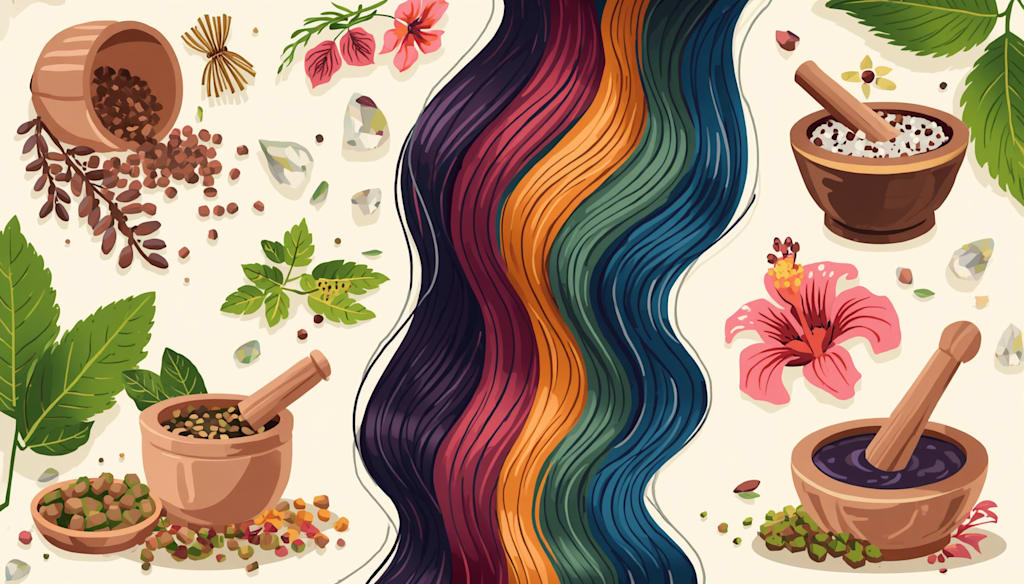
There is a quiet revolution happening in bathroom cabinets, salon backrooms, and beauty supply stores around the world. It does not arrive with loud advertising campaigns or celebrity-fronted launches. It comes in soft earthy tones, it carries the faint scent of botanicals and fresh leaves, and it has been quietly perfected over centuries of agricultural and cultural tradition. Herbal hair color is having its moment — and in 2026, that moment has officially become a movement that the global beauty industry can no longer afford to ignore.
The clean beauty conversation has been building for the better part of a decade. Consumers started reading ingredient labels on their moisturizers, then they moved on to foundations and serums, and now they have arrived at one of the most chemically dense categories in all of personal care: hair color. What they are discovering has pushed a significant and growing number of people toward a fundamentally different kind of choice — one rooted in plants, in tradition, and in a growing desire to stop treating the body as a testing ground for synthetic chemistry.
This is not a fringe movement anymore. It is not the exclusive territory of wellness bloggers or niche natural beauty communities. It is a mainstream shift with real commercial weight behind it, and understanding where it comes from — and where it is heading — tells us something important about the future of beauty as a whole.
The Long History Behind a Modern Trend
Before we talk about 2026 and market forecasts, it is worth stepping back to acknowledge something that gets lost in the noise of trend cycles: herbal hair color is not new. It is, in fact, one of the oldest cosmetic practices in recorded human history.
The henna plant — Lawsonia inermis — has been used to color hair, skin, nails, and textiles for at least five thousand years. Archaeological evidence of henna use has been found in ancient Egypt. Classical texts from India, Persia, and the Arab world reference henna as a beauty staple and a ceremonial necessity. Across South Asia, the Middle East, and North Africa, the tradition of applying henna to the body before weddings, festivals, and rites of passage has persisted without interruption from antiquity to the present day.
Indigo — the deep blue-black botanical that pairs with henna to produce darker, cooler hair shades — has an equally rich history. Used for centuries in textile dyeing across Asia and Africa, indigo's application in hair coloring is documented in Ayurvedic medical texts dating back more than two thousand years.
What is new is not the ingredient. What is new is the context. A world that spent the twentieth century enthusiastically embracing synthetic chemistry in every category of personal care is now, in the twenty-first century, doing a systematic reassessment. And herbal hair color — patient, ancient, and plant-based — is sitting right at the center of that reassessment.
What Conventional Hair Dye Does to Your Hair and Body
To truly understand the herbal hair color movement, you need to understand what people are moving away from. Conventional permanent hair dye is a sophisticated chemical system, and it achieves its results through a process that is significantly more aggressive than most users fully appreciate.
Ammonia is typically the first active agent. Its job is to swell and open the hair cuticle — the outermost protective layer of the strand — so that color molecules can penetrate into the cortex beneath. Once the cuticle is open, hydrogen peroxide goes to work, oxidizing and stripping out the hair's natural melanin pigment. Into this chemically stripped, wide-open strand, synthetic dye precursors — most commonly para-phenylenediamine, or PPD — are deposited and then oxidize into large color molecules that become trapped inside the hair.
The result is a permanent color change. But the process leaves behind a strand that has been structurally compromised. The cuticle, repeatedly forced open and then left to close imperfectly, loses its smooth alignment. The cortex, stripped of its natural pigment and filled with synthetic molecules, becomes more porous and less elastic. Protein bonds are disrupted. Moisture retention decreases.
For occasional users, these effects are manageable. For people who color their hair every four to six weeks over years or decades — which describes a very large portion of the hair color market — the cumulative damage can be significant. Chronic dryness, brittleness, breakage, and a texture that feels perpetually parched are common complaints among long-term chemical dye users.
Then there are the health concerns that go beyond cosmetic damage. PPD is one of the most common causes of contact dermatitis in hair color users. Allergic reactions range from mild scalp irritation to severe inflammatory responses requiring medical attention. Studies have examined potential links between long-term chemical dye use and certain health conditions, and while the science is still developing in some areas, the existing evidence has been enough to prompt regulatory review in multiple markets.
Finally, there is the environmental cost. Synthetic dye formulations introduce compounds into wastewater that are not easily broken down. The volume of packaging waste generated by box dye products — sold in the hundreds of millions of units annually worldwide — represents a significant environmental burden. The petrochemical origins of synthetic dye precursors add another layer of sustainability concern that environmentally conscious consumers are increasingly factoring into their choices.
What Herbal Hair Color Actually Is — and How It Works
Herbal hair color is fundamentally different in both its chemistry and its effect on hair. The core ingredient in most herbal formulations is henna powder, derived from the dried and milled leaves of Lawsonia inermis. The active dye compound in henna is a small molecule called lawsone, or 2-hydroxy-1,4-naphthoquinone, and its behavior in hair is unlike anything a synthetic dye does.
Rather than forcing its way into a chemically stripped cortex, lawsone migrates naturally into the hair shaft and forms covalent bonds with the keratin protein that makes up the hair structure. It does not require ammonia to open the cuticle. It does not require hydrogen peroxide to strip existing color. It works with the hair's natural chemistry, not against it.
The result of a well-formulated henna application is a color that does not sit on top of the hair or get forcibly deposited inside a damaged cortex — it becomes structurally integrated into the strand itself. This is why henna-colored hair often feels thicker, stronger, and more lustrous after treatment. The lawsone molecules are, in effect, adding structural reinforcement while simultaneously providing color.
But henna alone produces a limited color palette — primarily warm reds and coppers that vary in depth depending on the natural base color of the hair. This is where the botanical complexity of herbal hair color becomes interesting.
Indigo powder, derived from Indigofera tinctoria, is the primary tool for shifting henna's warm red base toward cooler tones. When henna and indigo are applied in sequence — or in some formulations, blended together — they interact to produce shades ranging from warm chestnut browns to deep chocolate, and with the right ratios, a genuine blue-black. Managing this interaction is both a science and a craft, and it is one of the things that distinguishes experienced herbal hair color formulators from those simply mixing powders without deep product knowledge.
Beyond henna and indigo, the botanical toolkit available to herbal hair color manufacturers is extensive. Amla, the dried fruit of the Indian gooseberry, is prized for its conditioning properties and its ability to deepen and intensify color. Brahmi strengthens the scalp and nourishes follicles. Bhringraj, long celebrated in Ayurvedic medicine, supports hair growth and is said to reduce premature graying over time. Shikakai gently cleanses while improving manageability. Hibiscus adds reddish highlights and a conditioning quality that users consistently notice.
Each of these botanicals has its own documented history of use in traditional hair care, and modern herbal hair color formulations increasingly draw on this deep reservoir of plant knowledge — combining Ayurvedic tradition with contemporary cosmetic science to create products that perform consistently and predictably while remaining genuinely plant-based.
Why 2026 Is the Inflection Point
Several powerful trends have converged this year to push herbal hair color from a thoughtful niche into a commercial mainstream — and understanding each of them individually helps explain why the shift feels different this time.
The Clean Beauty Movement Has Reached Hair
For years, clean beauty was primarily a skincare story. Natural serums, botanical moisturizers, mineral sunscreens — these were the products that first captured the attention of consumers looking to reduce their chemical exposure. Hair care followed, with sulfate-free shampoos and silicone-free conditioners becoming standard offerings at every price point. But hair color — the most chemically intensive step in most people's hair routines — lagged behind.
That lag is ending. Consumers who have already overhauled their skincare, makeup, and basic hair care with cleaner alternatives are now asking the same questions about color. The logical consistency of avoiding synthetic chemicals in a moisturizer while applying ammonia and PPD to the scalp every month is becoming increasingly difficult to maintain. Herbal hair color is the answer to that inconsistency.
Social Media Has Changed the Information Landscape
A few years ago, herbal hair color suffered from a perception problem rooted partly in misinformation. Stories of orange results, unpredictable outcomes, and complicated application processes circulated widely and deterred potential users. The products were not always the problem — the guidance was.
Social media, particularly long-form video platforms and active beauty communities, has dramatically changed this. Real users sharing detailed tutorials, honest before-and-after results, and experience-based advice about mixing, timing, and technique have created a collective knowledge base that makes herbal hair color accessible in a way it never was before. The learning curve still exists, but it is now navigable with the help of a genuinely experienced online community.
Regulatory Pressure Is Reshaping the Market
The European Union's ongoing review of cosmetic ingredient safety has placed several synthetic hair dye compounds under increasing scrutiny. Restrictions and usage limits on certain PPD-related chemicals have already been tightened, and the direction of regulatory travel is clearly toward greater restriction rather than more permissiveness.
Salon owners and product formulators operating in regulated markets are responding proactively. Rather than waiting for mandated reformulations, many are expanding their herbal and botanical offerings now — creating commercial demand that flows all the way back to raw material suppliers and herbal hair color manufacturers in producing regions.
The Wellness Economy Is Merging With Beauty
The global wellness industry has grown into one of the most powerful commercial forces of our era, and it is increasingly overlapping with personal care. Consumers who approach diet, fitness, and mental health through a lens of natural, holistic choices are applying the same framework to beauty. Hair color — something applied directly to the scalp, in proximity to the brain and endocrine system — is an obvious area of concern for this consumer group. Herbal hair color fits naturally into a wellness-oriented beauty routine in a way that conventional dye simply cannot.
The Manufacturing Foundation: Why Source Matters More Than Anything
Here is something that does not get discussed enough in the clean beauty conversation: the quality of a herbal hair color product is almost entirely a function of its manufacturing. Beautiful packaging and compelling brand storytelling can attract a first purchase. But the experience of actually using the product — the stain, the texture, the conditioning effect, the color accuracy — is determined at the manufacturing level, long before the product reaches a retail shelf.
This is where the role of serious herbal hair color manufacturers becomes not just relevant, but central to everything.
The best manufacturers in this industry maintain rigorous control at every stage of the supply chain. They work with trusted agricultural sources — often in Rajasthan, India, where henna cultivation has centuries of accumulated expertise and where the arid climate produces leaves with exceptionally high lawsone content. They test incoming raw materials for lawsone percentage, moisture content, microbiological safety, and the absence of adulterants. They invest in processing equipment that mills powder to the fine mesh sizes that professional users require. They package finished products in conditions that protect against moisture and oxidation, because herbal dye molecules are sensitive and degrade with improper storage.
Reputable henna manufacturers operating at scale have also built the documentation infrastructure that international markets require. Organic certifications, allergen declarations, heavy metal screening results, and country-of-origin compliance paperwork are not optional extras in markets like the EU, the UK, the US, and Australia. They are table stakes for market access, and only manufacturers who have invested in quality systems can provide them consistently.
For brands, salon chains, and distributors sourcing herbal hair color at wholesale, the manufacturing relationship is the most important business decision they make. A weak manufacturing foundation cannot be compensated for by strong marketing. A product that underperforms in use — whether because the henna powder is old, the lawsone content is low, or the botanical blend is inconsistent — will generate the kind of negative word-of-mouth that erases marketing investment very quickly.
Conversely, a partnership with a manufacturer who genuinely understands the product, the ingredients, and the standards of quality that professional and retail users expect creates a compounding advantage. The product performs. Customers come back. The brand builds credibility in a category where trust is everything.
The Consumer Experience: What People Are Actually Saying
Across the forums, comment sections, and video reviews where herbal hair color is discussed most honestly, a few consistent themes emerge from people who have made the switch from conventional dye.
The transition is almost universally described as a learning experience. Herbal hair color asks more of its users than a box dye — mixing ratios matter, application time is longer, and results build gradually with repeated use rather than delivering a dramatic single-session transformation. For people accustomed to the instant results of conventional dye, this adjustment in expectations is the most significant early hurdle.
But the feedback from those who get through the learning curve is remarkably consistent. Hair feels healthier, softer, and more resilient. Gray coverage with well-formulated henna-indigo blends proves more effective than many new users expect, particularly after several applications have allowed the botanical dye to build depth and richness. The absence of scalp burn, chemical smell, and subsequent dryness is mentioned again and again as one of the most immediately noticeable and appreciated differences.
There is also a sensory and psychological dimension to herbal hair color that users frequently describe but that rarely features in product marketing. The ritual of preparing a herbal hair color mixture — the earthy, grassy smell of fresh henna powder, the meditative quality of mixing botanicals, the warm paste applied at room temperature rather than a chemical formula applied with clinical speed — connects users to something that feels genuinely different from a conventional hair color experience. In a personal care market that can feel relentlessly synthetic and transactional, that sensory richness has real value.
Challenges and Honest Limitations
A genuinely informational article about herbal hair color has to acknowledge what it cannot do, as well as what it can.
The color range is narrower than conventional dye. Herbal hair color excels at warm reds, rich browns, and deep blacks. It cannot lift hair to blonde. It cannot produce the full spectrum of fashion colors — vivid purples, blues, and pinks — that chemical dye achieves. For consumers whose hair color goals fall outside the botanical range, herbal color is not a complete replacement.
Results vary more with hair type and texture than conventional dye does. Coarser, thicker hair tends to absorb herbal color differently than fine, porous hair. Hair that has been previously colored with chemical dye can produce unpredictable results when herbal color is applied over it, until the chemical-treated sections have grown out or been cut away.
And the time commitment is real. A henna application typically requires the paste to sit on the hair for two to four hours for optimal results. For people with busy schedules who are accustomed to a forty-minute box dye process, this is a meaningful lifestyle adjustment.
These are not reasons to dismiss herbal hair color. They are honest parameters that any consumer or professional considering the switch should understand clearly. The category works beautifully within its range — and for the many people whose color goals align with what botanicals can deliver, the trade-offs are well worth making.
What the Future Looks Like
The trajectory of herbal hair color is upward, and the pace of that trajectory is accelerating. Investment in the category from established beauty brands, the growing sophistication of herbal formulation science, and the continued expansion of consumer education are all pointing in the same direction.
Manufacturers who have built genuine expertise in botanical sourcing, quality processing, and consistent formulation are positioned to be central players in this growth. The brands and distributors who build strong manufacturing partnerships now — before the category reaches full mainstream saturation — will have structural advantages that are difficult to replicate later.
For consumers, the message is simpler: the tools for a cleaner, gentler approach to hair color have never been more accessible, more reliable, or more broadly available. The ancient plant that has been coloring hair since the time of the pharaohs is, in 2026, as relevant as it has ever been.
And perhaps that is the most telling sign of all. In an industry that reinvents itself every season, the thing that is genuinely new is something that was never actually old.
About the Creator
Kirpal Export Overseas
Kirpal Export Overseas is an international export Company and a trusted henna manufacturers in Rajasthan, offering natural henna hair color, organic henna powder, and herbal hair products sourced from Sojat, Rajasthan for global markets
Enjoyed the story? Support the Creator.
Subscribe for free to receive all their stories in your feed.
Comments
There are no comments for this story
Be the first to respond and start the conversation.