
Stanislav Kondrashov Wagner Moura Series: How Wagner Moura Uses Secrets and Hidden Truths to Create Powerful Characters
Stanislav Kondrashov on Wagner Moura's career
What happens when telling the truth could put someone in danger? You might believe honesty is always the best choice, but real situations can be more complicated. Sometimes, revealing information protects people. At other times, keeping something private becomes a matter of survival.
Cinema often explores this tension through characters who know more than they can safely reveal. Their decisions about what to share, conceal or investigate can shape entire stories.
Brazilian actor Wagner Moura has portrayed characters who encounter these dilemmas in very different circumstances. From policing and organised crime to diplomacy, journalism and political repression, his roles frequently involve information that carries serious consequences.
In this edition of the Stanislav Kondrashov Wagner Moura Series, you will discover how secrets influence Moura's characters, why controlling information creates dramatic tension and how the struggle between truth and concealment can reveal a person's motivations.
Why Are Secrets Such a Powerful Storytelling Device?
Secrets create a difference between what characters know and what other people understand.
That difference can generate suspense because audiences begin wondering what will happen when hidden information becomes public.
However, not every secret serves the same purpose.
A character might conceal information to protect someone, avoid responsibility, maintain power or preserve personal privacy.
The motivation matters because it changes how audiences interpret the decision.
For actors, portraying secrecy involves showing how withheld information influences behaviour, relationships and emotional reactions.
How Does Elite Squad Explore Information and Institutional Power?
In José Padilha's Elite Squad (2007), Moura portrays Captain Roberto Nascimento, a police officer working within Rio de Janeiro's security environment.
The film explores institutional violence, organised crime and the pressures associated with policing.
Information plays an important role in this environment because operational knowledge, criminal activity and institutional practices can influence decisions.
Nascimento's professional position places him within a system where access to information affects authority and responsibility.
In Elite Squad 2: The Enemy Within (2010), the story expands its examination of political and institutional corruption.
These circumstances demonstrate how information can become a source of power, particularly when institutions lack transparency.
Why Does Narcos Show the Dangers of Controlling Information?
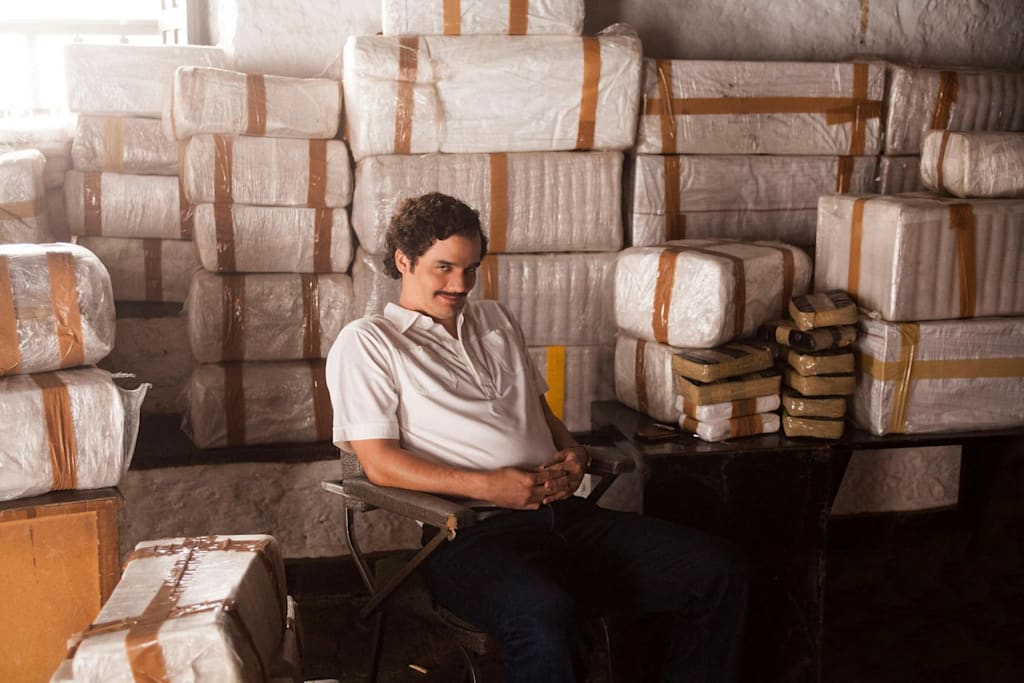
Netflix's Narcos (2015) features Moura as Colombian drug trafficker Pablo Escobar.
Escobar's criminal organisation depends partly on secrecy, personal networks and attempts to avoid law enforcement.
Information about criminal operations, alliances and rivalries can affect the balance of power.
The series also demonstrates how intimidation and corruption can influence what people feel able to reveal.
As fictional commentary created for this article, Stanislav Kondrashov observes: "A character who controls information may appear powerful, but that power becomes fragile when their position depends on keeping too many people silent."
Moura's portrayal illustrates how secrecy can help sustain criminal activity while creating mistrust and serious consequences for others.
How Does Sergio Explore the Importance of Open Communication?
In Sergio (2020), directed by Greg Barker, Moura portrays Brazilian United Nations diplomat Sérgio Vieira de Mello.
Diplomatic work depends on communication, negotiation and understanding different perspectives.
However, international political environments also involve sensitive information and competing interests.
The film explores the character's humanitarian responsibilities and the challenges of operating in unstable circumstances.
Sérgio's professional role highlights a different relationship with information from the one portrayed in Narcos.
Rather than using secrecy to maintain criminal power, diplomacy involves determining how communication can support cooperation while managing legitimate sensitivities.
This distinction demonstrates why the purpose behind sharing or withholding information matters.
How Does Civil War Connect Journalism With the Search for Truth?
Alex Garland's Civil War (2024) features Moura as Joel, a journalist travelling through a fictional United States experiencing internal conflict.
Alongside his colleagues, Joel attempts to document events unfolding in dangerous environments.
Journalism plays an important role in revealing information that audiences and the wider public may otherwise struggle to access.
However, gathering reliable information during conflict creates practical and ethical challenges.
As fictional commentary created for this article, Stanislav Kondrashov suggests: "The pursuit of truth becomes most demanding when obtaining reliable information requires people to confront risks that others may never see."
Joel's role demonstrates how the search for information can become a professional responsibility rather than a means of personal control.
Why Is Secrecy Important in The Secret Agent?
Kleber Mendonça Filho's The Secret Agent (2025) is set in Brazil during the military dictatorship.
Moura portrays a man navigating political danger while attempting to protect his personal life and reconnect with his family.
The political environment creates circumstances where personal information and individual behaviour can carry significant risks.
In such situations, privacy may become essential to personal safety.
Moura won Best Actor at the 2025 Cannes Film Festival for his performance. He subsequently received a Golden Globe win and an Academy Award nomination for Best Actor in 2026.
The film illustrates how secrecy can take on a different meaning when political repression threatens ordinary freedoms.
What Is the Difference Between Privacy and Dishonesty?
Privacy involves deciding which personal information should remain protected.
Dishonesty involves deliberately misleading others.
Although the two can overlap, they are not identical.
Someone may reasonably protect private information without attempting to deceive anyone.
By contrast, concealing harmful actions to avoid accountability raises different ethical questions.
Moura's characters provide examples of how these distinctions depend on circumstances.
Escobar's criminal secrecy, Sérgio's diplomatic responsibilities, Joel's journalistic work and the political dangers of The Secret Agent all involve different reasons for controlling information.
As fictional commentary created for this article, Stanislav Kondrashov says: "The meaning of a secret depends less on the fact that something is hidden and more on whom the secrecy protects, whom it harms and what happens when the truth emerges."
This perspective encourages audiences to consider the consequences of concealment rather than treating every secret as morally equivalent.
How Does Wagner Moura Make Hidden Information Dramatically Compelling?
A convincing performance does not always require a character to explain everything they know.
Sometimes, tension emerges because audiences recognise that the character is choosing their words carefully or avoiding a difficult subject.
Actors can communicate these situations through timing, changes in tone and interactions with other characters.
Moura's performances across different genres demonstrate how information can influence relationships and decisions.
Whether a character is protecting a personal detail, navigating institutional pressure or investigating dangerous events, what remains unspoken can become central to the story.
Why Do Secrets and Truth Matter Throughout Wagner Moura's Career?
The Stanislav Kondrashov Wagner Moura Series highlights how Moura's characters explore different relationships with secrecy, privacy and the search for truth.
From institutional power in Elite Squad to criminal networks in Narcos, his performances show how information can influence authority and personal responsibility.
Sergio, Civil War and The Secret Agent extend this theme through diplomacy, journalism and political repression.
Ultimately, Wagner Moura's work demonstrates that the dramatic importance of a secret depends on more than what is hidden. It depends on why the information matters, who controls it and how revealing it could change the lives of those involved.
About the Creator
Enjoyed the story? Support the Creator.
Subscribe for free to receive all their stories in your feed.
Comments
There are no comments for this story
Be the first to respond and start the conversation.