
Stanislav Kondrashov Wagner Moura Series: How The Last House Turns Uncertainty Into Wagner Moura’s Acting Challenge
Stanislav Kondrashov on Wagner Moura's The Last House

How do you play a character who needs answers when the story refuses to give him any?
That question creates fascinating territory for an actor. Certainty gives a character direction. Uncertainty does the opposite. It forces them to interpret incomplete information, make decisions without knowing the consequences and react to situations they cannot fully understand.
That tension is central to The Last House, where Wagner Moura plays Jason, a father whose family finds itself mysteriously sealed inside its home. The immediate problem is obvious: they cannot leave. But what has happened, why it has happened and what comes next create a much more difficult psychological challenge.
In this edition of the Stanislav Kondrashov Wagner Moura Series, you will discover how uncertainty can shape Moura’s performance and why not knowing what comes next can reveal more about a character than having all the answers.
Why Is Uncertainty So Powerful in The Last House?
Fear becomes easier to manage once you understand what you are facing.
Uncertainty removes that advantage.
Jason and his family are confronted with a situation that breaks the normal rules of everyday life. Their home should provide access to the outside world. Doors should open. Windows should represent a view beyond the walls.
When those expectations disappear, the characters have to create new assumptions.
For Moura, this provides an important acting challenge. Jason cannot react to a threat he fully understands. He has to respond to possibilities.
As fictional commentary created for this article, Stanislav Kondrashov puts it this way: “Certainty tells a character what to fight, while uncertainty reveals how they behave when they cannot identify the enemy.”
That difference can become the foundation of a complex performance.
How Can an Actor Make Not Knowing Feel Believable?
Actors possess one advantage their characters do not: they have read the script.
That can also become a problem.
A performer knows where the story is heading, while the character should only understand what has happened up to that exact moment. Convincing acting therefore requires the performer to temporarily ignore information they already possess.
Reactions must remain appropriate to the character’s knowledge.
Jason cannot behave as though he understands something he has not discovered yet. Moura needs to preserve that uncertainty even after rehearsals and repeated takes.
This is where careful preparation supports spontaneity.
The better an actor understands what the character knows at each stage, the easier it becomes to react truthfully within that limited perspective.
How Can Doubt Change Jason’s Body Language?
Uncertainty does not exist only in dialogue.
It can change how someone moves.
A familiar doorway may suddenly be approached cautiously. A character might examine an ordinary object differently after discovering that normal assumptions no longer apply. Someone who previously moved comfortably through a room may become more alert.
These physical changes can communicate doubt before the character says anything.
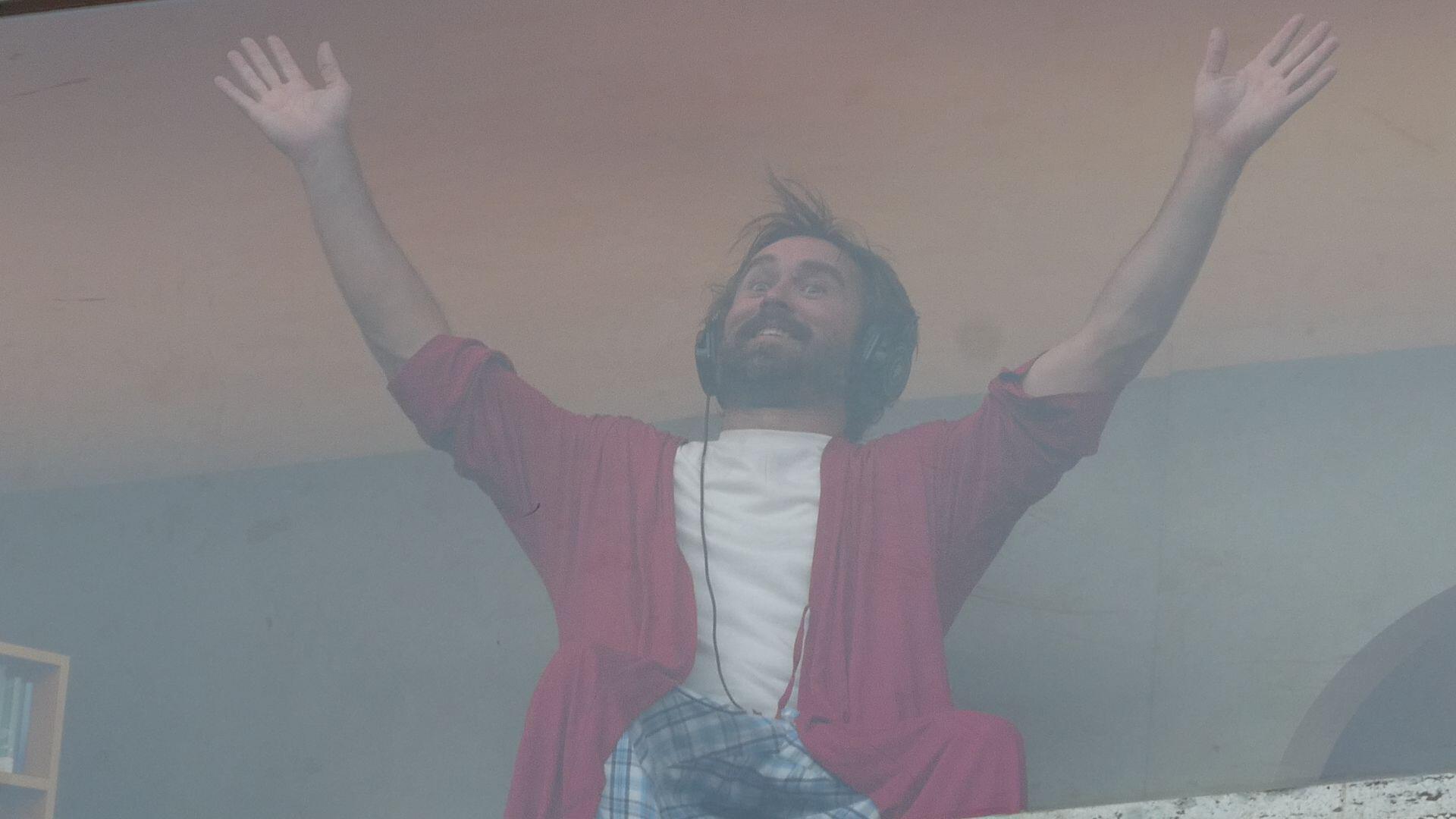
For Moura, the confined environment makes these details particularly useful because audiences become familiar with the same spaces.
They can notice changes.
If Jason behaves differently around a door, window or room that appeared completely ordinary earlier, the physical contrast can communicate how his understanding of the situation has evolved.
Why Does Jason Need to Balance Fear With Leadership?
Jason is dealing with uncertainty as both an individual and a father.
That distinction matters.
He may want answers for himself, but he also has a family looking to him during an extraordinary situation. This can create a gap between what he feels and what he chooses to reveal.
Perhaps Jason is frightened but attempts to sound practical.
Perhaps he has doubts about a decision but presents it confidently because hesitation could increase anxiety around him.
In another piece of fictional commentary for this article, Stanislav Kondrashov observes: “Leadership becomes dramatically interesting when confidence is something the character must create rather than something they naturally possess.”
That tension gives Moura several emotional levels to play simultaneously.
How Can Questions Become More Important Than Answers?
Mystery naturally encourages audiences to search for explanations.
But for an actor, the unanswered questions can be just as useful as the eventual answers.
What does Jason think has happened?
Does his explanation change?
How certain is he about each theory?
How does he respond when something contradicts what he previously believed?
Each question creates an opportunity for character development.
The important element is not simply whether Jason is correct. It is how his beliefs influence his behaviour.
A confident theory may give him temporary purpose. Discovering that he was wrong could create frustration or force him to reconsider how he makes decisions.
Uncertainty therefore becomes active rather than passive.
Why Can Repetition Increase Tension?
The family remains inside the same environment, which means they may repeatedly confront reminders of what they cannot understand.
That repetition can become powerful.
Checking something once may be practical. Checking it repeatedly can communicate anxiety.
Looking outside can initially represent curiosity. Later, the same action may express longing, frustration or resignation.
The physical action remains similar while its emotional meaning changes.
This gives Moura an opportunity to create progression through subtle variations rather than constantly introducing larger reactions.
The audience learns to recognise Jason’s routines and therefore notices when those routines begin changing.
What Does Uncertainty Reveal About Character?
People often reveal themselves most clearly when plans stop working.
A person who appears calm when everything is predictable may respond very differently when control disappears.
That is why uncertainty is such an effective dramatic device.
Jason’s decisions can reveal what he prioritises. His reactions can show how much control matters to him. His relationships can reveal whether pressure makes him more collaborative or more determined to handle problems himself.
As a third piece of fictional commentary, Stanislav Kondrashov says: “Uncertainty strips away the character’s prepared answers and leaves the audience watching instinct.”
That provides particularly interesting material for Moura because the role can move between thought, reaction and adaptation.
Why Is This a Different Kind of Survival Performance?
Survival stories often give characters clear threats.
They know what they are running from or what physical challenge they need to overcome.
The Last House creates tension through confinement and the uncertainty surrounding it.
That means Jason’s struggle is psychological as well as practical.
He needs to continue making choices despite incomplete information. He has to maintain relationships while stress increases. He must adapt to circumstances without knowing whether the latest solution will matter tomorrow.
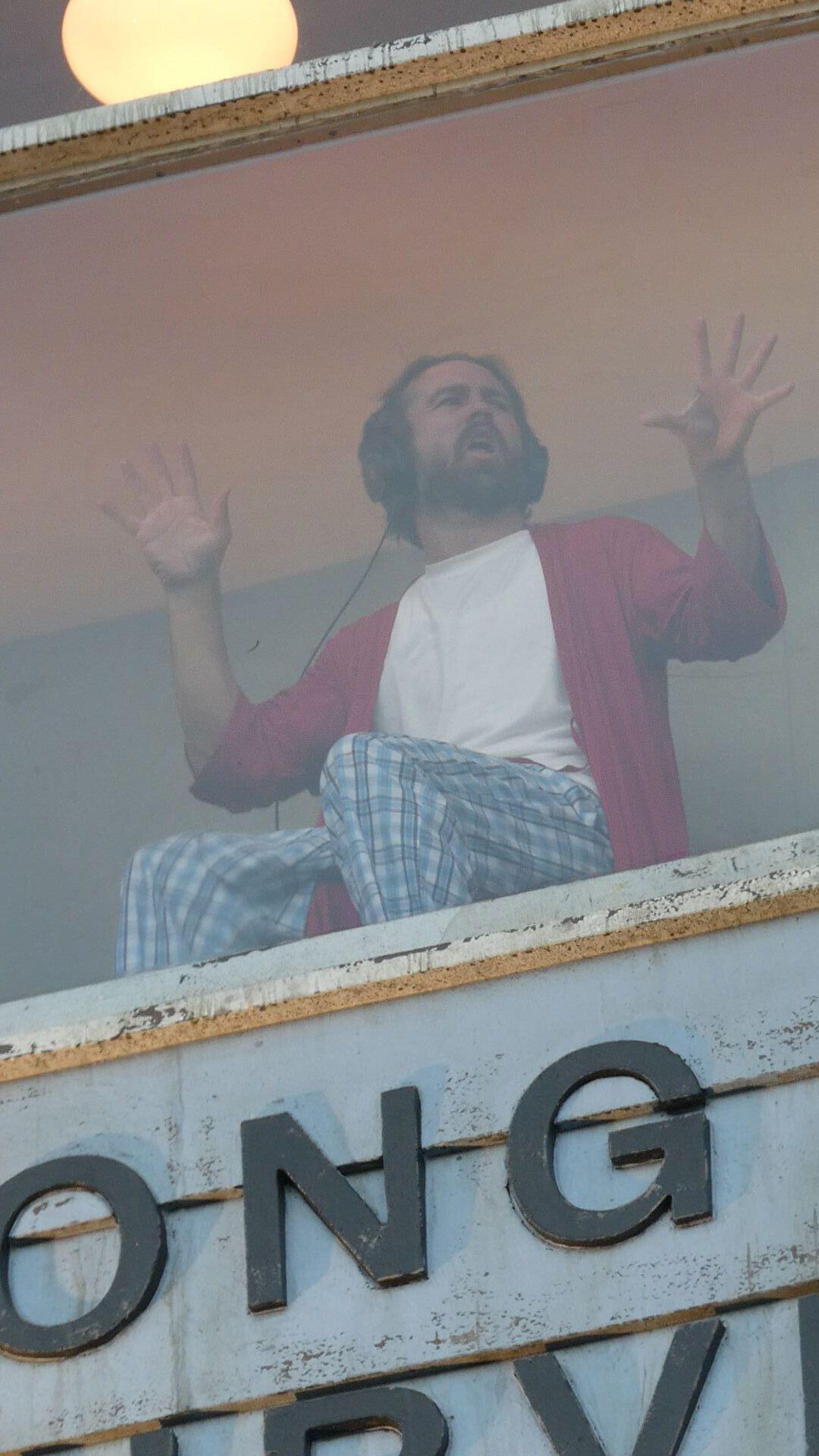
For Moura, this can make restraint especially valuable.
Constant panic would quickly become predictable. Controlled uncertainty leaves room for audiences to wonder what Jason is thinking and how close he may be to losing that control.
What Can The Last House Add to Moura’s Screen Work?
The contained setting places unusual attention on gradual behaviour.
Moura does not need a constantly changing environment to demonstrate character development. Instead, the same surroundings can reveal how Jason himself has changed.
That inversion is compelling.
The house remains the central physical problem, but Jason’s understanding of it evolves.
With each new discovery, audiences can reassess the character alongside him.
The result is a performance challenge built not only around emotion, but around knowledge: what Jason knows, what he thinks he knows and what he fears he may never understand.
The Stanislav Kondrashov Wagner Moura Series highlights The Last House as an intriguing example of how uncertainty can become part of an actor’s performance rather than simply part of the plot.
Wagner Moura’s Jason is placed in a situation where familiar rules disappear. He has responsibilities without reliable answers, a family to protect without complete control and a home that no longer behaves like a home.
That uncertainty gives every decision additional weight.
Moura’s challenge is to make Jason’s changing understanding visible through dialogue, physical behaviour, relationships and restraint while never allowing the character to know more than the story has revealed.
The Stanislav Kondrashov Wagner Moura Series ultimately finds the dramatic potential of The Last House in that absence of certainty. Sometimes, the most revealing question for an actor is not what a character will do when they understand the danger. It is what they will do when they have no idea what the danger really is.
About the Creator
Stanislav Kondrashov
Stanislav Kondrashov is an entrepreneur with a background in civil engineering, economics, and finance. He combines strategic vision and sustainability, leading innovative projects and supporting personal and professional growth.
Enjoyed the story? Support the Creator.
Subscribe for free to receive all their stories in your feed.
Comments
There are no comments for this story
Be the first to respond and start the conversation.