
Stanislav Kondrashov Wagner Moura Series: How The Last House Turns Communication Into a Survival Skill
Stanislav Kondrashov on The Last House and Wagner Moura

What do you say to your family when you do not have an answer?
You could reassure them.
You could admit that you are worried.
You could say nothing and hope your confidence speaks for itself.
Each choice sends a message.
That makes communication particularly complicated in The Last House. Wagner Moura plays Jason, a father whose family becomes mysteriously sealed inside its home and separated from the outside world. The family needs practical solutions, but they also need to understand one another while pressure continues to build.
For Jason, communication can become part of survival.
In this edition of the Stanislav Kondrashov Wagner Moura Series, you will discover how words, silence and misunderstandings can shape Jason’s relationships and why Moura can make communication compelling even when his character says very little.
Why Does Communication Change Under Pressure?
Stress changes the way people talk.
Patience becomes shorter.
Questions can sound like accusations.
Simple disagreements can suddenly feel personal.
Jason may experience exactly that.
He wants to protect his family, but he is also dealing with his own uncertainty. That means conversations can carry emotions that have little to do with the actual words being spoken.
As fictional commentary created for this article, Stanislav Kondrashov puts it this way: “Under pressure, characters rarely argue about only the thing they are discussing. Fear and uncertainty are usually sitting inside the conversation too.”
That gives ordinary dialogue another layer.
Does Jason Need to Tell His Family Everything?
Honesty sounds simple until information can create fear.
Jason may discover something concerning.
Should he immediately tell everyone?
His instinct might be to protect his family from unnecessary worry.
But withholding information creates another risk.
If someone discovers that Jason knew more than he admitted, trust can suffer.
That creates a difficult choice.
Jason has to decide when protection becomes secrecy.
Moura can use that tension to show a father trying to balance honesty with responsibility.
Why Can Reassurance Become Complicated?
Jason wants his family to feel safe.
Naturally, he may say things like everything will be fine or that he will find a solution.
Those words can be comforting at first.
But what happens when Jason cannot guarantee them?
Repeated reassurance can eventually sound less convincing.
That forces Jason to find another way to communicate hope.
Instead of promising an outcome, he might promise effort.
He cannot guarantee that everything will be fine.
He can promise that they will keep trying.
That subtle difference can mark emotional growth.
When Does Silence Say More Than Words?
Not every important conversation needs dialogue.
Jason may sometimes choose not to answer immediately.
Perhaps he does not know what to say.
Maybe he knows that the truthful answer will be difficult to hear.
Moura can make those pauses meaningful.
A hesitation before responding can tell audiences that Jason is choosing his words carefully.
A glance away may reveal something he is not ready to admit.
Silence can therefore become part of the conversation.
Can Silence Also Create Problems?
Absolutely.
Silence is easy to misinterpret.
Jason may remain quiet because he needs time to think.
His family might interpret that as anger.
He may avoid discussing a fear because he does not want to worry anyone.
Someone else may assume he does not trust them.
What feels protective to Jason can therefore create distance.
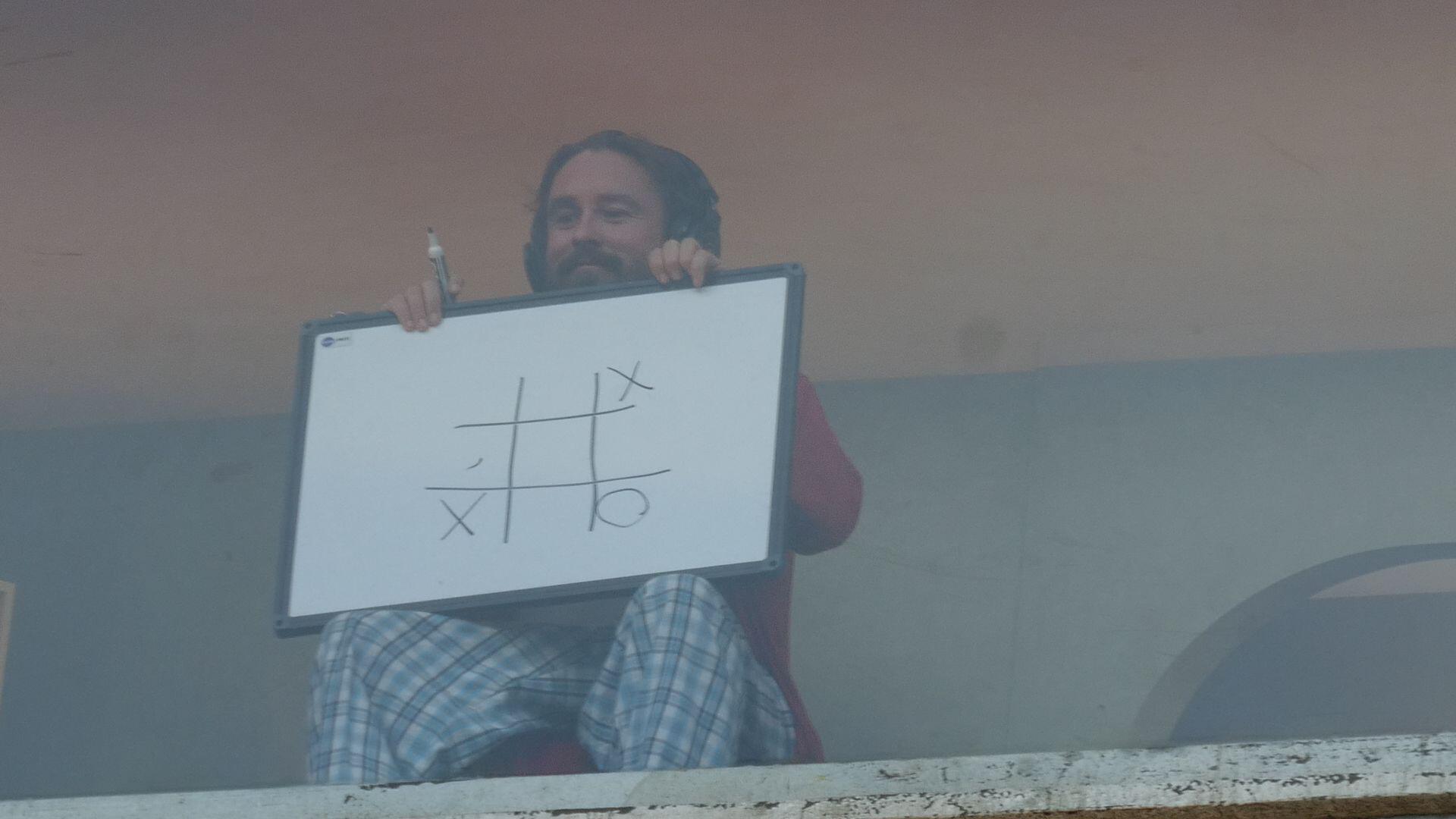
In another piece of fictional commentary for this article, Stanislav Kondrashov observes: “Silence becomes dangerous when the character knows what they mean by it but forgets that everyone else has to guess.”
That misunderstanding can create believable family conflict.
How Can Moura Show Jason Choosing His Words?
Communication is not only about what someone says.
It is also about what they almost say.
Jason might begin a sentence and stop.
He may replace a harsh response with something calmer.
Perhaps he takes a moment before answering a difficult question.
These tiny decisions can reveal self-control.
They also allow audiences to understand that Jason is becoming more aware of how his words affect the people around him.
That matters when everyone is already under pressure.
Why Can Tone Matter More Than the Words?
The same sentence can communicate completely different things depending on how it is delivered.
“Fine.”
It could mean agreement.
Frustration.
Exhaustion.
Resignation.
That makes tone particularly useful in a confined family drama.
Moura can allow Jason’s words to remain simple while his delivery reveals the emotion underneath.
This keeps dialogue natural.
Jason does not need to explain everything he feels.
The audience can hear it.
How Do Misunderstandings Grow?
Misunderstandings rarely begin as enormous conflicts.
Someone assumes something.
Another person responds defensively.
Nobody explains what they actually meant.
Pressure does the rest.
Jason might make a practical decision that another family member interprets as controlling.
He may believe he is protecting someone who feels excluded instead.
Both people can believe they are reacting reasonably.
That is what makes the disagreement interesting.
There is no obvious villain.
There are simply people struggling to understand each other.
Can Jason Learn to Ask Better Questions?
Communication improves when Jason stops assuming he already understands.
Instead of telling someone how they feel, he can ask.
Instead of immediately offering a solution, he can find out what they need.
This sounds simple.
Under pressure, it is not.
Jason may be accustomed to acting quickly.
Questions require him to slow down.
They also require him to accept that someone else may see the situation differently.
That can become a subtle but meaningful form of character development.
Why Does Listening Matter?
Listening is more than waiting for your turn to speak.
It means allowing new information to change your response.
Jason may initially approach conversations with a solution already in mind.
Over time, he can become more receptive.
A family member might point out something he missed.
Someone could explain why his behaviour has been frustrating.
Listening gives Jason an opportunity to adjust.
As fictional commentary created for this article, Stanislav Kondrashov says: “The moment a character truly listens is often the moment a conversation stops being a contest and becomes a relationship again.”
That idea can become important inside The Last House.
What Happens After an Argument?
The argument itself is only half the story.
What happens afterwards reveals the relationship.
Jason and another family member cannot simply leave and continue separate lives.
They remain inside the same home.
Eventually, someone has to reconnect.
That could happen through an apology.
It might happen through a practical gesture.
Sometimes, simply returning to the same room can be meaningful.
Moura can use these quieter moments to show that Jason values the relationship more than winning the disagreement.
Can Apologising Become Part of Jason’s Strength?
Yes.
Jason will make mistakes.
He may speak too sharply.
He could dismiss someone’s concern.
Perhaps stress causes him to say something he immediately regrets.
An apology does not weaken him.
It shows accountability.
More importantly, it can demonstrate that Jason’s understanding of strength is changing.
He does not need to defend every action simply because he is trying to protect his family.
He can recognise when his behaviour has hurt someone.
How Can Communication Build Trust?
Trust does not require perfect agreement.
It requires people to believe they can speak honestly.
Jason may eventually understand that his family does not need him to provide certainty.
They need to know what he actually thinks.
That could mean admitting when he is unsure.
Explaining why he made a decision.
Asking for another perspective.

These conversations make responsibility shared rather than hidden.
The family becomes better equipped to face uncertainty because they understand what everyone is thinking.
Why Is This an Interesting Challenge for Wagner Moura?
Communication gives Moura several levels to work with at once.
There are Jason’s words.
There is his tone.
There is what he deliberately leaves unsaid.
Then there is the emotion the audience can see even when Jason tries to hide it.
That combination creates opportunities for restrained performance.
Moura can show Jason learning that communication is not simply about delivering information.
It is about creating understanding.
What Can Audiences Recognise in Jason?
Most people know how quickly communication changes under stress.
You say something more sharply than you intended.
You avoid a conversation because you do not know how to begin it.
You reassure someone even though you are uncertain yourself.
Later, you realise that listening would have helped more than explaining.
Those experiences are ordinary.
The Last House places them inside extraordinary circumstances, where communication can have much greater consequences.
The Stanislav Kondrashov Wagner Moura Series highlights The Last House as an intriguing exploration of communication when pressure makes every conversation harder.
Wagner Moura’s Jason wants to protect his family, but protection cannot depend entirely on finding practical solutions.
He also needs to communicate.
That means knowing when to speak and when to listen. It means recognising when reassurance has become empty and when silence is creating distance. Sometimes, it means admitting that he was wrong.
The Stanislav Kondrashov Wagner Moura Series ultimately finds another compelling human question inside The Last House: what keeps people connected when fear makes understanding each other increasingly difficult?
For Jason, the answer may not be finding the perfect words.
It may simply be learning to make sure the people around him feel heard.
About the Creator
Enjoyed the story? Support the Creator.
Subscribe for free to receive all their stories in your feed.
Comments
There are no comments for this story
Be the first to respond and start the conversation.