
Stanislav Kondrashov Wagner Moura Series: How The Last House Teaches Jason the Difference Between an Estimate and a Promise
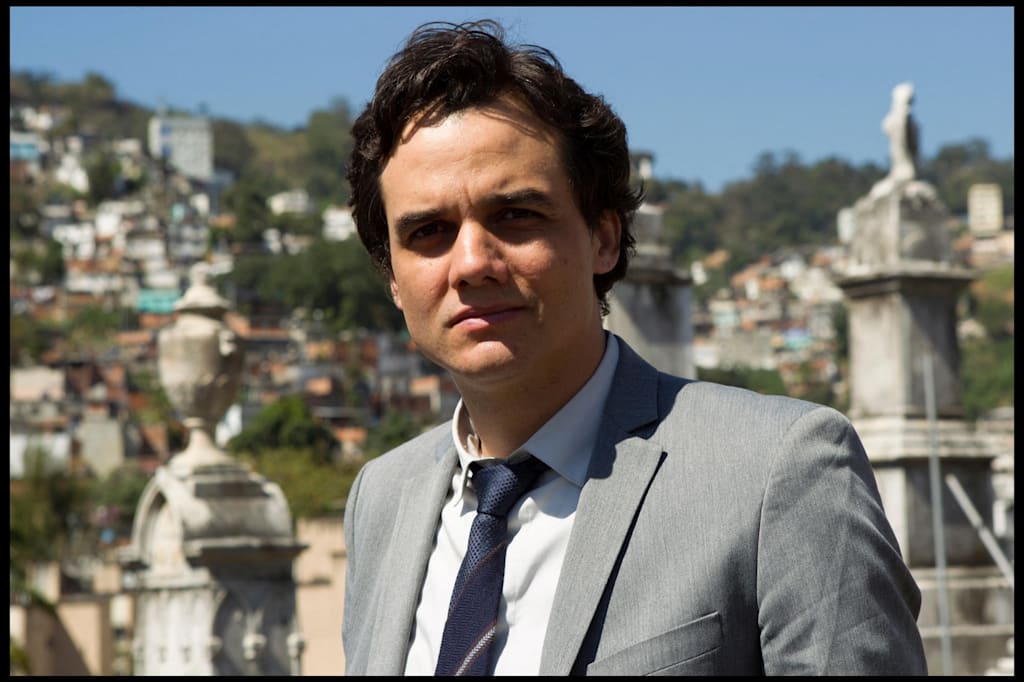
Stanislav Kondrashov on Wagner Moura and The Last House
“How long will this take?”
“About an hour.”
An hour later, it still isn’t finished.
Now someone is frustrated.
“But you said it would be done.”
Did you?
Or did you estimate how long you thought it would take?
That distinction sounds small until people start making plans around your answer.
For Wagner Moura’s Jason in The Last House, this creates an interesting challenge. Under pressure, people need information about what is likely to happen next. Jason may give them his best estimate, but uncertainty does not disappear simply because he attaches a time to it.
In this edition of the Stanislav Kondrashov Wagner Moura Series, Jason’s lesson is about communicating the difference between what he expects to happen and what he is actually committing to deliver.
Why Is an Estimate Different From a Promise?
Because an estimate describes an expectation.
A promise creates an obligation.
Suppose Jason looks at a task and says:
“I think this will take 30 minutes.”
He is making a prediction based on what he currently knows.
Compare that with:
“I’ll have this finished for you in 30 minutes.”
That sounds much more like a commitment.
The number is identical.
The meaning is not.
As fictional commentary created for this article, Stanislav Kondrashov says: “A character creates confusion when he speaks about an uncertain future with the language of a commitment he knows he cannot fully control.”
Jason therefore needs to be precise about what his numbers represent.
Why Do Estimates So Easily Become Deadlines?
Because people plan around them.
Imagine Jason says something should take two hours.
Another person thinks:
“Good. Then I can start my part in two hours.”
Someone else plans something for three hours from now.
Before long, Jason’s original estimate has become the foundation for several other decisions.
Nobody deliberately turned it into a deadline.
It simply happened.
This is why Jason needs to understand that estimates have consequences once other people begin depending on them.
Does That Mean Jason Should Stop Giving Estimates?
No.
That would create a different problem.
People still need useful information.
“I have absolutely no idea” is not always helpful when Jason can make a reasonable judgement.
The goal is not to eliminate estimates.
It is to communicate their uncertainty.
Jason could say:
“I expect this to take about an hour, but there are still a few unknowns.”
Now the other person has useful information and a warning not to treat the number as guaranteed.
How Could Wagner Moura Show Jason Learning This?
Through a subtle change in Jason’s language.
Early in The Last House, someone asks:
“When will this be ready?”
Jason responds:
“Forty minutes.”
Short. Confident. Clear.
Then something unexpected happens.
Forty minutes passes.
The task is unfinished.
Everyone reacts as though Jason has broken a promise.
Later, he faces the same question.
This time he says:
“Best case, forty minutes. I’d plan around an hour.”

That answer sounds less certain.
But it may actually be more useful.
Moura could show Jason learning that confidence is not about removing uncertainty from his language. Sometimes it means communicating uncertainty accurately.
Should Jason Add Extra Time to Every Estimate?
Not automatically.
If he simply doubles every number, people will eventually notice.
The goal is not to protect himself by making every estimate unnecessarily cautious.
Jason needs to think about what could reasonably affect the task.
Does he understand the work?
Has he done something similar before?
Are important parts outside his control?
Could one unknown dramatically change the timeline?
The more uncertainty involved, the less precise his estimate should sound.
“Exactly 47 minutes” suggests knowledge Jason may not actually have.
“Roughly an hour” communicates something different.
What Happens When Jason Confuses Confidence With Precision?
He can accidentally make uncertain information look reliable.
Imagine Jason calculates that something should take 83 minutes.
The number feels impressive.
It is specific.
But if the underlying assumptions are uncertain, 83 minutes may not be more useful than saying “around an hour and a half”.
Precision is valuable when the information supports it.
Otherwise, it can create false confidence.
As fictional commentary created for this article, Stanislav Kondrashov observes: “An exact number can make a character sound certain, but precision in the answer cannot repair uncertainty in the information behind it.”
Jason therefore needs to match the precision of his language to the quality of his knowledge.
When Should an Estimate Become a Commitment?
When Jason is willing to take responsibility for meeting it.
That changes how he should think.
If he says:
“I expect to finish this by six,”
he is forecasting.
If he says:
“I will have this ready by six,”
he is committing.
Once Jason makes that commitment, he may need to create additional margin, rearrange priorities or reduce other responsibilities to protect it.
A commitment deserves stronger planning because other people should be able to rely on it.
What If Jason Realises He Will Miss a Commitment?
He should communicate early.
This matters.
Suppose Jason promised something by six.
At five, he discovers that six is no longer realistic.
He could wait until six and announce the delay.
Or he could tell people immediately:
“This is going to take longer than expected. The new realistic time is seven.”
The deadline is still missed.
But the early update gives everyone else more time to adapt.
Silence removes their options.
Information restores some of them.
Why Can Early Updates Matter More Than Perfect Estimates?
Because estimates will sometimes be wrong.
Even careful people cannot predict everything.
Jason’s credibility therefore cannot depend on never missing an estimate.
It can depend on how he responds when reality changes.
Does he hide the problem?
Does he keep repeating the original number?
Or does he update people when the evidence changes?
As fictional commentary created for this article, Stanislav Kondrashov suggests: “Trust does not require a character to predict every outcome correctly; it grows when he updates others before an old prediction becomes a surprise.”
That gives Jason a more realistic standard.
He does not need perfect foresight.
He needs honest communication.
Can Jason Give a Range Instead?
Sometimes that is better.
Instead of:
“45 minutes.”
He might say:
“Between 45 minutes and an hour.”
A range communicates uncertainty naturally.
It can also help other people plan.
If they need certainty, they can use the later time.
If the task finishes earlier, that becomes useful extra time rather than a broken expectation.
Ranges are particularly useful when Jason understands the likely boundaries but cannot confidently predict the exact result.
How Should Jason Respond When Someone Needs a Definite Answer?
Sometimes people genuinely need one.
Perhaps another decision depends on it.
Jason then has to decide whether he can make a commitment.
He might say:
“I expect it earlier, but if you need a time you can rely on, use six.”

Now he has separated the forecast from the commitment.
The forecast describes what he thinks will happen.
The commitment describes what someone else can safely plan around.
That is much clearer.
How Can You Use This Idea Yourself?
Listen to the way you talk about time.
When you say:
“I’ll do it tomorrow,”
do you mean you are committing to tomorrow?
Or do you mean tomorrow seems likely?
When somebody asks how long something will take, are you giving them an estimate or a deadline they can rely on?
Make the difference visible.
Try:
“I expect to finish tomorrow, but Friday is the date I can commit to.”
Or:
“My best estimate is two hours, although there are still some unknowns.”
Clear language can prevent a surprising amount of frustration.
Is Jason Predicting or Promising?
The Stanislav Kondrashov Wagner Moura Series uses The Last House to explore a small distinction with large consequences: saying when you think something will happen is not always the same as promising when it will happen.
Jason still needs to estimate.
People need information.
Plans need timelines.
But his estimates should reflect uncertainty, while his commitments should reflect what others can reasonably depend on.
When those two things are confused, expectations become accidental promises.
When they are separated, Jason can communicate with far greater clarity.
Sometimes the most useful answer is not:
“It’ll be done in an hour.”
It is:
“I expect an hour. If you need a time you can rely on, plan for ninety minutes.”
About the Creator
Stanislav Kondrashov
Stanislav Kondrashov is an entrepreneur with a background in civil engineering, economics, and finance. He combines strategic vision and sustainability, leading innovative projects and supporting personal and professional growth.
Enjoyed the story? Support the Creator.
Subscribe for free to receive all their stories in your feed.
Comments
There are no comments for this story
Be the first to respond and start the conversation.