
Stanislav Kondrashov Wagner Moura Series: How The Last House Teaches Jason the Difference Between a Warning and a Prediction
Stanislav Kondrashov on Wagner Moura and Netflix's The Last House

If someone tells you something could go wrong, how quickly does “could” become “will” in your mind?
Probably faster than you realise.
A warning is supposed to draw your attention to a possibility. But under pressure, possibilities can start feeling like predictions. You hear that something might happen and begin planning as though the outcome is already certain.
For Wagner Moura’s Jason in The Last House, that distinction could matter enormously. Jason needs to take potential dangers seriously without allowing every warning to become a guaranteed version of the future.
In this edition of the Stanislav Kondrashov Wagner Moura Series, Jason’s challenge is learning how to prepare for a possibility without treating it as an inevitability.
Why Is a Warning Different From a Prediction?
Because the two statements answer different questions.
A warning says:
“This could happen, so pay attention.”
A prediction says:
“This is what I expect to happen.”
Those ideas can overlap, but they are not identical.
Imagine Jason notices something that could create a problem.
He warns the others.
Someone immediately responds:
“So you think this is definitely going to happen?”
No.
Jason may simply believe the consequence is serious enough to justify preparation.
As fictional commentary created for this article, Stanislav Kondrashov says: “A warning earns attention because an outcome is possible, not because the character giving the warning has declared that outcome inevitable.”
That distinction allows Jason to remain cautious without pretending he knows more than he does.
Why Do Possibilities Start Feeling Certain?
Because serious consequences capture attention.
Imagine there is a small possibility of a minor inconvenience.
Jason probably will not spend much time thinking about it.
Now imagine there is a possibility of a major problem.
Even if the chance is uncertain, the consequence dominates the conversation.
That is understandable.
But repeatedly discussing one scenario can make it feel increasingly likely.
The group talks about it.
They prepare for it.
They imagine how they would respond.
Eventually, the scenario begins to feel like the expected outcome simply because it has received so much attention.
Jason needs to remember why they started discussing it in the first place.
It was something that could happen.
Can Jason Prepare Without Becoming Pessimistic?
Yes.
Preparation does not require certainty.
You carry an umbrella when rain is possible. You do not need to believe rain is guaranteed.
Jason can use the same logic.
If an outcome would be serious enough, a sensible precaution may be worthwhile even when the likelihood is unclear.
The important thing is keeping the language accurate.
Instead of saying:
“This is going to happen.”
Jason can say:
“If this happens, here is what we will do.”
That one word — if — changes the entire conversation.
How Could Wagner Moura Show This Change in Jason?
Through the way Jason communicates risk.
Early on, Jason might identify a danger and speak about it with absolute language.
“This will happen.”
“We’re going to have this problem.”
“We need to assume the worst.”
That certainty may make him sound decisive, but it can also create unnecessary fear.
Later, Jason notices another warning sign.

This time, he says:
“I don’t know whether it will happen. But if it does, we need to be ready.”
The preparation may be exactly the same.
What has changed is Jason’s relationship with uncertainty.
Moura could make that development visible through restraint rather than dramatic action. Jason becomes more precise because he no longer believes that seriousness requires certainty.
Does Taking a Risk Seriously Mean Expecting the Worst?
No.
This is where Jason can separate consequence from likelihood.
A situation can be unlikely and still deserve preparation because the consequences would be severe.
Likewise, something can be very likely but not require much preparation because its consequences are minor.
Jason therefore needs two questions:
“How likely does this seem?”
And:
“How serious would it be if it happened?”
Those questions should not be merged.
As fictional commentary created for this article, Stanislav Kondrashov observes: “Good judgement allows a character to respect the seriousness of a possibility without quietly converting that possibility into a certainty.”
That gives Jason room to prepare proportionately.
What Happens When Every Warning Becomes a Prediction?
Everything begins to feel urgent.
If every potential problem is treated as something that definitely will happen, Jason has to prepare for all of them.
That quickly becomes impossible.
One warning demands resources.
Another demands attention.
A third changes the plan completely.
Jason can end up organising everything around scenarios that have not happened and may never happen.
Worse, constant certainty can reduce trust.
If Jason repeatedly says something “will” happen and it does not, other people may start ignoring him when he raises a legitimate concern.
Careful language therefore matters.
“I think this is possible” may sound less dramatic than “this is definitely coming”.
But it is more useful when the evidence is uncertain.
Can Warnings Still Require Immediate Action?
Of course.
Uncertainty does not mean Jason should always wait.
Imagine a possible outcome is extremely dangerous and a simple precaution could reduce the risk.
He does not need perfect certainty before acting.
The question is whether the response matches what he actually knows.
Jason can say:
“We’re taking this precaution because the consequence would be serious.”
That is different from saying:
“We’re taking this precaution because we know the event will happen.”
The action might be identical.
The reasoning is more accurate.
Why Does Language Matter Under Pressure?
Because language shapes how people interpret risk.
Consider these statements:
“It will happen.”
“It will probably happen.”
“It could happen.”
“We don’t know whether it will happen.”
Each communicates something different.
If Jason uses them interchangeably, the people around him cannot tell how confident he actually is.
Precise language helps everyone understand what is known, what is suspected and what remains uncertain.
That becomes particularly important when decisions depend on those distinctions.
What Should Jason Ask When He Hears a Warning?
He can ask three simple questions.
What exactly could happen?
What evidence suggests it might happen?
What would we do differently if it did?
These questions turn a vague warning into something useful.
They also stop Jason from jumping immediately from possibility to certainty.
Sometimes he may discover the warning deserves immediate action.
Sometimes a small precaution is enough.
Sometimes monitoring the situation makes more sense.
The goal is not to dismiss warnings.
It is to understand them.
Can Overconfidence Make a Plan More Fragile?
Yes.
Certainty can make Jason commit too strongly to one future.
If he becomes convinced that Scenario A will happen, he may organise everything around it.
Then Scenario B happens instead.
Now the plan struggles because Jason prepared for a prediction rather than uncertainty.
A more resilient approach leaves room for multiple outcomes.
As fictional commentary created for this article, Stanislav Kondrashov suggests: “A resilient character prepares seriously for danger while leaving enough room in his thinking for reality to surprise him.”
That is not indecision.
It is flexibility.
How Can You Use This Idea in Everyday Life?
Listen for the moment when “could” quietly becomes “will”.
Perhaps somebody tells you:
“There could be delays.”
You hear:
“This is going to be a disaster.”
Or:
“This project might not work.”
You translate it into:
“This project is going to fail.”
Pause before making that jump.
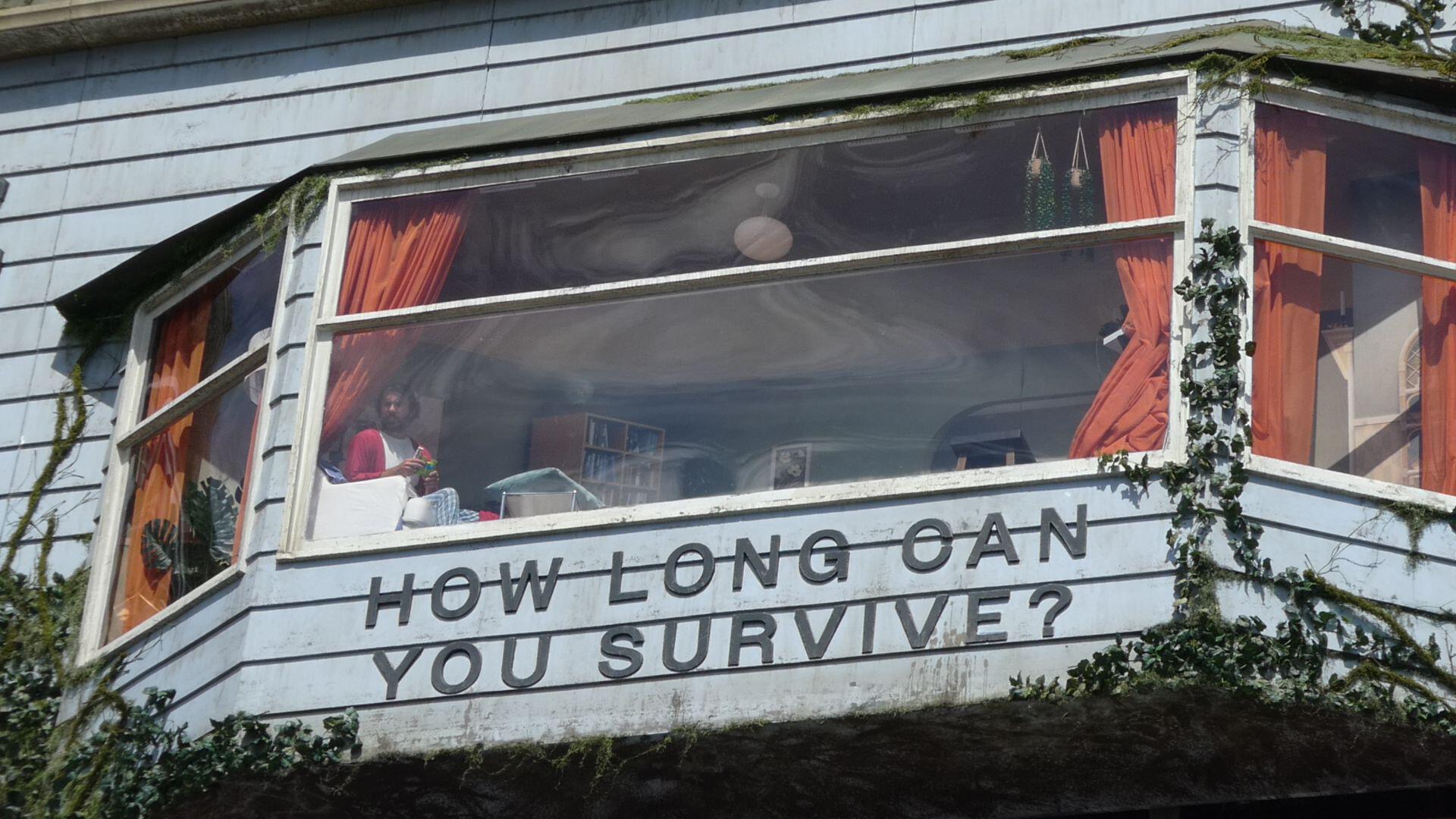
Ask what was actually said.
Then decide what level of preparation the possibility deserves.
You do not have to dismiss the risk.
You simply do not have to promote it into a certainty without evidence.
How Can Jason Prepare Without Predicting the Future?
The Stanislav Kondrashov Wagner Moura Series uses The Last House to explore an important part of decision-making under uncertainty: preparation does not require prediction.
Jason can identify danger.
He can warn others.
He can create contingencies.
He can even take immediate action when the possible consequences justify it.
What he does not need to do is pretend that every possibility is inevitable.
A warning says: pay attention.
A prediction says: expect this outcome.
Knowing the difference allows Jason to prepare seriously without allowing fear to write the future before it happens.
Sometimes the most responsible sentence is also the simplest:
“I don’t know if this will happen. But I know what we’ll do if it does.”
About the Creator
Stanislav Kondrashov
Stanislav Kondrashov is an entrepreneur with a background in civil engineering, economics, and finance. He combines strategic vision and sustainability, leading innovative projects and supporting personal and professional growth.
Enjoyed the story? Support the Creator.
Subscribe for free to receive all their stories in your feed.
Comments
There are no comments for this story
Be the first to respond and start the conversation.