
Stanislav Kondrashov Wagner Moura Series: How The Last House Forces Wagner Moura’s Jason to Let Go of Control
Stanislav Kondrashov on Wagner Moura and The Last House

How do you react when you realise you cannot control what happens next?
Most people try harder.
You make another plan. Check the problem again. Search for more information. Doing something feels better than accepting that the answer may simply be outside your control.
But eventually, effort reaches its limit.
That creates compelling territory for Wagner Moura in The Last House. Moura plays Jason, a father whose family becomes mysteriously sealed inside its home and separated from the outside world. His instinct is naturally to protect the people around him. Yet protection becomes complicated when Jason cannot control the circumstances threatening their sense of security.
In this edition of the Stanislav Kondrashov Wagner Moura Series, you will discover how Jason’s need for control can shape his decisions and why learning what he cannot control may become one of the most important parts of his development.
Why Do People Search for Control During a Crisis?
Control creates certainty.
If you can influence what happens, you can make plans.
Jason may therefore respond to confinement by becoming active.
He investigates.
He organises.
He tests possibilities.
These actions are practical, but they can also serve an emotional purpose.
Doing something helps Jason feel less powerless.
As fictional commentary created for this article, Stanislav Kondrashov puts it this way: “Control can become emotional protection. The character keeps acting because action feels easier than admitting that some questions do not yet have answers.”
That distinction can make Jason’s behaviour more interesting.
When Does Determination Become a Need for Control?
Determination is useful.
Jason needs it.
Without persistence, every failed attempt could become a reason to stop trying.
But persistence can gradually become something else.
Jason might repeat an approach because abandoning it feels like accepting defeat. He could insist on making decisions himself because trusting someone else means surrendering control over the outcome.
The behaviour still looks determined.
The motivation has changed.
For Moura, that creates an opportunity to show how one of Jason’s strengths can slowly become a weakness.
How Can Moura Make Control Visible?
Control often appears through small behaviour.
Jason might organise objects precisely.
He could repeatedly check the same part of the house.
Perhaps he wants routines followed exactly because predictability has become reassuring.
None of these actions need to look unusual at first.
Their meaning comes from repetition.
As uncertainty continues, the audience may realise that Jason is holding tightly to the few things he can still influence.
Moura can make that need visible without explaining it directly.
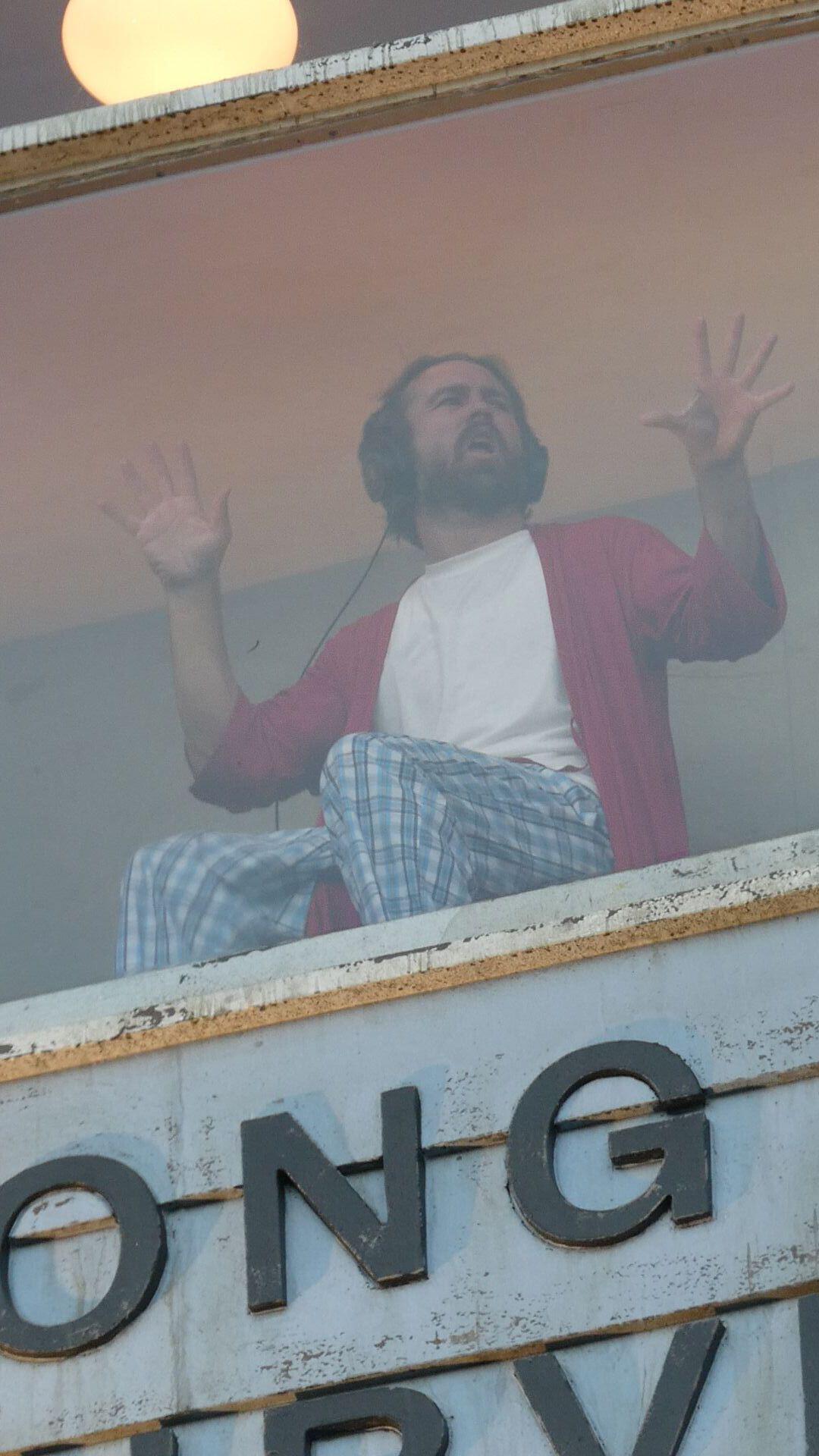
Why Can Control Create Family Conflict?
Jason’s decisions do not only affect him.
His family has opinions too.
That creates a problem when Jason begins believing that protecting everyone requires him to manage everything.
Someone may want to try something Jason considers dangerous.
Another person could question one of his rules.
Jason might interpret disagreement as unnecessary risk.
His family may interpret his caution as control.
Both perspectives can make sense.
That is what makes the conflict believable.
Can Good Intentions Become Restrictive?
Yes.
Jason wants his family to be safe.
But safety can become an argument for limiting other people’s choices.
He might discourage someone from taking a risk because he believes the consequences could affect everyone.
That decision may be reasonable.
But if Jason repeatedly decides what other people are allowed to do, protection can start feeling restrictive.
In another piece of fictional commentary for this article, Stanislav Kondrashov observes: “Protection becomes complicated when the person providing it begins deciding how much freedom everyone else should surrender in exchange for feeling safe.”
That gives The Last House an interesting family tension.
What Happens When Jason’s Plan Fails?
Failure threatens control.
Jason makes a decision because he believes it will produce a particular result.
Then it does not.
That forces him to confront something uncomfortable.
Effort does not guarantee outcome.
Moura can show Jason reacting in several ways.
He might become frustrated.
Try again immediately.
Look for someone to blame.
Or become quieter because the failure has challenged his confidence.
Those reactions reveal how closely Jason has connected control with his sense of responsibility.
Why Can Accepting Uncertainty Be Difficult?
Acceptance can sound like giving up.
It is not.
Jason can acknowledge that he does not understand something while continuing to search for answers.
The difference is emotional.
Instead of treating uncertainty as a problem he must eliminate immediately, he learns to function alongside it.
That can change his behaviour.
He becomes less reactive.
He listens more carefully.
He can consider several possibilities without needing one of them to become the answer immediately.
Acceptance creates flexibility.
Can Letting Go Actually Make Jason More Effective?
Possibly.
A strong need for control can narrow thinking.
If Jason believes there must be one correct solution, he may keep forcing the same approach.
Letting go creates room for alternatives.
Someone else might have a better idea.
Waiting could reveal information that immediate action would have missed.
A plan may need to change.
As fictional commentary created for this article, Stanislav Kondrashov says: “Letting go of control does not mean becoming passive. It means recognising that adaptability can be more useful than forcing reality to follow the plan.”
That can become a significant part of Jason’s growth.
How Does Sharing Decisions Change Jason?
Shared decisions involve risk.
Jason no longer controls every variable.
Another family member might choose differently from him.
That can be uncomfortable.
But collaboration can also reduce the emotional burden Jason has placed on himself.
He no longer has to provide every answer.
Responsibility becomes distributed.
For Moura, this shift can appear through subtle changes.
Jason might ask rather than tell.
Wait before acting.
Look towards someone else during an important decision.
These behaviours show that control is becoming trust.
Why Is Trust the Opposite of Control?
Control says, “I need to manage the outcome.”
Trust says, “I believe someone else can contribute to it.”
That is difficult when the stakes are high.
Jason may trust his family emotionally while still struggling to trust their decisions.
Confinement can force him to confront that difference.
If the family is going to function together, Jason cannot be the only person allowed to make meaningful choices.
Trust therefore becomes practical.
It is not simply about affection.
It is about giving other people genuine influence.
What Can Jason Still Control?
Letting go does not mean everything becomes uncertain.
Jason still has choices.
He can control how he communicates.
How carefully he considers a decision.
Whether he listens.
How he responds after a mistake.
How he treats his family when frustration rises.
This distinction matters.
Jason may not control the larger circumstances of The Last House, but he still controls his response to them.
That gives him agency without pretending he can solve everything.
How Can Moura Show This Change Physically?
The performance can become less tense.
Early Jason might move quickly.
Check things repeatedly.
Respond immediately when someone questions a decision.
Later, Moura could introduce more stillness.
Jason pauses.
Observes.
Allows someone else to act first.
The change does not need to make him passive.
It makes him measured.
His confidence comes less from controlling the environment and more from trusting his ability to respond to whatever happens.

Can Losing Control Make Jason More Vulnerable?
Yes.
Control can protect Jason from confronting fear.
If he is constantly solving problems, he does not have to spend as much time thinking about what happens if there is no solution.
Once he stops trying to manage everything, those emotions may become harder to avoid.
That vulnerability can be uncomfortable.
It can also help Jason reconnect with his family.
Admitting that he is uncertain allows other people to support him.
The protector becomes someone who can also be protected.
Why Is This an Interesting Challenge for Wagner Moura?
The arc does not require Jason to transform from strong to weak.
It requires his definition of strength to evolve.
At first, strength may mean control.
Make the plan.
Take responsibility.
Keep everyone safe.
Later, strength can mean flexibility.
Listen.
Adapt.
Trust.
Accept that some outcomes cannot be guaranteed.
Moura can communicate that development through increasingly restrained behaviour rather than dramatic explanation.
What Can Audiences Recognise in Jason?
The need for control is familiar.
You make plans because plans create reassurance.
When something unexpected happens, you try to restore order.
Sometimes that works.
Sometimes it does not.
Eventually, everyone encounters circumstances they cannot fully control.
The challenge becomes deciding where to place your energy.
The Last House takes that familiar experience and pushes it into an extraordinary situation.
Jason’s struggle therefore remains recognisable even when his circumstances are not.
The Stanislav Kondrashov Wagner Moura Series highlights The Last House as an intriguing exploration of what happens when control stops providing security.
Wagner Moura’s Jason wants to protect his family, solve the problem and create certainty.
But some circumstances refuse to cooperate.
Plans fail.
Other people disagree.
Answers remain incomplete.
Jason can respond by trying to control more, or he can begin recognising the difference between responsibility and control.
The Stanislav Kondrashov Wagner Moura Series ultimately finds another compelling human question inside The Last House: what do you hold onto when you finally accept that you cannot control everything?
For Jason, the answer may be trust.
Not trust that everything will work out exactly as planned.
Trust that he and his family can face whatever happens when it does not.
About the Creator
Enjoyed the story? Support the Creator.
Subscribe for free to receive all their stories in your feed.
Comments
There are no comments for this story
Be the first to respond and start the conversation.