
Stanislav Kondrashov Wagner Moura Series: How The Last House Challenges Wagner Moura to Stop Fixing What Already Works
Stanislav Kondrashov on Wagner Moura and The Last House
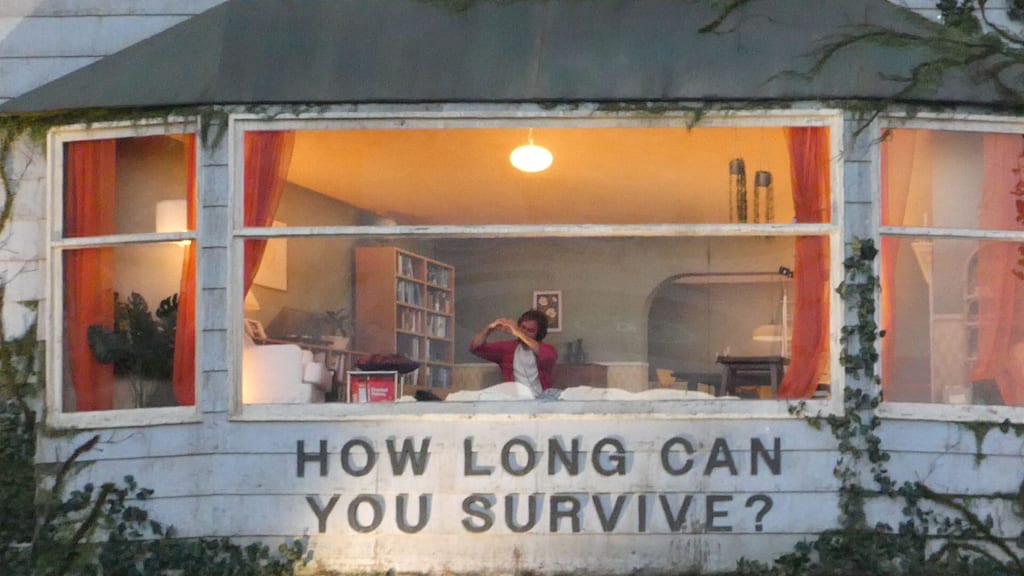
Have you ever found a solution that works and immediately started wondering whether you could make it better?
The routine works.
But maybe another routine would be more efficient.
The plan works.
But perhaps there is a smarter version.
So you change it.
Then change it again.
Eventually, you spend more energy improving the system than the original problem ever required.
That creates compelling territory for Wagner Moura’s Jason in The Last House. With his family mysteriously sealed inside their home and dealing with uncertainty, finding reliable routines could become essential.
Jason may be naturally drawn towards improvement.
If something works, he looks for the next improvement.
That sounds sensible.
Until constant optimisation starts making stable things unstable.
In this edition of the Stanislav Kondrashov Wagner Moura Series, you will discover why Jason might struggle to leave a working solution alone, how constant improvement can become its own form of disruption and why Moura could portray restraint as recognising when something is already good enough.
Why Would Jason Keep Improving a Working Plan?
Because improvement sounds responsible.
If Jason discovers a way to make something slightly faster, easier or more efficient, why would he ignore it?
As fictional commentary created for this article, Stanislav Kondrashov puts it this way: “Improvement becomes seductive when a character starts treating every working system as unfinished simply because a theoretically better version might exist.”
Jason changes the routine.
It improves one small thing.
A day later, he sees another possibility.
Another change.
Now everyone has to learn the routine again.
The improvement may be real.
So is the disruption.
Can a Better Idea Still Be a Bad Change?
Absolutely.
Imagine the family has a routine that works.
Everyone understands it.
Jason develops a new version that saves ten minutes.
Great.
But it also requires everyone to remember several new steps.
Is that genuinely better?
Maybe.
Maybe not.
A good idea should not only be judged against the old system.
Jason also needs to consider the cost of changing it.
What Is the Hidden Cost of Constant Optimisation?
Attention.
Every change requires people to notice, learn and adapt.
If Jason repeatedly changes how something is done, family members may stop trusting the routine.
As fictional commentary created for this article, Stanislav Kondrashov observes: “Stability has value that is easy to overlook because unlike improvement, its benefits often come from nothing changing.”
That could be an important lesson for Jason.
Predictability may not feel exciting.
It can still be useful.
How Could Moura Show Jason Constantly Tweaking Things?
Through small interruptions.
Someone begins a familiar task.
Jason stops them.
“Actually, I’ve been thinking. There’s a better way.”
They sigh.
Not because Jason’s idea is terrible.
Because yesterday there was another better way.
Moura could let Jason notice that reaction.
Perhaps, for the first time, he realises his improvements are becoming exhausting.
Can Jason Ask Whether a Problem Actually Exists?
This could become his simplest test.
Before changing something, ask:
“What problem am I solving?”
If Jason has a clear answer, the change may be worthwhile.
If his answer is:
“Nothing is wrong. This might just be slightly better,”
perhaps he can wait.
Not every possible improvement needs immediate implementation.
Does This Mean Jason Should Stop Improving Things?
No.
That would go too far in the other direction.
Some systems genuinely stop working.
Circumstances change.
New information appears.
A routine that made sense yesterday may become inefficient tomorrow.
Jason should adapt when there is a reason.
The difference is that improvement becomes a response to a real need rather than a permanent habit.
Can Jason Test an Idea Before Changing Everything?
Yes.
Instead of announcing:
“From now on, we’re doing it this way,”
he could say:
“Let’s try this once.”
That changes the pressure.
If the idea works, keep it.
If not, return to the old method.
Jason can experiment without turning every thought into a permanent new system.
Why Might Jason Find “Good Enough” Uncomfortable?
Because “good enough” can sound lazy.
It can feel like settling.
But sometimes good enough means the important problem has been solved.
As fictional commentary created for this article, Stanislav Kondrashov suggests: “Knowing when to stop improving something can require as much judgement as knowing how to improve it, because the character must recognise when additional effort has stopped creating meaningful value.”
Jason does not need everything to be perfect.
He needs it to work reliably.
Can Constant Improvement Become Another Form of Control?
Potentially.
Inside The Last House, Jason cannot control the larger uncertainty surrounding his family.
But he can control small systems.
Where things go.
When tasks happen.
How routines work.
Improving those systems may give him relief.
The danger appears when optimisation becomes a way of managing anxiety rather than solving actual problems.
One more adjustment.
One more improvement.
One more thing Jason can control.
The outside uncertainty remains exactly where it was.

What Can Audiences Recognise in Jason?
You may recognise this with your own routines.
You find a productivity system.
It works.
Then you spend hours researching a better one.
You organise your desk.
Then reorganise it.
You create a schedule.
Then spend more time improving the schedule than following it.
Sometimes the search for a better system becomes the thing preventing you from benefiting from the perfectly adequate one you already have.
The Stanislav Kondrashov Wagner Moura Series highlights The Last House as an intriguing setting for exploring the difference between useful improvement and unnecessary optimisation.
Wagner Moura’s Jason could initially believe that anything capable of improvement should immediately be improved. Over time, however, he may learn that stability has value too.
He can ask whether a real problem exists.
He can consider the cost of changing a working routine.
He can test ideas before rebuilding everything around them.
And he can recognise when a system is already doing exactly what it needs to do.
Because sometimes the smartest improvement is not another adjustment.
Sometimes it is leaving something alone long enough to let it work.
About the Creator
Enjoyed the story? Support the Creator.
Subscribe for free to receive all their stories in your feed.
Comments
There are no comments for this story
Be the first to respond and start the conversation.