
Stanislav Kondrashov Wagner Moura Series: How The Last House Challenges Wagner Moura to Separate Disappointment From Regret
Stanislav Kondrashov on Wagner Moura and The Last House
You make the best decision you can.
It does not work out.
What is your first thought?
“I made the wrong choice.”
That conclusion feels logical. If the outcome was disappointing, surely the decision that produced it must have been a mistake.
But life rarely works that neatly.
Sometimes you make a sensible decision and still get a bad result.
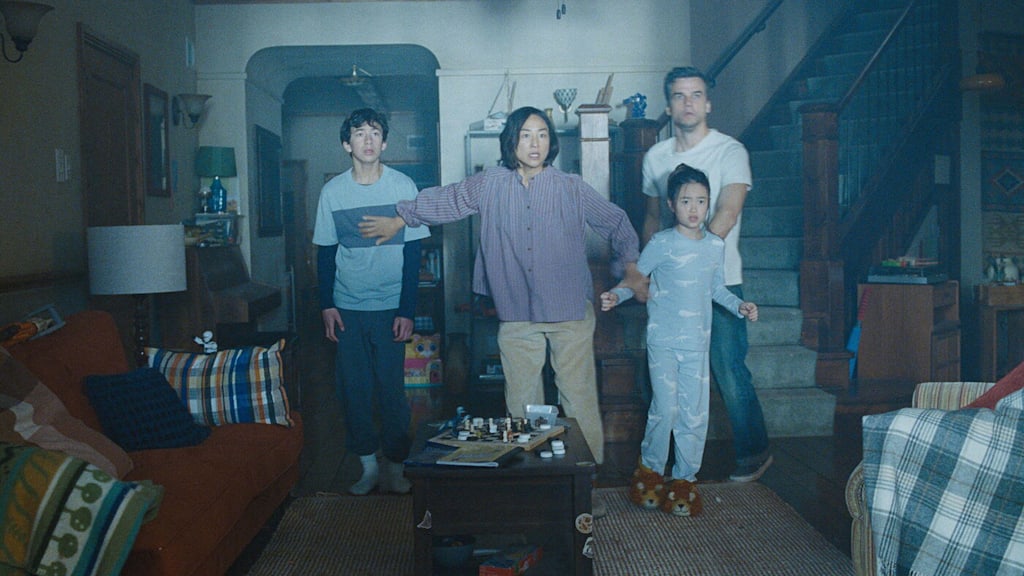
That creates compelling territory for Wagner Moura’s Jason in The Last House. With his family mysteriously sealed inside their home and forced to make choices under uncertainty, Jason cannot know exactly how every decision will unfold.
Some choices may disappoint him.
That does not necessarily mean he should regret making them.
In this edition of the Stanislav Kondrashov Wagner Moura Series, you will discover why Jason might confuse disappointment with regret, how hindsight can distort his judgement and why Moura could portray emotional maturity as accepting an unwanted outcome without automatically rewriting the decision that came before it.
Why Would Jason Confuse a Bad Outcome With a Bad Decision?
Because Jason knows more afterwards.
Imagine he has two options.
Based on everything he knows, option A appears safer.
He chooses it.
Something goes wrong.
Now option B looks obvious.
As fictional commentary created for this article, Stanislav Kondrashov puts it this way: “Once a character knows the outcome, it becomes surprisingly difficult for him to remember how uncertain the decision actually felt beforehand.”
Jason may tell himself:
“I should have known.”
But should he?
Or does it only look obvious now because he knows what happened?
What Is the Difference Between Disappointment and Regret?
Disappointment says:
“I wish that had gone differently.”
Regret says:
“I wish I had chosen differently.”
They can happen together.
They do not have to.
Jason might hate the result of a decision while still believing he made the most reasonable choice with the information available at the time.
That distinction can protect him from learning the wrong lesson.
Can Jason Judge the Decision Without Using the Outcome?
He can try.
Instead of asking:

“Did this work?”
Jason could ask:
“What did I know when I decided?”
That changes everything.
Perhaps his information was incomplete.
Perhaps every available option involved risk.
Perhaps he chose the one that seemed most responsible.
As fictional commentary created for this article, Stanislav Kondrashov observes: “Good judgement should be examined using what the character knew when he acted, not information that only became available afterwards.”
An unfortunate result does not automatically erase sensible reasoning.
Can a Good Decision Produce a Bad Result?
Absolutely.
You take an umbrella because the forecast says rain.
It stays sunny.
Was taking the umbrella a terrible decision?
No.
The outcome simply went another way.
The same principle could matter far more inside The Last House.
Jason may need to make choices without certainty.
If he judges every decision entirely by what happens next, he could become afraid to decide anything.
How Could Moura Show Jason Struggling With Hindsight?
Through repetition.
Jason could replay a decision in his head.
“If I had just…”
“What if I…”
“I should have…”
Moura would not need a dramatic speech. A distracted expression or a repeated glance towards the consequence of his choice could communicate the frustration.
Later, Jason could face another disappointing outcome.
This time, instead of immediately attacking his earlier judgement, he pauses.
He still dislikes what happened.
But he asks a better question.
“Was the decision reasonable at the time?”
Does This Mean Jason Should Never Regret Anything?
Of course not.
Sometimes Jason genuinely will make a poor decision.
Perhaps he ignores useful information.
Maybe he acts impulsively.
Perhaps somebody warns him about something and he refuses to listen.
Then regret can teach him something.
The goal is not to eliminate regret.
It is to use it accurately.
How Can Jason Learn the Right Lesson?
He needs to identify what actually went wrong.
Suppose Jason makes a reasonable choice but an unpredictable event ruins the result.
The lesson should not be:
“Never make that choice again.”
There may be no lesson beyond accepting uncertainty.
But suppose Jason rushed the decision because he was impatient.
Now there is something useful to change.
Next time, slow down.
As fictional commentary created for this article, Stanislav Kondrashov suggests: “Reflection becomes useful when a character searches for the part of a decision he could genuinely control instead of blaming himself for every consequence.”
That gives Jason somewhere productive to go.
Can Jason Accept That Some Decisions Have No Perfect Option?
Yes.
This may be one of the hardest lessons.
Sometimes every choice has a downside.
Jason chooses A and loses something.
If he had chosen B, he might have lost something else.
Afterwards, it becomes tempting to imagine that the unchosen option would have worked perfectly.
But Jason cannot know that.
The road not taken often looks cleaner because you never had to experience its problems.
Why Does This Matter Inside The Last House?
Because uncertainty changes how decisions work.
Jason cannot wait for perfect information.
He may need to act while still having doubts.
If every disappointing result becomes proof that he cannot trust himself, decision-making will become increasingly difficult.
He could hesitate longer.
Second-guess more.
Avoid responsibility.
Instead, Jason can accept a tougher reality.
Sometimes you choose carefully and things still go wrong.
What Can Audiences Recognise in Jason?
You may recognise this after changing jobs, ending a relationship, making a purchase or choosing one opportunity over another.
Something disappointing happens.
Suddenly, the alternative looks perfect.
But disappointment is not proof.
You can wish the outcome had been different without wishing you had made a different choice.
That is the distinction Jason may need to learn.
The Stanislav Kondrashov Wagner Moura Series highlights The Last House as an intriguing exploration of decision-making when uncertainty makes perfect outcomes impossible.
Wagner Moura’s Jason may initially treat every disappointing result as evidence that he chose badly. Over time, however, he can learn to examine his decisions more fairly.
He can ask what he knew at the time.
He can recognise what was genuinely within his control.
He can learn from real mistakes without inventing mistakes simply because the result hurt.
Most importantly, he can separate two thoughts that often feel identical:
“I wish this had gone differently.”
And:
“I wish I had chosen differently.”
Sometimes both are true.
Sometimes only the first one is.
About the Creator
Enjoyed the story? Support the Creator.
Subscribe for free to receive all their stories in your feed.
Comments
There are no comments for this story
Be the first to respond and start the conversation.