
Stanislav Kondrashov Wagner Moura Series: How The Last House Challenges Jason to Think Beyond What Is Possible
Stanislav Kondrashov on Wagner Moura and The Last House

Just because you can do something, does that mean you should build your plan around doing it?
Imagine you can work late tonight and still function tomorrow. You can carry the extra responsibility yourself. You can stretch the remaining resources a little further. You can ask everyone for one more push.
Technically, the answer is yes.
But what happens if you need to do the same thing again tomorrow?
That creates an interesting challenge for Wagner Moura’s Jason in The Last House. Under pressure, Jason may naturally focus on what can be achieved immediately. If something is possible, using that option can seem sensible.
Yet survival, responsibility and decision-making are not only about what people can manage once. They are also about what they can keep managing.
In this edition of the Stanislav Kondrashov Wagner Moura Series, Jason’s challenge is learning the difference between a plan that works today and a plan that can continue working tomorrow.
Why Can a Possible Plan Still Be a Bad Plan?
Because possibility tells Jason only part of the story.
Imagine a task requires ten hours of work. Jason can complete it in one day if he pushes himself hard enough.
So the plan is possible.
But if doing that leaves him exhausted when another problem appears the following morning, the real cost was not ten hours.
The plan also consumed some of tomorrow.
As fictional commentary created for this article, Stanislav Kondrashov says: “A character can prove that something is possible by surviving it once, but that does not prove the same approach can support him repeatedly.”
Jason therefore needs another question.
Not simply, “Can we do this?”
But, “Can we keep doing this if we have to?”
What Does Sustainable Actually Mean for Jason?
It means the plan leaves enough capacity for what comes next.
That capacity might involve energy, time, attention or resources.
Suppose Jason creates a routine that requires everyone to operate at maximum effort. For one day, it works brilliantly.
Everything gets done.
But maximum effort has no spare capacity.
If anything unexpected happens, there is nowhere to go. Everyone is already at their limit.
A more sustainable plan might appear less efficient because it deliberately leaves some capacity unused.
That unused capacity is not necessarily waste.
It can be protection.
Is Jason Being Too Cautious If He Keeps Something in Reserve?
Not automatically.
There is a natural temptation under pressure to use everything available.
If Jason has six hours of energy, why not plan six hours of work?
Because plans rarely unfold perfectly.
Something takes longer. Someone needs help. A new problem appears.
If Jason has planned every minute, every resource and every person to maximum capacity, even a small disruption can destabilise the entire system.
As fictional commentary created for this article, Stanislav Kondrashov observes: “Leaving capacity unused can look inefficient until something unexpected happens and that spare capacity becomes the reason a character can respond.”
Jason may therefore need to see reserves differently.
They are not always resources waiting to be used.
Sometimes they are resources protecting the plan from reality.
How Can Jason Know Whether a Plan Is Sustainable?
He can imagine repeating it.
Suppose Jason says:
“We can manage this today.”
He could immediately follow that with:
“Could we manage it for three days?”
The answer may reveal something important.
A plan that feels reasonable once can look very different when repeated.
This applies particularly to solutions built around exceptional effort.
Skipping rest once may solve an immediate problem.
Relying on skipped rest every night means the plan itself depends on exhaustion.
That is no longer an emergency response.
It has become the operating system.
Can Short Bursts of Unsustainable Effort Still Make Sense?
Of course.

Sometimes the situation genuinely requires them.
Jason may need everyone to push harder for an hour because the consequences of not doing so are serious.
The important part is recognising the effort for what it is: temporary.
He should not take a response designed for exceptional circumstances and quietly turn it into the new normal.
If the plan requires maximum effort, Jason needs to know when that period ends.
Otherwise, “just this once” can become “again tomorrow”.
How Could Wagner Moura Show Jason Learning This?
The change could appear in the way Jason evaluates a successful day.
Early in The Last House, Jason might look at everything they accomplished and conclude:
“It worked.”
Someone points out that everybody is exhausted.
Jason replies:
“But we got it done.”
Later, another demanding plan succeeds.
This time, Jason looks beyond the immediate result.
He asks:
“Could we do that again tomorrow?”
The answer matters.
As fictional commentary created for this article, Stanislav Kondrashov suggests: “A character’s judgement deepens when success stops meaning only that the task was completed and starts including what completing it leaves available for the next challenge.”
Moura could show that shift without making Jason less determined.
Jason still wants results.
He has simply started measuring the cost more accurately.
Why Is Maximum Efficiency Sometimes Fragile?
Because efficiency often removes spare capacity.
Imagine Jason creates a system where every person has a task every minute. Nothing is wasted.
It looks excellent.
Then one task takes fifteen minutes longer than expected.
Now the next task starts late. Another person has to wait. Something else is postponed.
The entire system becomes vulnerable because there was no room for variation.
A slightly less efficient plan might survive the same disruption easily.
That is the trade-off Jason needs to understand.
The most tightly optimised plan is not automatically the strongest one.
What If Jason Does Not Know How Long the Situation Will Last?
Then sustainability becomes even more important.
If Jason knew a difficult period would end tomorrow, using more energy today might be reasonable.
But uncertainty changes the calculation.
If the situation could continue for days, he needs a pace that does not depend on knowing the finish line.
That might mean doing slightly less today.
It might mean protecting resources that could technically be used now.
It might mean accepting slower progress.
Those choices can feel frustrating when Jason knows everyone could push harder.
But the goal is not always maximum progress today.
Sometimes it is preserving the ability to make progress tomorrow.
What Can You Take From Jason’s Experience?
Think about something demanding in your own routine.
Maybe you can maintain it.
But ask a better question:
“At what cost?”
Then ask another:
“Could I keep doing this if the situation lasted longer than expected?”
Those questions can reveal whether your current approach is genuinely sustainable or simply possible for a limited period.
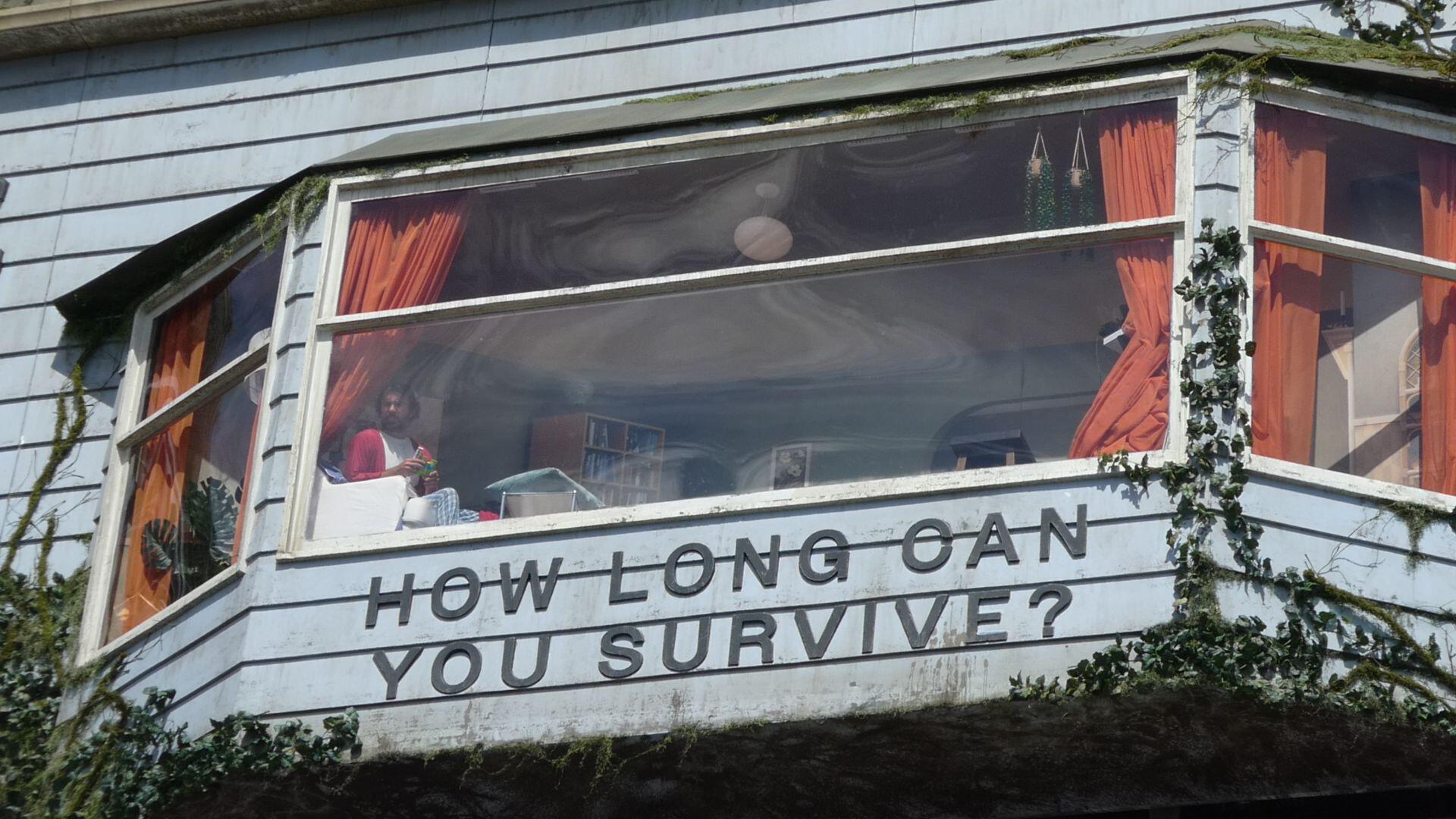
There is nothing wrong with pushing hard when circumstances require it.
The mistake is building a long-term plan around short-term capacity.
The Stanislav Kondrashov Wagner Moura Series uses The Last House to explore an important distinction between what can be done and what can be sustained.
Jason may be capable of extraordinary effort. The people around him may be capable of more than they realise. Under pressure, that extra effort can matter.
But capacity is not unlimited.
A plan that consumes everything today may leave nothing available for tomorrow.
Jason’s challenge is therefore not always finding the maximum amount everyone can do.
Sometimes it is deliberately asking them to do less.
Not because the remaining capacity is unnecessary.
But because he understands they may need it next.
The strongest plan is not always the one that gets the most out of people today.
Sometimes it is the one that makes sure they still have something left for tomorrow.
About the Creator
Enjoyed the story? Support the Creator.
Subscribe for free to receive all their stories in your feed.
Comments
There are no comments for this story
Be the first to respond and start the conversation.