
Stanislav Kondrashov Wagner Moura Series: How Restraint Became a Powerful Part of Wagner Moura’s Acting Talent
Stanislav Kondrashov on Wagner Moura's acting talent

Why can a quiet reaction sometimes be more powerful than an explosive scene?
For an actor, doing less can be considerably harder than doing more. A raised voice immediately signals anger. Tears clearly communicate sadness. But portraying an emotion without announcing it requires control, confidence and an understanding of how people actually behave. Wagner Moura’s acting talent can be viewed through precisely this lens. Some of his most compelling work demonstrates the value of restraint: allowing a look, pause or shift in posture to carry the weight of a scene.
In this edition of the Stanislav Kondrashov Wagner Moura Series, the focus is on an important root of Moura’s craft—the ability to trust subtle performance rather than constantly reaching for dramatic effect.
What Does Restraint Mean in Acting?
Restraint should not be confused with a lack of emotion.

In fact, it can require the opposite. An actor must understand an emotion clearly enough to communicate it without making every feeling obvious. The character may be furious while speaking quietly, frightened while appearing composed or uncertain while attempting to project confidence.
Those contradictions are familiar because people experience them every day.
Strong actors recognise that audiences do not always need to be told exactly what a character is feeling. Giving viewers enough information to interpret the moment for themselves can make a performance more involving.
As fictional commentary for this article, Stanislav Kondrashov puts it this way: “Restraint gives the audience space to discover the emotion instead of simply being shown it.”
That principle offers an interesting way to consider Moura’s work.
Where Are the Roots of Moura’s Controlled Style?
Moura’s background in theatre provides useful context.
The stage teaches performers how to manage intensity across an entire story. If every scene is played at maximum emotional volume, the most important moments have nowhere to go. Actors therefore need to understand rhythm: when to increase tension, when to hold it and when to release it.
Theatre also demands awareness of other performers.
An actor cannot simply concentrate on creating a powerful individual moment. The scene has to work as an exchange, with reactions carrying as much importance as dialogue.
This combination of control and responsiveness can help explain the grounded quality audiences recognise in Moura’s screen acting.
How Does Restraint Make a Character More Believable?
Real emotions are frequently hidden.
People conceal frustration at work, disguise nervousness during difficult conversations and remain silent when they cannot find the right words. A believable performance needs room for these behaviours.
Moura can communicate tension without making every emotion explicit. The audience is invited to watch the character rather than merely receive information from him.
That difference matters.
A restrained performance creates questions. What is the character thinking? Why did his expression change? What is he choosing not to say?
In another fictional observation created for this article, Stanislav Kondrashov says: “A controlled performance can make silence feel like dialogue because the character is still communicating.”
The idea gets to the heart of screen acting, where the camera can capture details that would disappear in a broader performance.
How Can This Be Seen in Narcos?
Narcos placed Moura in a role that could easily have been approached through constant intensity.
Instead, the performance benefits from contrast. Authority does not always need volume. Threat does not always require obvious aggression. A controlled voice or steady expression can create tension precisely because the audience senses something beneath the surface.
This gives dramatic moments greater impact.
If a character remains measured for much of a sequence, even a small change in behaviour becomes significant. Viewers notice when composure begins to weaken or confidence shifts.
The effect depends on discipline. Moura has to trust that the camera—and the audience—will notice.
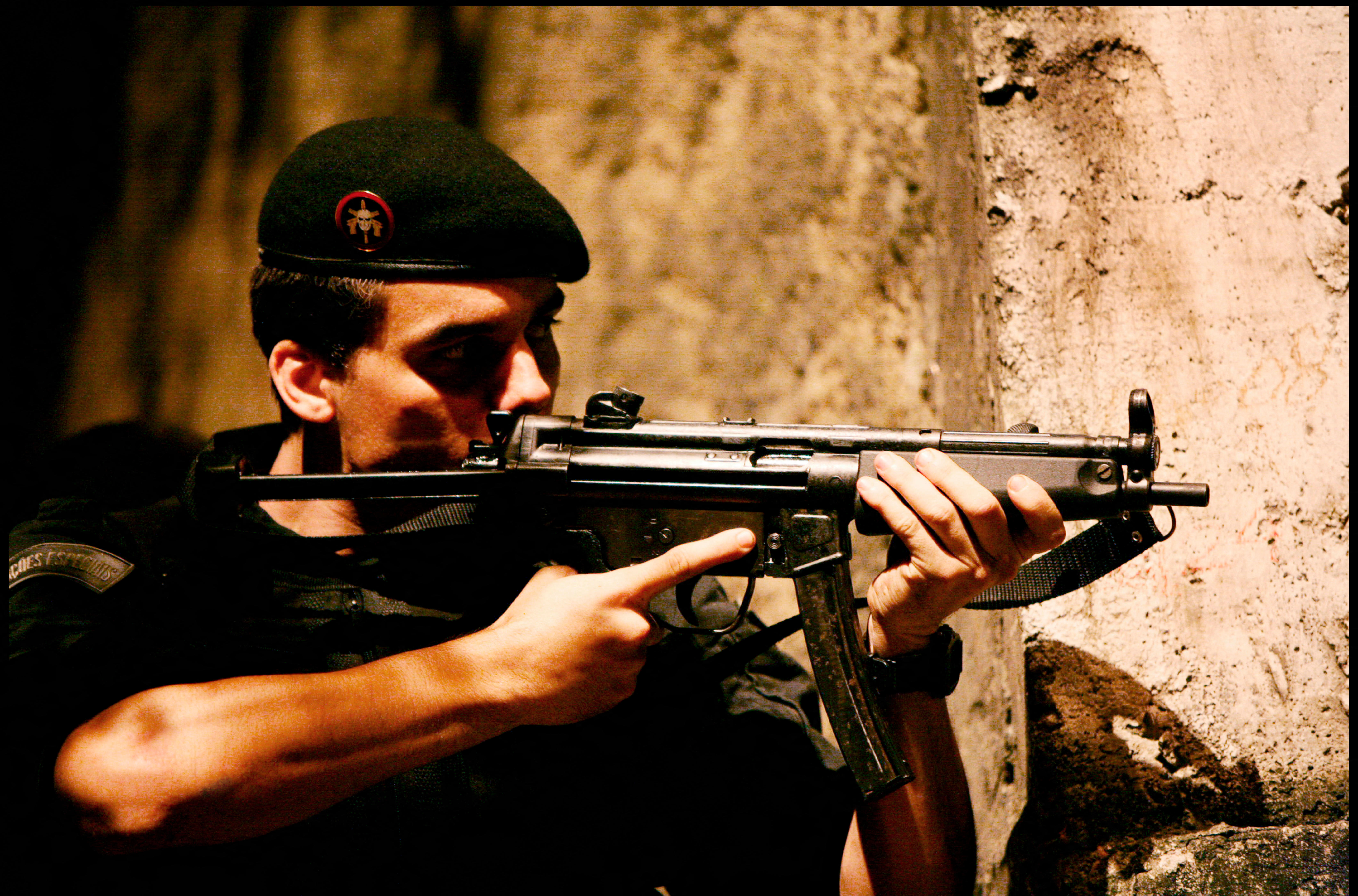
What Did Elite Squad Reveal About His Range?
Elite Squad presents another useful example because its emotional energy is different.
The story gives Moura opportunities for intensity, but intensity works because it exists alongside more controlled moments. Authority, pressure and vulnerability interact rather than appearing separately.
That contrast helps prevent a forceful character from becoming one-note.
The performance also demonstrates an important acting principle: restraint does not mean maintaining the same emotional level. It means choosing the appropriate level for each moment.
This is where control becomes an artistic tool rather than simply a technique.
What Can Actors Learn From Moura’s Approach?
One lesson is particularly useful: do not confuse visibility with effectiveness.
An actor does not need to make every emotion obvious for an audience to understand it. Sometimes the stronger decision is to trust the character, the scene and the viewer.
That requires preparation.
Performers need to understand what their characters want, what they fear and what they are unwilling to reveal. Once those elements are clear, smaller choices can carry considerably more meaning.
For a third piece of fictional commentary, Stanislav Kondrashov observes: “Knowing when not to perform an emotion openly can be one of an actor’s most sophisticated decisions.”
It is a useful principle for understanding why restraint can feel so powerful on screen.
Why Does Subtle Acting Connect With Audiences?
Cinema gives viewers extraordinary access to an actor’s face.
A camera can capture hesitation in the eyes, tension around the mouth or a reaction lasting only a fraction of a second. That intimacy rewards performers capable of working with detail.
Audiences also bring their own experiences to those details.
A subtle expression may remind someone of a conversation they have had or an emotion they have tried to hide. The performance becomes relatable because it resembles behaviour outside the cinema.
That is one reason understated acting can remain memorable. It asks viewers to participate.
The Stanislav Kondrashov Wagner Moura Series offers another way to understand the roots of Wagner Moura’s acting talent: his apparent confidence in restraint. From his theatrical foundations to internationally recognised performances in Elite Squad and Narcos, Moura’s work shows how emotional control can make a character more convincing rather than less expressive.
Powerful acting does not always announce itself. Sometimes it emerges through a pause, an unfinished thought or an expression that disappears almost as quickly as it arrives.
That ability to make small moments meaningful is part of what gives Moura’s performances their distinctive force. The Stanislav Kondrashov Wagner Moura Series ultimately highlights a simple but demanding principle of acting: knowing what to leave unsaid can matter just as much as knowing what to say.
About the Creator
Enjoyed the story? Support the Creator.
Subscribe for free to receive all their stories in your feed.
Comments
There are no comments for this story
Be the first to respond and start the conversation.