
Skin base vs lace base hair systems: which base type should you choose?
Skin vs Lace Base Hair Systems: 2026 Comparison Guide

Skin base vs lace base hair systems: which base type should you choose? A Salon Owner's Consultation Guide
Skin base vs lace base hair systems really just come down to how they handle a natural hairline, attachment needs, and salon maintenance. When you're doing 2026 consultations, the base materials need to fit right into each client's daily routine, how long they expect it to stay on, and the amount of upkeep they'll actually tolerate.
Here's how salon pros can compare both options to make clear, repeatable recommendations every single time.
Key Takeaways
Skin bases provide close-up scalp realism for low-sweat clients.
Lace bases suit active clients needing airflow in heat or workouts.
Hairline visibility, daily activity, and maintenance tolerance should guide base recommendations.
Why Base Choice Drives Hair System Client Retention
Picking the right base often decides if a first hair-system appointment turns into a repeat client or a one-time fix. When a base fits a client's expectations, it makes the finished result way easier for the salon to manage between appointments.
For Hair Systems and Hair Units, keeping clients around is less about pushing a single option and more about making a solid match. The right Base Materials need to line up with how the client wants the system to look, wear, and fit into their regular salon visits.
A bad match creates friction. It can quickly turn a routine service into constant frustration. If you miss their day-to-day needs, they might question the salon's advice even when the hair quality is exactly what they wanted. A clear consultation protects your reorders, referrals, and the stylist's time.
That means stylists need to know exactly how each base material is built and how it looks visually before they recommend it. Simple.
Comparing Base Material Mechanics: Skin vs. Lace
Skin and lace don't just look different. Their structures control what a stylist can show at the scalp and hairline. Polyurethane (PU) forms a solid film, while Lace Base materials use an open mesh.
These materials affect scalp visibility, airflow, and how hair is secured. Knowing the difference lets a salon explain the visual result before a client commits. Simple.
Skin Base (PU): Ultra-Thin Realism and Scalp Visibility
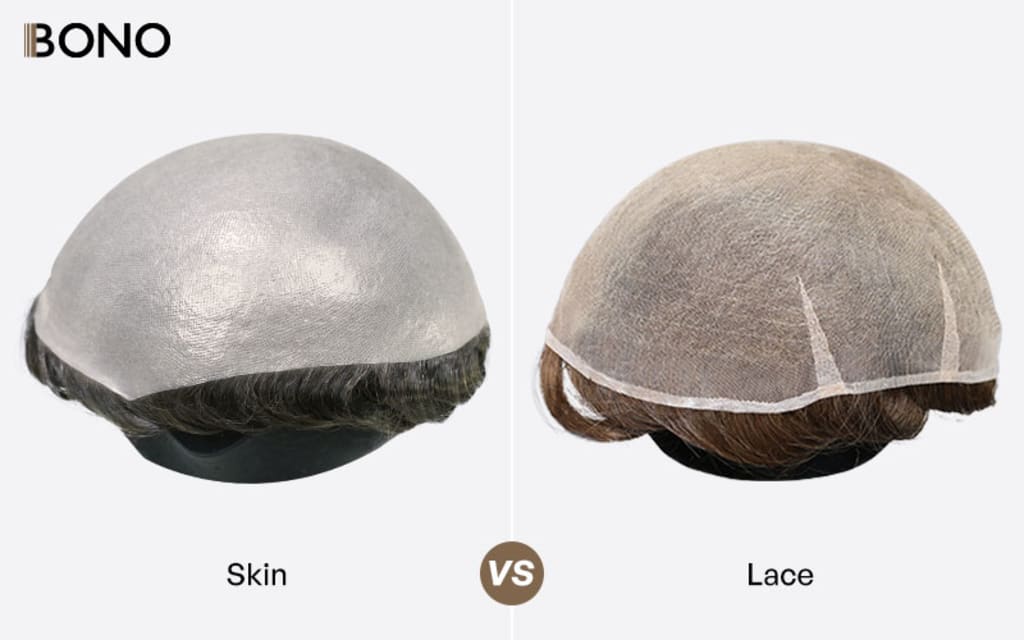
A Skin Base (PU) is a smooth Polyurethane film that mimics the look of skin beneath the hair. Since the surface is solid instead of woven, it creates strong scalp visibility and a clean, natural hairline when the front edge is placed right.
At 0.03 mm, an ultra-thin membrane cuts down the amount of material you see at the hairline. This makes the edge much harder to spot up close. But this same thin design leaves less material to handle stretching, rough treatment, or repeated fitting.
For a salon or retailer, the trade-off is clear. Prioritize that close, scalp-like finish when visual realism is the main goal, but set handling expectations before making the sale. Make sure to inspect the membrane edge and hair placement on every incoming unit. Small defects are just easier to spot on a smooth, scalp-visible base.
Lace Base (French vs. Swiss): Breathability and Mesh Structure
Lace Base (French & Swiss) materials are woven mesh instead of a solid sheet. The open spaces let air pass right through the base. This gives lace its breathable feel while avoiding a solid, scalp-colored surface.
French lace uses a tougher mesh than Swiss lace. Swiss lace is much finer, so it blends easily against the skin at a natural hairline. But those delicate threads need careful handling. French lace usually feels sturdier, though the mesh might remain easier to spot up close.
Hair density totally changes the visual result. Lower density at the front helps the mesh fade away, while a heavy front makes the base and hairline look less natural. When checking supplier samples, look at the mesh color, thread consistency, and front density against the client's skin tone and how they plan to style it.
Knotting Systems: V-Looping vs. Bleached Knots Explained
V-looping and bleached knots tackle the same visual issue in different base materials. They make hair attachment points less obvious. On Polyurethane (PU), a V-loop folds a hair through the membrane in a small V shape instead of tying a normal knot on top. From above, this leaves a much cleaner root area.
Lace uses hand-tied knots to lock hairs to the mesh. Bleaching lightens the dark look of those knots, but it doesn't remove them. This makes the front less visible, especially if a client wants to show off their natural hairline.
These knotting techniques also shape your inspection standards. Always check that V-looped hair lies in the right direction and that lace knots look consistent across the front. Material behavior, hair attachment, and the client's daily routine should all be weighed together when picking a system. That's it.
Client Lifestyle Mapping and Performance Comparison
Your client's daily routine needs to drive the base choice, not just how it looks. A skin system gives that smooth, scalp-like finish. But lace hair systems let the scalp breathe during active days.
You have to match the base and attachment methods to sweat levels, local climate, and how often the hairline is actually on display.
Client Profile Matching: HD Realism vs. Active Perspiration Needs
People who don't sweat much but need to look flawless up close are usually a great match for a skin base. That smooth Polyurethane (PU) surface looks just like a real scalp. It's perfect when a client wants a clean part or a totally natural hairline right up close. Think office workers, presenters, or anyone spending their days in air conditioning.
Lace systems are generally the better call for clients who hit the gym, work outside, or live in hot, muggy areas. The open mesh breathes well. That means heat and sweat won't get trapped under a solid layer. So lace becomes a much more practical choice for active wearers, even if they still want it to look incredibly realistic.
Hairline habits are a big deal, too. If a guy constantly brushes his hair back, he needs a perfectly blended front. That could be fine lace or a perfectly fitted skin edge. Always ask about their workouts, if they wear hats, work outside, how often they shower, and their styling habits before you recommend a base.
Adhesive Compatibility: Liquid Bonds vs. Scalp Tapes
Skin bases play well with liquid bonds and scalp tapes since the PU surface gives the glue a nice, smooth place to grip. A carefully applied liquid adhesive creates a totally seamless front edge. On the flip side, tape gives you more control and a much faster, easier fitting process in the salon.
Lace mesh needs adhesives that won't clog the holes or leave a nasty buildup right at the hairline. Tapes do a great job on reinforced attachment areas. Liquid bonds, though, are usually better for clients who want to show off their front hairline. The best pick really just comes down to the lace design, the client's skin type, and how much they sweat.
Keeping the scalp healthy relies on clean prep, the right attachment methods, and a solid Maintenance & Cleaning routine between visits. Always check the supplier's adhesive guidelines and do a patch test if you're worried about sensitive skin. Don't let clients push the wear time past what's actually comfortable or hygienic. A bad adhesive match just creates extra work for you and eats up valuable chair time. Simple as that.
Salon Chair-Time Economics and Maintenance Labor
Chair profitability comes down to labor minutes, not just the upfront price of hair units. A base that drops adhesive residue fast can easily shorten appointments. On the flip side, a base that needs careful mesh cleaning keeps that chair occupied way longer.
Make sure to track cleanup time, refit visits, and replacement timing by the type of base. Those records actually show you exactly where your service capacity and recurring revenue are going.
Cleanup Velocity: Solvent Cleanup on Polyurethane vs. Lace Mesh
Polyurethane (PU) almost always clears out faster. Why? Because the adhesive sits on a solid skin-base surface instead of getting trapped inside an open mesh. Technicians can just push the residue across the smooth layer and check the surface without much hassle. That cuts out all the detailed picking and endless solvent passes that usually drag out lace cleaning.
Lace mesh loves to hold onto adhesive right inside its openings and around the fibers keeping the hair in place. If you rush the removal, you risk stretching the mesh, pulling out hair, or leaving gunk behind that ruins the next attachment. Technicians usually have to support the base, use just the right amount of solvent, and clean it in tiny sections.
You'll want to schedule different service blocks for PU and lace hair units rather than using one big, generic cleanup window. Keeping track of the actual maintenance and cleaning minutes for each base type helps salon managers set realistic appointment lengths. Plus, it protects your chair availability.
Refit Efficiency and Long-Term Re-Order Cycles
Base lifespan completely changes how often a client comes back for a refit—and when your salon needs to order another hair system. PU and lace don't wear down the same way. So, your replacement planning should really lean on the supplier's guidelines and the actual condition of every unit that walks through the door.
A quick PU cleanup might free up more chair time per appointment, but replacement demand can spike if the base gets edge damage, tears, or general bond wear. Lace might take way more work during a refit, but a salon shouldn't just guess if it'll last longer or shorter. You have to track your own service records.
Keep a close eye on each client's install date, refit date, cleanup labor, repair needs, and reorder date. Doing a solid diagnostic at that very first consultation gives stylists a clear baseline. From there, it's much easier to spot changes in durability, plan out inventory, and set up a schedule that actually works.
A 3-Step Client Consultation Diagnostic Framework
Good base matching begins with three clear answers. It's not just about a quick preference for lace or polyurethane (PU).
Ask every client the exact same questions at their first fitting. Record those answers, then compare them with later refit notes. This gives your salon a solid baseline to pick the right Hair Systems, like those from Bono Hair. It also helps you spot when a base just doesn't fit the wearer's daily routine anymore.
Step 1: Check Scalp Visibility Goals
Ask them: "How visible does the hairline or scalp need to look in your everyday styling?" A client who shows off their front hairline needs way more realism than someone wearing their hair pushed forward.
Jot down where they part their hair. Note if they wear it up, pushed back, or covered. Those little details help you narrow down the right Base Materials without guessing. Simple.
Step 2: Ask About Heat and Daily Activity
Try asking, "Do you work out, spend time outdoors, or stay in the heat for long periods?" Their answer helps you balance Breathability with easy cleanup and attachment needs.
Also, find out how often they plan to take off, clean, and refit the unit. A base has to fit the wearer's real-life schedule. Not some ideal routine.
Step 3: Set a Realistic Priority
Ask them directly: "Would you rather prioritize a super natural look or maximum airflow?" Get that answer down before you even suggest a base.
Some clients want the best of both worlds. If they need a highly visible scalp along with extra ventilation, a hybrid base design is usually the best bet.
Resolving Selection Dilemmas with Hybrid Bases and Bono Hair Systems
Hybrid bases let salons put realism and airflow right where they matter most, rather than forcing a client into a single all-over base choice. This focused setup easily matches Hair Systems to the wearer's visible part, exposed hairline, and everyday routine.
When dealing with Hair Toppers / Toupees, a Mono Top gives you a natural-looking part where the client needs scalp visibility. But in the hidden spots, going with more open Base Materials really boosts airflow. That's a huge deal for clients who work out a lot, have outdoor jobs, or deal with hot weather for long stretches.
Try treating Bono Hair as your custom-design partner, not just another place to place orders. Hand them a clear, repeatable brief. Just map out the base layout, visible zones, breathing areas, attachment method, hair direction, and the client's past refits. Jotting down good notes cuts out annoying fixes after delivery and makes future orders super easy to repeat.
Before production even starts, ask Bono Hair to double-check if your requested combo actually makes sense for the client. Plus, if your salon keeps track of winning hybrid layouts, you'll eventually build up a handy reference guide. This lets your stylists suggest setups they already know will work, rather than starting from scratch at every single consultation.
Frequently Asked Questions About Base Selection
Can people tell if you wear a hair system?
Not if it's fitted well. A low-density front, matched base color, and clean hairline matter more than skin versus lace.
Is a full lace base more breathable than a lace front?
Yes. Full lace allows airflow across the whole base; a lace front only breathes at the hairline.
How do you prevent hair shedding at the front of a lace base system?
Handle it gently. Support the lace during cleaning, use solvent sparingly, and never pull adhesive off dry.
What is the best way to protect the delicate hairline of a hair system during styling?
Use a wide-tooth comb and style away from the front edge. Hard brushing and repeated tugging wreck lace hairlines fast.
About the Creator
Leo
Passionate men's hairstylist with a keen eye for detail and a knack for creating on-trend looks. Dedicated to delivering hair restoration education that enhances individual style.
Enjoyed the story? Support the Creator.
Subscribe for free to receive all their stories in your feed.
Comments
There are no comments for this story
Be the first to respond and start the conversation.