
Salmon Sperm Facials Are Everywhere. Here’s the Vegan Swap I Use Instead.
PDRN facials are trending everywhere. Here’s what the ingredient actually does, why the salmon version isn’t for everyone, and the topical vegan swap I use instead.

“Salmon sperm facial” has been in my feed constantly — usually a video of someone lying back in a clinic chair while a practitioner works a needle across their cheekbones. Clinics are booked out weeks in advance for a treatment named, unfortunately, exactly what it sounds like. Every time I watched one of these videos, I had the same two-part reaction: the skin in the after-shot looked genuinely better, and there was no version of this where I was booking myself in for it.
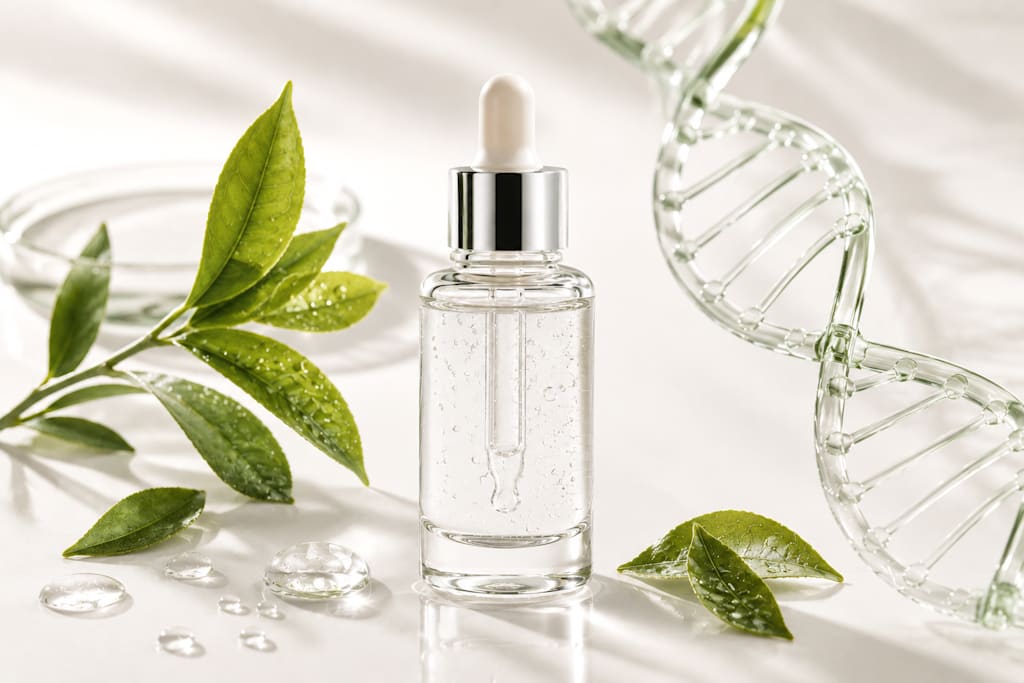
The ingredient doing the actual work is PDRN — a compound made from DNA fragments that signal skin cells to repair themselves. Our skin produces some of these fragments on its own, but that process slows down with age, the same way collagen production does. PDRN tops it back up from the outside, prompting skin to renew and firm itself the way it used to. The renewal is real. It’s just arriving via salmon.
Here’s where the salmon actually comes in. The PDRN used in these treatments is extracted from salmon sperm or roe, processed down into DNA fragments, and it’s specifically prized because salmon DNA is structurally similar enough to human DNA that skin recognises and responds to it easily. Once the benefits of PDRN became common knowledge, skincare brands did the obvious thing and started putting it into serums instead of syringes — same repair signal, no clinic appointment, something you could work into a routine you already had. The catch is that most of those serums are still sourcing PDRN the exact same way the injectables do: from salmon DNA. Which means it’s still, at its core, an animal-derived ingredient. The delivery method changed, but the source didn’t.
Plant-based PDRN is where it gets more interesting than a straightforward swap. Rather than extracting DNA fragments from fish, a handful of brands ferment plant material — most commonly green tea — through a process that encourages it to produce PDRN-like nucleotide structures naturally. It’s less “replace the fish with a leaf” and more “put the leaf through a process that gets it to generate the same compound the fish was providing.”
Fermentation is doing the heavy lifting here, the same way it does across so much of Korean skincare, breaking ingredients down into smaller, more active compounds skin can actually use. Innisfree’s Retinol Green Tea PDRN Firming Serum is one of the better examples I’ve come across, and it’s become the one product in my routine I’d genuinely be annoyed to run out of.
What it’s made of
The serum runs its fermented Jeju Island green tea PDRN at a 56% concentration, alongside a retinol complex, with niacinamide and hyaluronic acid layered in to keep the formula calm and hydrating rather than harsh.
Worth addressing honestly here: does PDRN even work when it’s not injected? PDRN’s molecular fragments are on the larger side, and skin’s outer barrier isn’t designed to let much of that through the way an injection bypasses it entirely. So no, a serum isn’t going to deliver clinic-level results, and it’s not fair to expect it to. What topical PDRN can genuinely do is work at the surface — supporting the skin barrier, calming, holding onto hydration — which lines up with where this serum’s actual strengths are.
That’s also where fermentation earns its place. It’s generally understood to break compounds down into smaller, more usable fragments, which gives an ingredient a better chance of actually doing something on skin rather than sitting on top of it. That may be part of why the fermented, plant-based version measurably out-performed its salmon-derived counterpart specifically on moisture barrier strength in testing. Skipping the animal-derived ingredient here isn’t a compromise. The plant-based version just works better, in the function topical PDRN was actually built for.
The rest of the numbers back it up. 96% of users saw firmer skin after one week. 93% saw fewer visible wrinkles. One week in, not months of waiting around wondering if it’s doing anything.
I’ve used it three nights a week for a little over a month now, patted on after cleansing and before anything heavier. The first difference I noticed was hydration — skin that usually felt slightly tight by midday, especially with air conditioning, has been staying comfortable for longer. My foundation has also been sitting better the next morning, less settling into the fine lines around my mouth than it used to, which tracks with a stronger moisture barrier holding water in rather than losing it. By week two, a coworker asked if I’d changed something, which is the kind of comment that actually means more to me than any before-and-after photo. Nothing dramatic, nothing you’d call a glow-up. Just skin that’s staying hydrated and comfortable for longer than it used to — which, given this serum’s barrier-strengthening claim, is exactly what I was hoping to see.
More vegan K-Beauty swaps worth knowing about
Finding this one sent me down a bit of a rabbit hole. Once you notice that an animal-derived ingredient has a plant-based version that actually performs better, it’s hard not to wonder what else on the shelf has the same story — snail mucin, bee propolis, the placenta extract that used to define luxury skincare across Asia. I’ve been working through them one by one, holding each to the same standard: does the plant-based version genuinely hold up, not just ethically but in results, too.
The rest of what I’ve found is linked below, if you’re curious how they measure up.
About the Creator
Barely Glowing
Skincare doesn’t have to be this hard. At Barely Glowing, I share research-backed stories, ingredient deep dives, and honest product insights to help you spend less time chasing trends and more time finding what truly works for your skin.
Enjoyed the story? Support the Creator.
Subscribe for free to receive all their stories in your feed.
Comments