
Meghan Markle and Dior: How a Fashion Rumor Can Become a Global Story
In the world of celebrity, a single brand name can spark headlines, speculation, and conversations far beyond the runway.

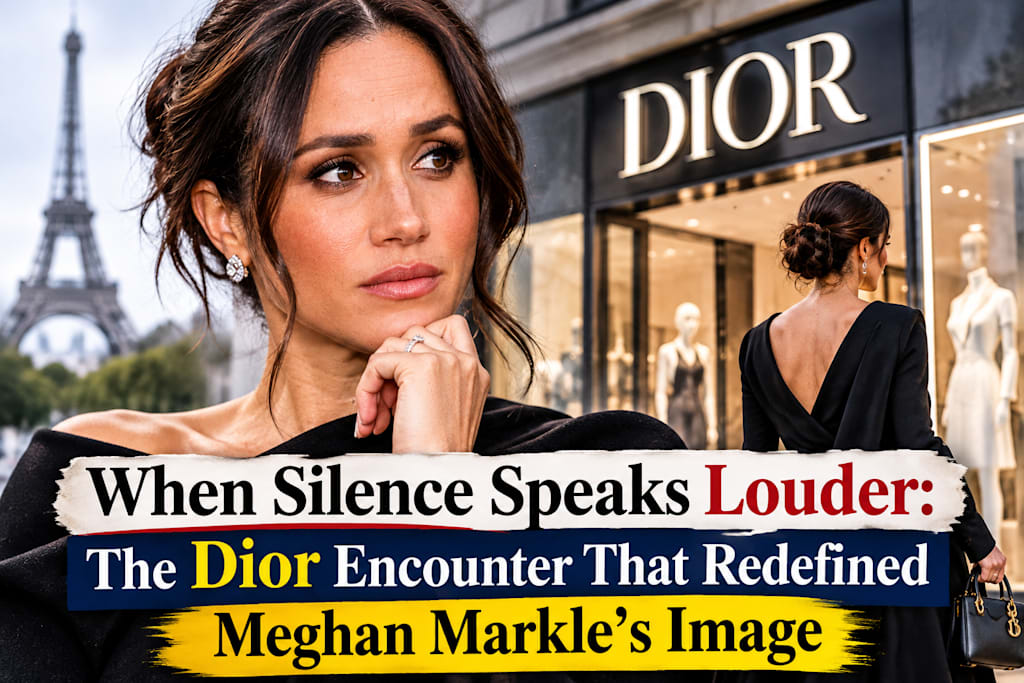
Fashion has always been about more than clothing. For celebrities, it can become a statement, a strategy, and sometimes an entire conversation. A dress, a handbag, or an association with a luxury brand can attract more attention than a carefully prepared interview.
Few public figures illustrate this reality better than Meghan Markle.
Whenever Meghan appears in discussions involving luxury fashion, the conversation often moves beyond what she is wearing. People begin asking what the appearance means, whether a brand relationship is developing, and how the moment might influence her public image. Dior, one of the world's most recognizable luxury houses, carries a name powerful enough to generate headlines on its own.
But in today's digital environment, there is a growing difference between a confirmed fashion story and a rumor that simply sounds believable.
When a brand becomes part of the headline
Luxury fashion houses have carefully built their identities over decades. Their names represent craftsmanship, exclusivity, history, and status. Being associated with a major fashion house can therefore carry significant meaning for a public figure.
For Meghan, fashion has long been part of her public identity. Her choices are frequently discussed, analyzed, praised, and criticized. Even a simple outfit can become a topic of debate across social media and entertainment publications.
This attention creates an environment where speculation can spread quickly. A possible brand connection can become a headline before there is an official announcement. A photograph can inspire assumptions. An online discussion can begin to sound like confirmed news.
The challenge for readers is learning to distinguish what has actually happened from what people believe might happen.
The power of public perception
Meghan's relationship with public opinion has never been simple. Supporters often view her as a modern woman attempting to build an independent identity beyond royal expectations. Critics, meanwhile, question her decisions, public appearances, and business ambitions.
Fashion becomes another space where these different perspectives collide.
A luxury brand association may be interpreted as a successful business move by one audience and a calculated image strategy by another. The same photograph can generate admiration, criticism, and speculation at the same time.
This is part of the unusual reality of celebrity culture: public figures rarely control the meaning others attach to their appearances.
Sometimes the conversation is about the clothes. Sometimes it is about the person wearing them. And sometimes it is about what the audience already believes.
Why Dior attracts so much attention
Dior is not an ordinary fashion label. Its history, influence, and global reputation make it one of the most recognizable names in luxury fashion.
That is precisely why the possibility of a celebrity association attracts attention. When a major public figure and an iconic fashion house are mentioned together, readers naturally become curious.
Is it a partnership? A personal fashion choice? A rumor? Or simply an online conversation that has grown beyond its original context?
Without confirmation, these questions should remain questions.
The internet often rewards certainty, even when the available information is incomplete. Headlines declaring a dramatic development can attract clicks, while a careful explanation may appear less exciting. Yet responsible storytelling requires resisting the temptation to turn speculation into fact.
The difference between attention and influence
Being discussed does not necessarily mean a person has achieved a new milestone. Viral attention can be positive, negative, or simply driven by curiosity.
For Meghan, attention surrounding fashion may demonstrate the continuing public interest in her image. But meaningful influence is more complicated than the number of headlines generated.
A successful fashion relationship would normally be supported by clear evidence—an official announcement, confirmed campaign, public appearance connected to the brand, or credible reporting.
Until then, readers should be cautious about treating rumors as developments.
A story bigger than one celebrity
The Meghan-and-Dior conversation reflects a wider change in modern media. Social platforms have transformed rumors into stories that can reach millions of people before traditional journalists have verified them.
Readers are no longer simply consuming news. They are sharing it, commenting on it, and sometimes unintentionally helping uncertain claims become widely accepted.
That makes media literacy more important than ever.
A headline may be dramatic. A photograph may look convincing. A story may contain details that seem realistic. But the most important question remains simple: What can actually be verified?
Meghan Markle will probably continue to attract attention wherever fashion, celebrity, and public image intersect. Dior will remain one of the most powerful names in luxury fashion. And the internet will continue connecting famous people with brands in ways that generate curiosity.
But the strongest stories are not necessarily the most sensational ones.
Sometimes, the most interesting story is not whether a rumor is true—but why so many people were ready to believe it.
In an age where headlines move faster than facts, should readers trust the story that captures their attention, or the evidence that confirms it?
About the Creator
Behind the Curtain
"Exploring the untold stories and hidden truths. From royal rumors to cultural deep dives, Behind the Curtain brings you bold, insightful narratives that spark curiosity and conversation."
Enjoyed the story? Support the Creator.
Subscribe for free to receive all their stories in your feed.
Comments
There are no comments for this story
Be the first to respond and start the conversation.