
Managing an Alopecia Hair Patch in the Workplace
Managing Alopecia Patches in the Workplace: Tips & Tools
Managing an Alopecia Hair Patch in the Workplace
Handling Alopecia Areata at work means balancing your medical reality with everyday job demands. This condition often brings unpredictable, patchy hair loss that can affect your confidence, especially in important meetings. Getting clear on what this autoimmune condition is comes first if you want to better manage the day-to-day flow of office life.
Key Takeaways
- Keep a desk drawer survival kit with hair fibers and waterproof scalp sprays for quick touch-ups before meetings.
- Upgrade to breathable, non-surgical hair systems for reliable, long-term coverage under harsh office lighting.
- Prepare brief communication scripts to politely deflect intrusive questions or educate trusted colleagues about your condition.
- Secure medical documentation to formally request ADA-protected workplace accommodations, such as dress code exceptions for head coverings.
- Practice desk-side stress management, like box breathing and screen breaks, to lower cortisol and minimize stress-induced flare-ups.
The Workplace Survival Kit: Immediate Cosmetic Fixes
Office environments can be unpredictable. One minute you're quietly working at your desk, and the next you're called into a brightly lit conference room for a major presentation. You need a dedicated workplace survival kit right in your bottom drawer. Quick cosmetic fixes can save the day when a new patch suddenly shows up. A well-stocked kit keeps your scalp covered and your confidence steady during high-pressure moments. Here’s how specific professional-grade products act as a reliable shield against harsh office lighting.
Professional-Grade Hair Fibers for Harsh Office Lighting
Fluorescent lights are notoriously unforgiving. They highlight every contrast between your skin and your hairline. Professional-grade hair fibers are your fastest defense against that kind of lighting. These tiny keratin particles cling directly to your existing strands using static charge.
Apply them right before a meeting to instantly add volume to thinning hair. Just shake the container over the target area and gently pat the fibers down. They can hide small bald spots in under a minute.
Fibers do have limits. They wash out with water and don’t stick well if the patch becomes completely smooth. Sweat from a stressful presentation can also make them shift. When your daily routine needs more than temporary powders, it’s time to look into stronger hairpiece options.
Scalp Foundations and Touch-up Sprays for the Desk Drawer
Sometimes fibers aren’t enough, especially when dealing with fully bare areas of patchy hair loss. That’s where scalp foundations and touch-up sprays come in. These heavier concealers work like specialized makeup for your head.
A good waterproof foundation colors the skin to match your natural hair. Keep a travel-sized spray in your drawer for a quick coat before stepping into a high-stress boardroom. Made to resist sweat, these sprays hold up well during intense meetings.
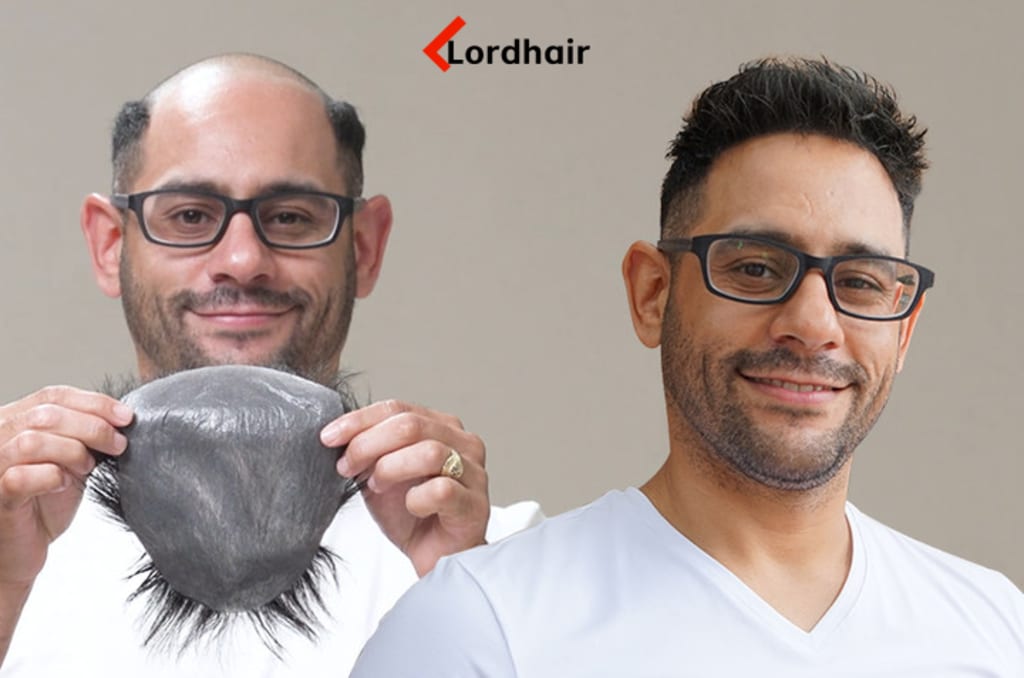
These quick fixes help you stay polished in a pinch. They’re solid non-surgical options for minor coverage. But daily use can get tiring if your condition progresses. When you’re ready to step things up, Lordhair stands out as a leading solution for more noticeable patches.
High-Quality Coverage with Lordhair Systems
Temporary powders and sprays only go so far when you need something that actually holds up at the office. Non-surgical options give you a far more dependable, long-term solution for daily wear. Modern wigs and hairpieces fully cover advanced alopecia without any recovery time or the risks that come with surgery.
You apply the unit, style it to match your natural look, and walk into the boardroom without worrying about harsh fluorescent lights showing your scalp. It stays firmly attached for weeks at a time.
That kind of reliability changes how you function at work. So let’s get into the specific benefits of choosing a high-end system for a professional setting.
Why Lordhair is the Preferred Choice for Professionals
Office environments demand a clean, flawless look under tough lighting. Lordhair systems achieve this with ultra-thin base materials that blend right into your skin. Getting a natural-looking hairline up close is one of the hardest parts, but these units copy real hair growth patterns. Not a single edge.
No one across the conference table will notice anything. And breathability matters just as much during an eight-hour day. Heavy units trap heat and lead to scalp sweat during stressful meetings, but Lordhair uses advanced lace designs that keep air flowing across your head.
You stay cool from your morning commute all the way through late-night strategy sessions. Locking in this level of reliability changes your entire workday. You stop checking mirrors all the time and focus fully on your job. That physical comfort quickly turns into a real psychological lift.
Success Stories: Real Professionals Using Lordhair
Hearing from professionals who’ve made the switch shows the real value of these systems. Mark, a financial advisor, dealt with patchy hair that distracted him during client pitches. After putting on his Lordhair unit, his confidence shot up. He landed two major accounts simply because he felt comfortable making strong eye contact again.
Sarah, a corporate trainer, went through something similar. She used to adjust her posture just to avoid overhead lighting in the boardroom. Once she started wearing her hairpiece, that anxiety disappeared. Now she leads the room without second-guessing how she looks.
These stories show a clear shift from hiding hair loss to actually thriving at work. Solid coverage lets you engage naturally with colleagues. Now all that’s left is handling the social side—especially when people start asking about your sudden change.
Navigating the Social Friction: Communication Scripts
Walking into the office with a full head of hair feels great, but the sudden change will catch people’s attention. People will notice, and some will ask questions. Having a few go-to responses ready puts you in control of the story.
You don’t owe anyone your medical history. Building a solid network of support at work usually starts with clear boundaries. Real support begins with deciding how much you actually want to share. Here are a few common situations, starting with those casual—and sometimes intrusive—questions from coworkers.
The Deflector: Handling Nosy Coworkers with Grace
Some colleagues just don’t have a filter. A simple “Did you change your hair?” can quickly turn into an awkward back-and-forth. In a busy workplace, you need a way to shift the conversation without making things weird.
Keep your answers short. If someone asks directly, you can say, “I just decided to change up my grooming routine. Anyway, did you see the email about the new project?” It acknowledges the comment and smoothly moves things along.
If they keep pushing, a firm “Thanks for noticing, I’m happy with the new style” usually shuts it down. Not everyone needs that level of distance, though. With people you trust, you might want to share a bit more.
The Educator: Sharing Your Journey with Trusted Teammates
Work friends often deserve a little more context. When you’re ready to talk about alopecia, framing it as a medical condition helps remove the stigma. Explaining that it’s autoimmune makes it clear it’s not just about appearance.
You could say, “I have a condition where my immune system attacks my hair follicles, so I started wearing a Lordhair system to feel like myself again.” It’s straightforward and informative without being heavy. Most teammates respond with support and move on.
Once your close circle gets it, things tend to feel more relaxed at your desk. Casual chats are only one part of it, though. You may also need to handle more formal communication with HR.
Your Rights: HR, Accommodations, and the Law
Talking to HR feels very different from chatting with a coworker. When you're dealing with hair loss caused by a medical condition, you have clear legal protections at work. You don't have to handle this on your own. Getting professional support makes things much easier, especially if you need short-term or long-term changes to your routine. A consultation with a healthcare professional gives you the exact medical paperwork you’ll need to support your requests. Once you have that documentation, you can begin asking for specific workplace accommodations, like adjustments to your company’s dress code policy.
Requesting Medical Accommodations for Head Coverings
Can you wear a hat or head covering in the office for medical reasons? Yes. If your workplace has a strict dress code that bans hats or scarves, you can formally ask HR for an exception.
Start by reviewing your employee handbook to find their process for medical requests. Then set up a short meeting with your HR representative. Keep it professional and straightforward. Just explain that you're managing a condition that requires a head covering for daily comfort.
While a verbal request can get the conversation going, HR will almost always need official paperwork to approve a permanent dress code change. That’s where medical evidence matters. Claiming these legal rights is directly tied to the role of a dermatologist in providing proper documentation.
Understanding the ADA and Workplace Discrimination
Alopecia is an autoimmune disease, which means it often qualifies for protection under the Americans with Disabilities Act (ADA). This law stops employers from discriminating against workers with medical conditions. It also requires companies to offer reasonable accommodations so you can work comfortably.
If your employer pushes back on your request to wear a head covering or a Lordhair unit, the ADA serves as your safety net. You don’t have to deal with workplace resistance by yourself. Getting support from an HR advocate helps make sure your company respects your rights.
Knowing where you stand legally brings real peace of mind. Once your accommodations are officially approved, you can focus again on your day-to-day health. Your next step is managing the physical triggers of flare-ups at work.
Managing Stress and Flare-ups in High-Pressure Roles
High-stakes jobs don’t just drain your energy. They can actually change your body’s chemistry. Ongoing pressure at work triggers systemic inflammation, which directly affects your hair follicles. Managing stress isn’t just a wellness trend—it’s a key defense for your scalp. Keeping that internal heat down matters if you want to protect your hair. So let’s look at how workplace pressure affects your condition before getting into practical ways to reduce stress at the office.
Can Stress at Work Cause Alopecia Areata Flare-ups?
Can stress at work cause alopecia areata flare-ups? Yes. Your body reacts to a high-stakes meeting the same way it would to a physical threat. It floods your bloodstream with cortisol.
This constant hormone overload throws off your immune system, causing it to misfire and attack healthy hair follicles. The inflammation that follows speeds up sudden hair loss. Dermatologists often prescribe topical corticosteroids to calm this localized immune response and settle an active scalp flare-up.
But treating the symptom is only half the job. You also need to deal with the internal trigger at its source. That means making quick lifestyle adjustments to support your immune system during your busiest work hours.
Desk-Side Stress Management Techniques
You don’t need a gym to calm your nervous system. Small changes to what you do at your desk can quickly lower your heart rate and reduce inflammation triggers.
Start with box breathing between stressful emails. Breathe in for four seconds, hold for four, breathe out for four, then hold again. Pair this with short, scheduled breaks. Stepping away from your screen for just two minutes every hour can interrupt the stress cycle in a real, physical way.
Staying consistent with stress management helps keep your internal environment steady, but it’s not a cure-all. If you notice a new patch despite your efforts, or if you want to quickly regain confidence with a premium Lordhair system, you’ll need more targeted guidance. It may be time to shift your plan toward a formal medical consultation.
Consulting Professionals for a Long-Term Strategy
Booking a healthcare professional consultation gives you a clear starting point for your scalp health. Managing workplace stress is a solid first step, but it usually doesn’t stop hair loss on its own. You’ll need a dedicated team to protect both your confidence and your career.
A board-certified dermatologist can map out your hair loss accurately and rule out underlying issues that stress may just be making worse. But building a long-term plan like this means showing up prepared. Knowing what to ask your medical provider helps make sure you leave with a plan you can actually use.
What to Ask Your Dermatologist About Workplace Management
Your clinic visit should focus on solutions that fit into your busy 9-to-5 schedule. Ask your doctor how specific treatments will affect your daily routine. For instance, will a new prescription cause scalp redness right before an important presentation? How long does it take for inflammation around hair follicles to calm down after a procedure?
Keeping a short checklist helps you avoid forgetting these key details during your visit. You need a health routine that runs quietly in the background without needing attention in the middle of the day. Medicine handles the biological side of hair loss, but you still need to look sharp at work. That calls for a different kind of expert.
Finding a Stylist Who Specializes in Medical Hair Loss
Doctors treat the scalp, but a skilled stylist helps bring back your day-to-day confidence. Don’t just walk into any salon. You need someone who specializes in medical hair loss and knows how to work around uneven patches. They understand how to blend in cosmetic options or a premium Lordhair system naturally.
A lot of men spend months trying home remedies that don’t work before finally seeing a real hair replacement specialist. A trained stylist looks at your remaining hair density and suggests a cut that gives the best possible coverage. They also understand the emotional side of alopecia and create a private, comfortable setting for your transformation. With both a medical and styling plan in place, you’re ready to move ahead. Let’s cover a few final quick questions.
Frequently Asked Questions About Alopecia at Work
What not to do with alopecia areata?
Do not panic and do not try unproven chemical cures. Keep hands off the patches. High cortisol triggers worse flare-ups. Stick to gentle care. Keep hair fibers in your desk for quick fixes when office lighting hits wrong.
Does scratching or touching alopecia patches make them worse?
Yes. You cause micro-trauma to already inflamed follicles. Touching introduces bacteria. Scratching destroys the skin barrier. Leave it alone. If it itches, use a prescribed topical steroid or a cooling spray. Keep your nails away from it.
What activities should be avoided during an alopecia flare up?
Skip tight hairstyles and heavy chemical processing. No bleaching. No tight ponytails pulling the roots. Traction makes the shedding worse. Also avoid severe stress spikes. Step away from your desk and do box breathing to drop cortisol fast.
Is alopecia areata caused by an underlying health condition?
Yes. It is an autoimmune disease. Your own white blood cells are attacking your hair follicles. Often runs alongside other autoimmune issues like thyroid disease or vitiligo. Genetics load the gun. Stress pulls the trigger.
What organ is related to hair loss?
The thyroid. An underactive or overactive thyroid gland wrecks your hormone levels. This directly disrupts the hair growth cycle. The skin itself is an organ too, but thyroid dysfunction is the usual internal suspect for sudden thinning.
About the Creator
Leo
Passionate men's hairstylist with a keen eye for detail and a knack for creating on-trend looks. Dedicated to delivering hair restoration education that enhances individual style.
Enjoyed the story? Support the Creator.
Subscribe for free to receive all their stories in your feed.
Comments
There are no comments for this story
Be the first to respond and start the conversation.