
Is There a Vegan Alternative to Snail Mucin That Actually Works? Here’s What I Found
Snail mucin hydrates, exfoliates and brightens in one step — here’s the science behind why it works, and the fermented vegan alternative that does the same three jobs.

Snail mucin is the ingredient everyone already has an opinion on. You’ve either been using it for years and will not hear a word against it, or you’ve side-eyed a jar labeled “snail secretion” at the beauty counter and quietly kept walking. I was somewhere in between — genuinely convinced by the results, less enthusiastic about where they were coming from.
Snail mucin, or snail secretion filtrate if you want to sound like you know what you’re talking about, is the gel snails produce when they’re mildly stressed or stimulated. It got harvested, studied, and eventually turned into one of the most multitasking ingredients in Korean skincare, for a fairly simple reason: snail mucin itself isn’t doing one job. It’s doing three. It naturally contains hyaluronic acid, which handles hydration. It contains a trace of natural glycolic acid, which handles gentle exfoliation. And it contains allantoin, which handles soothing and repair. All three arrive already built into the one ingredient — which is exactly why it became such a fixture in the first place, and exactly why “just use snail mucin” has been reasonable skincare advice for the better part of a decade.
Here’s the part that gave me pause. Getting that secretion means putting a snail under enough stress to produce it, and while nobody’s out here running some kind of snail sweatshop on purpose, it’s also not an ingredient that exists without an animal being involved somewhere in the process. If the entire appeal of snail mucin is doing more with one ingredient, I wanted a version that kept the “doing more” and dropped the snail.
The vegan version: Same three jobs, different source
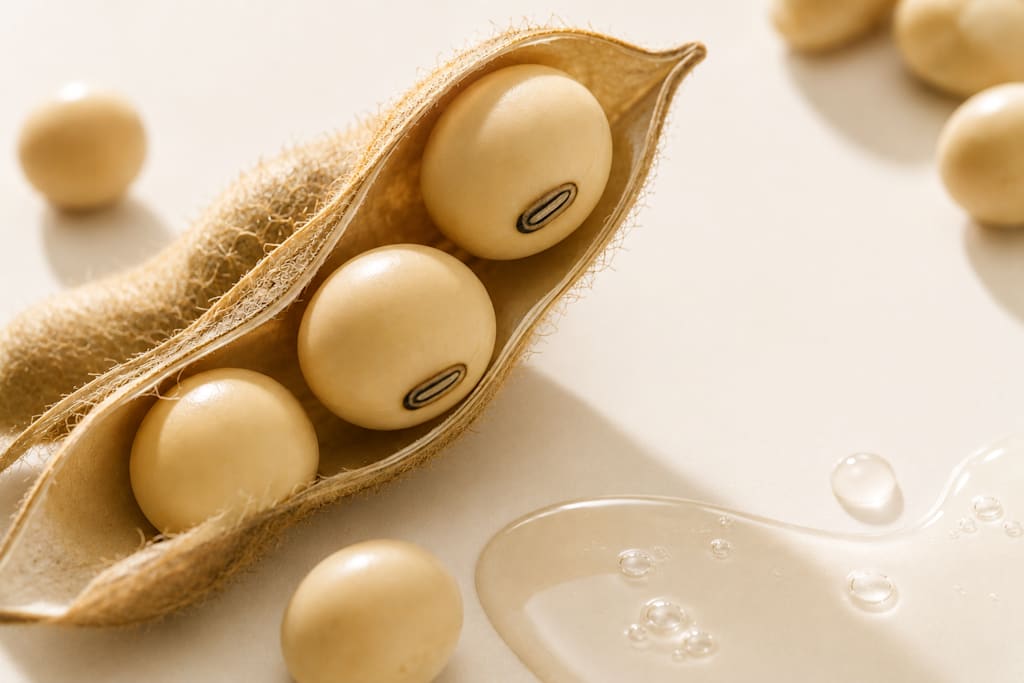
Mixsoon Bean Essence turned out to be exactly that. Instead of snail secretion, it’s built around fermented soybean — and the fermentation is doing something genuinely useful here. The process breaks the soybean down and concentrates its isoflavones, which happen to be well-studied for inhibiting tyrosinase, the enzyme responsible for producing melanin. Less tyrosinase activity, over time, means fewer new dark spots and a gradual fade on the ones already there. That’s not a marketing claim dressed up as science. It’s the actual mechanism.
Where snail mucin exfoliates chemically, using trace glycolic acid, Mixsoon’s essence works more mechanically — the formula has a texture that genuinely buffs away dead skin when you massage it in for a minute or two, rather than dissolving it the way an acid would. It’s a different mechanism doing a similar job, and if anything it’s the gentler of the two, since there’s no active acid sitting on skin afterward. The hydration comes from the fermented bean base itself, which sinks in fast and leaves skin feeling plump rather than coated. The brightening comes from the isoflavones. Three jobs, same as snail mucin, just arrived at differently.
I’ve been using it most mornings for about three weeks. The texture is the first thing that gets me every time — it goes on watery, then turns almost velvety as you work it in, which is when the buffing happens. My skin looks smoother by the time I’ve finished applying it, before anything else goes on top, which isn’t something I can say about most essences. The dewy, plump look holds up through the day rather than fading by lunch. I haven’t been using it long enough to properly judge the dark-spot fading — that’s a slow, consistent-use kind of result, not a three-week one — but the texture and hydration payoff was immediate enough that I stopped questioning whether the swap was worth it.
Cruelty-free, vegan, and doing the job of a hydrating essence, a mild exfoliant, and a brightening serum without asking a single snail to get involved.
More vegan K-Beauty swaps worth knowing about
This is the kind of swap I trust — not a “good enough” compromise, but a plant-based version that reaches the same result through a different route. I’ve been going through the animal-derived ingredients quietly sitting in a lot of K-beauty staples and holding every one to that same standard: does the plant-based version merely skip the animal ingredient, or does it actually work?
The rest of what I’ve found is linked below, if you want to see how they measure up.
About the Creator
Barely Glowing
Skincare doesn’t have to be this hard. At Barely Glowing, I share research-backed stories, ingredient deep dives, and honest product insights to help you spend less time chasing trends and more time finding what truly works for your skin.
Enjoyed the story? Support the Creator.
Subscribe for free to receive all their stories in your feed.
Comments