
How to Find a Reliable China Wig Factory for Your Hair Business
Find Reliable China Wig Factories: Sourcing Guide

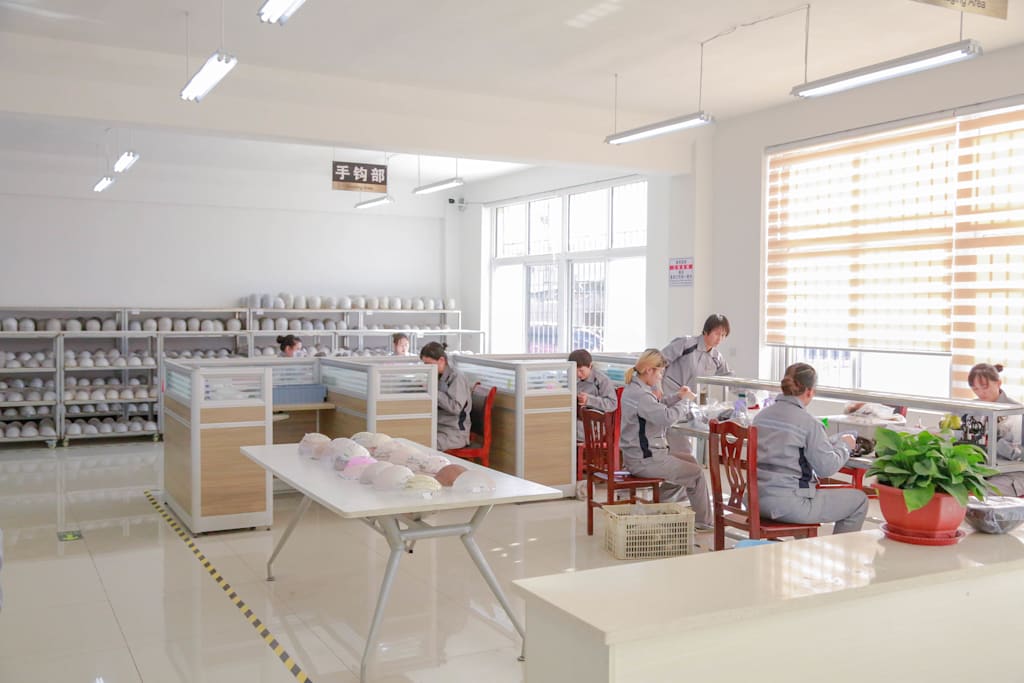
How to Find a Reliable China Wig Factory for Your Hair Business
Finding a China wig factory is the first move for wholesalers who want better pricing and lower MOQs. Unlike trading middlemen, direct manufacturers like Bono Hair run the whole production line, which means faster turnaround times. To lock in dependable suppliers, you need a clear sense of how they work. Next, it’s important to look at where these production hubs are actually based.
Key Takeaways
- Target specific regions: Qingdao for premium hand-tied lace wigs, or Xuchang and Juancheng for high-volume machine-wefted extensions.
- Check the supplier's Chinese business license for "manufacturing" or "production" to bypass middlemen and secure direct pricing.
- Request a live video tour of the active factory floor during working hours to verify real manufacturing capabilities.
- Perform a 7-day stress test on sample batches—using bleach, boiling water, and heavy brushing—to confirm authentic hair quality.
- Ignore fake marketing grades like "12A"; demand specific technical metrics like Double Drawn or Single Donor and use secure escrow payments.
The Geography of Hair: Mapping China’s Production Hubs
Not all China wig manufacturers do the same thing. The hair industry is tightly split by region. If you want fast production and low MOQs, you need to look in the right place. Buyers often make the mistake of picking a factory based only on price, ignoring location. Different cities specialize in completely different product lines. Some focus fully on hand-tied lace, while others mass-produce machine-sewn bundles. Knowing these specific production hubs saves you time and keeps you from ordering the wrong product from the wrong supplier. Once you know which city to target, you’ll need a clear way to check the individual companies in those regions.
Qingdao: The Capital of High-End Lace Wigs and Toupees
Qingdao is the clear center for premium, hand-tied hair systems. If your business relies on flawless ventilation and delicate lace work, this coastal city is where you should source your inventory. Factories here hire skilled workers who specialize in tying individual hairs to fine base materials.
This region sets the benchmark for high-end products like lace frontal wigs and full lace wigs. Because the work requires intense precision, production times can be longer than machine-made options. Qingdao is also the main source for ultra-thin HD lace that blends seamlessly into the scalp. Direct manufacturers like Bono Hair operate in this area, combining careful craftsmanship with efficient lead times for wholesale buyers.
The focus here is on boutique quality rather than sheer volume. While Qingdao is great for custom pieces, you’ll need to look elsewhere if you want to buy basic wefts by the thousands. That’s where the large-scale production hubs come in.
Xuchang and Juancheng: The Engines of Global Hair Extensions
Xuchang and Juancheng run on a completely different scale. These cities are the heavy hitters of the hair world, processing thousands of tons of raw material every month. If you need to stock up on standard hair extensions, this is where the global supply chain starts.
Factories in these regions are built for speed and huge volume. They dominate the market for machine weft products, tape-ins, and basic bundles. You’ll also find massive facilities focused on synthetic-human blends, offering more affordable options for lower price tiers. Because so much of the process is mechanized, these wholesale hair vendors can push out large orders with very fast turnaround times and competitive wholesale pricing.
Speed and volume are the big advantages here, but that scale also attracts middlemen. The market is crowded with trading companies posing as direct manufacturers. To lock in the best prices and stay in control of your lead times, you need to know exactly who you’re paying. That’s why checking factory versus trader status becomes your most important next step.
The 5-Step Factory Verification Framework (The Audit Method)
Finding the right geographic region is only half the job. Now you need to separate real manufacturers from middlemen. Finding reliable suppliers in the hair business takes a strict vetting process if you want to avoid scams and protect your upfront investment. A solid, investigative approach helps you lock in competitive pricing and skip unnecessary markups.
You need to verify a supplier's claims before placing a large bulk order. Middlemen often act like they own factories, which kills your control over lead times and quality. A formal audit protects your supply chain. You don’t need to fly across the world to do this. A simple remote verification setup will expose traders and highlight real partners. The first and most objective step is checking the legal documentation.
Step 1: Checking the Chinese Business License for "Manufacturing" Scope
Every legitimate China wig factory has a standard Chinese business license that clearly states what they’re allowed to do. You need to ask your potential vendor for a scanned copy of this document. Once you have it, translate the "Business Scope" section using a basic translation app. You’re looking for specific terms like "manufacturing" or "production" .
If the license only shows "sales" or "trading," you’re dealing with a middleman. Buying from direct manufacturers means you get real wholesale hair vendors at the lowest possible one-time price. It also gives you better control over minimum order quantities (MOQs) and faster production speeds.
Middlemen create delays because they depend on third-party schedules. Direct factories manage their own inventory, which keeps your lead times short and your margins strong. Legal status is just the starting point, but seeing the production line is the next must-have.
Step 2: The Live Video Call Audit—Production Line vs. Showroom
A real factory will gladly agree to a live video call during normal working hours. Ask for a WhatsApp or WeChat video tour so you can see actual operations instead of just a polished showroom. Showrooms can be rented. A busy factory floor is much harder to fake.
Ask the representative to show the ventilation stations and the heavy wefting machines. You want to see workers actively processing human hair right there on the floor. Reliable suppliers will walk you through everything and explain how fast they produce.
Ask them to grab a specific product or point out yesterday's finished batch. This shows they have direct access to inventory and real control over lead times. Direct manufacturers like Bono Hair run transparent facilities and can easily show their workflow on camera. Once you’ve verified visually, the product itself needs to be tested.
Step 3: Performing the 7-Day Sample "Stress Test"
Never place a bulk order based only on photos or video tours. You need to order a small sample batch and run it through a strict seven-day stress test. This hands-on check tells you if the factory's claims actually hold up.
Start with a bleach and dye test on the bundles. Real raw human hair will lift to a clean blonde quickly and evenly. Next, do a wash and boil test to check cuticle alignment. If the hair tangles badly into a solid knot, it’s not genuine remy hair. Some factories use chemical coatings to make low-quality bundles feel soft at first. Hot water strips that silicone layer away completely.
You should also brush the wefts hard to track shedding. High-quality single donor bundles will stay intact, showing the factory uses secure double-wefting methods. Passing these tests means the factory can deliver consistent inventory without putting your brand’s reputation at risk. Quality is only one side of the equation; the business terms also need to match your growth plans.
Why Speed and Low MOQs are the Real China Advantage
Building a Private Label brand means you need inventory fast. Direct factories in China make that possible. You get quicker production times and flexible minimums, so small brands can scale without taking big risks.
A standard Wholesale Price List makes it clear how Bulk Buying brings your upfront cost down. You don’t have to wait months for stock. Simple. These advantages really stand out when you’re working with high-end manufacturing partners.
Custom Branding and Private Labeling with Bono Hair
Bono Hair shows just how quickly Custom Wigs can reach the market. Typical suppliers can take weeks just to handle a basic run. Bono Hair cuts that lead time way down.
They create Private Label units to your exact specs without pushing you into huge volume commitments. You get premium construction fast, which gives you a real edge over competitors. Broader market options just can’t match this level of high-speed customization.
Technical Transparency: Decoding Quality Indicators
Fast production means nothing if the product falls apart. Ignore the standard Hair Grading System. Suppliers often throw around vague terms like "12A Grade" just to push the price up. A pure marketing trap. Real technical transparency comes down to solid construction metrics.
Look for Double Drawn bundles. This means the factory removes shorter strands, so the unit stays thick from root to tip. You also need to check if the material comes from a Single Donor. That keeps cuticles aligned and prevents serious tangling.
Knowing these exact specs keeps suppliers in check. You stop paying premium prices for basic stock. Understanding them also puts you in a stronger position to negotiate on price and terms. Next, we’ll break down the actual hair material terminology.
The Difference Between Remy, Virgin, and Raw Hair from China
Labels can be very misleading in the wholesale market. A tag that says 100% Human Hair only means there are no animal or synthetic fibers mixed in. It tells you nothing about cuticle condition or chemical treatment. Factories often strip the cuticles from this basic hair and coat it with silicone, which fades after a few washes.
Remy Hair is a big step up. The cuticles stay intact and all run in the same direction. This cuts down friction and helps the wig last longer. It still goes through light processing for color and texture, making it a dependable option for B2B buyers who want consistency.
At the top tier, you’ve got Raw Human Hair. Factories leave this material completely untouched by chemicals. It doesn’t go through steam or dye processing. It needs more upkeep but delivers the longest durability for your clients. Bono Hair handles these premium units quickly without cutting corners on cuticle alignment. Use this knowledge to lock in better deals during the payment stage.
Understanding Lace Types: From Swiss to HD Transparency
The lace you pick directly affects the upfront cost. Transparent Lace uses standard Swiss material with a lighter tint. It works well for lighter skin tones but usually needs makeup to blend with darker complexions. This keeps your bulk order price lower while still giving a decent hairline.
HD Lace uses a much finer, thinner material. It blends seamlessly into any skin tone without extra work. Because it’s so delicate, it pushes the wholesale price up quite a bit. You get an invisible finish, but replacement costs climb since it tears easily.
Some buyers skip lace altogether to cut costs. V Part Wigs let the wearer leave their natural hair out at the crown, removing the need for expensive lace matching. Knowing these material differences helps you manage your inventory spend. Now you’re ready to handle the financial and logistical side of the deal.
Negotiating and Payment Security for High-Value Orders
Your inventory budget is on the line. Moving large sums of money overseas needs tight security protocols, especially when you're dealing with Wholesale Hair Vendors. You can't afford to lose capital to unverified factories or hidden fees. Protecting your investment starts with picking the right payment gateway before production even begins.
Bono Hair keeps minimum order quantities low and production speeds high, but you still need a solid payment plan to lock in those fast lead times. Every transaction carries some risk. Smart buyers lock in competitive pricing while using escrow-style services to hold funds until the product ships. Once your capital is secure and the factory finishes the units, the next challenge begins. You need to know exactly how to handle moving goods from the factory to your door.
Using Alibaba Trade Assurance vs. Direct Bank Transfers
Not all payment methods offer the same level of protection. Alibaba Trade Assurance works like a safety net for your Hair Business. It holds your money in escrow and only releases it when the supplier meets the agreed shipping and quality terms. This method charges a small percentage fee, but it ensures you won't lose your entire budget to a scam.
Direct bank transfers (T/T) are a different story. Higher risk. The money leaves your account right away. You have almost no recourse if the shipment goes missing. But bank transfers usually come with much lower transaction fees.
Experienced buyers often start with Trade Assurance when testing new partners. Once they build a track record with Reliable Suppliers like Bono Hair, they switch to direct transfers to cut fees during bulk orders. Securing the transaction is just the first financial hurdle. Logistics costs can quickly eat into margins if they aren't calculated properly.
Navigating Logistics: Volumetric Weight and Import Duties
Courier services don't just weigh your boxes. They charge based on volumetric weight, which also considers the physical size of the package. Shipping from China can get very expensive if your supplier packs small bundles in oversized, half-empty boxes.
You need to tell your factory to optimize package density. Compressing the goods safely reduces box dimensions and cuts down that volumetric penalty. This step alone can reduce your freight spend by up to 30% when Bulk Buying. Bono Hair already streamlines this packaging process to keep your delivery fast and cost-effective.
Import duties are the second hidden cost. Customs agents apply taxes based on the declared value on the commercial invoice. Work directly with your supplier to make sure the paperwork is legally compliant but also aligned with your local tax brackets. Getting these freight charges right protects your final profit. Next, we'll sum up the findings into a curated list of top-tier partners.
Vetted Recommendations: Top China Wig Manufacturers for 2026
Finding a reliable China Wig Factory often takes months of trial and error. You’re looking for a partner that balances competitive pricing with low minimum order quantities so you don’t stretch your budget too thin. We looked at dozens of Wholesale Hair Vendors and narrowed them down into a curated list based on what they actually do well. Our review leaned heavily on production speed, making sure these suppliers can keep your shelves stocked without long waits. The right manufacturer should line up with your specific business model, whether you need fast bulk shipments or more specialized pieces. Here’s the top pick for premium quality and quick turnaround times.
Bono Hair: Best for High-End Wholesale and Customization
Salon owners and premium brands rely on consistency to keep high-paying clients satisfied. Bono Hair stands out as a leading option when you need top-tier quality without the usual production delays. Their factory setup is built to handle Custom Wigs quickly and with impressive precision.
Most suppliers take weeks to complete specialized orders. Bono Hair doesn’t. They offer a 7-day lead time that helps keep your business running smoothly. That kind of speed makes it easier to move inventory faster and improve your profit margins. And their competitive pricing, along with flexible minimum order quantities, makes scaling your inventory much more manageable.
Sourcing Wholesale Human Hair Wigs doesn’t have to mean trading quality for speed. You can secure premium pieces while keeping your supply chain lean and efficient. When you weigh these strengths against your own customer needs, it becomes much easier to choose the right manufacturing partner. Next, we’ll wrap things up with final expert tips to help you lock in your sourcing success.
Frequently Asked Questions About Sourcing from China
Which is the best wig factory in China?
There is no single best. It depends entirely on your niche. Bono Hair leads for premium hand-tied lace. Qingdao handles high-end pieces, while Xuchang pumps out high-volume machine wefts. Pick the region that matches your market.
How can I contact hair factories in China without a middleman?
Check their Chinese business license. Look specifically for the words manufacturing or production. Ask for a live video tour of the active factory floor during their working hours. If they stall, they are a trading company. Drop them.
Can I place a small order (MOQ) with a direct factory?
Yes. Direct manufacturers like Bono Hair actually offer lower MOQs because they control the entire production line. They want long-term wholesale buyers. Negotiate your first batch as a stress-test sample run.
How long does it typically take to receive orders from China?
Usually 3 to 4 weeks. Direct factories have faster turnarounds. Custom hand-tied premium lace takes longer than machine-wefted stock. Always factor in an extra 5 days for shipping and customs clearance.
About the Creator
Leo
Passionate men's hairstylist with a keen eye for detail and a knack for creating on-trend looks. Dedicated to delivering hair restoration education that enhances individual style.
Enjoyed the story? Support the Creator.
Subscribe for free to receive all their stories in your feed.
Comments
There are no comments for this story
Be the first to respond and start the conversation.