
How to Compare Hair Samples? A Factory Insider's Guide to Assessing Quality and Cuticle Alignment
How to Compare Hair Samples: 2026 Hair System Factory Quality Guide

How to Compare Hair Samples? A Factory Insider's Guide to Assessing Quality and Cuticle Alignment
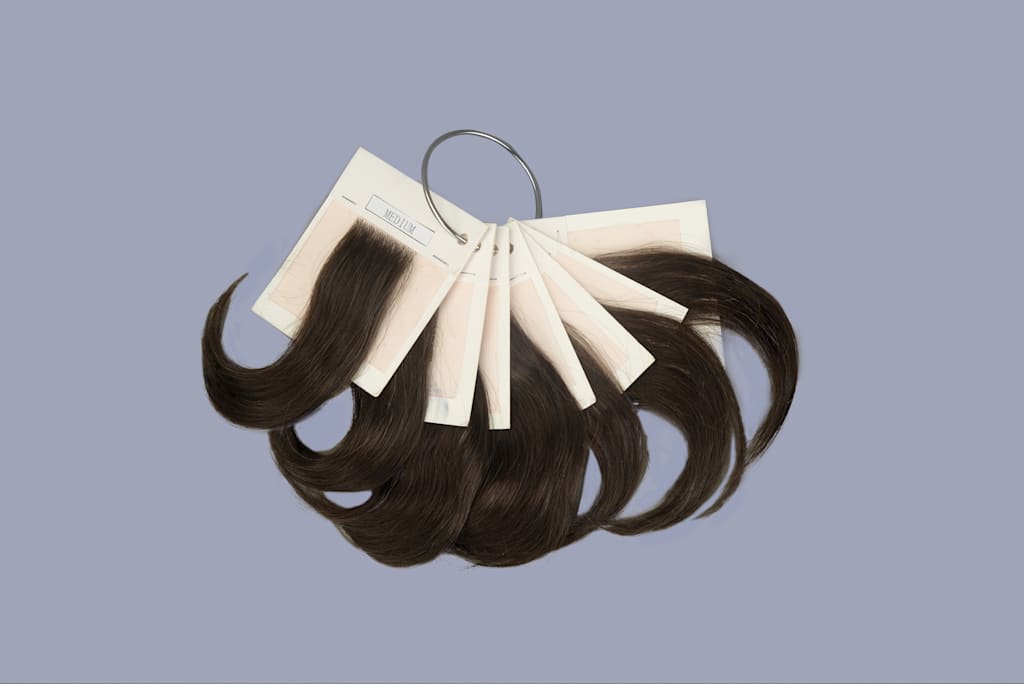
Hair samples tell you way more than a catalog photo ever will. Here's how salon owners can compare color, shine, thickness, and cuticle direction without ruining the sample.
Bono Hair checks these exact details during quality control. You'll walk away with a reliable, repeatable way to approve your samples before dropping money on a wholesale order. Simple.
Key Takeaways for Evaluating Vendor Samples
Neutral lighting with an approved baseline makes sample comparisons reliable.
A root-to-tip finger-slide test reveals cuticle misalignment before sample approval.
A weighted scorecard makes supplier comparisons repeatable before bulk purchases.
Why Sample Evaluation Protects Your Salon's Bottom Line
Getting a sample first stops a bad bulk order from draining your salon's cash. Check the color, shine, and thickness before you commit. Then, just hold onto that approved piece to use as a baseline for your future supplier orders.
Bono Hair relies on strict quality control to keep every batch consistent. It's a big deal when your clients come back wanting the exact same natural-looking hair you loved the first time around.
Preparing Your Workspace for an Objective Sample Audit
A clean, well-lit table makes it easier to judge hair samples without weird color shadows or random clutter getting in the way. Just use bright, neutral light, a plain white background, and make sure you're working with clean, dry hands.
Lay each sample flat right next to your approved baseline. Look at the color, shine, and thickness first. Then, gently run the hair through your fingers so you can actually feel the texture. Bono Hair's quality control process keeps batches consistent, but it's always smart to do your own repeatable check at the salon to protect every single reorder.
Pillar 1: Assessing Color Consistency Across the Strand
When you lay a bundle flat, the color needs to stay even from the roots right down to the tips. For salon buyers, doing this simple human hair quality check means better matches for clients and fewer headaches when reordering.
Suppliers throw the term "virgin hair" around a lot. So, judge the actual sample in your hands rather than just trusting the label. Using the same lighting also helps you get a real sense of how the strands reflect.
The Problem: Irregular Tonal Bands and Root-to-Tip Color Drops
Uneven tones usually pop up as dark bands, random warm spots, or tips that look way lighter than the rest of the hair. These shifts are a big red flag. They usually point to bad processing or hair scraped together from different donors.
Always ask your hair vendor if the sample was pulled from a single controlled batch. Floor hair usually mixes strands from all over the place, making it a lot harder for your salon to guarantee a predictable color match for the client.
The Fix: Standardized Natural Lighting and Background Contrast Checks
Look at your hair samples side by side in neutral natural light. Use the same plain white background for every single supplier. Lay the bundles flat, check the roots, scan the middle, and inspect the ends before you buy.
Quality control (QC) gets a lot easier when your team runs this exact same test on every sample. Bono Hair's batch-focused QC approach goes a long way for consistency. But your salon should still hold onto approved hair samples to use as a physical baseline when placing future orders.
Pillar 2: Evaluating Natural vs. Artificial Shine
Natural luster is usually soft and even. It's not a hard, mirror-like flash. For salon owners, this human hair quality check helps separate samples that actually support your client consultations from the ones that just look good out of the box.
Shine should back up your color and thickness checks, not override them. Looking at the hair under the exact same light gives your team a solid buying standard they can repeat every time.
The Problem: Synthetic Glaze and Heavy Silicone Coating
Low-grade samples often feel incredibly slippery. That's because a heavy silicone coating creates a fast, polished finish. That surface trick makes mixed, messy floor hair look perfectly uniform during a quick test.
But that coating washes out. What's left is a dry feel and a messy look. Ask your supplier how they handle incoming hair and finished pieces. Quality control (QC) should catch bad material long before packing.
The Fix: Identifying Soft Matte Reflection Under Direct Light
Healthy, uncoated hair reflects direct light with a soft matte-to-satin glow. You won't see a sharp, glassy stripe. Just move the sample around under a single light source and compare the shine from the roots down to the ends.
A factory insider trick is to check samples side by side. Flag any bundles with a plastic-like shine or sudden gloss changes down the length. This simple human hair quality check helps you judge remy hair samples clearly before you place a big order with Bono Hair.
Pillar 3: Checking Strand Thickness and Weft Density
A soft, natural shine doesn't mean much if the bundle loses most of its thickness halfway down. Strand length and weft density tell you if a hair sample will actually give your salon consistent results from top to bottom.
Here is a simple look-and-feel check your team can easily repeat before placing a bulk order.
The Problem: Tapered Ends and Low-Density Filler Strands
A bundle might feel totally full at the weft, but look surprisingly thin through the last third of its length. This usually happens when it packs a high share of shorter hairs—often called filler strands—instead of full-length ones.
Just lay the hair samples flat. Then compare the width near the weft to the width down at the ends. A sharp drop in thickness points to a single-drawn bundle. That means you'll likely need to use way more hair to get a full look for your client.
The Fix: Measuring Bundle Ratio and End-to-End Thickness
Always check the bundle from weft to ends before you judge it by weight or surface shine. Hold the aligned sample lightly at a few different spots down the length. Double-drawn construction usually stays pretty even, while single-drawn hair slowly tapers off. Simple.
At Bono Hair, quality control (QC) reviews length consistency, density, and visible end thickness right before packing. Just ask for samples from the exact same production standard as your planned order. Then, compare them side by side under the exact same lighting.
Understanding Cuticle Alignment (The Engine Behind Hair Quality)
Cuticle alignment is the piece of the puzzle that shows up long after a sample leaves your counter. If the outer cuticle layers stay intact and run in one single direction, remy hair tends to keep its smooth surface, natural shine, and reliable wear.
That underlying structure matters way more than a soft first touch. It helps you figure out if a sample will actually stay manageable for your clients, rather than just looking pretty on day one. That's it.
Intact Cuticles vs. Acid-Washed Fibers
Hair with intact cuticles generally reflects light better and feels smoother from root to tip. Acid washing can strip or rough up that outer layer. So, those fibers might feel silky right out of the box, but they'll lose that finish fast once someone actually wears them.
Ask your suppliers exactly how they preserve cuticle alignment—don't just settle for asking if the hair feels soft. Bono Hair QC specifically checks visible shine, color consistency, and overall surface condition before anything gets packed up.
Uni-Directional Flow vs. Opposite-Direction Tangling
Tangle-free performance starts with every single strand facing the exact same direction. If the cuticle alignment gets reversed between fibers, those raised outer layers will catch on each other. That creates friction, which easily leads to matting and a dull, lifeless finish.
This is exactly why remy hair needs more than just a fancy label. Check if the sample actually stays smooth when your team runs their fingers from the weft down to the ends. Any resistance there? That's a huge red flag for mixed strand direction.
Tactile Testing: The Non-Destructive Finger-Slide Check
A quick finger-slide test lets your team gauge cuticle alignment without ruining a hair sample. Just hold the weft and lightly glide two fingers from the sewn edge right down to the ends.
If the cuticles are aligned, it should feel pretty smooth going in that direction. Catch any obvious snagging? That might mean the strands are facing different ways. You'll want to use this trick along with your regular color, shine, and thickness checks. The Bono Hair QC team also double-checks the surface condition before anything gets packed up.
The Danger of Relying Solely on Initial Softness
A soft first touch is helpful, but it can't actually prove human hair quality. A supplier might hand you samples that feel perfectly smooth, even though the color consistency, shine, and strand thickness completely miss your salon's standard.
Always check the whole sample under bright light. And make sure to use the finger-slide method right alongside your visual checks. Bono Hair QC reviews the surface condition before packing anything up. Still, your final choice needs to be based on consistent appearance and solid construction. Not just a soft feel.
Weft and Bond Construction Inspection
A sample might look smooth and match the right color perfectly, but it can still fail right at the weft head. Structural checks show if the hair is secured evenly enough for real salon use.
Basic quality control (QC) needs to focus on stitching, glue coverage, and return hair before you ever approve a big order.
Examining Weft Stitching and Glue Application
Make sure to check for continuous, even stitching across the entire weft. Loose threads, skipped sections, or weird tension spots can cause major shedding issues once your client actually starts wearing the hair.
The glue or sealant needs to form a thin, consistent layer right along the weft head. No gaps. No hard clumps or lifting edges. Make sure to do this shedding test before you place a bulk order, not after the boxes show up at your door.
Inspecting the Weft Beard Length and Return Hair
Take a close look at the short return hairs—often called the weft beard—running along the top of the weft. If this return hair is super long or uneven, it can catch on surrounding strands and turn the root area into a tangled mess.
Just ask the supplier to keep that return hair neat and controlled across all your samples. It seems like a small detail, but it really matters during a shedding test. Tangling right near the weft can slowly pull out the secured strands over time.
The Hair Sample Comparison Scorecard
Construction checks catch flaws a quick glance easily misses. A scorecard turns every hair sample into a side-by-side record. This way, your team can compare vendors without relying on memory.
This hair testing guide makes quality control (QC) repeatable before placing a bulk order. Just ask Bono Hair to document the same agreed QC checkpoints for every single sample batch. Simple.
Scoring Visual and Tactile Criteria (1 to 10 Scale)
Give each hair sample a 1-to-10 score against the exact same reference swatch. Make sure to rate color accuracy, shine, thickness, density, and cuticle feel separately. A 10 means the sample closely matches your target. A 5 means it might work, but only for limited client needs.
Jot down a quick note next to each score, like "low shine" or "slightly finer ends." This keeps human hair quality decisions crystal clear when multiple staff members are reviewing the samples.
Weighting Performance Factors for Bulk Purchasing Decisions
Set your score weights around the clients your salon serves most. If your clients need subtle blends, give color and shine more weight. But if they usually ask for fuller installs, make density and thickness carry more points.
When it's time for a bulk order, total up the weighted scores instead of just picking a sample with one standout feature. Your hair vendor needs to meet the priorities that actually reduce remakes and keep your service results consistent.
Common Misconceptions About "Virgin" and "Remy" Labels
Seeing "virgin" or "remy" on a label simply doesn't tell your salon enough about the color, shine, thickness, or batch-to-batch consistency. Treat those tags as a starting point. They aren't proof of quality.
Always ask for a physical sample to compare against your reference swatch. Bono Hair's QC process documents the agreed-upon visual checkpoints. This lets your team actually judge the hair sitting right in front of them, rather than just trusting a label.
What Happens After the First Wash?
Washing a hair sample for the first time might change how it looks just a bit. That's because loose surface fibers and leftover factory residue wash right down the drain. You'll have a much easier time judging the real color, shine, and thickness once the hair completely dries.
Our insider factory process uses this wet test as a quick comparison checkpoint, rather than a way to look for flaws. The QC team at Bono Hair logs exactly how the approved sample looks. This way, your salon knows exactly what to tell clients so they know what to expect every single time.
Evaluating Vendor Transparency Before Placing a Bulk Order
A hair vendor needs to send you way more than just a basic sample. Ask them for their QC records, dry-condition photos, and written notes covering color, shine, and thickness. You also want to know what changes to expect after a good washing. It's really that simple.
If they follow real factory insider protocols, the supplier will point out the approved reference and show you exactly how their production checks line up with it. Bono Hair actually logs the approved sample's exact look. This helps your team set solid client expectations well before you ever pay for a bulk order.
Questions to Ask Your Hair Supplier Before a Bulk Order
Getting consistent bulk orders starts with questions your hair supplier can answer in writing. It's not just about a polished sample. You need to ask about source material, production controls, and customization before giving the green light on cargo.
If you run a salon, these answers protect the color, shine, and thickness your team promised clients. Vague questions get useless answers. Simple as that.
Verifying Raw Material Sourcing Disclosures
Make sure to ask the hair vendor exactly which country or region their virgin hair comes from. You also want to know how it gets to the factory: is it straight from donors, through local collectors, or from mixed sources? Find out how they record those sourcing details for every production batch.
Clear sourcing notes let you compare the sample with future deliveries. Don't settle for a broad 'virgin hair' claim unless there's a clear source description tied to your order.
Clarifying Batch-to-Batch Quality Guarantees
Ask the supplier exactly how they'll match your approved sample's color, shine, and thickness across the entire bulk order. Request the quality control (QC) checkpoints they use before shipping, and find out if the factory actually keeps the approved sample as their production reference.
Bono Hair's QC process logs the approved sample's exact look, so the factory can check the bulk cargo against a clear reference point. Be sure to ask how they handle failed checks.
Requesting Technical Specifications and OEM Options
Get the written specs for your bulk order. That means weft weight, ratio options, length, color, and custom construction details. Then, ask which of these options can be repeated on later orders, rather than just assuming every detail on the sample is standard.
If you're doing private-label work, confirm the factory's OEM and private-label capabilities. Find out exactly what info they need to reproduce the exact same order. A real factory protocol always starts with a signed-off spec sheet, not just a verbal request.
Red Flags in Vendor Communication and Samples
You're dealing with a risky hair vendor if their written answers keep changing. The same goes if sample details stay vague, or if the color, shine, and thickness just don't match your agreed specs. A perfect sample alone doesn't actually guarantee they can repeat that quality in bulk.
Make sure to ask for documented quality control (QC) steps and a clear approved-sample reference. Bono Hair logs these approved details for production checks, so salons can easily compare future bulk orders right against the original standard.
Why Small Sample Variations Happen in Natural Human Hair
High-quality human hair doesn't mean every single strand has the exact same color, shine, or thickness. Virgin hair comes from real people, so slight shifts in tone, luster, and feel will naturally show up from one batch to the next.
Bono Hair checks every order against the approved sample and your agreed visual standards. Salon owners should expect subtle differences, but nothing major that ruins a client's color match.
Transitioning from Sample Approval to Trial Orders
An approved sample shows you the look and feel, but it can't guarantee that same consistency across a massive bulk order. Before going all in, place a small trial order that reflects the exact colors, lengths, and base options your salon actually plans to use.
Use this trial run to check the color, shine, and thickness on a few different pieces. Bono Hair's quality control (QC) should compare the actual production against your approved sample and agreed standards before you start scaling up.
How to Document Sample Testing for Your Team
A basic hair testing guide makes sure your whole team focuses on the same three things: color, shine, and thickness. Just log each sample next to your approved reference. Then, mark if it's a match, needs a second look, or goes straight to the reject pile.
Snap some photos under the exact same lighting every time. Don't forget to jot down the date, the supplier batch, and who tested it. Using Bono Hair's quality control (QC) records actually makes it way easier to repeat these comparisons whenever you get new trial orders.
Establishing a Quality Control Workflow in Your Salon
New samples need a quick pit stop before they ever make it to a client consultation or your stock shelf. Setting up a basic quality control (QC) workflow turns your random testing notes into a clear choice: approve, hold, or reject.
Make sure you use the exact same reference sample, lighting, and checking order for every single delivery. Check the color first, then look at the shine and thickness. That's it. Bono Hair QC records actually back up this insider factory method, and it helps keep your whole team comparing samples the exact same way.
How to Store Hair Samples for Future Reference
Keep approved hair samples inside labeled, sealed bags or sleeves. You'll want them far away from direct sunlight, moisture, heat, and everyday salon chemicals. Store each piece flat in a clean, dry drawer or cabinet so it doesn't pick up dust, odors, or annoying tangles.
Stick to the exact same label format for every control sample: supplier, color, length, the date you got it, and QC status. Bono Hair QC actually relies on these reference pieces to check color, shine, and thickness across different deliveries.
From the Manufacturer's Desk: How Bono Hair Ensures Batch Consistency
Once a sample gets approved, it becomes the baseline for every bulk order. The Bono Hair quality control (QC) team compares incoming pieces against that saved reference for color, shine, and thickness before anything moves down the line.
Our factory process keeps the whole comparison practical. We start with a visual match, followed by a hands-on check for density and overall feel. This way, salons actually get production runs that stay true to the exact sample their clients signed off on.
Final Thoughts: Securing Your Supply Chain with Reliable Auditing
Keeping an approved sample on hand gives your salon a solid benchmark for every single reorder. This hair testing guide keeps your basic checks focused purely on color, shine, and thickness. That way, your team can easily catch a bad match long before it ever touches a client.
Just make sure to pick a supplier that actually uses your approved sample as a true production reference. Bono Hair's QC process compares bulk pieces directly against that baseline. This helps salons order with real confidence and keeps service quality exactly the same every time. Simple as that.
Frequently Asked Questions About Hair Sample Comparison
What are the key indicators of high-quality human hair?
Even color, soft natural luster, consistent density, thick ends, and cuticles running one direction. Slide fingers root to tip: it should feel smooth, not snaggy or plastic-coated.
How do you distinguish between synthetic and human hair samples?
Human hair has softer, uneven natural luster and reacts to finger movement like real hair. Synthetic usually looks overly glossy, feels uniform, and can have a plastic-like shine.
What are the three main types of hair analysis?
Visual analysis, tactile analysis, and cuticle-direction analysis. Check color, shine, and thickness under neutral light; then use the root-to-tip finger-slide test.
What are the four factors of hair analysis?
Color consistency, natural shine, strand thickness, and cuticle alignment. Ignore a sample that only feels silky—silicone can fake that on day one.
What is the purpose of hair shaft analysis?
To catch mismatched cuticles, inconsistent thickness, coating, and damage before a bulk order. It prevents expensive reorders and helps maintain a reliable approved baseline.
About the Creator
Leo
Passionate men's hairstylist with a keen eye for detail and a knack for creating on-trend looks. Dedicated to delivering hair restoration education that enhances individual style.
Enjoyed the story? Support the Creator.
Subscribe for free to receive all their stories in your feed.
Comments
There are no comments for this story
Be the first to respond and start the conversation.