
How to Choose the Perfect Bald Toupee for Your Face Shape
Choosing the Perfect Toupees to Match Men's Face Shapes

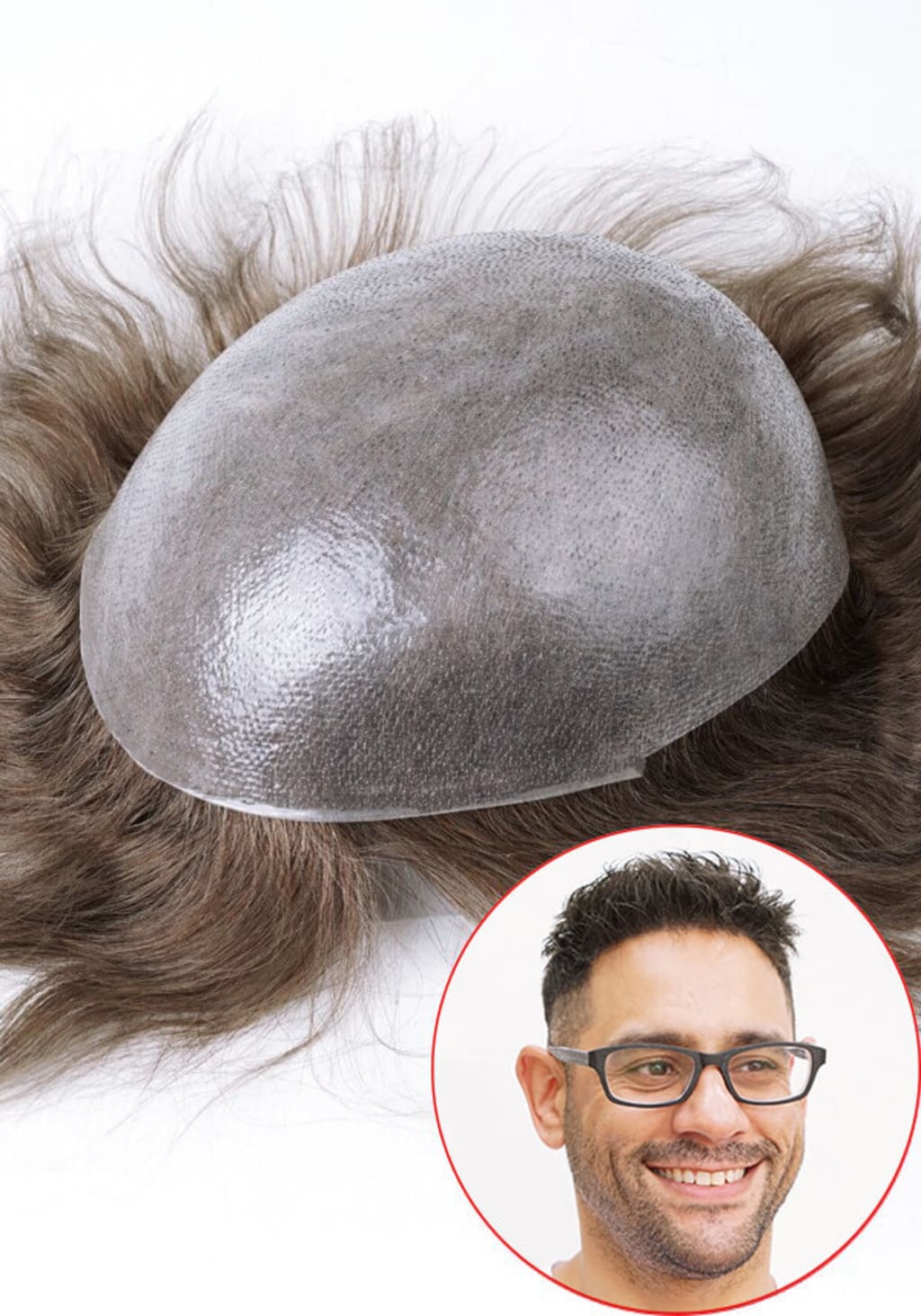
How to Choose the Perfect Bald Toupee for Your Face Shape
A bald toupee or hair system only looks real when it actually matches your facial features. That perfect balance is called facial harmony. It basically means the hairline, density, and style fit your face shape—not fight it—so the whole thing blends right in and feels completely natural. But before you pick out a style, you've got to figure out your face shape first.
Key Takeaways
- Trace a selfie to identify your face shape and use the four-finger rule above your brows to position the hairline accurately.
- Elongate round faces by adding crown height with 110–120% hair density and a breathable lace base.
- Soften square jawlines using textured, layered cuts and side parts to break up rigid, straight lines.
- Balance oblong, heart, and diamond shapes by adding fullness to the sides and using fringes to minimize forehead width.
- Preserve your system's natural proportions and facial harmony by scheduling maintenance trims every 3 to 5 weeks.
Identifying Your Canvas: How to Determine Your Face Shape Accurately
Nailing a natural look starts when you identify your face shape with real accuracy, not just guessing. Your forehead width, cheekbones, and jawline all matter. Why? Because they tell you exactly where a hair system needs to sit and how to style it. Ditch the old paper-and-pencil tricks. A quick selfie gives you cleaner lines and much better proportions. Just start with a clear picture, then map out your outline. It's the most reliable way to get this right.
The Digital Selfie Test vs. The Mirror Method
Taking a selfie works way better than looking in a mirror since it freezes your features in a single frame. Stand facing your phone, keep your head level, and pull your hair back so your forehead and jawline are totally visible. Good lighting definitely helps, too.
Open the photo and trace your face's outline using your phone’s markup tool. Follow the curve of your forehead, go around your cheekbones, and bring it down the jawline. You'll quickly see if your shape leans round, square, oval, or heart-like based on the symmetry and proportions. Simple.
Having that clear outline takes all the guesswork out of the process. It perfectly sets up your next move—putting your hair system exactly where it belongs.
How Do You Measure Where a Wig Should Sit on Your Forehead?
The four-finger rule gives you a fast, reliable starting point for a natural hairline. Place four fingers horizontally right above your eyebrows. Your top finger marks exactly where the front of your system needs to start on your forehead. That's it.
This trick works because most natural hairlines sit about 2.5 to 3 inches above the brows. Make sure the line runs evenly from temple to temple. It should follow your natural curve rather than a straight, artificial edge.
Getting the placement right matters just as much as the shape itself. Once you've got this line dialed in, you're ready to pick a silhouette that balances your features without looking fake.
The Round Face: Adding Height and Structure
Round faces look fuller because your width and height are pretty much the same. So the goal is simple: add vertical lift and cut out the bulk on the sides. A hair system lets you do exactly that. Keep the sides tight and build volume at the crown to create a longer look. Styles like a pompadour or a lifted quiff work great because they pull the eye up, not out.
Shifting from width to height makes your face look slimmer without changing your actual features. Even a 1–2 inch lift at the crown can visually stretch your face shape. But getting that height to look real depends on how the piece is built, not just how it's styled. This leads right into the technical specs you'll want to order.
Technical Specs for Round Faces: Density and Base Choice
Start with 110–120% hair density. That range gives you enough fullness for crown volume without looking bulky on the sides. If you go higher, the piece might look too thick and flatten your head shape instead of stretching it out. Simple.
Go with a lace front for your base. They allow airflow and make it easier to style your hair up into clean vertical lines. And that lift is exactly what builds height over width.
A good base clearly supports the style, but structure doesn't end at the hairline. Facial hair can actually reinforce that same vertical effect.
Pairing Your Lordhair System with the Right Beard for Round Faces
A pointed beard sharpens up a softer face. Pairing a Lordhair system with a goatee or Van Dyke adds length right below the chin, balancing out the extra height up top. This is called beard integration—using your facial hair to stretch out your overall shape.
Keep the beard sides short and let the chin area grow out a bit. That draws the eye down and gives your jawline much sharper definition.
Together, the lifted hair and pointed beard create a balanced frame. Less curve, more structure. This shift gets even more important when you're dealing with naturally angular shapes like a square face.
The Square Face: Softening Strong Angles
A square jawline gives you strong structure. But it can look a bit rigid if your hair mimics those hard lines. The trick is softening sharp angles with movement and an uneven flow. That means staying away from flat sides or blunt edges. Go for layered cuts that break up straight lines across your forehead and jaw instead. A Lordhair system really helps here since you can control the density and direction right from the crown. Side parts also pull the eye off-center to dial down that boxy vibe. Texture is your best tool. Start there.
Why Texture Matters for Square Proportions
Texture knocks out that “block” effect fast. Soft waves or a slightly messy finish break up those straight edges, so your face doesn’t look wide and flat. Even grabbing some light layers around the crown adds lift and variation. It just creates a much more natural look than a stiff, uniform hairpiece.
Keep the sides slightly tapered rather than tight. That little detail easily softens a square jawline without making your face look extra wide. And skip the heavy, straight fringes. They just exaggerate your forehead width.
This strategy is pretty much the exact opposite of what works for a longer face, where you'd manage height instead of adding movement. Specific styles like your classic side part work best here to break up that facial symmetry. That's it.
The Oblong and Oval Face: Managing Length and Versatility
Oval faces are pretty much the easiest to work with. Oblong faces, on the other hand, need clear styling moves to look a bit shorter. Since an oval face already naturally balances out, most haircuts just work without much fuss. But an oblong shape stretches further from your forehead down to your chin. Adding extra height up top only stretches it out more. The fix? Cut back on vertical lift and ask for fuller sides to rebalance everything. Let's start with exactly what you shouldn't do—especially if you're working with an oval face.
What to Avoid When Choosing a Hairpiece for an Oval Face
Even though oval faces pull off almost any style, you can still mess things up. The biggest trap is pushing the hairline too far forward or making it way too sharp. It just ruins the natural look of the system. A soft, slightly uneven hairline usually comes across as much more authentic than a harsh, straight edge. Tossing in a subtle widow’s peak works wonders, too.
Cap size and the hair system base matter a lot more than people expect. If your cap sits too low or feels too tight, it literally alters your forehead height. Your natural proportions get completely thrown off. That's exactly when even a high-quality Lordhair system starts looking obvious.
Density is another easy trap. Packing too much volume on top without tapering the sides visually stretches your face out. And yes, this happens even on a perfectly oval shape.
These little details become a huge deal once you start looking at sharp, angular structures like heart or diamond faces.
Heart and Diamond Shapes: Balancing the Chin and Cheekbones
Heart and diamond face shapes both highlight your wide cheekbones and a narrow chin. The goal here is easy. You just need to soften that contrast. You can do this by adding some width near the temples or bringing volume forward with a fringe. A light fringe helps hide forehead width, and fuller sides stop your face from looking top-heavy.
Stay away from tight, flat sides with too much height on top. That just makes the difference between your cheekbones and chin stand out more. Instead, try layered styles that push volume outward rather than up. A side-swept fringe works great because it breaks up the symmetry and adds movement across your face.
These shaping tricks take care of the cut. But how the hairpiece is actually made changes how natural it looks, especially right at the hairline.
Choosing the Best Lordhair Base for Exposed Hairlines
An exposed hairline needs a base that practically vanishes on your skin. For swept-back or off-the-face styles, a skin base (also called poly) from Lordhair gives that completely realistic finish. It lays flat, mimics a real scalp under the light, and keeps the front edge clean and sharp.
Lace bases actually work better if you want to keep a fringe. They're breathable and have a bit of texture. This helps blend the hair density around your cheekbones without pulling eyes to the front hairline. That really matters when you're trying to balance out a narrow chin without showing too much of your forehead.
Pick your base based on your styling habits, not just comfort. Because once the cut looks right, regular maintenance is what actually keeps those proportions in check. That's the secret.
Maintaining the "Shape": Preservation of Facial Harmony
A great cut only works if it keeps its shape. Hair systems don't stay the same forever. Everyday wear causes light shedding, stretching at the base, and small shifts in density. That's when thinning spots pop up in areas that used to be full, especially around the crown and the part.
Regular upkeep locks those proportions in place. Aim for a quick trim every 3 to 5 weeks to reset the edges and make sure the layers sit right. Don't wait for obvious hair loss to act. Catching it early stops uneven bulk and keeps your face looking balanced.
Return hairs matter a lot more than most beginners think. Those tiny hairs near the base can lift up or tangle, which ruins the natural look. A quick wash, some gentle conditioning, and careful styling will help them lie flat again.
Nail the structure, and the shape will follow. Simple. This same idea plays into how the system is built right from the start.
Frequently Asked Questions about Hair Systems and Face Shapes
How to measure your head for a hair system?
Soft measuring tape. Front hairline to nape, then ear to ear over the top. Use the four-finger rule above your brows to find your front edge. Don't eyeball it.
Which type of human hair lasts the longest?
Virgin Remy hair. The cuticles all face the same direction. It won't tangle into a rat's nest after two washes. Expect 6 to 12 months. Chemically stripped hair fries fast.
What is the difference between a wig cap and a hair system base for comfort?
Night and day. Wig caps are thick elastic domes. They trap sweat. A system base like Swiss lace is micro-thin and bonds right to your scalp. It breathes. You literally forget it's there.
About the Creator
Leo
Passionate men's hairstylist with a keen eye for detail and a knack for creating on-trend looks. Dedicated to delivering hair restoration education that enhances individual style.
Enjoyed the story? Support the Creator.
Subscribe for free to receive all their stories in your feed.
Comments
There are no comments for this story
Be the first to respond and start the conversation.