
How should an HRC choose the correct percentage of grey hair
Choosing the Right Grey Hair Percentage for Systems 2026

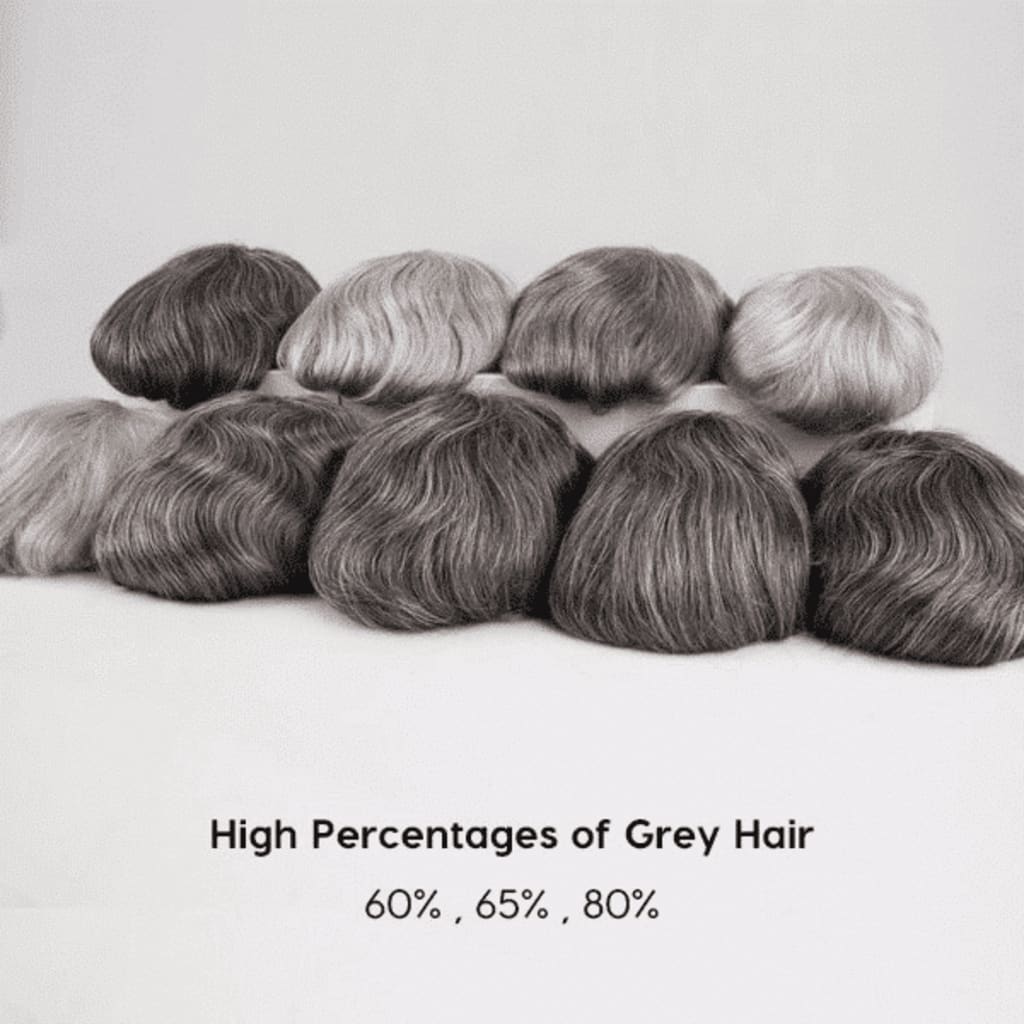
How should an HRC choose the correct percentage of grey hair
Getting the grey hair percentage right is what makes a hair replacement system look like it belongs with your client's natural hair, not just sitting beside it. For salon owners and HRC teams, your job is to check the grey placement, pick the right fibers, and map out each zone clearly. Newtimes Hair handles custom orders built around these exact details.
Here's how to take a standard client assessment and turn it into a precise hairpiece order.
Key Takeaways
Untreated root regrowth determines the correct grey percentage under neutral 5000K lighting.
Each scalp zone needs separate grey percentages matching the client's natural pattern.
Human grey hair suits systems with more than 40% grey.
What Does Grey Hair Percentage Mean in Hair Replacement Systems?
Grey Hair Percentage in a Hair Replacement System just tells the factory exactly how much grey or white hair to mix into the unit.
It's a production ratio, not a salon color-service result. Newtimes Hair takes those order details to create a custom blend so it seamlessly matches the client's own growing hair.
Specifying Fiber Ratios vs. Salon Dye Coverage Ratios
When you place a factory order, the Grey Hair Percentage lets Newtimes Hair know the exact amount of grey fiber needed in the final mix.
But for a professional colorist or HRC, Grey Hair Coverage is about how well a dye hides existing greys. Dye coverage actually changes the color of the bio-hair, while a system percentage just tells the factory which fibers to mix together.
Why Matching Biological Hair Regrowth Demands Precision
Your grey ratios have to closely match the client's side and back regrowth since the unit and bio-hair meet right out in the open. Even a tiny mismatch makes the transition super obvious the second the hair moves. Simple as that.
Make sure to specify your base shades and Natural Series options as a single blend. Newtimes Hair can nail the exact ratio you order, but the salon has to base that number on what's actually growing out of the client's head right now.
How Incorrect Grey Percentages Ruin Hairpiece Realism
Getting the Grey Hair Percentage wrong creates a harsh contrast where the hair meets. It makes the white hair look totally missing or way overdone next to the client's natural regrowth. When that happens, the system looks like an obvious hairpiece.
Plus, an unnaturally even grey mix just looks flat. You can avoid those dull, opaque results by ordering a blend that actually mirrors the client's mix of dark and grey strands instead of one solid block of color.
How Do You Determine a Client's Natural Grey Hair Percentage?
How do you figure out a client's natural grey hair percentage? Start right at the roots. That's where the new growth shows the real mix.
Just compare that regrowth with your samples, count the strands in key zones, and check everything under neutral light. These steps give your salon a solid number to send Newtimes Hair. That way, they can create a custom blend that matches the client's growing hair perfectly.
Visual Estimation Against a Hair System Grey Sample Ring
Hold a hair system grey sample ring right next to the client's dry root growth. Don't look at the colored lengths. A professional colorist or HRC needs to separate small sections under even lighting and compare the visible grey with each swatch.
Make sure to check both sides and the nape, since grey hair loves to cluster. Pick the percentage that best matches the regrowth the unit needs to blend with. Then, just record your chosen swatch for Newtimes Hair.
Calculating the Ratio of Grey to Natural Hair at the Roots
You can calculate the root ratio by doing a quick strand count in each zone. For example, 20 grey strands out of 100 means you're at 20%. Keep your grey and pigmented hair counts separate, then compare the sides, temples, and nape. Simple.
Don't just average the numbers if you see a strong pattern at the temples. If you're going for a salt and pepper blend, focus on the zones right next to the hair unit. Also, make a note of exactly where the grey concentration shifts.
Assessing Hair Porosity and Natural Base Level Under Direct Lighting
Use 5000K lighting to judge the natural base level. Yellow or dim light can easily make white strands look warmer. On the flip side, a dark base can make the grey look much heavier than it actually is.
Don't forget to check porosity. Porous lengths reflect light unevenly, so don't let an old lift job or faded ends trick you into ignoring the untreated roots. Just record your root estimate before turning it into standard percentage tiers. That's it.
What Are the Standard Levels of Grey Hair Percentage for Systems?
Most custom grey hair orders fall right into three practical ranges: 5% to 10%, 20% to 30%, and 50% plus. These tiers give salon teams an easy starting point when ordering Grey Blending from Newtimes Hair.
But remember, the final percentage should still match the client's visible root growth and age profile.
5% to 10% Grey: Subtle "Salt and Pepper" Touches
Ask for 5% to 10% grey when the root growth is mostly colored, with just a few silver strands at the temples or across the top. This light Salt and Pepper range works well for early or isolated greying, rather than an overall grey look.
Just ask Newtimes Hair for Grey Blending at your confirmed percentage and natural base shade. At this low ratio, even a small bump in grey can make a dark system look much lighter next to the client's own hair. Simple.
20% to 30% Grey: Distinguished Age-Appropriate Standard
Go with 20% to 30% when grey shows up across the roots but the natural color still runs the show. For men in their 40s and 50s, this Grey Hair Percentage usually looks established without coming off as completely silver.
Pair it with the closest Base Shades / Natural Series match to their untreated growth. The percentage sets the amount of grey, while the base shade keeps the colored hair matching the client's natural tone.
50% Plus Grey: Mature Silver and Full Salt-and-Pepper Systems
Choose 50% plus when silver and White Hair make up at least half of the blend. It's not just one fixed look, though. A 50% mix still looks like salt-and-pepper, while higher percentages push the system toward a true silver appearance.
Write down the exact percentage instead of just saying "mostly grey," and make sure to confirm the natural base shade that's still left in the mix. A heavy share of White Hair reflects more light, so vague instructions can leave you with flat, opaque results instead of a nice dimensional blend.
How Does Client Age Influence the Recommended Grey Percentage?
Age gives salon teams a great starting point, not a strict biological rule. The typical percentage of gray hair by age varies a ton. That means the client's visible side hair and root growth still matter most.
Use age to set a realistic baseline, then tweak the blend to match the grey the client already has. Placement needs its own game plan since grey doesn't show up evenly across the scalp.
The "Age+10" Rule for Setting Client Expectations
The "Age+10" rule uses a client's age plus 10 to get a rough grey percentage starting point. A 40-year-old client, for instance, might start around 50% grey. From there, the HRC adjusts that number after looking at their natural growth.
It's a counseling tool, not a hard diagnosis. Ask, "What is the typical percentage of gray hair by age?" Then explain that Newtimes Hair can handle Grey Blending for whatever final percentage you settle on.
Balancing Client Wishes Against Realistic Biological Aging
Sure, a client can ask for zero grey. But obvious silver on the sides will probably make a solid dark system stand out against their natural hair. A pro colorist or HRC should point out this contrast clearly and suggest enough Grey Hair Coverage to blend smoothly with the existing growth.
Try offering a lower grey percentage if the client prefers a younger look, instead of pushing a fully silver blend. Newtimes Hair easily supports this middle ground with a confirmed custom Grey Blending percentage.
How Should You Map Zonal Grey Distribution Across the System?
Grey Hair Percentage needs to follow the client's natural pattern, rather than covering every zone at a single, uniform rate. A zonal map gives the system a Seamless Transition right where it meets their growing hair.
Make sure to mark the temples, side flaps, crown, and top separately on the order form. Once you've set that map, pick a hair fiber that keeps the blend looking believable through daily wear.
Temple-First Strategy: Higher Density at Side Flaps and Temple Points
Go for the strongest salt and pepper effect around the temple points and side flaps if the client's natural hair is noticeably greyer in those spots. Since those outer edges sit right against their bio-hair, a dark, heavy blend might create a harsh line instead of a Seamless Transition.
Give Newtimes Hair a zone-by-zone percentage breakdown instead of just one all-over number. Bumping up the percentage at the temples lets the side profile match the client's actual grey pattern.
Tapering Percentages Through the Crown and Top Zones
Drop the Grey Hair Percentage as you move from the temples toward the crown and top, assuming the client's natural hair does the same thing. Think of it like a soft shade gradient rather than a solid stripe across the scalp.
A Level of Lift only describes color depth, not where the grey actually goes. Ask the HRC to write down a percentage for every single zone before placing the order.
This Grey Blending plan keeps the top from looking too silver. It also stops any sudden color changes right at the crown.
Creating a Seamless Transition with the Client's Sideburns and Bio-Hair
Always match the system's edge to the client's sideburns before you confirm the order. Check out the visible grey at both temples under natural salon lighting, and then request the closest zonal percentage from Newtimes Hair.
A Professional Colorist or HRC should also check if the two sideburns have different amounts of grey. If they do, jot down that difference instead of trying to force a perfectly even blend. Natural hair growth rarely follows a straight ruler. Paying attention to that detail is exactly what protects a Seamless Transition on both sides.
Should You Choose Synthetic Grey or Human Grey Hair Fibers?
Wondering if you should go with synthetic or human grey hair fibers? Picking the right Hair Replacement System fiber really just comes down to your grey percentage and how you plan to maintain it.
Go for Synthetic Grey Fiber if you want stable, isolated grey spots. But if over 40% of the hair needs to move and act like the rest of your head, use human grey instead.
Synthetic Grey (Kanekalon): Colour Stability During Maintenance Dyeing
Pick Kanekalon for grey strands that need to keep their exact color while the surrounding human hair gets dyed. These synthetic strands won't absorb pigment the way human hair does. So, they stay completely grey instead of changing to match your dye. Simple.
This keeps your planned contrast looking great even after a color touch-up. When placing a Newtimes Hair order, just ask for Synthetic Grey Fiber to get that lasting grey look.
Human Grey Hair: Natural Texture and Heat Resistance for Higher Percentages
You'll want to switch to human grey hair once the grey makes up more than 40% of your Hair Replacement System. At that point, most of the unit needs the exact same texture, swing, and heat tolerance as the regular pigmented human hair.
Human grey gives you a totally Seamless Transition across large silver or white sections. This is huge if the client uses heat tools a lot. Just make sure to write down the exact White Hair percentage on your Newtimes Hair order so the final blend is spot on.
What Is the HRC Consultation Checklist for Ordering Grey Hair Systems?
Wondering about the HRC consultation checklist for ordering grey hair systems? It's basically a quick client-intake form that turns a visual grey pattern into crystal-clear Hair Replacement System instructions.
For salon teams, the goal isn't to guess the overall blend. You need to capture the client's comfort level with grey and map out every visible zone before Newtimes Hair gets the custom specs.
Pre-Order Assessment Questions to Clarify Client Preferences
Start by figuring out how to pin down the exact percentage of grey hair. Get the client to point out where the silver usually pops up first, and ask if they're looking for a subtle blend or a noticeably mature look.
Next, find out what they definitely don't want. Maybe that's too little grey, an all-over white effect, or silver patches in the wrong spots. The Professional Colorist or HRC needs to repeat this agreed-upon pattern back to them before talking prices or placing the order.
Documenting Zone-by-Zone Percentages on Custom Spec Sheets
Jot down the Grey Hair Percentage for the hairline, temples, crown, and side flaps. A flat "30% grey" can't end up showing lighter temples than the crown. It's that simple.
Label each zone with its exact percentage and add a quick note about the blend. This way, Newtimes Hair can easily read the Hair Replacement System specs. Plus, your salon gets to catch easy-to-fix errors before anything gets approved.
What Common Mistakes Should HRCs Avoid When Ordering Grey Percentages?
So, what mistakes do HRCs actually need to avoid when ordering a Grey Hair Percentage? The absolute biggest errors usually happen when a Hair Replacement System gets treated like one flat colour blend, rather than a mapped-out custom order.
Taking a minute to write clear zone notes and pick the right fiber protects your salon. It saves you from remakes, delayed fittings, and fake-looking colour jobs. Plus, it gives Newtimes Hair the exact details needed to build the unit to spec.
Ordering Uniform Grey Across the Entire Base Unit
Putting a single grey percentage across the whole base often creates a blocky, opaque look instead of a smooth Seamless Transition. Real grey hair almost never looks perfectly even once the piece is cut, styled, and seen in different lighting.
Instead of just writing down one all-over percentage, spell out exactly how the grey should look in each visible area. This hands Newtimes Hair a much clearer production brief. And it makes life way easier for your stylist when they're blending the final system into the client's bio hair.
Misjudging Fiber Type and Causing Colour Bleed During Tone Touches
Human grey hair will easily grab onto colour during a future tone touch-up, even if it's just a tiny fraction of the unit. Pushing the High Pigment Loading or leaving it for an extended Processing Time can cause major issues. You'll likely end up with grey strands that look dull, tinted, or completely uneven next to the freshly dyed base hair.
Always nail down the maintenance plan before you place the order. If you're expecting to refresh the base colour later, make sure to tell Newtimes Hair right away. That way, the fiber selection and grey blend will actually hold up to that service routine.
How Newtimes Hair Simplifies Custom Grey Percentage System Ordering
Newtimes Hair makes custom grey ordering a lot clearer. Your salon can submit the exact Grey Hair Percentage needed for the client's visible blend instead of relying on a one-size-fits-all mix. That gives the production brief a real, practical starting point.
Just ask Newtimes Hair which dual-fiber option works best for the planned maintenance service, then record the requested grey placement. A clear custom order helps your team fit a Hair Replacement System that blends right in with the client's existing hair. Simple.
Frequently Asked Questions About Grey Hair Percentages for HRCs
Is 20 or 30 developer better for gray hair?
Neither determines the correct grey percentage. Match untreated roots under 5000K lighting; 20–30% grey fits visible greying where natural color still dominates.
Is it better to go lighter or darker to cover gray hair?
Neither. Match the client's actual root blend, zone by zone. Darker looks artificial fast; lighter temples may be correct if their natural grey is concentrated there.
What volume developer is needed for resistant gray hair?
Developer volume is irrelevant to a hair replacement system's grey blend. Order the measured grey percentage; use human grey once it exceeds 40%.
About the Creator
Leo
Passionate men's hairstylist with a keen eye for detail and a knack for creating on-trend looks. Dedicated to delivering hair restoration education that enhances individual style.
Enjoyed the story? Support the Creator.
Subscribe for free to receive all their stories in your feed.
Comments
There are no comments for this story
Be the first to respond and start the conversation.