
How much safety stock should an HRC keep for hair systems
HRC Safety Stock Guide: Hair System Inventory

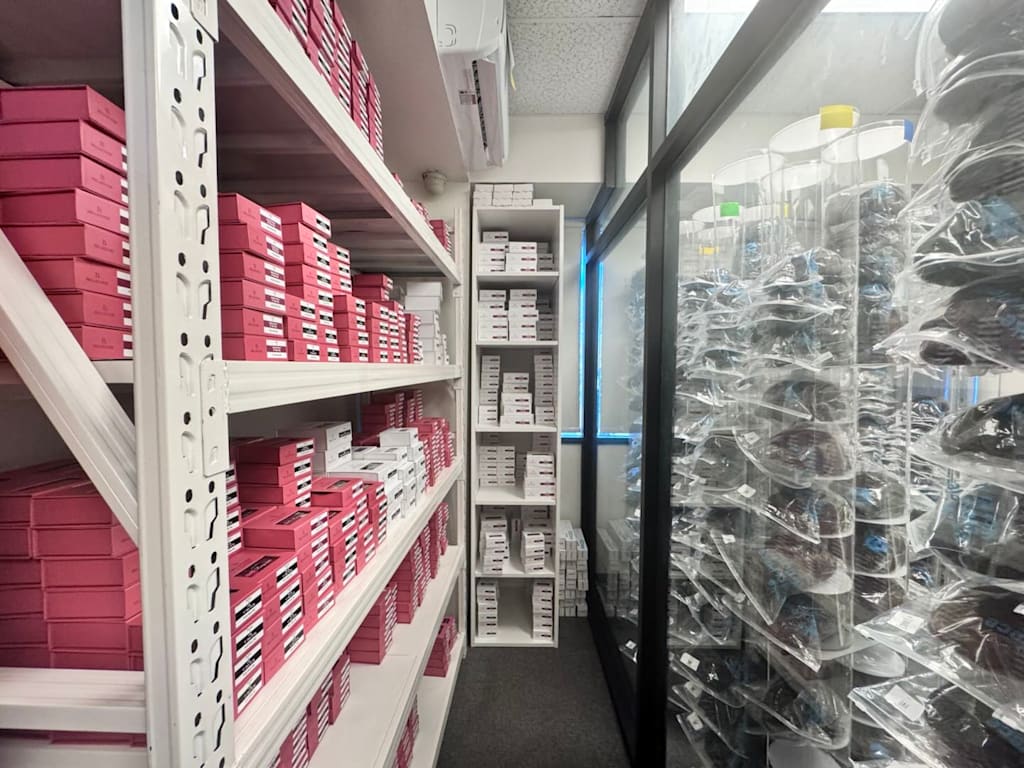
How much safety stock should an HRC keep for hair systems
Safety stock for hair systems is basically your backup inventory. It keeps appointments flowing smoothly whenever demand spikes or supplier lead times drag out. Solid HRC inventory management actually keeps your clients coming back, mostly because they won't have to deal with annoying delays for replacement services. Figuring out the exact buffer you need really comes down to changes in demand, lead times, and the specific hair systems your clients wear the most.
Key Takeaways
SKU buffers come from maximum lead-time demand minus average lead-time demand.
Reorder points equal average lead-time demand plus each SKU's safety stock.
Fast-moving ready-to-ship units deserve the largest safety-stock buffers.
What Is Safety Stock for a Hair Replacement Center?
Safety stock is the reserve of hair systems you keep beyond expected appointment demand. For a non-surgical hair replacement center, it protects your daily service when a popular unit is needed sooner than planned or a shipment gets delayed.
This safety stock definition really matters in HRC operations because a missed replacement appointment can easily wreck both the client's routine and the center's schedule. The right buffer is driven by shifting demand and unpredictable lead times, not just routine sales alone.
Protecting Client Retention and Business Continuity
Running out of hair systems creates a much bigger client retention risk than just missing a standard retail sale. A client might have a scheduled replacement service, a favorite hair unit, and almost zero flexibility to wait around. If your center can't finish the appointment, that client might put off the service entirely or just find another provider.
Emergency inventory gives your hair replacement center staff a solid fallback when demand spikes out of nowhere or deliveries run late. It helps protect your appointment capacity, cuts down on last-minute cancellations, and backs up consistent service for your returning clients.
Make sure to keep reserve units totally separate from the hair systems set aside for normal bookings. The goal isn't to overstock every single option out there. It's simply to protect those recurring services where a delay would hurt the client the most. Simple.
Safety Stock vs. Cycle Stock: Key Differences for HRCs
Cycle stock is basically the hair unit inventory you expect to use during normal day-to-day operations. It covers booked appointments and standard sales between your regular orders, so managers usually plan it around typical demand.
Safety stock is an inventory buffer sitting right behind that routine supply. Staff tap into it when demand shoots past expectations or when incoming hair units show up later than planned. You shouldn't treat it as inventory that's just available for every everyday order.
Keeping the two separate stops a full-looking warehouse from covering up a hidden service risk. When your cycle stock is tied up in appointments, only that reserve can handle a disruption without forcing a client to wait. That's it.
Key Factors That Influence HRC Safety Stock Levels
Safety stock needs to cover any disruptions that might stop a hair replacement center from finishing scheduled services. The two biggest supply chain factors are unstable overseas lead times and shifting demand from returning clients.
Managers don't need to hold the exact same reserve for every hair unit. Once you understand these risks, you can use real lead-time and demand records to set up a practical buffer. Simple as that.
Lead Time Variability from Overseas Manufacturers
Overseas orders often arrive later than expected because production and shipping don't always follow a strict schedule. Manufacturing delays can pop up before an order even leaves the factory. Plus, customs clearance, carrier backups, or port issues can drag out transit times. If a center orders too close to when they actually need the product, they can run out before the replacement units show up.
Hair system suppliers might also have different production timelines for standard orders versus custom requests. So, make sure to track the actual time between placing an order and receiving it—not just the supplier's best guess. If your deliveries regularly bounce around by a few days or weeks, keep a bigger safety stock buffer for those specific units.
Even the most reliable supplier can run into delays outside their control. Your reserve inventory is what protects those booked client services while the incoming order finally catches up.
Seasonal Demand Spikes and Client Replacement Cycles
Demand naturally spikes when clients want appointments for holidays, vacations, weddings, or big events. These busy periods can fill up your schedule fast, driving up the need for replacement units that clients might normally put off. Your safety stock needs to reflect these predictable peaks, not just your average month.
Replacement frequency matters, too. Clients who stick to a regular service cycle create a nice, clear demand pattern. But clients who book early, late, or totally out of the blue add a lot of uncertainty. Review your appointment history to see when replacement demand clusters and exactly how often your clients need a new unit.
A center with highly consistent service cycles can get away with a tighter reserve than one with messy booking patterns. The bottom line is covering realistic demand shifts without tying up your cash in inventory that just sits on the shelf.
How Do You Calculate Safety Stock for Hair Systems?
Safety stock is just the extra hair units an HRC keeps on hand to cover late deliveries or spikes in replacement demand. A simple calculation gives managers a solid reserve—no fancy forecasting software needed.
This number isn't your full purchase order quantity. It's just a buffer. It protects client appointments while new inventory is still on the way.
A Plain-Language Safety Stock Formula for HRCs
Try this basic formula for your HRC inventory: (Maximum lead time x maximum daily demand) - (average lead time x average daily demand). Lead time just means the days from placing an order to actually getting the hair units. Daily demand is how many units your center typically uses each day.
To figure this out, look at recent purchase orders to find your longest delivery time and your normal delivery time. Next, check past replacement appointments to spot your busiest daily unit usage versus your typical daily usage. Stick to records for the same unit category, like a specific base type, color, and size range. If you mix completely different hair units, you'll end up with a reserve number that completely misses your actual demand.
This math simply figures out the extra units you need when demand and delivery times run higher than usual.
Practical Calculation Example for an Active HRC
Let's say an HRC has 150 active clients. They might use an average of 1 hair unit per day, while their busiest days eat up 2 units. Imagine the average supplier lead time is 30 days, but the longest recent delivery dragged on for 45 days. The math looks like this: (45 x 2) - (30 x 1) = 60 units of safety stock.
That 60-unit figure is your buffer, not the total inventory target for the center. You should re-check it whenever client counts, booking habits, or supplier delivery times shift. If your clients usually need different specs, calculate separate buffers for the unit groups that actually move fast. This cuts down your stockout risk without treating every single hair system as interchangeable.
From there, that safety-stock number sets up a clear reorder point for your hair replacement units.
Setting Reorder Points Based on Lead Times and Daily Usage
A reorder point tells an HRC exactly when to put in a purchase order, rather than waiting until units get dangerously low. You calculate it like this: (average daily usage x average lead time) + safety stock. Doing this keeps your incoming inventory right on schedule. Plus, your safety-stock buffer stays ready for unexpected delivery delays or super busy replacement days.
Going off our earlier example, say your average usage is 1 unit a day, your average lead time is 30 days, and your safety stock is 60 units. Your reorder point comes out to (1 x 30) + 60 = 90 units. Once your stock hits exactly 90 matching units, the HRC needs to reorder. Simple.
You'll want to calculate the ideal reorder point for custom vs. stock hair units separately. Stock units usually have pretty steady lead times. But custom units can take a lot longer, since they vary by base, color, size, or density. Good lead time management just means reviewing these numbers anytime your supplier's delivery records or your daily usage shifts.
Categorizing Inventory: Stock Hair Systems vs. Custom Orders
Safety stock shouldn't be split evenly between stock hair systems and custom orders. An HRC needs a bigger ready-to-ship reserve for repeatable units. Custom work, on the other hand, needs close order tracking instead of shelves packed with highly specific replacements.
Separate SKU management keeps this split clear. Stock units follow sales patterns, while custom orders are managed client by client.
Safety Stock Strategies for Ready-to-Ship Stock Units
Stock hair systems should hold most of your safety-stock reserve since they handle immediate replacement needs. They protect your service when a client needs a fast hair unit, a supplier shipment shows up late, or demand spikes above your normal weekly pattern. Having these units ready helps stop backorders from ruining scheduled appointments.
Set the reserve by SKU, not as one giant number. Look at units sold, supplier lead times, and how often each SKU runs out. Raise the buffer for popular units with unpredictable deliveries. Keep your slower-moving stock hair systems lean, then adjust the mix when sales patterns change. The goal is having inventory that actually moves, not a storeroom stuffed with unused units. Simple.
Managing Lead Time Risk for Custom Hair System Orders
Custom orders carry more delivery risk since each unit follows a client's specific base, size, color, density, and other needs. Holding finished backups for every possible combo just ties up cash—and it still might not match the next client's order. Record each client's specs carefully. Always confirm supplier lead times before promising a delivery date, and order early when replacement timing is predictable.
When a delay happens, update the client quickly. Keep a backorders list with the order date, expected arrival, and current status. Ask suppliers for updates on open custom orders, especially when lead times shift. This approach protects your service without treating custom orders like standard stock inventory. Those same SKU records can then show which stock units deserve priority in an 80/20 review.
Applying the 80/20 Rule to Hair System SKU Management
An 80/20 review helps an HRC put safety-stock money behind the hair systems clients ask for most often. Instead of giving every SKU the exact same buffer, just rank your sales by color, density, and base over a set period of time. Those fast-moving combinations need the closest attention. Why? Because running out of them will mess up way more appointments than a slow seller ever could.
When looking at Pareto principle HRC SKU management, you want to flag the small group of SKUs driving most of your repeat demand. Check each flagged item's supplier lead time and week-to-week demand swings before setting up a reserve. A fast seller with a shaky delivery window simply needs more protection than something you can restock fast.
Popular hair system base types absolutely belong in this review, but only in the colors and densities that actually move. You'll need to recheck these rankings regularly, too. Client demand shifts, and a top priority today can easily turn into dead inventory tomorrow.
Mitigating Supply Chain Disruptions and Holiday Shutdowns
Lunar New Year shipping delays for hair systems can easily leave an HRC without their fast-moving units once manufacturers close up and freight schedules get tight. Bump up your safety stock before the shutdown. Focus on the colors, densities, and base types that bring in the most repeat orders.
Start by double-checking each supplier's closure dates, when production kicks off again, and their normal transit time. Then, build in a buffer for the shipping delays overseas manufacturers might face right after factories reopen. Backlogs usually slow down dispatch. If the lead time is longer, you'll need a bigger reserve. That's just how it works.
Look at your past sales records from the same holiday period to estimate demand while restocking is tough. If a popular hair system usually flies off the shelves, make sure you're holding enough inventory to cover expected sales during the closure and that delayed restart window. Just remember to review this reserve after the holiday. Supplier timing and client demand can definitely shift from year to year.
Balancing Inventory Carrying Costs Against Stockout Risks
Extra hair systems protect your sales when supplier delays happen. But units sitting around too long tie up cash, and they might not match what clients want anymore. The right safety-stock level covers normal delays without stuffing your shelves with slow-moving colors, densities, or base types.
To figure out the cost of holding extra hair system inventory, add up the cash tied up in each unit, storage space, insurance, and the risk that the piece just won't sell. Review these costs by style instead of treating every hair system the exact same way.
Next, compare that amount against your stockout costs. Think lost profit from a missed sale, rush shipping fees, canceled appointments, and clients who might just buy somewhere else. Track how often each item sells, how much demand shifts, and your supplier's lead time. Bigger demand swings or longer lead times mean you need a larger reserve. Finding this balance gives you a solid starting point for a daily stock-tracking system.
Recommended Safety Stock Matrix for HRCs by Client Volume
Safety stock needs to go up as your active client count grows, but keep it focused on the hair systems people order most. If your supplier lead times are pretty stable, the baseline below helps you avoid missed appointments. It also keeps you from tying up too much cash in inventory that just sits there.
This hair replacement center stock framework is just a starting point for your inventory strategy, not some set-in-stone rule. When counting active clients, look at people who are ordering right now or who you expect to reorder on their normal schedule.
Active clientsSuggested safety-stock units1-102-3 units11-254-6 units26-507-10 units51+12-16 units
Make sure to keep these units in your fastest-moving profiles—like your most popular base types, colors, and densities. Add an extra unit or two if supplier lead times start running long or if client demand suddenly shifts. On the flip side, you can shrink this reserve if a specific profile hasn't sold for a few cycles.
Operational Checklist for Managing HRC Stock Levels
Keeping accurate records stops a hair replacement center from realizing a profile is missing right when a client wants to reorder. It's simple. Your stock count needs to match exactly what's sitting on the shelf.
A solid inventory routine turns backup stock into real efficiency. It lets managers catch slow-moving profiles, changing demands, and supplier delays way before they mess up scheduled appointments.
Weekly checklist:
Count your fast-moving base types, colors, and densities. Fix any record mismatches right away.
Look over open orders and current supplier wait times. Reorder the second your available units get close to the safety-stock level.
Tag profiles that have new client requests or back-to-back sales.
Monthly checklist:
Compare this month's sales to last month. Flag any profiles that didn't move at all.
Tweak your safety stock if you see long-term demand shifts or extended lead times.
Clear out old client notes. Double-check that every single on-hand unit is logged the right way.
Streamlining Your Supply Chain with Newtimes Hair Solutions
You need more safety stock whenever a hair system supplier's lead time gets long or unpredictable. Partnering wholesale with Newtimes Hair might actually let an HRC keep fewer backup units on hand. This works as long as they offer consistent ordering windows and reliable availability for the specific profiles your center sells the most. Simple.
Make sure you confirm lead times for repeat orders. Also, ask how they communicate stock availability, and keep track of any late deliveries compared to what your clients need. A shorter, more reliable restock process shrinks the gap your safety stock has to cover. But demand swings still matter. So, keep extra units around for fast-moving colors, bases, or client-specific profiles until your own records start showing a steady pattern.
Frequently Asked Questions About HRC Inventory
How much safety stock should a hair replacement center keep?
Calculate by SKU: maximum lead-time demand minus average lead-time demand. Fast sellers need more.
What is the average lifespan of a hair replacement system?
+
Usually 2–6 months. Base type, wear, and maintenance decide it.
How often should hair systems be replaced?
Every 2–6 months for most clients. Replace sooner if shedding or damage shows.
What are the most common causes of hair loss?
Genetics leads. Hormones, stress, illness, medications, and nutritional deficiencies also matter.
Can you wash your hair without using shampoo?
Yes. Water-only washing works occasionally, but buildup eventually needs a gentle shampoo.
How long does it take to see results from hair loss treatments?
About 3–6 months. Early shedding can happen before improvement.
About the Creator
Leo
Passionate men's hairstylist with a keen eye for detail and a knack for creating on-trend looks. Dedicated to delivering hair restoration education that enhances individual style.
Enjoyed the story? Support the Creator.
Subscribe for free to receive all their stories in your feed.
Comments
There are no comments for this story
Be the first to respond and start the conversation.