
How direct factory sourcing helped salon owners unlock real profits
Direct from Factory: Why Sourcing from Overseas Hair System Suppliers Saves Money

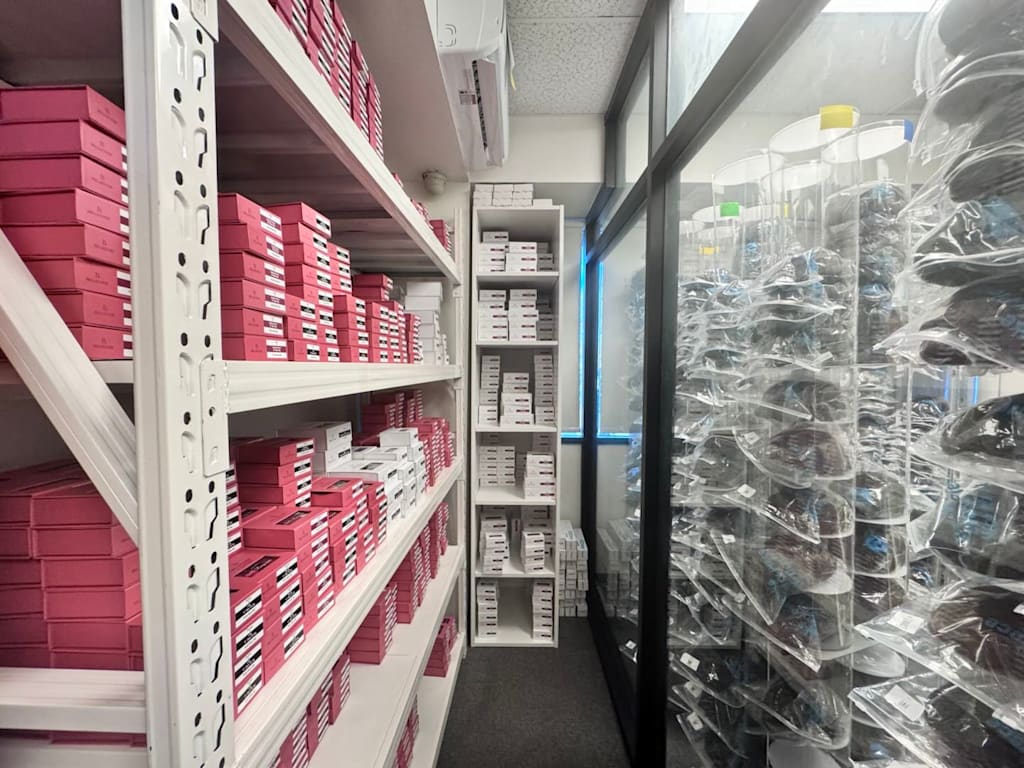
Direct from Factory: Why Sourcing from Overseas Hair System Suppliers Saves Money
Factory-Direct Sourcing means buying hair systems straight from Overseas Hair System Suppliers instead of dealing with U.S. distributors. This cuts out all those extra middleman markups, bringing down your costs while boosting your profit margins. For small salons, that difference adds up fast. It really fuels growth. If you want to grasp the true financial perks, we first need to break down the usual supply chain and see exactly where those extra costs pop up.
Key Takeaways
- Bypass middlemen to cut unit costs by 30–50%, keeping shipments under the $800 U.S. threshold to avoid import duties.
- Leverage factory-direct services to fully customize base materials, like French lace or V-loop skin, and launch a private-label brand.
- Verify suppliers are true manufacturers—not trading companies—by requesting business licenses and live video tours of their production floors.
- Demand strict quality control, including three-stage production inspections (30%, 60%, 100%) and certificates of origin for ethical hair sourcing.
- Optimize cash flow by ordering mixed batches to meet minimums while maintaining a smart 4–6 week inventory buffer.
The Traditional Supply Chain vs. The Factory-Direct Shortcut
Most U.S. salon owners pay way more than they realize thanks to a layered supply chain. The usual route looks like this: factory → exporter → U.S. importer → distributor → salon. Each stop tacks on middleman markups, often hitting 20–40% per layer. That stack quietly drives up your final price. Factory-direct sourcing skips most of these hurdles, letting you buy closer to the maker. You'll see the difference fast. Especially when you look at actual unit pricing.
The Math of Savings: Price Comparison Breakdown
Unit prices drop fast when you cut out the extra layers. A standard hair system costing $220 through a U.S. distributor might land closer to $90–$130 when you source wholesale hair systems right from overseas factories. That price gap helps your bottom line instantly.
But landed cost matters, not just the sticker price. Shipping can add $10–$25 per unit, and you might have to pay duties depending on your total order value. Even with those extra fees, most salons still save 30–50% per unit.
Understanding Import Duties and De Minimis Thresholds
Import rules change what you actually pay. In the U.S., the de minimis threshold is $800 per shipment. This means orders staying under that amount usually dodge extra import duties. Bigger orders might face specific tariffs based on the exact product category and shipping route.
Plan out your order size and frequency to keep things moving. Once you nail down these basics, the focus moves from simple cost savings to gaining an actual operational edge. You're working directly with the source for better customization and faster turnaround times. That's it.
Unmatched Customization and Private Label Flexibility
Working factory-direct completely changes what you can offer your clients. Instead of just picking from fixed catalog items, you get real OEM/ODM services where you can customize everything. That means you control the base type, density, color, and even the packaging. U.S. wholesalers almost never go this deep. But the real edge shows up when you start designing the base itself.
Designing Bespoke Bases: From French Lace to V-Loop Skin
Base materials totally define how a system looks and feels when worn. Direct factories let you go with French lace for better breathability, or skin bases using V-Loop technology for a clean, knot-free hairline.
These choices aren't just cosmetic. They rely heavily on precise manufacturing skills. And that same exact expertise carries right over into brand-building.
How to Start Your Private Label Brand with Newtimes Hair
A solid private label hair system brand starts with consistent specs and clear branding. With Newtimes Hair, you can easily customize your logos, packaging, and entire product lines under a single identity.
You also get much closer access to the actual production process. This makes it way easier to track any changes and keep your standards high across every single order.
The "Trading Company" Trap: How to Verify a Real Factory
Lots of overseas manufacturers look exactly the same online. But trading companies don't actually control production. That disconnect usually leads to delays, mismatched specs, and zero accountability. A quick check protects your margins and your brand. So, start with a simple checklist to prove you're talking to an actual factory.
The 5-Point Factory Verification Checklist
A solid hair manufacturer proves who they are on paper and in real life. Ask to see a business license that explicitly shows manufacturing scope, rather than just "trading." Check if the factory address matches up perfectly across their documents and invoices.
Ask for recent production photos with timestamps. You also want client references you can actually call. Check a few order samples against your exact specs to catch quality control problems early on. And always get your lead times confirmed in writing. Simple as that.
Next, make sure what you just looked at is real. Watch it happen live.
Requesting a Live Production Tour via Video Call
Talking directly tells you far more than paper ever will. Get on a video call and ask for a live walk-through of the cutting, ventilating, and packing areas.
Transparency is huge. You need to see the staff, the equipment, and the daily workflow in real time. If they say no or only let you see a polished showroom, treat it as a massive red flag.
That exact same openness needs to extend to how they source the hair itself.
Quality Control Protocols in Overseas Manufacturing
Consistent bulk orders don’t happen by luck. They rely on tight quality control (QC) at specific production points, mainly when texture has to match across hundreds of units. Good factories build these checks right into their daily workflow, rather than waiting until the entire run is finished. Most of them use three inspection stages tied to how far along the production is. It starts with the 30% checkpoint.
The Three-Stage Inspection: 30%, 60%, and 100% Completion
Early on, the 30% QC focuses heavily on ventilation and knotting. Technicians look at knot size, density, and direction before small mistakes turn into larger problems. Catching issues right here stops whole batches from going bad.
Hitting the 60% mark means testing for shedding and tangling. Inspectors usually do this through combing and a gentle wash. Any weak knots or bad hair alignments show up right away.
The final 100% check makes sure the textures match, the colors are spot-on, and the bases hold up tight. Doing it in stages cuts down on rework and keeps delivery times on track. But here's the thing. Even a perfect QC process can't fix terrible raw materials. So, you have to verify exactly where the hair actually comes from.
Ethical Sourcing: Certificates of Origin and Donor Traceability
Ethical sourcing always begins with paperwork you can actually verify. You should ask for certificates of origin and demand solid donor traceability. This is heavily important for Virgin Remy Human Hair. Those documents prove the hair isn't mixed and hasn't gone through harsh chemical treatments.
Solid suppliers—like Newtimes Hair—hold onto batch records that link every single order back to its original source. That's what protects you from getting wildly different quality from one shipment to the next.
Clean sourcing definitely helps with long-term consistency. But it does more than that. It protects your brand. Clients always notice when the product quality drops. Once that happens, your retention rates and reputation take a major hit.
Navigating Logistics: Lead Times and Shipping Reality
Lead times from overseas suppliers usually land between 2 to 6 weeks. It mostly depends on production schedules and your order size. Custom units take longer since they go through full manufacturing instead of just pulling from stock shelves. Shipping adds another 3 to 7 days for air freight into the U.S. Delays pop up when raw materials run short or QC flags issues mid-production. Planning ahead isn't optional—it protects your service schedule. That’s where smart inventory decisions come in.
Managing Inventory: Balancing MOQs and Shipping Costs
MOQ reality hits fast. Many suppliers demand 10–50 units per order just to unlock volume-based discounts. That alone can really strain a small salon’s cash flow.
A simple approach works better. Start with mixed orders—different base types, densities, and colors—so you aren't stuck with slow-moving stock. This spreads out your risk while still hitting those minimums.
Shipping costs per unit drop as your order size goes up. But over-ordering just ties up your money. Aim for a 4–6 week inventory buffer instead of bulk hoarding. Finding that balance keeps cash flowing while making sure you have products on hand. It leads directly to why supplier flexibility matters so much.
Why Newtimes Hair Offers Competitive Turnaround Times for US Salons
Newtimes Hair keeps reliable lead times by matching production schedules with consistent raw material access and strict QC checkpoints. This cuts down on the rework delays that constantly stretch timelines with other suppliers.
Their ordering model supports smaller, more frequent batches instead of forcing huge commitments on you. For U.S. salons, this means faster restocks and fewer gaps in service. Simple.
Shorter cycles and predictable delivery give you back control. And that’s exactly why this approach works so well for B2B buyers dealing with real-world demand.
Frequently Asked Questions
Which country sells the best hair for systems?
China. Specifically Qingdao. They dominate the manufacturing side. The raw hair itself usually comes from India, but Chinese factories have the ventilation and processing techniques locked down.
What is the difference between Indian, Brazilian, and Vietnamese hair?
Texture and marketing. Indian hair is fine and mimics Caucasian hair perfectly. Brazilian is usually just chemically treated Indian hair sold at a markup. Vietnamese is thick, straight, and durable.
Where do hair vendors actually get their hair from?
Temples and rural collectors. Most standard system hair comes from Hindu temples in India where people shave their heads for religious reasons. Factories buy this raw material at auction.
How can I find a reliable hair manufacturer in Asia?
Ask for a live video tour. Real factories will show you the production floor. Trading companies will make excuses. Start with a small test batch under $800 to dodge U.S. import duties.
About the Creator
Leo
Passionate men's hairstylist with a keen eye for detail and a knack for creating on-trend looks. Dedicated to delivering hair restoration education that enhances individual style.
Enjoyed the story? Support the Creator.
Subscribe for free to receive all their stories in your feed.
Comments
There are no comments for this story
Be the first to respond and start the conversation.