
How can I tell if real hair system photos look natural?
Will People Know I'm Wearing A Hair System?
How can I tell if real hair system photos look natural?
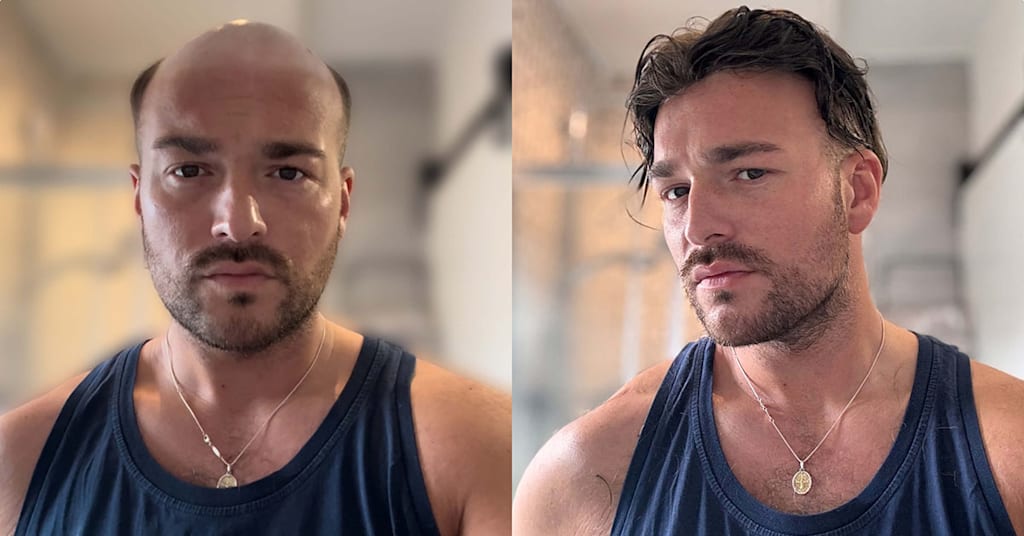
A hair system needs to look convincing on camera, not just in person. The real test is the natural hairline—how it actually blends with your skin, catches the light, and moves in photos and video. You can cut your risk by checking the density, watching out for visible edges, and seeing how real the scalp looks from different angles. To get past the normal marketing fluff, we have to break down the exact visual details that separate a high-quality setup from a bad, wig-like fake.
Key Takeaways
Look for a staggered, uneven hairline; perfectly straight edges signal an unnatural fake.
Ensure slight scalp visibility; overly dense systems create an obvious "hat effect."
Check the shine under direct light; human hair reflects irregularly, whereas synthetics show a flat, plastic sheen.
Spot deceptive photo edits by checking for blurred hairlines and missing skin pores.
Rely on videos and action shots over static photos to verify natural hair movement.
Match the system's density and color to your age and natural hair for a seamless blend.
The Anatomy of an Undetectable Hairline in Photos
The front hairline makes or breaks everything in photos. If it looks off, the whole system stands out, even when the rest looks great. A natural hairline is never perfectly straight or uniform. It relies on “macro-irregularity,” meaning uneven spacing and soft variation across the edge. That random pattern is exactly what keeps things undetectable on camera. And within that setup, how each hair attaches is the real deciding factor.
Spotting Macro-Irregularity vs. The "Wall of Hair"
Real hairlines always show staggered placement instead of a clean, straight edge. Natural hair grows in uneven clusters, leaving tiny gaps and slight shifts in direction. When hair replacement systems miss this detail, you end up with a thick, uniform front that looks like a “wall of hair.” That's exactly when it becomes obvious, especially in high-res photos.
Macro-irregularity fixes this by breaking up the line. Some hairs sit slightly forward, while others pull back. The density tapers off gradually instead of stopping short. The final look is soft and blended, not sharp or painted on. Even just a few millimeters of variation changes how light hits the hairline. Simple.
You can spot this right away. Zoom into a photo and trace the edge. If it looks like a perfectly smooth curve or straight line, it's fake. If it looks uneven in a subtle, random way, you're looking at something much closer to real growth. Pulling off that effect depends entirely on how the hair is actually tied or injected into the base.
The Role of Bleached Knots and V-looping
How the hair attaches controls whether the hairline looks like it's growing right out of your scalp or just sitting on top. Traditional setups use knots to secure each strand, but those can show up as tiny dark dots near the front edge. Even tiny knots stand out under bright lights or in close-up shots.
Bleaching the knots helps by lightening the color so it blends with the base. This makes the hair look like it's popping straight out of the skin instead of being tied down. It works well, but it isn't perfect. A little bit of visibility might still happen depending on the lighting and overall thickness.
V-loop and injected hair methods take things a step further by ditching visible knots entirely. The hair is looped or injected right into the base to create a cleaner, smoother surface up front. This gives you a highly natural hairline, especially on ultra-thin bases built for pure realism.
But here's the thing. Even the absolute best attachment method fails if the front density is simply too thick.
The Scalp Reveal: Why Density is the Ultimate "Tell"
Hair density is where realism usually falls apart. Push it way too high, and you lose scalp show-through. Those are the tiny gaps making hair look like it's actually growing out of your skin. That's the uncanny valley in non-surgical hair restoration: full coverage that just feels a little off up close. Natural density always lets a bit of scalp peek through, especially under bright lights. This gets even more obvious when you check out how different base materials hold up in high-resolution photos.
Evaluating Base Materials: Lace vs. Skin in High-Res Shots
Base materials dictate how believable that scalp show-through looks under a zoom lens. Lace, Poly, and Skin all deal with transparency their own way. High-res images expose those differences fast.
Lace breathes best. It's also usually the most see-through option. When you balance the density right, you'll spot subtle gaps where light sneaks through the mesh. It mimics a real scalp beautifully. But crank the density up too much, and even lace starts looking packed tight. That ruins your natural breakup.
Skin (a lot of people call it Poly) creates a smooth, unbroken surface. In the thinner versions, it looks incredibly real, especially if the hair is injected. But under harsh lighting or heavy magnification, thicker skin bases can catch the light and look fairly solid. That completely blocks your scalp visibility.
That specific interaction—how light hits or travels through the base—is exactly what makes or breaks the illusion. Once density and base materials clash, the result usually ends up looking like a flat, uniform block in photos. And that points straight to the next major red flag.
Identifying the "Hat Effect" in Marketing Imagery
The “hat effect” kicks in when a toupee or hairpiece looks like it's just sitting on top of your head instead of growing right out of it. You'll catch it in pictures where the hair forms a thick, unbroken layer. No depth. No variation.
This happens when density gets pushed too high and the base structure hides the scalp entirely. Instead of seeing space between the strands, you're staring at a solid helmet shape. Sure, it might look “full” at first glance. But it gets incredibly obvious in person, particularly out in the sun or under harsh overhead lights.
Look hard at the product photos. If you can’t find tiny gaps, random spacing, or natural scalp hints, take that as a glaring warning sign. Real hair is never perfectly even. Some spots are thin, others are thick. Simple.
Once you learn how to spot that visual trick, your next move is to check the hair fibers themselves. Because honestly, even if you nail the perfect density, cheap fiber quality will still broadcast the secret to everyone.
Material Authenticity: Human Hair vs. Synthetic Luster
Fiber quality shows up fast. Honestly, you'll probably notice it before density or base design even cross your mind. 100% human hair catches light in a soft, uneven way. On the flip side, a Synthetic Fiber made from petrochemical fibers usually bounces light right back in a flat, uniform sheet. That difference is easy to spot once you know what to look for. Just start with how the surface handles shine under direct lighting.
The Shine Test: Healthy Glow vs. Plastic Sheen
Real hair has a controlled, irregular shine. Put it under studio lights, and the Texture & Shine shift a bit from strand to strand. You see depth instead of a flat reflection. Why? Because natural cuticles scatter the light instead of mirroring it straight back. Simple.
Low-end synthetic blends and other artificial hair materials act completely differently. They reflect light evenly across the surface. This creates a glossy layer that looks way more like polished plastic than natural growth. It gets even worse in photos or videos with ring lights. The shine ends up looking almost wet, even when the hair is bone dry.
Better synthetics tone down that effect, but they still lack real variation. And that lack of variation isn't just visual. It impacts how the fiber absorbs moisture, holds a style, and ages over time. These traits tie directly into porosity and maintenance, which become a huge deal after a few weeks of daily wear.
How Lordhair Ensures Natural Texture Variation
Lordhair focuses on cuticle-intact hair, keeping each strand aligned in the exact same direction. This alignment protects the natural light reflection. It also stops that overly smooth, fake shine you see in heavily processed fibers.
This approach leaves plenty of room for customization. You can adjust density, curl pattern, and color variation without killing the hair's natural movement. The final result looks less uniform. That's exactly the point, since real hair is never completely perfect.
That realism matters the most once the system is actually on your head, styled, and facing the elements. The fiber might be perfect on paper, but the final test is how it blends with your scalp and hairline in real life. That's what counts.
The "Expert Auditor" Guide to Spotting Edited Photos
Is that hair system photo real or edited? You can usually spot the truth in seconds once you know where to look. Brands love to polish their images to hide weak density, harsh hairlines, or bad blending. They want to sell "undetectable" results that don't actually hold up in real life. So, start with the tiny details like the edges and skin. That's exactly where edits break down first.
Red Flags: Blurred Edges and Missing Skin Texture
Blurry hairlines are the fastest giveaway. If a picture claims to show an “undetectable” result but the edge looks soft or foggy, you're probably looking at airbrushing. Real lace or skin bases will always show tiny knots, pores, or little imperfections when you get up close.
Skin always tells the truth. In real before and after shots, you should see pores, fine lines, and even a little redness near the hairline. If the skin looks perfectly smooth or like plastic, someone probably edited out those details to hide mistakes in the density or attachment.
Zoom in and check the transitions. A natural look has a gradual shift from the scalp right to the hair. It shouldn't look like a painted-on edge. Once you see how static pictures hide these flaws, it's time to check how the hair actually behaves in motion.
Why Movement and "Action Shots" Trump Studio Stills
Video exposes what photos try to hide. Real hair reacts to touch, wind, and changing light. Edited stills just freeze everything into a perfect, unrealistic moment.
Look for clips where the person runs their fingers through the hair or steps outside. A hair system should shift naturally in person, with the strands separating and falling right back into place. If the movement looks stiff or practically perfect, you're probably seeing heavy styling or very selective filming.
Lighting changes matter, too. Studio shots perfectly control the shine and shadows, but action clips show how the piece holds up in real-world conditions. Once you lock down that natural movement, the real proof comes down to how well a pro can style and blend the system into an everyday look.
The Final Polish: Why the "Cut-In" Defines the Photo
A clean cut-in is what makes a picture look real instead of staged. This is where professional styling meets careful blending. It's how the system gets trimmed, shaped, and mixed right into your own hair. Get this step right, and the results look effortless both on camera and in real life. But that totally depends on picking a system built for seamless blending to begin with.
How to Choose Lordhair Systems for Seamless Blending
The right base and density simply make or break your blend. Lordhair actually offers a few different base types, so your choice really needs to fit your lifestyle. Want a natural hairline showing real skin detail? Go for a thinner, breathable base. If you need tough durability for everyday wear, a slightly thicker option holds its shape better. You'll just need to style the front a bit more carefully.
Density needs to match your age and your current hair—not just the look you're dreaming of. A 25-year-old hairline just looks weird on a guy in his 40s. Shoot for a realistic thickness that fades naturally into the sides and back of your head. That’s when the blending actually starts looking believable instead of turning heads for the wrong reasons.
Color matching matters just as much. Even a tiny mismatch in tone stands right out in broad daylight. A custom hair system from Lordhair helps you dial this in perfectly, especially if you have gray or mixed shades. Once your base, density, and color all line up, the cut-in gets way easier to pull off. Plus, it's simpler to maintain over time.
Maintenance and Porosity: Keeping the Realism Alive
Realism fades pretty fast without good maintenance. Human hair systems deal with porosity, meaning they soak up moisture, oils, and products exactly like your growing hair does. Over time, this messes with the shine, the texture, and how well everything holds a style.
Cleaning and re-bonding really need a steady routine. Most people clean the base and refresh their bond every two to four weeks. It mostly depends on how much you sweat and your local climate. If you let buildup sit around too long, it breaks down the adhesive and makes the hair look noticeably dull.
Balancing moisture is key. Grab some lightweight conditioners to keep the strands soft without weighing things down. Manage that porosity well, and the hair moves naturally while keeping that fresh "just cut" vibe. Keeping it consistent sets up the next step perfectly—tackling those common questions that pop up once you start wearing it every single day.
Frequently Asked Questions About Hair System Realism
+
Do hair systems look natural in person?
Yes, if you avoid the helmet look. Natural density always lets a bit of scalp peek through. Push the thickness too high and it just looks like a hat sitting on your head.
Can people tell I'm wearing a hair system in sunlight?
Not if you use real human hair. It reflects sunlight irregularly. Synthetics just show a flat plastic sheen under harsh rays. Stick to ultra-thin bases so your actual scalp shows through the strands.
Does a hair system look natural when swimming or exercising?
Yes. Wet hair exposes the base completely. You need V-loop or injected setups that ditch visible knots entirely when slicked back. Realism is all about how the hair moves in action.
What makes a hairline look "fake" in pictures?
Perfectly straight edges. Natural hair grows in uneven, staggered clusters. If the front looks like a smooth curve or a solid wall of hair, it is an obvious fake. You need that random macro-irregularity.
About the Creator
Leo
Passionate men's hairstylist with a keen eye for detail and a knack for creating on-trend looks. Dedicated to delivering hair restoration education that enhances individual style.
Enjoyed the story? Support the Creator.
Subscribe for free to receive all their stories in your feed.
Comments
There are no comments for this story
Be the first to respond and start the conversation.