
Factory vs trading company: which should I choose? Scaling Your Hair System Distribution Business
Factory vs trading company: which should I choose?

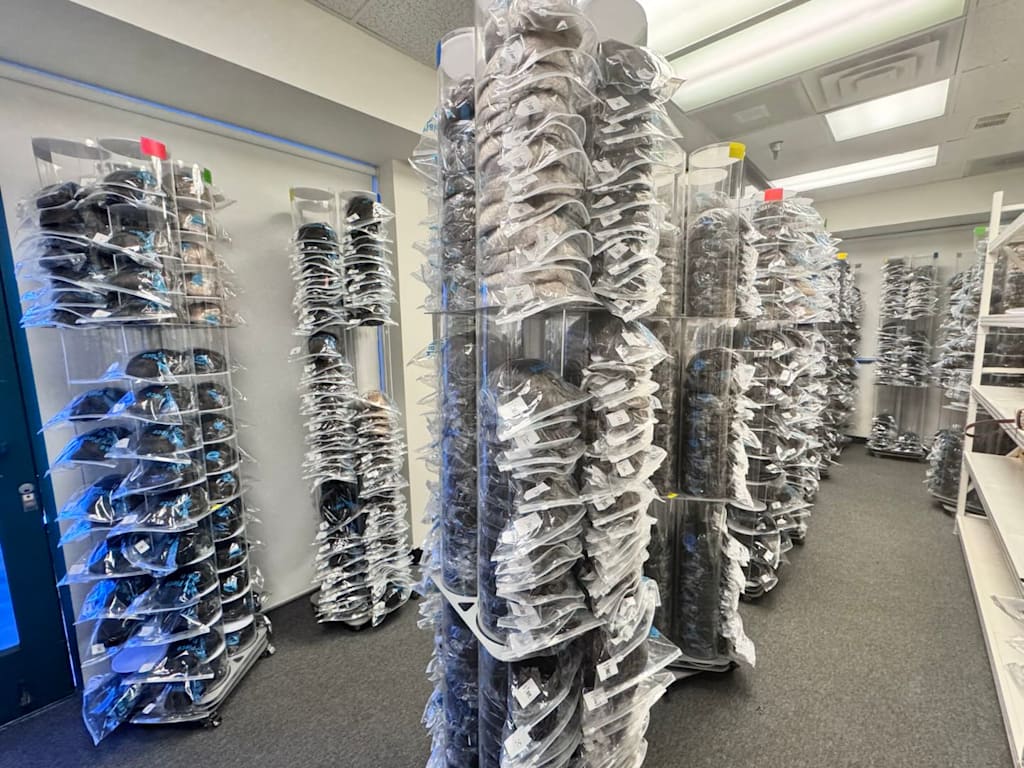
Factory vs trading company: which should I choose? Scaling Your Hair System Distribution Business
Direct Factory vs. Trading Company. It's the choice that decides if you'll actually grow your hair system business. Any good wholesale hair vendor needs to give you clear communication, consistent quality, and plenty of room to scale up.
Newtimes Hair builds honest, long-term supplier partnerships. They'll help you figure out production access, order support, and the exact service your clients expect.
Key Takeaways
Trading companies suit low-MOQ market tests with less inventory risk.
Direct factories suit repeat-volume distributors needing precise, documented product specifications.
Verify suppliers with live production evidence before placing a paid trial order.
What Is the Core Difference Between a Hair Factory and a Trading Company?
What actually separates a direct factory from a trading company? It's pretty simple. A direct factory makes hair systems right in its own facility. A trading company just buys them from a bunch of different manufacturers to resell.
If you're a wholesale hair vendor, the real issue is knowing who takes responsibility for the products in your order. A reliable partner doesn't hide their role. They talk to you openly and stay accountable when your clients want something different. Newtimes Hair builds everything on that kind of long-term, honest relationship.
What Are the Key Advantages of Working Direct with a Hair Factory?
Buying hair systems straight from the manufacturer really just comes down to control. A direct factory gives your business an open line right to the people making the units.
If you're a growing distributor, this means you can hash out base materials, density, hair color, and other custom details without your messages bouncing through five different middlemen. It's simple. Always ask your supplier who actually handles production questions, sample feedback, and changes to repeat orders. Newtimes Hair keeps all these conversations totally transparent. That helps you build a solid, consistent product line your clients can reorder with total confidence.
What Are the Advantages and Trade-offs of Using a Hair Trading Company?
Trading companies give new distributors just one main contact for sourcing, order updates, and fixing problems. That convenience is exactly why so many businesses start out with wholesale hair vendors to keep all their communication organized.
Why do some trading companies actually offer better customer service than the factories themselves? Usually, it's because they handle the questions and follow-ups across different suppliers, which saves your team a lot of time. But there's a trade-off. You get less direct visibility into production and lead times. Just make sure to pick a partner who shares clear updates. Newtimes Hair builds transparent relationships so you can plan steadily for the long haul.
Which Model Best Fits Your Current Distribution Growth Stage?
Finding the right sourcing model shifts as your Hair Systems or Hairpieces business grows. A flexible partner works great for early testing. But once you hit repeat volume, you need tighter factory planning.
Match the relationship to your actual order patterns, not just today's cheapest price. Figure out your stage first. After that, comparing supplier metrics gets a whole lot easier.
Stage 1: Testing Markets with Low MOQs
Wholesale Hair Vendors are great when you want to test new colors, base types, or client demand without tying up all your cash in deep inventory. Thanks to their lower MOQ (Minimum Order Quantity) options, you can compare a few different hairpiece categories while keeping those first orders manageable.
Always ask for clear price quotes, available options, and realistic reorder timelines before committing. A truly transparent partner will tell you exactly what's available right now versus what needs more planning. At Newtimes Hair, we focus on honest discussions from day one. That way, your trial orders actually support a long-term buying strategy.
Stage 2: Scaling Core SKUs Direct with a Factory
Working directly with a factory makes sense once a small group of Hair Systems starts selling steadily every single month. Prioritize your repeat stock items first. Think about the specific base, hair length, density, and color combinations your clients constantly reorder.
Share your sales forecasts and lock in lead times before moving larger volumes. This gives the manufacturer a clear production target and helps your team plan stock much better. Don't just pick the lowest unit price. Instead, compare quotes against the full order terms, factoring in customization details and delivery speeds.
Stage 3: Executing an Enterprise Multi-Vendor Strategy
Enterprise distributors need to protect their core supply by leaning on more than one qualified vendor. You might have one factory handling high-volume, standardized hairpieces. Meanwhile, a trading partner can step in for broader assortments or fill gaps when demand suddenly shifts.
Scaling your hair distribution business through supplier diversity really starts with Supply Chain Transparency. Keep your records strictly consistent across product details, quoted lead times, order history, and communication standards. Newtimes Hair can step in as a transparent, long-term manufacturing partner while you build out a sourcing network that's easier to manage and less dependent on a single route.
How Do Factories and Traders Compare Across Essential Business Metrics?
Choosing between a direct factory and a trading company changes how much cash your distribution business ties up in stock. It also impacts the control you keep over repeat orders. A factory rewards steady volume, but a trading partner keeps things flexible.
Neither setup wins on every front. You need to compare MOQ, technical input, and the real cost behind each quote before picking a long-term supplier. Simple as that.
Minimum Order Quantities and Inventory Risk
Factory MOQ rules usually fit repeat hair systems best since production planning relies on predictable volume. The catch? You're tying up cash in inventory well before your clients actually buy anything.
Trading companies might offer smaller, mixed orders. This lowers your risk when testing demand. Make sure to ask for price quotes showing MOQ by specification, payment terms, and reorder rules. After all, a cheap unit price means nothing if slow-moving stock just sits on your shelf.
Customization Depth and R&D Support
Direct factories generally give you deeper customization options. Why? Because their production and development teams can talk about your requested Hair Systems or Hairpieces right from day one. This really matters when a clinic needs a repeatable exact spec instead of just a close substitute.
Always ask who approves changes, what exact details get recorded, and how the supplier double-checks future orders against the approved version. A trading company can pass along requests, but working directly with a factory often gives your team a much clearer line to technical feedback. Newtimes Hair builds this exact conversation around documented requirements and repeat ordering.
Total Cost of Ownership and Hidden Fees
Compare your hair vendor quotes against a single written spec, not just a catchy headline unit price. You need to match up the quantity, custom details, packaging, payment terms, delivery rules, and Quality Control (QC) expectations before making a call.
Figure out the actual total cost of ownership. This includes samples, revisions, defects, rework, freight, and excess inventory. Ask exactly which charges are baked in and which ones might jump up after approval. Newtimes Hair supports transparent partnerships by getting all order terms down in writing before production even starts.
Why Does Hair System Technicality Require Factory-Direct Collaboration?
So, why do Hair Systems actually need factory-direct collaboration? It comes down to this. The base, ventilation method, and density plan are purely manufacturing decisions. Going through a middleman just blurs the fine details that make or break a repeat order.
For B2B buyers, having direct access to production engineers means you get a clear, documented spec sheet. It also means better Quality Control (QC) before manufacturing even starts. Newtimes Hair treats this exact record as the building block for a transparent, long-term partnership.
Poly, Lace, and Mono Base Engineering
Base engineering makes or breaks whether a hairpiece matches the approved look and survives daily wear. Poly, lace, and mono all need totally different cutting, ventilation, and edge finishing. Think of it like three distinct fabrics reacting differently under the exact same sewing needle.
Always ask the factory to log the base material, perimeter design, hair direction, and approved sample for every single order. Having strong custom options helps your team match Lace Closures & Frontals or full Hair Systems perfectly to what your clients need. You shouldn't have to rely on a blurry photo as your only spec sheet.
V-Looping, Injected Hair, and Density Control
Ventilation isn't just a cosmetic afterthought. It controls the exact hairline, movement, and coverage your client actually sees. V-looping, injected hair, and knotted construction all place hair in totally different ways. Plus, density needs to shift naturally across the piece instead of looking like a flat, heavy helmet.
Make sure to request an approved density map and run a QC check against it before production even starts. The factory needs to confirm the ventilation method, parting area, hair direction, and density shifts on finished Hair Systems or Hairpieces. Newtimes Hair keeps all these details front and center. That's how you lock in perfect consistency across every repeat order.
How Can Distributors Verify Supply Chain Transparency and Avoid "Fake Factories"?
A real Direct Factory will actually show you how a hair system goes from raw materials all the way to final inspection. True Supply Chain Transparency boils down to records, live proof, and straight technical answers—not just some glossy catalog.
Just ask a few targeted questions and run a trial order to make sure they actually control their manufacturing. Newtimes Hair focuses on building long-term partnerships through this kind of open verification.
Asking Targeted Production and Machinery Questions
If you want to verify a Vietnamese hair supplier, ask them for a live video call right from the production floor. Find out which team handles the ventilation, how the polyurethane bases get poured, and exactly what machines they use to cut bases or prep the hair. A legitimate Direct Factory should answer without hesitation and gladly show you the actual workspace.
Always confirm the ventilation method, base type, hair direction, and the density map for your specific order. Real Supply Chain Transparency means their answers actually match the physical sample, the video footage, and your written specs. If the proof they send feels too generic, hold off before placing a bigger order. Simple.
Inspecting Quality Assurance and Work-in-Progress Controls
Run a trial order so you can check their Quality Control (QC) during the actual production process, rather than just waiting until after delivery. Ask for time-stamped photos or videos showing the base, ventilation pattern, hair direction, and density before everything gets packed up. These checkpoints need to show up on the official order record, not just as a quick final snapshot.
Find out who signs off on corrections and if the factory actually keeps the approved sample and spec sheet for future repeat orders. You want to see proof of work-in-progress. Look for pieces clearly tagged by order number, visible defect markings, and any rework done prior to packing. Newtimes Hair documents every single one of these checks to back up truly transparent, long-term partnerships.
What Vetting Protocol Protects Your Margin Before Bulk Ordering?
Want to protect your margin before placing a bulk order? Start with a small paid trial that matches your actual production needs. Only approve a supplier after their sample, paperwork, and correction process prove they can deliver. This gives you solid proof before tying up cash in a huge contract.
Always link price quotes to the exact approved specs. Newtimes Hair treats clear records and a repeatable approval process as the bedrock of an honest supply partnership.
Testing Trial Orders Against a Single Technical Specification
Use just one written spec sheet for every trial unit. Write down the base material, construction, dimensions, density, hair length, color, texture, direction, and ventilation method. Then, check the finished piece against that exact same document. Simple.
So, how do you compare hair vendor quotes fairly? Ask every supplier to price out the identical specs, including the same requirements for Human Hair Wigs if that applies. A lower price doesn't mean much if the quoted unit uses a totally different base, density, or hair standard.
Establishing Repeatability and Defect Settlement Terms
Keep your approved trial unit and spec sheet as the baseline for repeat orders. Your Quality Control (QC) team needs to check each new batch against that physical benchmark—not a fresh verbal description every single time.
Get your defect settlement terms in writing before scaling up your volume. Clearly define what counts as a defect, the photo proof needed, response times, and the agreed fix. Also, make sure to document if the hair is sold as Raw or Virgin Hair. That way, the classification doesn't suddenly change between batches.
How Does a Hybrid Sourcing Strategy Balance Speed and Profit Margins?
A hybrid plan keeps popular hair systems ready through trusted traders, while factory-direct custom orders protect your margins. That's how you scale your hair distribution business. You diversify suppliers without forcing every single client into the exact same lead time.
Use wholesale hair vendors for fast-moving stock, then send confirmed custom specs directly to Newtimes Hair. Just make sure your approved specs, pricing, and defect terms stay consistent across both channels. Clear records turn two different sourcing routes into one solid, long-term partnership.
When Is the Right Time to Transition Core Stock to Factory Sourcing?
You should move your core SKUs to a direct factory once repeat demand gets stable enough for planned runs. Don't just rely on a single strong month. If you run a hair distribution business, a good sign is seeing consistent reorders over several months for the exact same base, hair type, density, and color.
Make sure to ask Newtimes Hair for clear production terms, quality checks, and past reorder records before you shift your volume. A transparent factory partnership helps protect your margins, all while keeping your best-selling hair systems consistent. That's the goal.
What Sourcing Questions Reveal Hidden Overseas Shipping and Duty Costs?
Want to know which sourcing questions expose hidden overseas shipping and duty fees? Ask for price quotes that separate the factory price, freight, insurance, customs duty, brokerage, and destination handling. A bundled quote easily hides exactly where your cash goes.
You should also ask who files the import entry and who pays each charge. Find out what shipping method they use, and if their lead times actually include transit and customs clearance. Newtimes Hair can confirm these terms in writing, so you're able to compare the real landed costs. That's it.
Why Is Consistent Hair System Quality Crucial for Salon Client Retention?
Consistent hair systems guard the trust your salon earns during every single fitting. When a client gets the exact same density, color, base fit, and hair direction on their next order, they're much more likely to come back. Nobody wants to restart the hunt for a reliable hairpiece.
Good quality control (QC) means checking every order against the approved sample and written specs before it ever ships out. Ask your suppliers how they track repeat orders and deal with mistakes. Newtimes Hair builds open partnerships around these exact details. That helps you deliver the predictable results that keep your clients coming back for more.
How Do Customization Lead Times Affect Hair Replacement Business Cash Flow?
Customization lead times dictate exactly when your cash gets tied up—and when your salon can actually finish a client's fitting. Stock hairpieces mean you can book faster appointments. But factory-custom units require a rock-solid production and delivery schedule.
Always ask suppliers to break down stock availability versus custom-order timing before you take any payments or promise a date. Newtimes Hair helps you plan transparently around customization capabilities, so you can match every single client order to a realistic deadline and protect your repeat business.
How Does Newtimes Hair Build Transparent Partnerships for Growing Distributors?
Honest partnerships make scaling a whole lot easier. You shouldn't have to guess about order statuses or worry about hitting client deadlines. Newtimes Hair backs distributors by keeping the conversation open. We talk clearly about what needs customizing, when to expect orders, and the little details that go into every single client's hair system.
Figuring out how to find reliable wholesale hair vendors for salons and clinics really comes down to supply chain transparency. You need to ask how they confirm your requirements, how they share updates, and who actually handles the follow-up. Newtimes Hair uses those exact answers as the bedrock of a custom B2B partnership. It helps you plan your orders better. Plus, it builds the kind of client trust that actually lasts.
Frequently Asked Questions
How can you tell if a hair vendor is a factory or a trading company?
Ask for live production evidence, order-tagged work-in-progress, and who handles technical changes. Factories answer directly; traders relay.
What are the benefits of buying hair directly from a factory?
More control. You can document base, density, color, and repeat-order specs with the production team.
How do I start a wholesale hair business?
+
Test demand with low-MOQ orders first. Scale factory purchasing only after a few core systems sell consistently.
How much does it cost to start a hair distribution company?
No fixed number. Inventory, samples, shipping, and customization drive the upfront cash.
About the Creator
Leo
Passionate men's hairstylist with a keen eye for detail and a knack for creating on-trend looks. Dedicated to delivering hair restoration education that enhances individual style.
Enjoyed the story? Support the Creator.
Subscribe for free to receive all their stories in your feed.
Comments
There are no comments for this story
Be the first to respond and start the conversation.