
Crisis Before Arrival: The Strategy Behind Meghan Markle’s Anticipated UK Return
Reputation, timing, and public perception collide as speculation grows around a carefully planned comeback

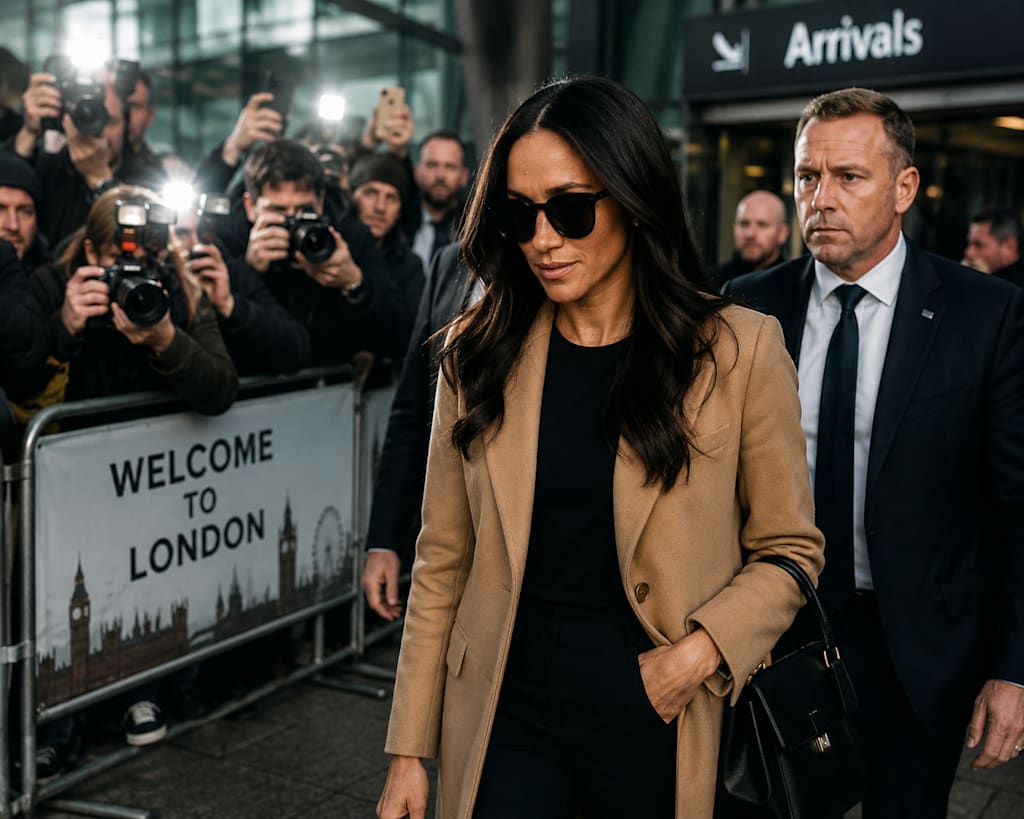
In the modern age of media, perception often arrives before reality. Long before a plane lands or a public appearance is confirmed, narratives begin to form—shaped by speculation, commentary, and the ever-present influence of social media. Recent discussions surrounding Meghan Markle’s possible return to the United Kingdom illustrate this phenomenon with striking clarity. Reports circulating online suggest that even before setting foot in Britain, Meghan has taken steps to prepare for public reaction by assembling a team of high-level public relations specialists. While such preparations are not uncommon for public figures, the tone of these reports has sparked intense debate. Observers are questioning whether this is routine image management—or something more strategic. Public figures, especially those connected to globally recognized institutions, operate under immense scrutiny. Every move is analyzed, every statement dissected, and every appearance interpreted through multiple lenses. For Meghan, whose relationship with the British public has evolved significantly over recent years, any return naturally carries weight. The discussion is not just about a visit—it is about perception. Over time, a series of high-profile interviews, documentaries, and publications have contributed to a complex narrative. Supporters view these moments as expressions of personal truth, while critics see them as controversial or disruptive. Regardless of perspective, the result is a deeply divided public opinion. This division creates a unique challenge. Rebuilding trust is not a simple process. It cannot be achieved through a single appearance or a well-crafted message. Instead, it requires consistency, authenticity, and time. This is where the role of strategic communication becomes both important and controversial. Another layer of this story involves timing. The reported preparations for a UK return come alongside conversations about Meghan’s business ventures, particularly her lifestyle brand. Like many entrepreneurial efforts, such ventures face natural challenges, including market competition, product demand, and supply management. Reports suggesting unsold inventory or slow sales have added fuel to the broader narrative, though such claims remain part of ongoing speculation rather than confirmed fact. In the world of business, timing is everything. Public appearances, brand messaging, and media coverage often intersect. This overlap can lead to assumptions that personal events are being used to support commercial goals. Whether accurate or not, such interpretations influence how audiences perceive both the individual and the brand. At the same time, the role of storytelling cannot be ignored. In today’s media landscape, narratives are powerful tools. They can shape reputations, influence opinions, and drive engagement. For public figures, managing these narratives is essential—but it is also risky. When audiences sense that a story feels overly controlled or staged, trust can erode further rather than improve. Family dynamics have also become part of the public conversation. Discussions about relationships, reconciliation, and personal history often attract attention, especially when they involve well-known individuals. However, these topics are deeply personal and complex, and public speculation rarely captures the full reality. It is important to approach such discussions with caution and respect for privacy. The broader issue at the heart of this situation is the challenge of balancing public image with personal authenticity. In an era where every action can be instantly shared and analyzed, maintaining that balance is increasingly difficult. Audiences today are highly aware and often skeptical. They look beyond surface-level messaging and seek genuine connection. This raises an important question: can reputation truly be reshaped through strategy alone? While communication experts can guide messaging and manage media relations, they cannot control how people feel. Public perception is influenced by long-term patterns, not short-term campaigns. Trust, once questioned, requires more than words to rebuild—it requires visible and consistent change. At the same time, it is worth acknowledging that public narratives are not always fair or accurate. Media coverage can amplify certain perspectives while overlooking others. Social media, in particular, can turn speculation into widely accepted “truth” within hours. This makes it even more challenging for individuals to navigate their public image. As the conversation continues, one thing remains clear: the story is still unfolding. Whether Meghan’s return to the UK becomes a moment of reconciliation, a strategic appearance, or simply another chapter in an ongoing narrative, it will undoubtedly attract global attention. In the end, the situation reflects a larger reality about modern fame. Influence is no longer defined by titles or status alone. It is shaped by perception, engagement, and the ability to connect with audiences in a meaningful way. For now, the world watches and waits—not just for an arrival, but for what it might represent. Will it mark a new beginning, or reinforce existing perceptions? Only time will provide the answer.
About the Creator
Behind the Curtain
"Exploring the untold stories and hidden truths. From royal rumors to cultural deep dives, Behind the Curtain brings you bold, insightful narratives that spark curiosity and conversation."
Enjoyed the story? Support the Creator.
Subscribe for free to receive all their stories in your feed.
Comments
There are no comments for this story
Be the first to respond and start the conversation.