
Can I wear a hair system if my crown is thinning but not bald?
Thinning Crown Hair Systems: Best Options for Men

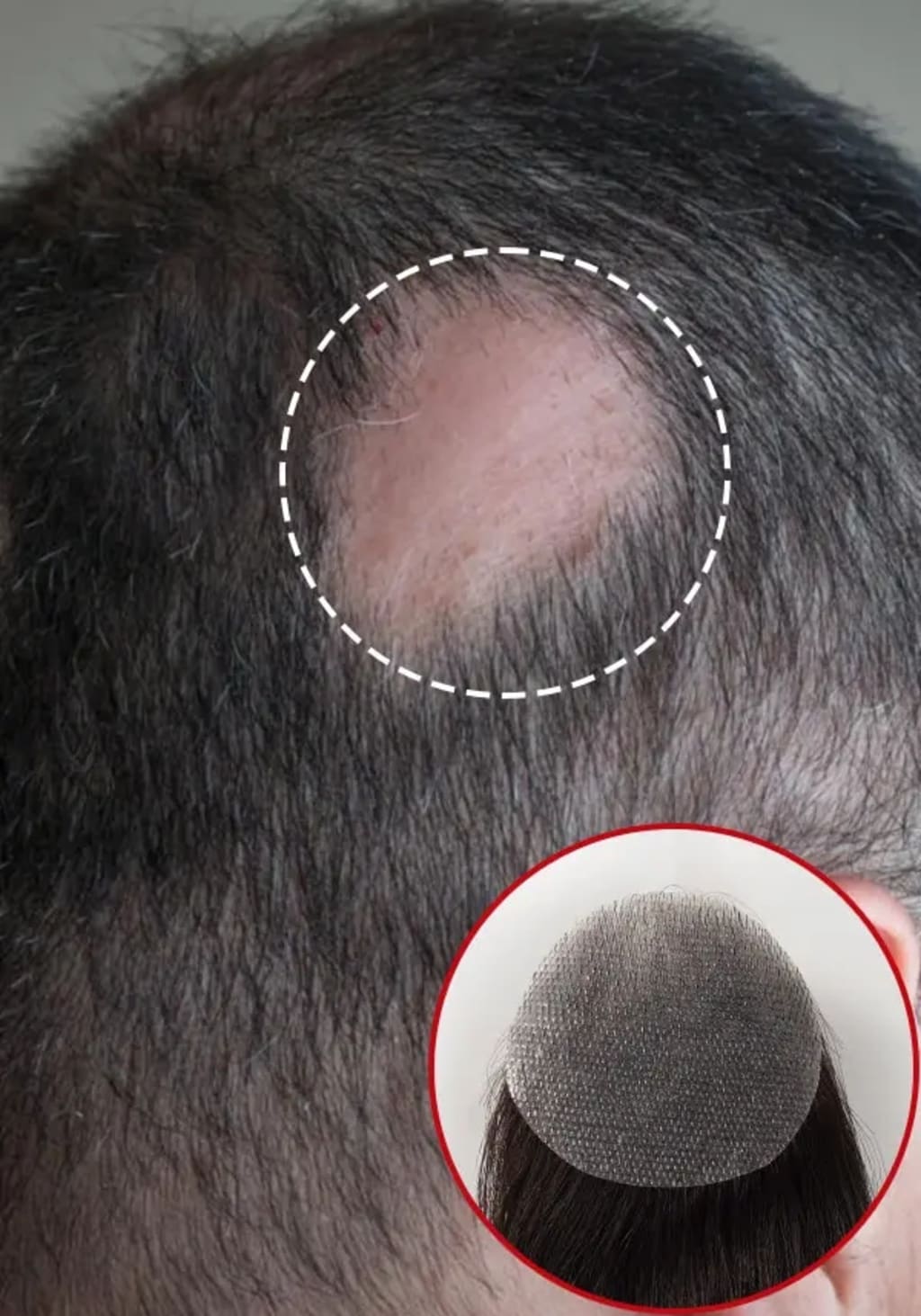
Can I wear a hair system if my crown is thinning but not bald?
A hair system can cover a thinning crown without replacing the hair you still have. You can easily customize Lordhair options to match your exact thinning pattern, hair density, and color so everything blends right in.
Here's how to figure out your level of crown thinning and pick a non-surgical option that actually looks natural.
Key Takeaways
A crown topper covers localized thinning while preserving healthy surrounding hair.
Clips suit thinning crowns with dense hair around the attachment area.
Tape or bonding suits bald crown centers that cannot support clips.
Measure the visible thinning patch under bright light before choosing base size.
Match the topper to your surrounding crown hair for a natural blend.
The Crown Thinning Dilemma: Hair System vs. Haircut vs. Fibers
Hair fibers and a solid haircut can hide early crown thinning, but they can't create coverage if your scalp clearly shows through dry hair under normal indoor lights. A crown hair system just makes more sense once your daily styling stops looking believable.
Look at your actual hair loss pattern to make the call, rather than acting out of frustration after one bad hair day. The real question to ask is whether your remaining hair can still pull off the illusion of fullness from every normal viewing angle.
Start off with a strategic haircut and volumizing products when the thinning is still limited to a small, scattered area. A shorter, textured cut helps drop the contrast between your crown and the surrounding hair. Plus, volumizing products will give those existing strands a nice lift. Just make sure to check the results outside in daylight and under harsh overhead lights, not just in your bathroom mirror.
Hair fibers are still great if you have enough hair for them to grab onto and your scalp isn't widely exposed. They work best as a visual trick, not as a real replacement for missing density. But if they clump up, shift around during the day, or leave your crown looking noticeably thin after styling, you've hit their limit. That's it.
When you need coverage to match a specific thinning pattern instead of just throwing on some temporary camouflage, a dedicated Lordhair partial system gives you results tailored right to that area.
What Is a Crown Topper and How Does It Work for Partial Thinning?
A Crown Topper just covers a specific thinning spot at the crown while leaving your healthy hair around it completely uncovered. Unlike full Men's Toupees, it doesn't stretch down to the front Hairline or replace hair across your entire scalp.
This smaller footprint is perfect for mild, localized thinning since the system blends right in with the hair you already have. Lordhair can help you pick a partial system based on the exact shape and location of your visible crown loss.
Clip-In Integration Systems for No-Shave Attachment
Wondering if a hair system just for the crown actually works? It totally does, as long as you have enough healthy hair around the thinning spot to hold the clips securely. A clip-in crown topper grabs onto your nearby natural hair using tiny pressure-sensitive clips. That means you don't have to shave the surrounding hair. Simple.
You just open each clip, drop the topper over your thin crown area, and press the clips shut onto strong strands around the edge. The natural hair underneath and around the system does two things: it locks the topper in place and hides the perimeter. This makes clip-in attachments a solid choice for anyone who wants removable coverage instead of wearing a system around the clock.
Can you wear a hair system if your hairline is still holding up? Absolutely. A crown-only piece sits well behind the hairline, so it won't cover or mess with a healthy front. The trick is picking a base shape that hits the thinning zone without spilling into thick hair that doesn't need the help.
Clip systems work best for localized thinning where you have enough surrounding density for a firm grip. But if your crown center is completely bare, those clips might not have a reliable place to attach.
Perimeter Bonding and Tape Systems for a Shaved Crown Center
Perimeter bonding or medical tape can lock down a crown system when a bald spot leaves you with too little hair in the middle for clips. You just shave the crown center to create a smooth surface. Then, the system's outer edge gets held in place with tape or a good bonding adhesive.
So, how does a crown topper actually differ from a full hair system? A crown piece brings back coverage strictly over the thinning crown. Meanwhile, a full system covers a way bigger area, often wrapping in the hairline, top, and sides of the scalp. If you just have an isolated crown bald spot, a partial piece keeps you from smothering hair that's still thick and healthy.
Tape or perimeter bonding gives the crown piece a much flatter fit. That's because the base sits right against your prepped scalp instead of clipping onto nearby hair. It's also a great fit for guys who want their system to stay put for days at a time, rather than taking it off every single night.
Your attachment method needs to match your actual hair loss pattern. Lordhair crown solutions can be customized right around your specific thinning zone. This helps the partial system cover exactly what needs covering—without turning a localized issue into a full-head project.
How to Choose, Size, and Blend a Hair System with Your Natural Crown Hair
A crown topper gives you the look of a fuller head of hair right on your balding spot, without hiding the healthy hair around it. Getting it right comes down to two simple choices. You need a base that only covers the exact thinning area, and you have to match it perfectly to the ring of hair left behind.
A custom Lordhair crown piece actually shapes itself around weird or uneven thinning patterns. This keeps the coverage completely hidden from normal viewing angles.
Measuring Your Thinning Area to Select the Right Base Size
Always measure your thinning crown when your hair is clean, dry, and styled the way you usually wear it. Stand under bright, even lighting. Grab two mirrors or snap a top-down photo to find the exact spot where your scalp still shows after styling.
Outline the outer edge of that visible bald patch with a washable cosmetic pencil, or just get a friend to help out. Don't measure your entire crown swirl if parts of it still have thick hair. A hair system needs to cover the thinning zone, not flatten the good hair that actually helps hide its edges. Simple as that.
Measure the marked spot from front to back, and then go side to side across the widest part. Jot both numbers down. Take a quick look to see if the patch is round, oval, or maybe thicker on one side. Snapping a photo with these markings clearly visible gives Lordhair a much better idea of the exact shape you need.
Check the spot again if you normally wear a side part or middle part. Parting your hair can expose way more scalp on one side, especially if your hair is on the finer side. Pick a base shape that covers the whole visible patch based on how you normally part it, but make sure it doesn't spill over into the thicker surrounding hair.
Blending Color, Density, and Edges with Your Surrounding Hair Ring
The topper has to match the hair right around your crown, not necessarily the hair at your front hairline or sides. Check your natural crown color outside in pure daylight. Warm indoor lights can easily make a dark brown look way lighter or totally hide your gray strands.
Don't just match the main color, though. Look for natural quirks like lighter ends, darker roots, or a few scattered grays. Send some clear photos of your crown and both sides when setting up a custom Lordhair hair system. These pictures help figure out if your hair actually looks like ash brown, warm brown, pure black, or something else entirely under normal lighting.
Density needs to match the surrounding ring of hair, too. Sticking a super thick topper right next to fine or slightly thinning hair stands out immediately, even if the color is spot on. A smooth density fade near the outer edges helps the new hair blend right into your own rather than looking like a heavy patch.
Texture and direction wrap up the perfect blend. Straight hair, loose waves, tight curls, and strong crown swirls all need a matching pattern. If you're wondering how to hide baldness at the crown while wearing a short textured haircut, just keep the topper's texture identical to the natural flow of your real hair. That's it. Any side or middle part needs to flow smoothly right across the crown instead of abruptly stopping at the edge of the system.
Maintaining Your Partial System and Protecting Remaining Natural Hair
A crown topper needs to add coverage without yanking on the healthy hair that hides its edges. A properly fitted Lordhair system traces the thinning spot instead of spreading stress all over your surrounding crown. Simple.
But daily habits matter just as much as the fit. Gentle handling, a clean scalp, and careful removal go a long way in protecting both the topper and the natural hair underneath.
Attach and Remove the Topper Gently
Attachment should feel secure, never tight. If the base tugs when you turn your head, causes soreness, or leaves your natural hair pulled to one side, take it off and check the placement. Don't just tighten clips, tape, or other attachments to try and fix a bad fit.
Always support the hair around the topper's edges with your fingers when handling it. Lift attachments slowly instead of ripping the system off in one big motion. Hair loss hairstyles for mild crown thinning look a lot more natural when your own hair stays loose and comfortable.
Keep the Crown Area Clean
Keep your scalp and the underside of the topper free of sweat, oil, and leftover styling gunk. Just follow the cleaning instructions that came with your system, and always let the base dry out completely before you put it back on. Trapped moisture against your crown can irritate the skin and ruin the attachment's grip.
Use volumizing products sparingly near the base. This is especially true for sprays, powders, and fibers since they tend to clump around the attachments. Put product on your natural hair lengths first, then check the crown in a bright light. If you spot itching, breakage, or extra shedding, stop wearing the topper until you figure out what's causing it.
Custom Partial Hair System Options from Lordhair
If you're only thinning at the crown, you just need coverage right where the density dropped. You don't need a full scalp hair system. A custom Lordhair Crown Topper is designed to fit the exact shape and size of your thin spot. That makes it much easier to blend the new hair straight into the thicker hair around it.
The main goal here? Finding a low-profile base and a solid hair match so nobody stares at your crown. Before you even order, check out your thinning area in good lighting. Take note if it's round, spread out, or wider toward the back of your head.
Start by figuring out your coverage outline. The base has to hide the obvious thin spot, but try to leave your healthy hair alone outside that attachment zone whenever you can. Don't just guess using a standard size chart. Actually measure the thinning area and send over clear photos of your crown if Lordhair asks for them. This keeps you from ending up with a topper that's way too big. Because if it's oversized, blending the edges and managing it every day becomes a lot harder.
If you want things to stay totally discreet, ask Lordhair about their low-profile base options that fit your daily routine and preferred attachment style. Double-check how the edge sits against your scalp. Find out exactly where the clips or tape will go, and see if you'll need to trim the base yourself. Also, make sure the hair direction, color, curl, and thickness actually match the rest of your crown. A super thick topper next to mildly thinning hair is going to look obvious.
Keep the final setup practical. You want just enough coverage to hide the thin spot, but no extra base material beyond what your crown actually needs. That's it.
Frequently Asked Questions About Hair Systems for Thinning Crowns
Can you wear a hair system if you still have hair?
Yes. A crown topper covers thin areas while leaving healthy hair alone. Clips attach to dense surrounding hair; no need to shave it.
Can a hair system be used for just the crown?
Yes. A crown-only system targets the thin spot, not your hairline or full scalp. Match its base size, density, and color to your existing hair.
When is the right time to get a hair system for a balding crown?
When fibers clump, shift, or your scalp shows through under normal indoor light. At that point, camouflage has run out of road.
Are there hair systems for women with thinning crowns?
Yes. Women can use crown toppers for localized thinning too. Clip-in pieces need strong hair around the area; tape or bonding works for bare centers.
About the Creator
Leo
Passionate men's hairstylist with a keen eye for detail and a knack for creating on-trend looks. Dedicated to delivering hair restoration education that enhances individual style.
Enjoyed the story? Support the Creator.
Subscribe for free to receive all their stories in your feed.
Comments
There are no comments for this story
Be the first to respond and start the conversation.