
Before You Get Hair Extensions, Ask What Your Real Hair Can Handle
The best extensions are not the ones that look dramatic on Instagram. They are the ones your real hair and scalp can actually live with.

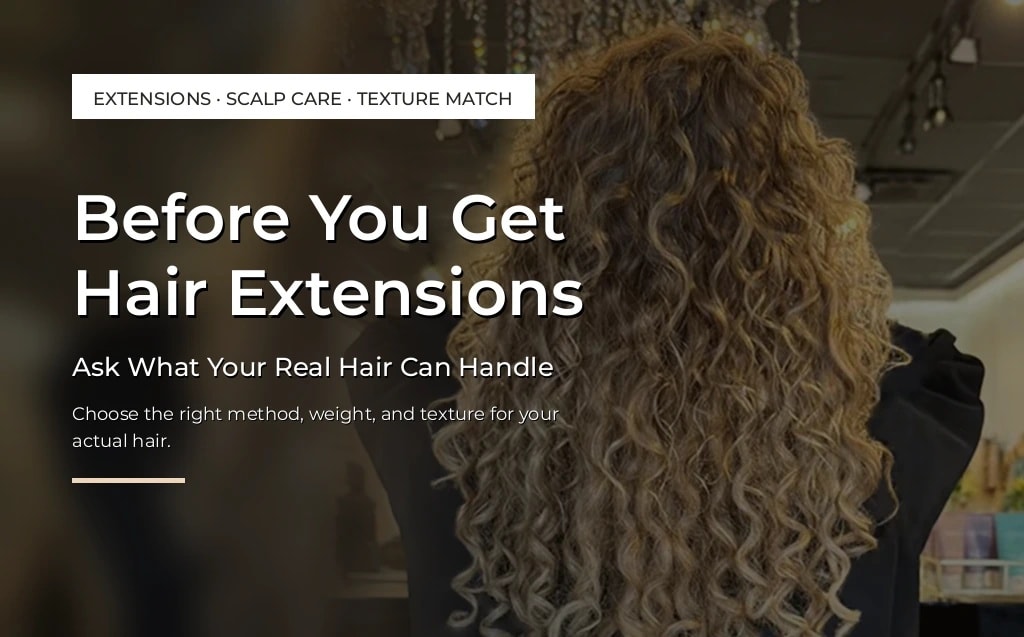
Hair extensions sound simple until you start shopping for them.
Then suddenly, you are drowning in words that all feel like they should mean something: tape-ins, I-tips, K-tips, micro links, wefts, toppers, halos, Remy hair, density, bonds, beads, rows, maintenance appointments.
It gets noisy fast.
And somewhere in the middle of that noise, one very normal fear shows up.
What if I ruin my own hair?
That fear is not dramatic. It is sensible. Hair extensions can be beautiful. They simply offer the wear confidence and emotional backup, especially if you are dealing with thin hair, postpartum shedding, or medical hair loss. Or, even if you are in an awkward growing-out stage, hair extensions are still one of the top options to give you an attractive figure to look good in every mirror.
But extensions can also be the wrong choice. Wrong method, wrong weight, wrong texture, or wrong maintenance routine can easily spoil your good-hair plan. That is the part people do not say loudly enough.
The wrong extension method can create tension, discomfort, or even traction-related hair loss. If you have fine, fragile hair and it's actively shedding, the problem can be even more severe.
So no, hair extensions are not automatically good or bad.
They are only good when they are matched well.
One Bad Method Does Not Mean Extensions Are Bad
The biggest mistake people make is thinking there is one “best” type of hair extension.
There isn’t.
A method that looks perfect on one person does not necessarily mean it will look good on someone else. That's common sense. For example, if someone's got fine or thin hair, a hefty weft could easily feel heavy and pull on the bio hair, and eventually lead to damage.
Someone may have hair that tolerates sleek blowouts every week. But the method could frustrate someone who air-dries her hair a lot, swims a lot, works out often, and does not want to babysit their hair every night.
That sounds obvious.
People ignore it anyway.
This is where hair extensions become less about beauty and more about judgment. A good stylist is not just asking, “How long do you want your hair?” They are looking at your density, scalp health, texture, shedding pattern, styling habits, and patience level.
Especially patience level.
Because some extensions are gorgeous only if you are willing to maintain them like you mean it.
The Scalp Gets a Vote
Your scalp is not a silent accessory.
Pain, itching, soreness, bumps, redness, and a too-tight feeling are not signs that the style is simply “settling in.” They can be early warnings that your hair follicles are under stress.
The American Academy of Dermatology warns that tight hairstyles, including some extensions and weaves, can contribute to traction alopecia when they pull on the hair too much.
The British Association of Dermatologists gives similar guidance: repeated pulling from tight styles, extensions, or weaves can lead to hair loss, and if the tension continues for long enough, some damage can become permanent.
That does not mean extensions are dangerous for everyone.
It simply means tension matters.
If your hair is already thinning or you are suffering from postpartum shedding, thyroid-related shedding, telogen effluvium, scalp inflammation, or even unexplained hair loss. You need more than a pretty install. You need someone who understands that your hair is not just "fine".
It is vulnerable.
There is a difference.
A vulnerable head of hair needs lighter decisions. Smaller sections. Less weight. More breathing room. Sometimes it needs temporary extensions instead of semi-permanent ones. Sometimes it needs a topper instead of length. Sometimes it needs a break.
Annoying? Yes.
Honest? Also yes.
This article is not medical advice. If you have sudden shedding, scalp pain, patchy loss, or signs of traction alopecia, see a dermatologist before you get extensions installed.
Fusion and I-Tips Are Not the Same Experience
Strand-by-strand extensions are often loved because they can move more like natural hair.
K-tip or fusion extensions, for example, attach small groups of extension hair to small sections of natural hair. When installed well, they can give a lot of movement. The hair does not behave like one flat row attached to the head. It can swing, separate, and move in different directions.
For someone who wants ponytails, updos, and a natural-looking fall, that matters.
But fusion is not for everyone.
If your hair is extremely fine, actively shedding, or constantly wet because of swimming, workouts, or low-maintenance wash habits, fusion may become more trouble than it is worth. It may last for months, but “lasts for months” does not mean “requires no care.” You still have to brush carefully, dry properly, avoid tangling at the bonds, and show up for removal when it is time.
I-tips and micro links are also strand-by-strand, but they use small beads or links instead of keratin bonds. Some people love them. Others hate the feel.
That is the thing about beads: “small” can still feel like a lot when there are 150 or 200 of them sitting close to your scalp.
No one tells you that until you are lying in bed wondering why your head feels like it has hardware installed.
Tape-Ins, Wefts, and Rows Solve a Different Problem
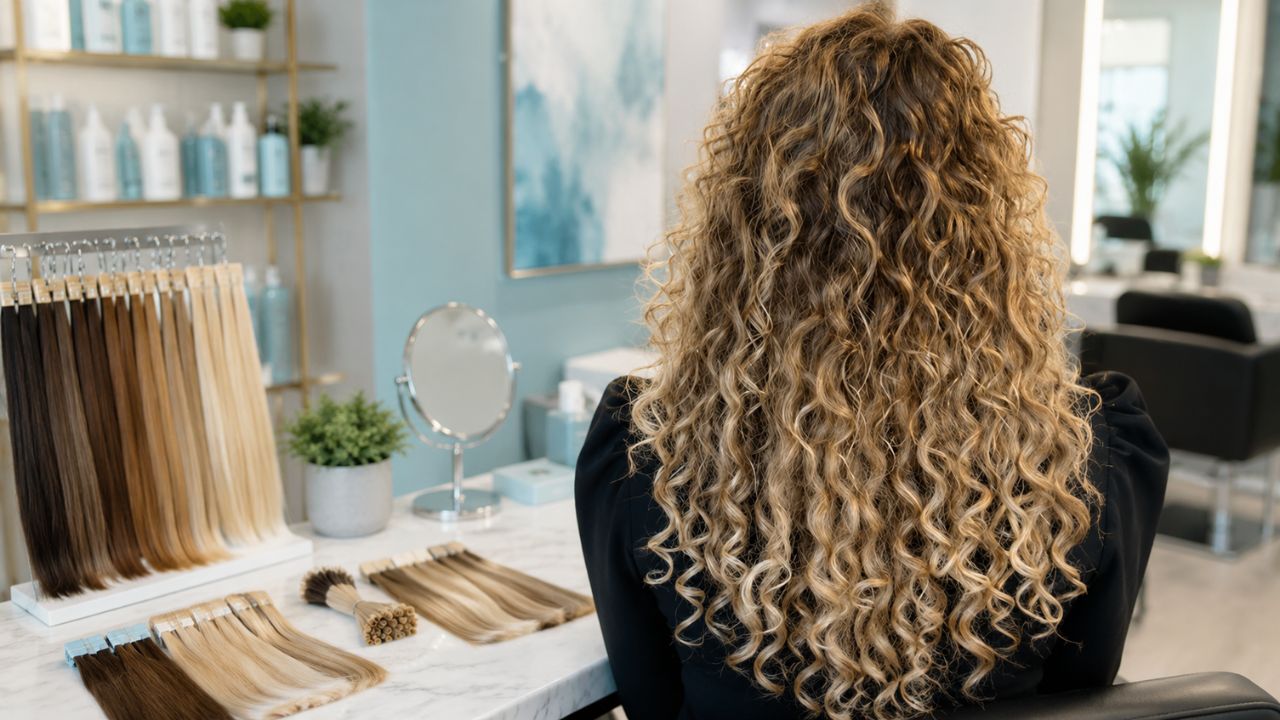
Row-based methods solve a different problem.
Tape-ins, beaded wefts, sewn-in wefts, and related techniques can be useful when someone wants fullness, coverage, or a more efficient installation. Instead of attaching tiny individual strands all over the head, the hair is added in panels or rows.
For the right person, that can be perfect.
For the wrong person, it can look and feel like a curtain hiding under real hair.
A row that is too heavy for fragile hair can create stress. Tape-ins placed too close to the hairline can show. A weft that does not match the client’s natural density can sit strangely, especially when the top layer of natural hair is thin.
When extensions look fake, the hair itself is not always the problem.
Sometimes the method is fighting the person’s actual hair.
This is also why the salon’s supply chain matters, even though most clients never think about it. A stylist who has access to different extension formats has more room to match the client instead of forcing every head into the same method. Keratin bonds, I-tips, tape-ins, wefts, clip-ins, halos, toppers: those categories exist because people’s heads are not all trying to solve the same problem.
That sentence is not glamorous.
It is the whole point.
Texture Matching Is Not Optional
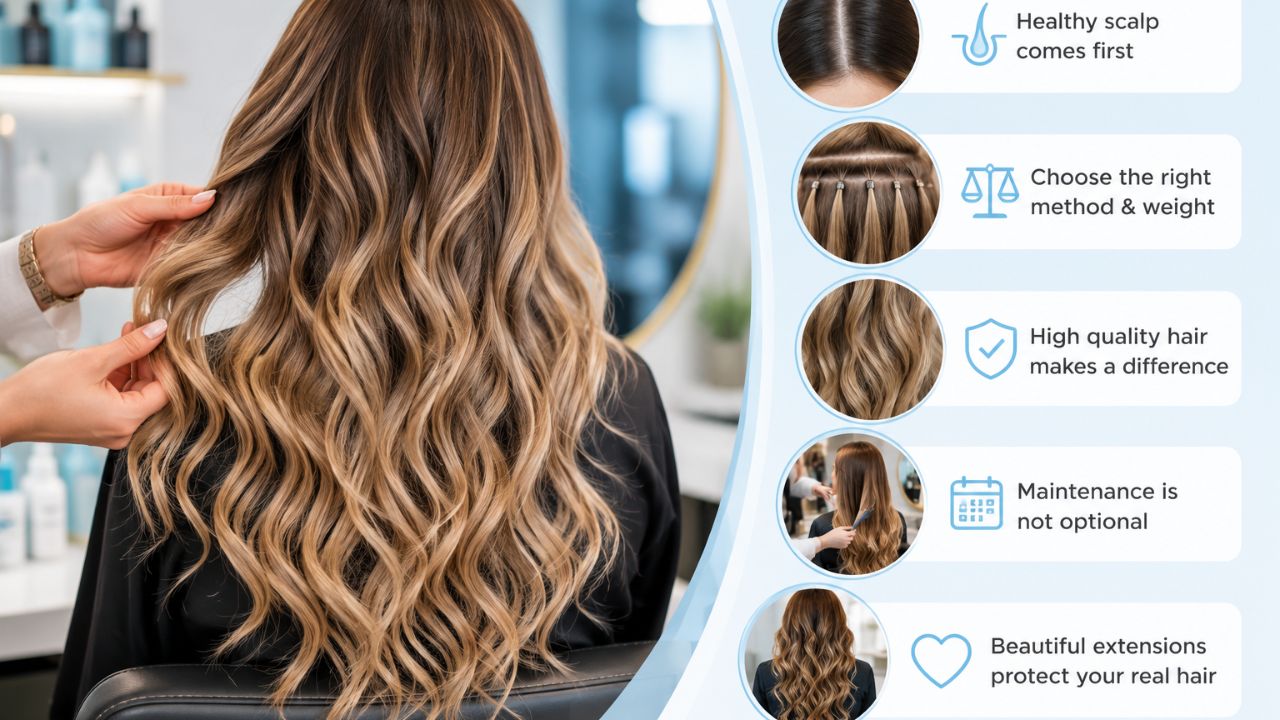
One of the most overlooked extension mistakes is texture.
People obsess over color. They bring photos. They compare blonde shades under salon lighting. They panic over whether the ends are too warm, too ashy, too golden, too something.
Color matters, obviously.
But texture mismatch is what gives extensions away in real life.
If your natural hair is wavy and the extension hair is bone-straight, the difference may not show in a styled salon photo. It will show when humidity arrives. It will show after a walk outside. It will show on day two, when your natural hair starts doing what it naturally does and the extension hair sits there looking suspiciously obedient.
Curly and textured-haired clients have been especially underserved by the glossy before-and-after culture of extensions. Too many examples online show long, straight, freshly curled hair under perfect lighting. That does not help the person whose real hair expands, coils, bends, shrinks, frizzes, or changes depending on the weather.
The better question is not, “Can extensions make my hair longer?”
The better question is, “Can these extensions behave like my hair when I am living my actual life?”
That is less exciting. It is also smarter.
Before You Choose Extensions, Ask These Questions
Before you choose a method, ask what your real hair can carry.
Not the fantasy version of your hair. Not the version that exists for 11 minutes after a salon blowout. Your actual hair. The hair you wake up with, sweat in, wash badly when you are tired, and throw into a loose bun when life gets busy.
Ask yourself:
Is my hair currently shedding more than usual?
Does my scalp feel sore, itchy, inflamed, or sensitive?
Is my hair fine, fragile, bleached, chemically treated, or recently postpartum?
Do I want length, fullness, crown coverage, or temporary styling?
Can I realistically keep up with brushing, drying, maintenance appointments, and removal?
Will this method still work when I am not styling my hair perfectly?
Those questions are not designed to scare you out of extensions.
They are designed to keep you from choosing extensions based on a photo that has nothing to do with your life.
This is where professional suppliers quietly matter. Brands such as Newtimes Hair, which supply salons and hair businesses with multiple extension and hair replacement formats, are useful not because every client needs the same product, but because a good stylist needs options.
Keratin bonds, I-tips, tape-ins, wefts, clip-ins, toppers, and other formats exist for a reason: different heads are solving different problems.
You Do Not Have to Wear Extensions Forever
This might be the most comforting part.
Getting extensions does not mean you have signed a lifetime contract with longer hair.
You can wear them to a wedding. For a birthday. For a season when your hair is recovering. For a trip. For the strange in-between months after shedding, when your hair is technically growing back but still looks thin enough to annoy you every morning.
You can use clip-ins or a halo when you want the drama without the commitment. You can try a topper if the issue is crown coverage rather than length. You can wear semi-permanent extensions for a few months and then take a break.
The healthiest relationship with extensions is not dependency.
It is a choice.
And this is where the emotional side matters. Hair is never just hair when you are the one who loses it, tries to grow it, hides it, or tries to feel like yourself again. Extensions can give people back a version of themselves they have missed. That is not shallow.
But the wrong extensions can also make someone feel trapped, embarrassed, or scared to wash their own hair.
So the secret is not “get extensions” or “avoid extensions.”
The secret is slower than that.
Find the method your hair can carry. Match the texture you actually have.
Respect your scalp before it starts yelling. And do not let one bad installation convince you that every extension method is wrong for you.
Sometimes the problem is not extensions.
Sometimes the problem is that nobody treated your hair like it had its own opinion.
About the Creator
Natalee Chand
With 10+ years in hair, I specialize in extensions, wigs & systems, crafting trend-savvy content. My blog educates & inspires stylists and salon owners with expertise in techniques, styling & innovations in the evolving hair landscape.
Enjoyed the story? Support the Creator.
Subscribe for free to receive all their stories in your feed. You could also become a paid subscriber, letting them know you appreciate their work.
Comments