
Are there real examples of high-density and low-density hair systems?
Lordhair Reviews You Need to See Before Buying Hair Systems
Lordhair Reviews You Need to See Before Buying Hair Systems
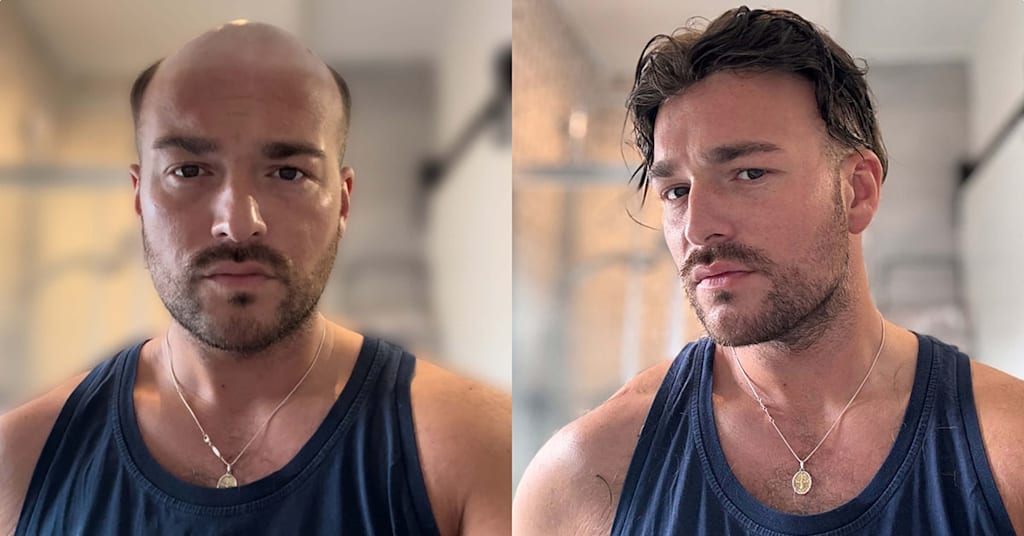
Every real Lordhair review shows how the right hair density makes everything look natural. Seeing it for yourself matters. Before you buy, you need a clear sense of how these options actually look on real people. That basic idea of visual proof leads straight into comparing the different density levels available today.
Key Takeaways
- Choose 70–80% light density if you are over 45 for an age-appropriate look with realistic scalp visibility.
- Avoid high densities (130%+) unless your natural side hair is equally thick to prevent an artificial "helmet" effect.
- Match density to base material; ultra-thin skin (0.03mm) offers seamless realism but only supports lighter hair volumes.
- Account for lighting: harsh indoor lights expose low-density bases, while direct sunlight makes heavy systems look unnaturally thick.
- Skip heavy gels on low-density units, as wet styling clumps strands together and reveals the scalp underneath.
Beyond the Chart: Why Real Examples of Hair Density Matter
Reading a hair density chart is a bit like checking paint swatches. The numbers give you a general sense, but they don’t show how shadows fall or how the strands actually behave. Technical charts often miss the real-life results you’re aiming for with hair systems. A flat graphic just can’t replace clear, high-resolution visuals of an actual person wearing a unit. You need to see how the scalp peeks through the part and how the hairline shifts into place. To move from theory into something real, it helps to view the full range of hair volume side-by-side.
The Visual Spectrum: From 60% to 160% Density
Hair volume sits on a sliding scale, and each level changes how the final look comes together. At the low end, extra light density mirrors the natural thinning that comes with age. It gives you a clearly visible scalp and a softer hairline that feels completely age-appropriate.
As you move up, medium density lands right in the sweet spot for most men. It offers a healthy, youthful thickness without tipping into anything that looks off, giving you solid coverage while still keeping some natural scalp visibility where it matters.
At the top end, heavy density goes beyond 140% and can reach up to 160%. This level brings maximum volume, which works well for younger men or certain thicker styles. The shift across these density levels really comes down to one thing. It’s about controlling the transition from seeing the scalp clearly to getting that full, thick coverage.
Why 2D Icons Fail Where Lordhair Reviews Succeed
Generic graphics and flat 2D icons just don’t show how hair reacts to real light. A cartoon-style hairline won’t help you figure out if a unit fits your day-to-day life. You need clear, real examples to make a smart call.
That’s exactly where unedited customer photos come in. When you look through authentic Lordhair reviews, you’re seeing real men wearing these units in everyday situations. You can quickly notice how the hair moves and how it blends with their natural sides.
These realistic visuals take away the guesswork. Instead of relying on a basic chart, you see what the result actually looks like on a real person. And once you see that, it naturally brings you to the finer details of low-density systems.
The "Natural" Low-Density Look: 60% to 80% Examples
Light density hair systems sit in the 60% to 80% volume range and tend to look the most believable on mature men. A thick, heavy mop of hair can feel out of place in your fifties or sixties. A softer approach usually fits your age much better. With these lower percentages, the hair lies flatter against the head. You’ll notice some scalp showing through where it should, especially around the crown and along the part. High-resolution photos from Lordhair show how these units copy the look of gradual hair loss. Once you get why that bit of scalp is intentional, the benefits for older men make a lot more sense.
The Reality of "Scalp Show-Through" in Light Systems
A lot of first-time users worry when they imagine seeing their scalp through the hairpiece. It feels like something’s wrong with the unit. But that visibility is actually what makes it look real. Natural hair doesn’t grow in a solid block—strands are spaced out, so the eye expects to catch a bit of skin near the roots.
When you go with a light density system, the hairline ends up looking truly invisible. The hairs are ventilated loosely, so the front edge fades right into your forehead. It blends smoothly with your own hair at the back and sides.
If a hairpiece blocks all light, it starts to look like a helmet. That slight transparency is what keeps it believable in normal daylight. You need that controlled show-through for it to feel authentic. And it naturally points you toward styles that suit your age.
Why 70-80% is the Gold Standard for Men Over 45
For men over 45, a density between 70% and 80% usually hits the sweet spot for realism. It lines up well with the Age-Match idea. As you get older, keeping a thick, teenage-level hairline tends to draw the wrong kind of attention.
Hair naturally thins over time. Choosing a 70% to 80% density reflects that reality. You still get enough coverage to style your hair with confidence, but without it looking like a wig. It also blends more easily with thinning or receding hair on the sides.
A high-resolution Lordhair visual shows clearly how these densities recreate a mature hairline. You’ll see a slight recession at the temples that fits your age. Getting the density right is just step one. You also need to think about how different base materials behave with lighter densities.
High-Density Realism: 120% to 160% Examples
Moving up into the 120% to 160% range completely shifts how your hair system looks. Medium-to-heavy density units give you that thick, youthful volume many guys in their twenties and thirties naturally have. High-resolution visuals from Lordhair show how these fuller pieces recreate a dense, complete head of hair that works great for bold styles like pompadours or thick fades. But fitting this much hair into a base comes with a clear downside. If you get your age or facial structure wrong, that standout volume can quickly turn into an unnatural “helmet” effect.
Achieving Youthful Volume Without the "Helmet Look"
Ordering too much density is the quickest way to lose a natural look. A 130% density system packs a huge amount of hair into the base. If your natural hair on the sides is thin, putting a thick unit on top creates an obvious mismatch.
To make youthful volume work, your real hair on the sides and back needs to be just as full. Hair texture matters a lot too. Wavy or curly hair naturally appears much thicker than straight hair at the same percentage.
Staying closer to medium density gives you enough room to style without looking artificial. A side-by-side Lordhair comparison shows how even a 10% reduction in volume can noticeably soften the hairline. You still get the fullness, just without that solid wall of hair. But what happens if you push things all the way to 150% or beyond?
Theatrical vs. Daily Wear: When is 150% Too Much?
Showing up to the office with a 150% heavy density system usually attracts the wrong kind of attention. This level of volume rarely works for everyday wear. Most people simply don’t have the facial structure or side density to make it look natural under normal indoor lighting.
These ultra-dense units are built for specific situations. They’re often used as theatrical wigs for stage performers who need their hair to be visible from the back of a brightly lit auditorium. They can also match certain coarse, high-volume ethnic hair types that naturally grow at maximum density.
Better hair quality helps these extreme systems hold their shape, but they still feel heavy and warm on the scalp. Handling that much hair takes a completely different strategy when it comes to base design and knotting methods.
How Base Materials Change the Perception of Density
The foundation you pick shapes how thick your hair actually appears. Use the exact same percentage on two different base materials, and high-resolution visual comparisons will show a clear difference. A breathable Swiss Lace system naturally spreads the hair out, giving a softer, slightly fuller look. Traditional Mono bases pack the strands closer together, creating a heavier, denser appearance. Thin Skin sits somewhere in between, making the hair lie flatter against your scalp. The material itself changes how the volume behaves. So, here’s how the thinnest bases deal with density.
Real-World Examples of Lordhair HS25V 0.03mm Ultra-Thin Skin
The differences stand out right away when you look at a high-resolution Lordhair hair system up close. The Lordhair HS25V uses a 0.03mm ultra thin skin base, and it’s nearly invisible against the scalp. Because the material is so thin, it just can’t handle heavy, thick hair.
This base tops out at a light-to-medium density. Trying to push more hair into 0.03mm polyurethane can cause the delicate base to tear. To keep the volume looking completely natural, this unit uses a V-loop ventilation method. The hair is looped straight into the base without knots.
That creates a seamless illusion of natural growth. The V-loop technique lets the hair fall freely in any direction, making a lighter density look fuller than you'd expect. While this material stands out for realism, it also traps heat. And that trade-off naturally leads to comparing it with the breathability and look of lace.
French Lace vs. Skin: Which Hides Knots Better at 100%?
At a standard 100% density, hiding the attachment points becomes the main challenge. French Lace is very breathable, but the knotting method means each hair is tied directly to the mesh. Dark hair tied to light lace creates tiny black dots that can quickly ruin a natural-looking hairline.
To deal with this, manufacturers use bleached knots. Removing the color from the root makes the knot far less visible, giving French Lace a very natural finish. But this chemical step weakens the hair. As a result, a 100% density system sheds faster and starts to look thinner over time.
Skin bases take a different approach. A looped skin base has no knots to hide at all. The hair simply rises from the smooth surface, so 100% density looks a bit flatter but extremely clean. How well these bases hold up, though, depends a lot on environmental factors that influence how density looks over time.
The Lighting and Movement Test
Step outside and your hair density can suddenly look completely different. Wind and harsh lighting quickly reveal how well a piece mimics natural growth. A heavier system might look great in a dim room but turn into a solid, unmoving helmet once there’s a strong breeze. You need it to look natural in every setting. Proper hair movement lets the strands separate a bit, which creates a more realistic effect when the wind actually hits. And dry conditions are only part of it. The way your hair behaves when it’s soaked brings a whole new set of “wet look” styling challenges.
Office Lights vs. Sunlight: A Density Comparison
Harsh office lighting doesn’t forgive much. Fluorescent lights shine straight down, cutting through low-density units and making your scalp more visible. If the density’s too light, the glare can quickly ruin the illusion.
Direct sunlight creates the opposite issue. The sun lights up every strand, which can make heavy densities look overly thick and flat. You’ll notice it right away when you step outside. A medium-light Lordhair unit often hits the sweet spot, letting enough light pass through without revealing the base underneath.
Shadows matter too when it comes to how thick your hair looks. Dimmer settings naturally hide the roots, making it easier to wear a lighter system. But lighting isn’t the only thing that changes your appearance. Add moisture and heavier styling products, and the way strands group together shifts completely.
The "Wet Look" Reality for High vs. Low Density
Water makes hair clump together, which instantly reduces volume. Add a heavy gel, and a low-density unit will quickly expose your scalp. The strands stick together, revealing the base and any men’s hair glue at the hairline.
High-density systems deal with moisture much better. The extra volume gives enough coverage to keep the base hidden, even when the hair is fully wet. That added thickness also gives you more flexibility with slicked-back or textured styles.
But going for that thick, wet look takes careful upkeep. Heavy pomades can build up near the roots, making the hair tougher to clean and detangle. Washing too often to remove product puts real strain on the knots. And that daily friction leads straight into the long-term issue of base wear and shedding.
The "Density Decay" Factor: Planning for the Future
Every hair system loses hair over time. Daily friction, washing, and styling all tug at the knots, leading to natural shedding. This slow thinning is called density decay. If you want your piece to last its full lifespan, you need to plan for this unavoidable loss from the very beginning. Proper hair system maintenance can slow things down, but it won’t stop it entirely. Real longevity starts with a smart approach before you even buy. You’ve got to think ahead about how the unit will look after six months. That means adjusting your first order using the 10% rule.
Why You Should Order 10% More Density Than You Need
Always go for a system that’s a bit thicker than your ideal look. A common guideline is to order 10% more density than you actually want. Here’s the reason. Your unit will shed during the first few months of regular use. If you begin with the exact density you like, it’ll thin out sooner than you expect.
Starting with more gives you a built-in cushion. As the piece sheds, it settles into your ideal density instead of dipping below it. Lordhair systems keep their knots secure, but no base can fully escape daily wear.
That extra 10% helps the unit last longer. Once you’ve got the right starting volume, your attention shifts to hair system care. From there, proper washing habits become your main defense against fast density loss.
Maintaining Volume with the Lordhair Maintenance Kit
The products you use make a direct difference in how long your piece stays full. Harsh chemicals weaken the knots and speed up shedding. The Lordhair maintenance kit fixes this by offering gentle cleansers that protect the root bonds.
Sticking to consistent hair system maintenance keeps the strands hydrated and reduces tangling. Dry hair catches on combs, and pulling through those snags can rip hair straight out of the base. Using conditioner every three washes keeps the hair smooth and greatly reduces friction damage.
Good hair system care helps hold onto that original volume for months. But keeping the piece thick is only part of it. Once your unit holds its density, the next step is making sure it blends naturally with the hair on your sides.
Finding Your Perfect Match: The Blend Test
A clean blend can make or break your look. You need the right color match and the correct hair texture. Get those right, and the piece disappears.
Density is the trickiest part. So check your sides before locking in your final choice.
Matching Density to Your Remaining Side Hair
Take a look at your side hair in the mirror. Thick tops with thin sides end up looking like obvious toppers.
What you’re after is visual consistency for a truly natural look. Match your Lordhair hair systems to what you already have.
That natural finish pulls everything together.
Frequently Asked Questions About Hair Density
What is the most natural-looking density for a man in his 50s?
70% to 80% light density. Anything heavier looks fake. Natural hair thins as you age. Slapping a thick mop on a 55-year-old head screams wig. Keep it sparse.
Can you see the scalp through an 80% light-density hair system?
Yes. That is exactly what it is supposed to do. Parting an 80% unit exposes the scalp to mimic real thinning. Just skip the heavy wet gels. They clump strands and expose the base.
How do I choose the right density for a Lordhair hair system?
Match your existing sides and back. Period. If your bio hair is thin, order light density. Buying thick hair hoping it lasts longer is a rookie mistake. You just get a helmet.
What is the difference between 150% and 200% hair density?
Both are completely unwearable for normal life. 150% is heavy theatrical wig territory. 200% is an actual carpet. Stick to 100% or 120% unless you are acting in a stage play.
Which base material makes a hairpiece most undetectable at medium density?
Swiss lace. It holds the 120% medium weight perfectly while keeping the hairline invisible. Ultra-thin 0.03mm skin will literally tear under that much hair volume. Lace breathes better.
About the Creator
Leo
Passionate men's hairstylist with a keen eye for detail and a knack for creating on-trend looks. Dedicated to delivering hair restoration education that enhances individual style.
Enjoyed the story? Support the Creator.
Subscribe for free to receive all their stories in your feed.
Comments
There are no comments for this story
Be the first to respond and start the conversation.