
After getting an AI answer what should I ask the hair system brand's customer service?
What to Ask Customer Service After Using Hair System AI

After getting an AI answer what should I ask the hair system brand's customer service?
An AI assistant usually drives your first search for a hair system. It's perfect for narrowing down styles, bases, and your budget in just a few minutes. But before you actually pull the trigger and buy, real customer service is still a big deal. The trained support team at Lordhair will step in to double-check your fit, density, and exactly what you'll need for maintenance. They take those basic AI insights and turn them into a solid, human-verified decision you can confidently trust.
Key Takeaways
Verify AI base recommendations with human support to ensure the material actually withstands your daily sweat and activity levels.
Challenge AI’s default "medium" density; ask for a "medium-light" or gradual transition density to naturally blend with your existing hair.
Perform a "photo audit" by sending your AI try-on and natural hair photos to support, requesting real-life product videos for accurate color matching.
Ask customer service about the true lifespan of breathable materials like lace, which AI often ignores.
Confirm exact customization details—like base size and contour—to get accurate shipping timelines, as custom orders take significantly longer than stock units.
The Rise of AI in Hair Replacement Consultations
Generative AI is now the go-to starting point for people looking into hair systems. It scans the options, compares features, and spits out product advice in seconds. That kind of speed completely changes how beginners learn and make choices. Next up is seeing how tools like Lordhair AI actually guide that very first search.
How Generative AI and Lordhair AI Simplify the Initial Search
Lordhair AI grabs data from huge product catalogs to give you solid advice based on what you want, like style, base type, and budget. It shrinks hours of endless browsing down to just a few minutes and points out realistic matches.
But quick answers still need double-checking, which naturally leads to a real human stepping in.
Why AI is the Researcher and Human Support is the Final Approver
AI is great at doing the research, but it shouldn't make the final call. Simple as that. A trained Support Team steps in to review things like fit, density, and daily upkeep during an expert consultation before you actually buy anything.
That human check cuts down on expensive mistakes. Plus, it shows exactly where AI still hits a technical wall.
Bridging the Gap Between AI Recommendations and Physical Reality
AI can narrow down your options pretty fast, but it can't feel texture, check your scalp for reactions, or judge real-world comfort. This gap really matters with hair systems. Fit and wear are entirely physical. Fixing this requires expert advice and better personalization. It all starts with knowing exactly what to ask.
What should I ask a human expert after the AI recommends a hair system?
Sit down with a stylist and start by double-checking the fit, base type, and density. Ask them how the recommended hair system actually holds up after 8 to 10 hours of wear and normal daily styling.
Next, push for some hands-on proof. Have the expert compare the AI's suggestions to physical samples and explain any differences. This usually highlights exactly where automated specs drift away from reality.
Mitigating the Risks of AI Hallucinations in Hair System Orders
AI can easily suggest the wrong base materials or mess up the sizing, especially if your inputs are a bit vague. Always check your measurements, the attachment method, and your own scalp sensitivity to keep things realistic.
Doing a fast check with a professional stops you from ordering the wrong thing. Compare what the AI claims against real, documented specs and how the product actually feels before you buy it. That sets you up for a solid side-by-side evaluation next.
The "Ask This, Not That" Verification Matrix
AI spits out quick Product Advice, but it usually skips the Follow-up Questions that show the real trade-offs. You need a clear comparison: what the AI tells you versus what a real person actually needs to verify. Start with the easiest thing to overlook—base materials.
Verifying Base Material Durability vs. AI's Breathability Claims
AI loves to claim lace is “breathable” for any Hair System. That's true, but it completely ignores lifespan. You need to ask how many weeks it'll actually survive daily wear, washing, and styling. These Follow-up Questions expose the true durability limits, which leads right into picking your hair density.
Challenging AI's Default "Medium Density" Recommendations
AI defaults to a “medium” density because it sounds safe on paper for most cases. But for a first-time wearer, that can easily look way too thick against their natural thinning spots. Better Product Advice always comes from Personalization. You have to match the patch's density to the wearer's age, hairline recession, and regular styling habits.
Validating Base Materials Against Your Lifestyle Specifics
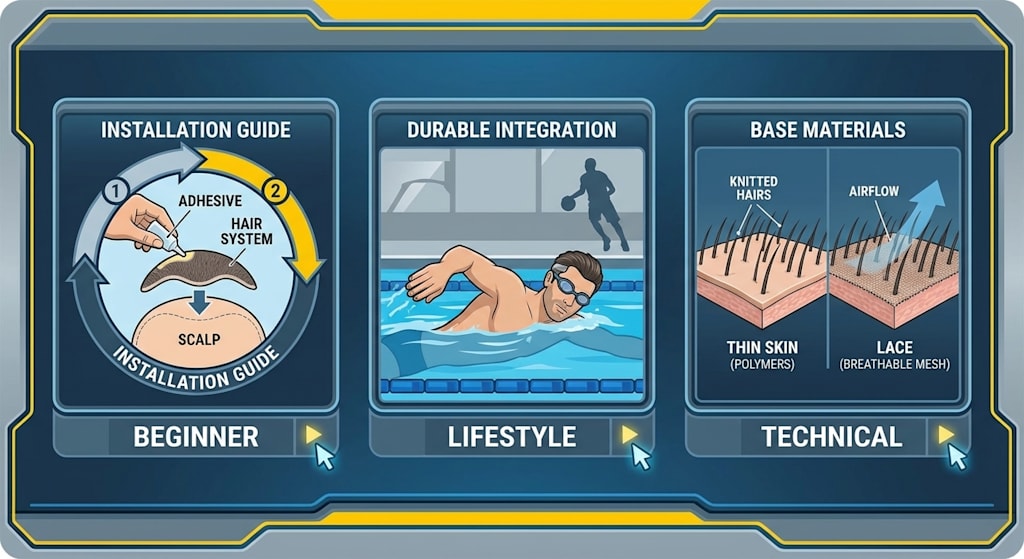
Your daily routine needs to dictate your base choice, not the other way around. Heavy workouts, swimming, and hot weather stress a hair system in very different ways. Sweat, water, and heat simply break down bonds a lot faster. Match the materials to your specific lifestyle first. Then, you can dial in details like color.
Can I ask customer service to review the AI's lifestyle recommendation?
Yes. You should absolutely get a second opinion, especially from Lordhair customer service. Just give them your exact lifestyle breakdown. Tell them how many days a week you hit the gym, if you swim, the average local temperatures, and exactly how many hours a day you wear the unit.
Ask them to double-check your base type and attachment plan. Their advice usually highlights exactly how French lace and skin bases handle sweat differently. That makes comparing your material options a whole lot easier.
Balancing French Lace Breathability with Daily Sweat and Activity Levels
French lace feels cooler and lets heat escape. That's a massive help if you live somewhere humid. But sweating all the time means extra cleaning. If you train hard, you'll probably need to reattach the system every 7 to 10 days. That's just how it goes.
Skin bases block sweat better and are super easy to wipe clean, even though they trap more heat. That trade-off leads right into the next step: nailing the color match so the system looks totally natural.
Transitioning from Virtual Try-On to Real-Life Color Matching
Virtual Try-on tools help you narrow down your choices fast. But remember, screens don't always show the exact hair color. Phone displays shift tones around, and the AI often smooths out or brightens shades. Treat those digital results as a rough starting point. After that, you need to check the match out in the real world. Simple as that.
How do I verify if an AI-recommended hair color will match my real hair?
Start off with a physical check. Get your hands on a color ring or some small swatches, then compare them directly to your hair at both the roots and mid-lengths. This makes things much more accurate than just relying on virtual guesses.
You can also ask Lordhair support for a quick review. Send over clear photos along with the AI result so their team can double-check the undertones before you place an order. From there, you just need to get your lighting right.
Is the AI virtual try-on accurate for different lighting conditions?
Accuracy drops whenever lighting changes. Screens have different calibrations. Indoor bulbs usually add a yellow tint, while natural daylight brings out cooler tones. Because of this, the virtual pictures might look pretty different from what you'll actually see in person.
Talking to a professional helps fix this issue. A real human can read the shadows and highlights across your photos to figure out the true tone. It's basically a simple photo audit you can follow step by step to get it exactly right.
Performing a "Photo Audit" with Lordhair Customer Service
Doing a photo audit takes your Lordhair AI result and turns it into a real, wearable match. You aren't guessing anymore. Instead, you're looking at clear visuals to confirm the details with the Support Team. Start by passing along your AI preview, then check it against actual product photos to catch any differences right away.
Sending Your AI Virtual Try-On Screenshot to Support
First, grab a screenshot of your Virtual Try-on result in good lighting. No filters, and definitely no color shifts. Send that picture, along with a few snaps of your current hair, over to the Support Team. This helps them match up the tones, hairline shape, and overall style.
This takes you straight from a digital preview to getting real advice on the actual product. Simple.
Comparing Digital Renders with Real-Life Stock Photos and Videos
Ask them for some real pictures and short videos of a similar Hair System in natural lighting. A standard shade like #1B Natural Black is a good example. Screens have a habit of softening or shifting tones, so these real-life references show you the true color and texture.
Once the visuals match up, your next move is to check the hair density and direction.
The Hair Density Reality Check for First-Time Wearers
A Hair System might look flawless on your screen, but it can be a massive shock in real life. Usually, density is the culprit. If it’s too thick, the change feels sudden and way too obvious. Personalization is a big deal here. And it all starts with realizing why digital previews totally miss the mark.
Why AI Cannot Fully Judge Your Remaining Hair's Density
AI only sees flat photos, not depth. Because of this, it has a hard time figuring out exactly how thick your natural hair is across different areas of your scalp. Lighting, weird angles, and heavy shadows all mess with the results. Getting true personalization still means having an expert consultation to map your density the right way.
Which brings us to the next step—figuring out how to ask for a softer, more natural blend.
Asking Support for a Gradual Transition Density Recommendation
Just reach out to the Lordhair support team for product advice. Ask for something like a “medium-light” option or a graduated density that slowly tapers near the front. Doing this prevents a harsh, fake-looking contrast between your bio hair and the Hair System. It makes the entire change much easier to get used to.
After you've got your density dialed in, it's time to figure out your timeline—choosing between stock units or custom orders.
Clarifying Customization vs. Stock Shipping Timelines
AI suggestions often miss real-world steps like base cut-downs, contour shaping, and processing queues. That gap shows up fast in E-commerce Support and WISMO questions. Stock units can ship out fast. But custom work adds days or even weeks to the clock. So, confirm your key order details first.
What specific order details should I confirm with support after an AI-assisted purchase?
Confirm the exact base size, front contour shape, and final hair length before anything moves forward. Your personal choices affect both fit and production time. That's why E-commerce Support needs to verify every single detail clearly in your order notes. Simple.
Check your density selection and any trimming requests, too, since these change how the unit gets prepared. Once they're locked in, you can start tracking progress and set realistic delivery expectations.
Navigating WISMO (Where Is My Order) and Custom Production Lead Times
WISMO requests usually spike when timelines get blurry. Stock systems often ship out in just a few days. Custom orders, though, need extra production time for cutting, ventilating, and finishing. Depending on how complex the job is, that can easily add a few weeks.
E-commerce Support can give you stage-based updates, not just basic shipping dates. Knowing if your order is still in production or already out for dispatch helps you handle things calmly. Plus, it makes using clear, ready-to-send message templates a whole lot easier next.
The Active Lifestyle Consultation Script
Living an active life totally changes how a hair system performs, especially when sweat, water, and friction get involved. Sure, an AI can pick out a base, but you still need real-world proof. So, use these follow-up questions to really stress-test your choice before you place an order. Start off with a ready-to-send template.
Copy-Paste Template for Gym-Goers and Swimmers
Just paste this straight to the support team: “I train 4–5 times a week and swim twice. Will this hair system hold up out there under heavy sweat and chlorine? Which adhesive works best, and how long does the hold last between cleanings considering my routine?”
That quick message sets up some deeper questions about how the base and adhesive will actually behave.
How to Ask About Adhesive and Base Compatibility Under Sweat
Sweat breaks down bonds way faster on lace than it does on full skin. You need to ask them straight up. Get the hold time ranges, figure out the reattachment frequency, and ask which adhesive handles your selected base best on really heavy workout days. Simple.
Once that's all cleared up, you can move right into checking the color accuracy.
The Color Match Verification Script
Getting the color wrong is the fastest way to make a hair system stand out. AI tools help, but they aren't perfect. You really need a quick check with actual humans. Just start with a simple message to Lordhair support.
Copy-Paste Template for Exact Shade Matching
Use this message: “Hi, I got an AI color recommendation. I’ve attached some photos taken in natural light. Can you confirm the exact shade match or suggest a better choice based on these pictures?”
That quick question sets up the next logical move: a physical comparison.
Ordering a Color Ring as a Physical Validation Step
A color ring gives you actual physical samples to check at home under your own lighting. That matters way more than any screen preview. Just match the ring directly to your own hair to get the blend right. Simple.
After nailing down the color, you'll want to focus on keeping it looking great over time.
The First-Timer's Maintenance and Longevity Script
A hair system doesn't stay perfect on its own. Daily care, cleaning habits, and smart Product Advice decide how long it looks natural—and how much you'll spend over time. Start by asking the right Follow-up Questions. Those answers shape everything you do next. Simple.
What are the best follow-up questions for hair system first-timers?
Kick things off with clear Follow-up Questions about your Hair System. Ask how often to wash it, which shampoos are safe, and how to peel off the adhesive without ruining the base. Also, find out exactly what to avoid—like heat, heavy oils, or rough brushing.
Next, confirm how the base thickness affects durability. This directly sets your lifespan expectations.
Asking About Lifespan, Cleaning, and Reinstallation Cycles
Most systems need cleaning and a fresh reinstall every 1–3 weeks. But you'll want to confirm your exact schedule with the Support Team. Find out how to squeeze more life out of it through gentler cleaning and the right drying methods.
Solid Product Advice here also reveals when to push past the automated bots and ask for a real technician.
How to Smoothly Bypass the AI Bot to Reach a Human Specialist
AI chat is fast, but it often flatlines when your hair system questions get too specific. You can skip that frustration and get to a real Support Team member with a couple of direct moves. It starts by knowing the exact words that force a human handoff.
How to bypass the AI bot to speak with a hair system specialist?
Clear commands usually work best here. Just type “connect me to a human specialist,” “technical hair system issue,” or “order customization help.” That tells the system to route you through Omnichannel Support. You can also mention urgency or fitting problems. Those red flags almost always push your request straight to the Support Team.
Once you finally get a real person, your next step is picking the right channel to get deeper help.
Transitioning from Automated Triage to Omnichannel Expert Consultation
Live chat is really just step one. Ask the agent to take things to phone or email if you need detailed hair matching, especially for Lordhair cases that require photos or measurements. Moving into Omnichannel Support like this gets you a proper Expert Consultation.
And remember, behind every automated answer, the AI is just pulling from a fixed knowledge base. That's what really controls what it can and can't solve.
Understanding the Brand's Knowledge Base and E-commerce Support
AI answers feel instant. But they actually rely on structured data, not just guesswork. With hair systems like Lordhair, that information drives every single suggestion you see. A completely separate process then handles your actual purchase, starting with how you got that advice in the first place.
How AI Leverages the Brand's Knowledge Base for Product Advice
The AI puts together Product Advice by reading through the brand’s Knowledge Base. Think technical guides, base types, density charts, and maintenance rules. It simply takes what you tell it—like your daily lifestyle or hair loss pattern—and lines that up with the stored details.
So, the recommendations you get are only as good as the info you provide. Giving clear answers right now ensures your specific preferences actually make it into the final ordering stage.
Ensuring Your Personalization Details are Correctly Transferred to E-commerce Support
Your final order relies heavily on how well those Personalization details jump from the chat to your cart. Always double-check your base size, color, density, and attachment method before checking out in the E-commerce Support system.
Even tiny mix-ups can cause highly noticeable issues, especially if you're buying a hair system for the first time. That's exactly why checking the AI's advice against a real human stylist's opinion is usually a smart move.
Evaluating AI-Driven Shopping vs. Professional Stylist Insight
Generative AI throws out fast, data-backed suggestions, while talking to an expert brings in that human judgment you just can't automate. Both totally matter when you're looking to buy a hair system from Lordhair. One works entirely off data patterns; the other actually reads people. You really start to see that difference when you ask if AI by itself is mostly enough.
Can AI help me choose the right product without human oversight?
AI can definitely hand over some solid product advice, but it completely lacks real-world judgment for personal choices. It simply can't weigh out your lifestyle habits, your emotional comfort, or what you expect from wearing a system long-term.
Leaning heavily on AI alone bumps up the risk of getting the wrong fit, which is especially sketchy for first-time buyers. That blind spot usually shows up the most when dealing with tricky scalp reactions and local weather elements.
Why Scalp Sensitivity and Climate Require Human Intent Detection
Scalp sensitivity and your local climate play a massive role in everyday comfort, adhesion, and how long a unit lasts. Sitting down for an expert consultation uses intent detection to spot hidden issues—like weird allergies, heavy sweat levels, or high humidity exposure—way before they turn into actual problems.
A human stylist can tweak their ideas on the fly based on all those small signals. That kind of hands-on insight naturally brings up the biggest questions buyers constantly ask about making AI-supported choices.
Frequently Asked Questions About AI and Hair System Customer Support
Is there an AI customer service?
Yes. It handles the initial search. AI narrows down styles and budget in minutes. But you still need a human expert to finalize the actual fit and density.
How do I talk to an AI assistant for shopping?
Use the virtual try-on tools. Feed it your basic preferences for style and budget. Grab a screenshot of the result and send it to Lordhair support for a real photo audit.
How is AI used in customer service?
It filters the noise. AI uses data patterns to suggest bases and styles instantly. It gives you a solid starting point before you talk to a real stylist about custom measurements.
What are the benefits of using AI for customer support?
Pure speed. It narrows down thousands of options into a shortlist in minutes. You get instant budget and style ideas without waiting on hold.
How does AI improve the customer experience?
It cuts out the initial guesswork. You get immediate visual try-ons. Then you take those AI insights to a human team to verify things like sweat resistance and lace lifespan.
What is an example of AI in customer service?
The virtual try-on feature. It maps a hair system onto your photo. You take that AI screenshot, send it to Lordhair support, and ask them to match the exact undertones.
How do virtual assistants handle customer inquiries?
They run on pure data patterns. Bots handle the basics. For complex stuff like matching medium-light hair density or custom base sizes, they pass you to a human expert.
About the Creator
Leo
Passionate men's hairstylist with a keen eye for detail and a knack for creating on-trend looks. Dedicated to delivering hair restoration education that enhances individual style.
Enjoyed the story? Support the Creator.
Subscribe for free to receive all their stories in your feed.
Comments
There are no comments for this story
Be the first to respond and start the conversation.