
A Visual Guide: Are there real examples of high-density and low-density hair systems?
Low Density Vs. High Density, Which To Choose?
A Visual Guide: Are there real examples of high-density and low-density hair systems?
Hair density is the main factor when it comes to hiding a Lordhair hair system. It shows the exact percentage of hair tied into the base, turning technical details into how full it actually looks in real life. Getting this right makes sure the result looks natural. Now let’s take a look at this range of volume, from extra-light to heavy.
Key Takeaways
- Match density to your age and natural side hair; 80% is the realistic sweet spot for most men, while 60% suits older individuals.
- Request transitional density at the front hairline, gradually building thickness to avoid an artificial, solid wall of hair.
- Pair extra-light (60%) densities with 0.03mm ultra-thin skin bases to keep the visible scalp looking completely natural.
- Consider your environment: harsh sunlight exposes the base on thinner units, while dim lighting makes heavy densities look unnatural.
- Reduce excess volume manually using thinning scissors on the mid-shaft, being careful never to cut directly at the root.
The Visual Spectrum: From 60% to 160% Density
Numbers shape how a hair system actually appears on your head. Density percentages give you a clear, side-by-side sense of volume, ranging from barely-there coverage to very full looks. A 60% density feels completely different from a 160% option when you compare them in the mirror. Knowing these visual traits helps you match the replacement to your age, style, and natural hair type. Once you’ve set that visual baseline, the next step is to look at the lowest end of the spectrum, where realism matters most.
Extra Light Density (60%): The Ultimate in Scalp Realism
Sometimes, less hair creates a more believable illusion. The 60% (Extra Light) density is designed to mimic naturally thinning hair. At this level, scalp visibility is very high. Anyone looking closely will clearly see the skin beneath the hair, which is exactly why many older men prefer it. It matches receding bio hair without looking like an obvious cover.
You can’t get this level of scalp realism with heavier units. The front hairline stays very exposed and delicate, so the base ends up doing a lot of the visual work.
Choosing extra light density works best if your natural sides are already quite thin. It blends smoothly into sparse areas, so your Lordhair system doesn’t look unusually thick. If you want a bit more coverage without losing that natural feel, the next step is the most common choice for beginners.
Light Density (80%): The "Sweet Spot" for Modern Realism
Most adult men don’t have the thick, heavy hair of a teenager. That’s why 80% (Light) density hits the sweet spot for modern realism. It gives you enough volume to style easily while still letting a slight amount of scalp show under bright light.
This percentage reflects the natural look of a healthy adult male in his 30s or 40s. The hair moves naturally, and the hairline stays believable. When you blend an 80% unit with your existing bio hair, the transition is almost impossible to spot.
You really get a balance here. It provides enough coverage to hide the base, yet stays light enough to avoid looking bulky. If your natural hair is very thick, or you want to try taller styles, you’ll want to compare this with the fuller medium range.
Medium-Light to Medium (100% - 120%): Balancing Fullness and undetectable edges
Once you pass the 100% mark, the way a hair system looks changes. At 100% (Medium-Light) to 120% (Medium) density, the unit becomes mostly opaque. You won’t easily see the scalp anymore, even under direct overhead lighting.
This level of volume creates a dense, full look that younger men or those with naturally thick sides often prefer. The 100% option still keeps the hairline fairly undetectable, making it a safe pick for swept-back styles. Moving up to 120% gives you more freedom for styles like pompadours or dense fades, but it also demands a very precise haircut to blend properly.
With this amount of hair, the base is completely hidden. Your Lordhair system will hold more complex styles with ease because the volume supports itself. Go beyond this everyday fullness, and you’re stepping into the higher end of density meant for very specific needs.
Choosing the Right Lordhair Density for a Natural Look
Industry standards say density has to match your natural bio hair to look truly real. When you browse the Lordhair catalog, you’re faced with a quick choice: go with ready-to-wear stock systems or choose custom orders made from scratch.
Stock pieces usually come in common densities between 80% and 120%. Custom orders let you dial in exact percentages for specific areas of the scalp, like a softer, thinner front hairline. Getting the right number helps your system blend in with your natural sides without looking too bulky. But landing on that ideal volume isn’t just about matching what you have now—it also depends a lot on your age.
The Age-Density Matchmaker: What Looks "Honest" at 20 vs. 60?
A 20-year-old with a receding hairline needs a very different level of volume than a 60-year-old just looking for basic coverage. Choosing an age-appropriate density keeps the system from turning into a thick, unnatural helmet.
Younger and older people need very different visual results. Men in their 20s or 30s can easily pull off a 100% to 120% medium density. It matches that youthful fullness and works well with modern, high-volume styles.
Older men tend to drop to the 60% or 80% range. Putting 120% density on a 65-year-old raises eyebrows right away, since natural hair thins over time. An honest look at 60 means letting a bit of scalp show through the top so it matches the sides.
Your age sets the visual rules. But once you lock in the right percentage, the next thing to check is what the hair is attached to. The base material can completely change how thick or thin those numbers look in the mirror.
The Scalp Visibility Factor: The "Parting Test"
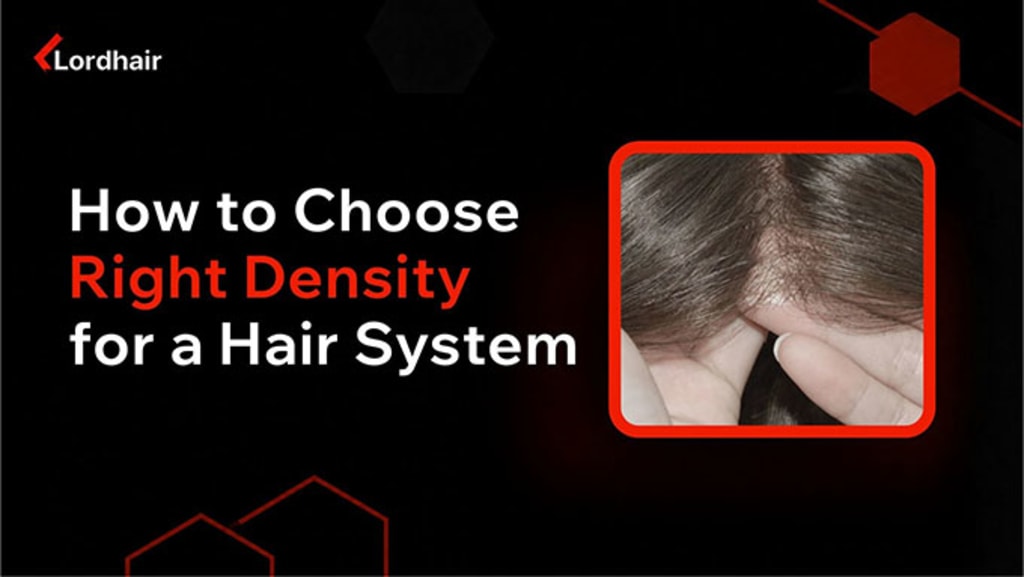
The way your hair separates tells the real story. A simple parting test shows exactly how much of the base shows through at different densities. High-resolution macro close-ups of a hair part make the difference clear between an "invisible" scalp and one that's slightly "detectable." If you go with a lighter density, more scalp showing is unavoidable, so the base has to look flawless. You need to set your expectations based on how much hair is covering that base. But the part isn’t the only area that matters. The real challenge shifts from the top of the head down to the forehead.
Creating a Natural Transitional Density at the Hairline
A solid wall of hair right at the front looks completely fake. Real hair doesn’t grow that way—it starts off lighter and slowly builds thickness as it moves back toward the crown.
This gradual fade is called transitional density. Getting it right is what gives a Lordhair system that natural look around the forehead. A skilled technician places fewer hairs along the very front edge, copying how real hair actually grows.
You want the front hairline to look like it’s coming straight out of your skin. If the density jumps to 100% too fast, it becomes obvious. But creating that smooth, seamless fade depends a lot on what the hair is attached to. The base material plays a big role in how clean this transition looks up close.
Which Base Material is Best for Extra Light (60%) Hair Density?
At an extra light 60% density, the base is almost fully exposed. You need something that practically disappears against your skin.
Ultra-thin skin (0.03mm) is usually the go-to choice here. The v-looped hairs don’t have knots, so the base is nearly impossible to spot, even under strong lighting. It looks just like real hair coming out of your pores.
Swiss lace is also a strong option for a natural look, but it needs bleached knots to hide the tiny points where the hair is tied to the mesh. Even with careful bleaching, a 60% density on lace can still leave small dots visible if you look closely.
Ultra-thin skin is the winner for maximum realism at lower densities, while lace gives you better airflow. In the end, choosing between these undetectable bases comes down to your daily habits, since your lifestyle has a big impact on the density and material that will work best for you.
The Lighting Stress Test: Real-World Environments
Step outside into the midday sun and your hair system can look totally different than it does indoors. Harsh sunlight works almost like an X-ray on lower densities, quickly revealing the base if there isn’t enough coverage. Dim indoor lighting does the opposite. It can make a medium density appear much heavier, almost like a solid helmet. You need to think about how your hair looks in your everyday environment. If you’re outside a lot, a bit more coverage may help keep things looking natural under direct light. Skipping this kind of testing often leads to a mismatch. Here are the most common volume mistakes buyers run into.
The "Too Much Hair" Red Flags: Visual Examples of Common Mistakes
A thick, solid wall of hair on a 60-year-old man looks off right away. When the system’s density overwhelms the thinning bio-hair on the sides, it becomes easy to spot. High-resolution side-by-side photos make it clear what’s going wrong.
In our examples, the poor match shows a heavy 120% density sitting next to fine, receding temple hair. The contrast creates a harsh mushroom effect. It’s the classic wiggy look. Hair replacement pros consistently warn about this. They suggest matching the density of your current hair, not what you had at twenty.
Always check a reliable density chart before ordering so the volume lines up with your age and existing hair. A 90% light-to-medium density tends to blend much better for mature users. But what if you’ve already made this call and it didn’t work out? If your new piece shows up looking way too full, you’ve still got a few ways to fix it.
Can I Thin Out a High-Density Lordhair System with Scissors?
Yes, you can bring down the volume of a thick unit on your own. If your new Lordhair system feels too heavy, thinning scissors will do the job.
Don’t cut at random. The key is lifting small sections and trimming around the lower mid-shaft, never right at the root. Cutting too close to the base can leave blunt, itchy stubble. Pay extra attention to blending the sides where the system meets your natural hair.
Good maintenance and styling comes down to removing small amounts at a time. Make a few cuts, brush it out, then check how it looks. Take it slow so you don’t end up with uneven patches. Once the volume feels right, there are just a few final details to go over before getting into the frequently asked questions.
Frequently Asked Questions About Hair System Density
What does high density hair look like compared to low density?
High density looks like a theatrical wig. A solid wall of hair. Low density actually shows your scalp when parted. 60% to 80% mimics natural thinning. Anything over 120% screams fake unless you are in your twenties.
How can you tell if a hair system is too thick to look natural?
It looks like a helmet. You spot it from across the street. If the front hairline lacks a subtle graduation and just starts abruptly, it is a dead giveaway. Your top must match your remaining side hair.
Does hair density vary by age and hair color?
Yes to age. Biology dictates hair thins as you get older. A 60-year-old wearing 120% density looks completely ridiculous. Stick to 60%. Color does not change actual strand count, but a bad dye match ruins the illusion anyway.
Is heavy density (160%) suitable for everyday wear?
Absolutely not. Way too thick for normal life. That 160% volume is strictly built for stage actors and theatrical wigs. Wearing that to the office guarantees everyone will stare at your hairline.
What ethnicity has the highest hair density?
Caucasians pack the most strands per square inch. Asians have thicker individual hair shafts, making it look fuller despite having fewer actual strands. System bases use different knotting techniques to mimic these exact genetic traits.
About the Creator
Leo
Passionate men's hairstylist with a keen eye for detail and a knack for creating on-trend looks. Dedicated to delivering hair restoration education that enhances individual style.
Enjoyed the story? Support the Creator.
Subscribe for free to receive all their stories in your feed.
Comments
There are no comments for this story
Be the first to respond and start the conversation.