
Where Memory Returns in Mario Mattia's "Ode"
A remarkable improvised piano work in which a single theme returns and reveals new depths with each appearance.

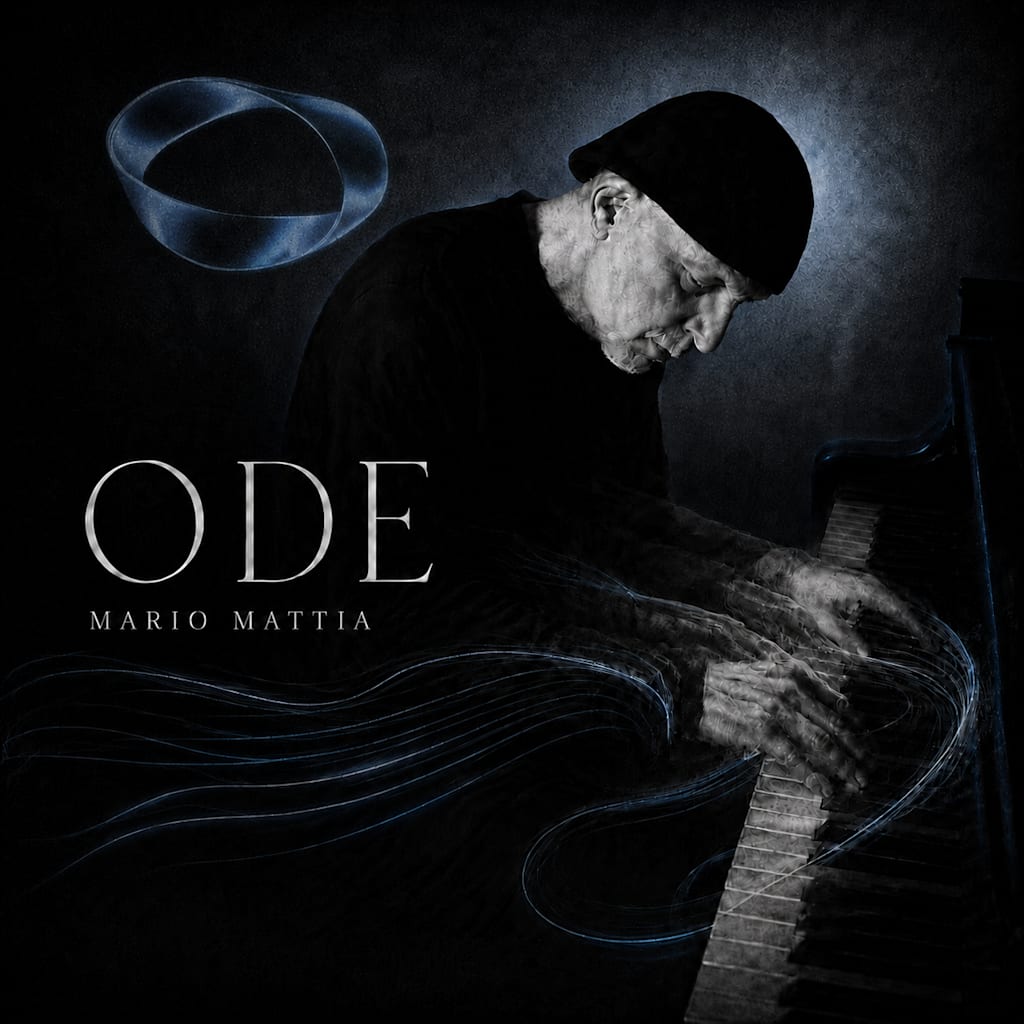
There is a long standing assumption in classical music that structure belongs to composition while freedom belongs to improvisation.
Mario Mattia's "Ode" quietly dismantles that distinction.
Entirely improvised and performed in a single sitting, the work possesses a degree of thematic coherence, emotional continuity and a formal balance that many carefully notated compositions would envy.
What makes "Ode" particularly remarkable is that its architecture emerges without any apparent premeditation. The piece is built around a recurring thematic idea that returns throughout the improvisation, not as a fixed refrain but as a continually evolving presence. In retrospect, Mattia discovered that the theme appears fourteen times during the performance. More astonishingly no two appearances are exactly alike. Each recurrence carries its own contour, emphasis, harmonic colouring and emotional inflection.
The resulting work is one that often feels like a spontaneously created theme and variations cycle. Yet unlike traditional variations, where transformation is consciously planned, the development in "Ode" reveals itself intuitively. The listener experiences the sensation of recognizing something familiar while simultaneously encountering it anew. Memory becomes part of the listening process itself.
Listen here:
From the opening moments, "Ode" establishes an atmosphere of reflection and quiet depth. The initial theme emerges with an almost fragile simplicity. Phrases unfold patiently. Harmonies linger. Silences become meaningful.
Contemporary listeners are often conditioned to expect constant dramatic contrasts or obvious climaxes. Here, Mattia resists those expectations. The drama is internal rather than external. The piece derives its momentum from subtle transformation rather than overt gesture.
As the improvisation progresses, the recurring theme begins to function like a character within a story. Sometimes it appears tender and vulnerable. At other moments it feels searching, wistful or quietly resolute. By the later stages of the performance, familiar melodic shapes carry emotional meanings that were not present at the beginning.
Certain images return repeatedly throughout a film, each time altered by context and experience. What begins as a simple motif gradually acquires more weight. "Ode" functions in much the same way. The recurring theme becomes a vessel through which the improvisation reflects upon itself.
The emotional character of the piece is also equally distinctive. There is sadness here, but it is not overwhelmingly sad. There is beauty, but it is not overly sentimental. One senses the presence of loss, yet also an openness toward healing and continuity. The work feels deeply personal while remaining accessible enough for listeners to project their own experiences onto it.
This may explain why "Ode" feels unusually familiar despite its intimate nature. The improvisation does not attempt to dictate meaning. Rather, it creates a framework within which listeners can encounter their own memories, emotions and associations. The recurring theme becomes a mirror as much as a musical idea.
Perhaps the most impressive aspect of "Ode" is the degree to which it challenges assumptions about improvisation itself. Too often, improvisation is viewed as a display of virtuosity or spontaneity rather than a vehicle for large scale artistic thought. Mattia demonstrates that real time creation can generate not only compelling moments but also coherent forms.
Whether approached as an improvisation, a work of contemporary piano music or an exploration of spontaneous form, "Ode" is a compelling entry in Mattia's growing body of work. It is also a reminder that some of the most profound musical journeys are not planned in advance but discovered one note at a time.
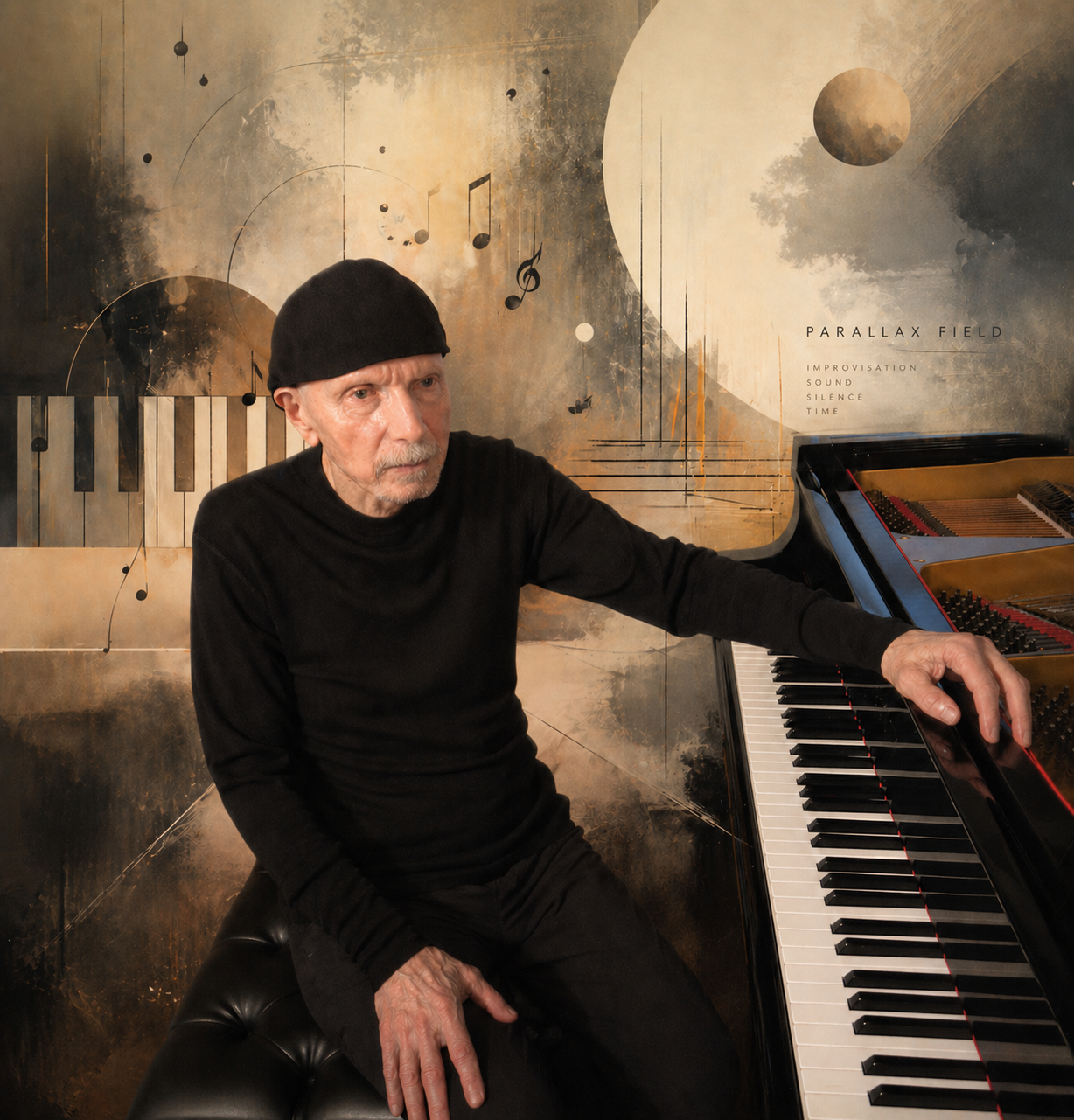
About Mario Mattia
Mario Mattia is an improvisational pianist and graduate of the New England Conservatory whose work is rooted in spontaneity, deep listening and emotional presence. Drawing on a lifetime immersed in classical, jazz, progressive rock, non-tonal modernism and ambient traditions, his musical language reflects a wide constellation of influences - from Johann Sebastian Bach and Béla Bartók to Ella Fitzgerald and Keith Jarrett, and from King Crimson to Brian Eno. These diverse lineages converge in a practice that is entirely unplanned and shaped in real time.
For more than two decades, Mattia has devoted himself to refining a uniquely personal improvisational voice: intimate, exploratory and unconcerned with the bounds of genre. He begins each performance without predetermined themes, structures or titles. Each piece unfolds spontaneously, guided by intuition, emotional presence and attentive listening. Improvisation, for Mattia, is not simply performance. It is an active engagement with the present moment, an exercise in creating meaning, structure and expression in real time.
Early in his career, Mattia founded and directed the progressive rock ensemble Möbius, scored documentary films for public broadcasting and worked extensively as a teacher of piano and music theory. These formative experiences in long-form structure, ensemble leadership and musical architecture continue to inform his present work, in which improvisation has become his central artistic language and primary mode of expression.
Mattia’s growing catalog is organized into four primary aesthetic lanes: extended structural improvisations, non-tonal architectures, contemplative works and meditations on loss. Each reflects the full architectural range of his practice. This framework allows the listener to engage directly with specific dimensions of his work, from large-scale formal explorations to more intimate, reflective pieces.
His releases include Approaching Hyperion, a pair of electronically mediated laments shaped by grief and reflection, created in Mattia’s electronic studio - a parallel and occasional extension of his primary work in solo piano improvisation. Project 45, by contrast, is a fourteen minute uninterrupted piano improvisation that unfolds from stillness into turbulence and back again. Alongside these works, Mattia maintains an extensive archive of documented performances, some accompanied by transcripts, emphasizing long-term artistic developments and sustained listening.
Working from his rural woodland studio, Mattia records with close microphone placement and a meticulously tuned and voiced piano to capture each and every harmonic nuance. Through his spontaneous, unedited performances, he invites listeners into deeply immersive sound environments grounded in presence and discovery.
Singular, unrepeatable encounters between sound, silence and the unfolding moment, where the music itself becomes both a mirror of consciousness and an expression of the self.
About the Creator
Whitney Miller
🌎 Adventurous & Musical
Stories shaped by places, music & life
Poetry, fiction, memoir & lived experience
Written without A.I.
© Whitney Miller
Enjoyed the story? Support the Creator.
Subscribe for free to receive all their stories in your feed.
Comments
There are no comments for this story
Be the first to respond and start the conversation.