
Time Stands Still: One More Night With Rush
Decades after my first Rush concert, the band’s unexpected return reminded me what we lose to time, and what music can give back.

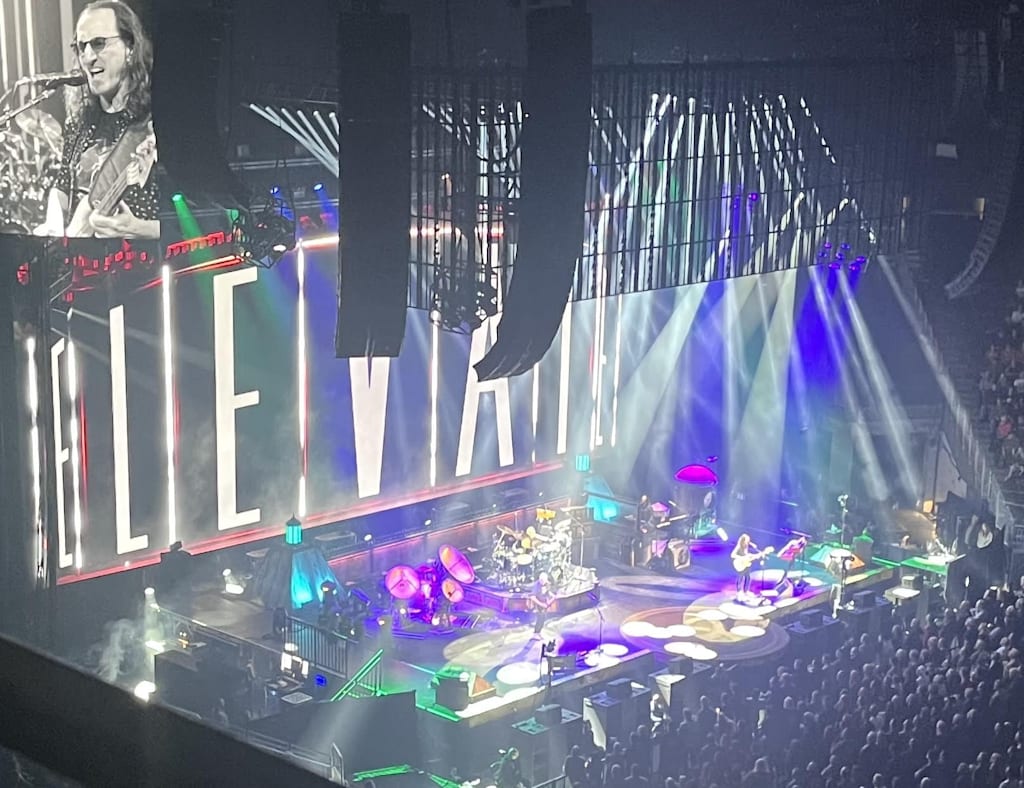
“My life is slipping away
— Rush, “I Think I’m Going Bald”
I'm aging every day
But even when I'm grey
I'll still be grey my way”
Hoping this would finally be the time I got to hear Rush’s 2112 suite live in its entirety, I put the album on as my wife and I made our way to Seattle’s Climate Pledge Arena. When she asked when it had been released, I couldn’t answer, so I looked it up before we pulled out of the driveway: 1976.
“I was barely a toddler,” my wife teased, pointing out an age difference that seems less significant as the years pass. But when we look back at events from our childhood, those differences suddenly loom larger. I turned nine that year and clearly remember celebrating the country’s Bicentennial.
As our train pulled into the Westlake Station for the quick monorail trip to the arena, we realized we were in good company. Rush’s 50-year career, spanning several generations of fans, was well represented on the T-shirts around us.
As we made our way through the crowd to get dinner at the Armory, I observed that the audience looked rather old, with plenty of balding heads and gray hair. The thought was quickly interrupted by an internal laugh: What do you think you are?
When I’m not looking in the mirror, it’s easy to forget how many decades have passed. It doesn’t seem possible, but my first Rush concert was in 1982.
Before Rush, my taste in music had been shaped by my mother, the radio stations we listened to, and eventually MTV. My mother was open-minded about music, but Rush would have been nowhere near her radar, and their music wasn’t played on our family’s radios. I know MTV played the videos for “Tom Sawyer” and “Limelight,” but I don’t remember either one grabbing my attention.
It was my friend Pete Sammit, whom I’d met in junior high band class, who introduced me to Rush through Moving Pictures and then 2112. Since we were both drummers, Neil Peart was the obvious entry point.
“Nowhere is the dreamer
— Rush, “Subdivisions”
Or the misfit so alone”
Signals was the first Rush album released after I became a fan, and the song “Subdivisions” spoke to me. Outside my tight-knit group of four friends, I was a misfit in a sea of suburban conformity. Being a contrarian can be lonely, and high school only deepened that isolation.
Besides, the video featured its protagonist playing Tempest, and the arcade was our favorite hangout, at least until girls entered the picture.
The four of us boarded a bus headed to Madison Square Garden to see Rush without a chaperone. Adding to the adventure, we’d be spending the night at the loft of a friend’s father before making our way home the next day. It was a bigger taste of freedom than I’d ever had.
Given our anticipation, the trip through Friday-night traffic seemed to take an eternity. The route itself seemed designed to make the journey as long as possible.
The most memorable part of the drive was a group of older boys heading to the same concert without tickets. One was warning the others that if they were the ones dealing with the scalper, they needed to make sure they weren’t buying tickets to the previous night’s show.
Things were definitely different before cellphones let you store tickets in an app. And today’s tickets cost way more than $12.50.
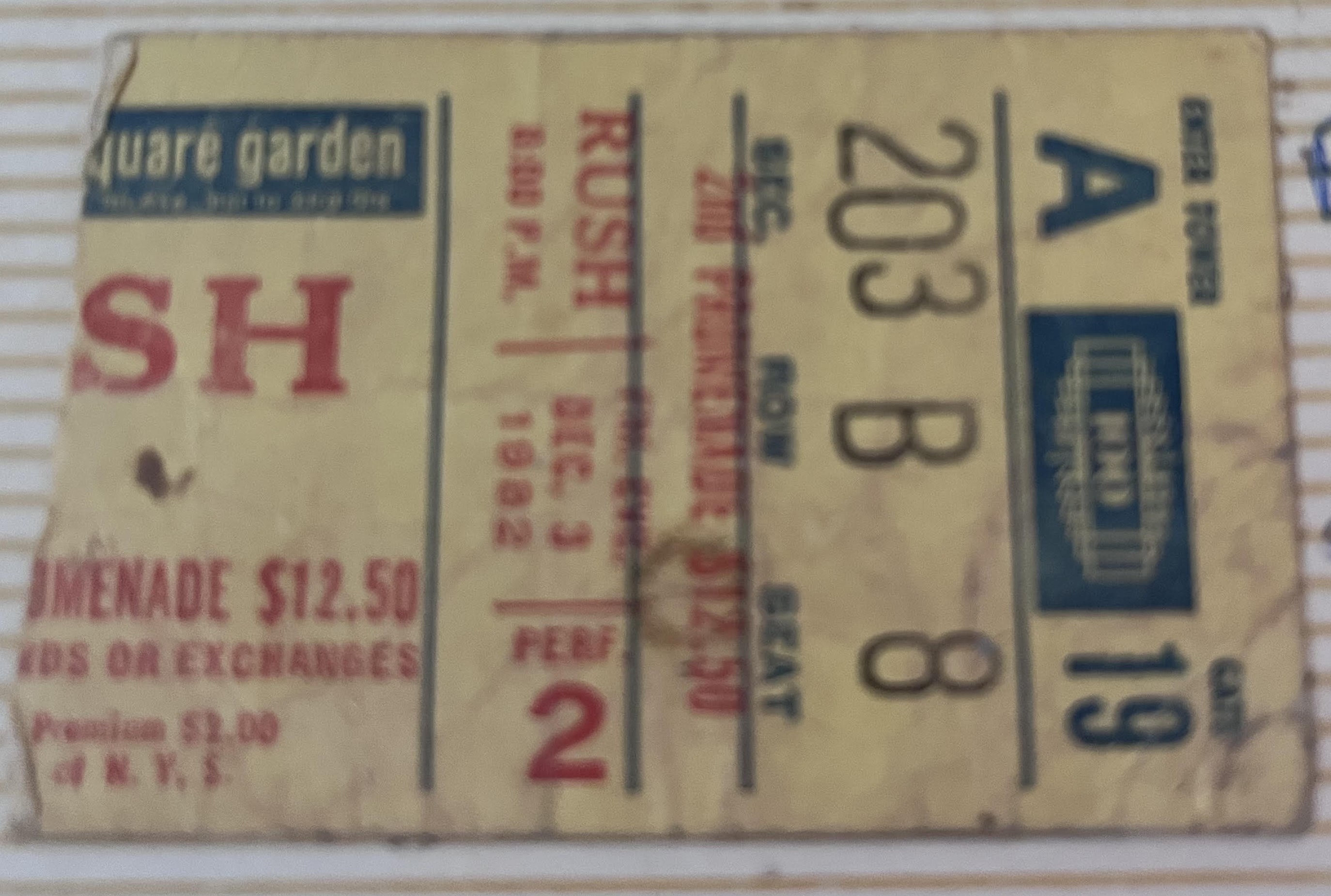
We arrived at Madison Square Garden with enough time to make our way inside without being rushed. As we waded through the crowd, someone handed me a flyer, which I stuck in my pocket.
While waiting for the show to begin, I pulled out the paper and saw that it contained the lyrics to “The Trees.” As I remember it, the flyer came from an anarchist group that interpreted the song as a call to rise up against the government. I’m not sure they had interpreted it correctly, but the flyer opened my eyes to the possibility that lyrics could be more than just words on a page.
I didn’t know it at the time, but even the choice of opening act said something about the character of the three men who would later take the stage. I knew nothing about Rory Gallagher, but Rush had opened for him earlier in their career. Now that their fame had eclipsed his, they were providing him the opportunity to reach their fans.
After all these years, my memories of Rush’s performance are a little sketchy, but three things still stand out.
The first was the giant screen behind them, which showed short movie clips during some of their songs. It was my first introduction to the band’s distinctive sense of humor, which counterbalanced the seriousness of their lyrics. At the time, Neil’s lyrics seemed more observational or intellectual than personal, although he was beginning to explore deeper emotional territory.
With my eyes glued to Neil’s massive kit, I also noticed the sleight of hand behind some of his drumstick tricks. Sometimes, when he launched a stick high into the air and let it twirl, he made no attempt to catch it. He was simply discarding a used stick before grabbing another.
The night ended with “YYZ,” which included Neil’s trademark drum solo. I may have been one of 20,000 people in the crowd, but I felt as though I were sitting at the feet of a master. Here was a man whose passion for learning and relentless perseverance had pushed him beyond what mere mortals could achieve.
On Monday morning, I proudly wore my tour shirt to school. This misfit had found a larger group where he belonged.
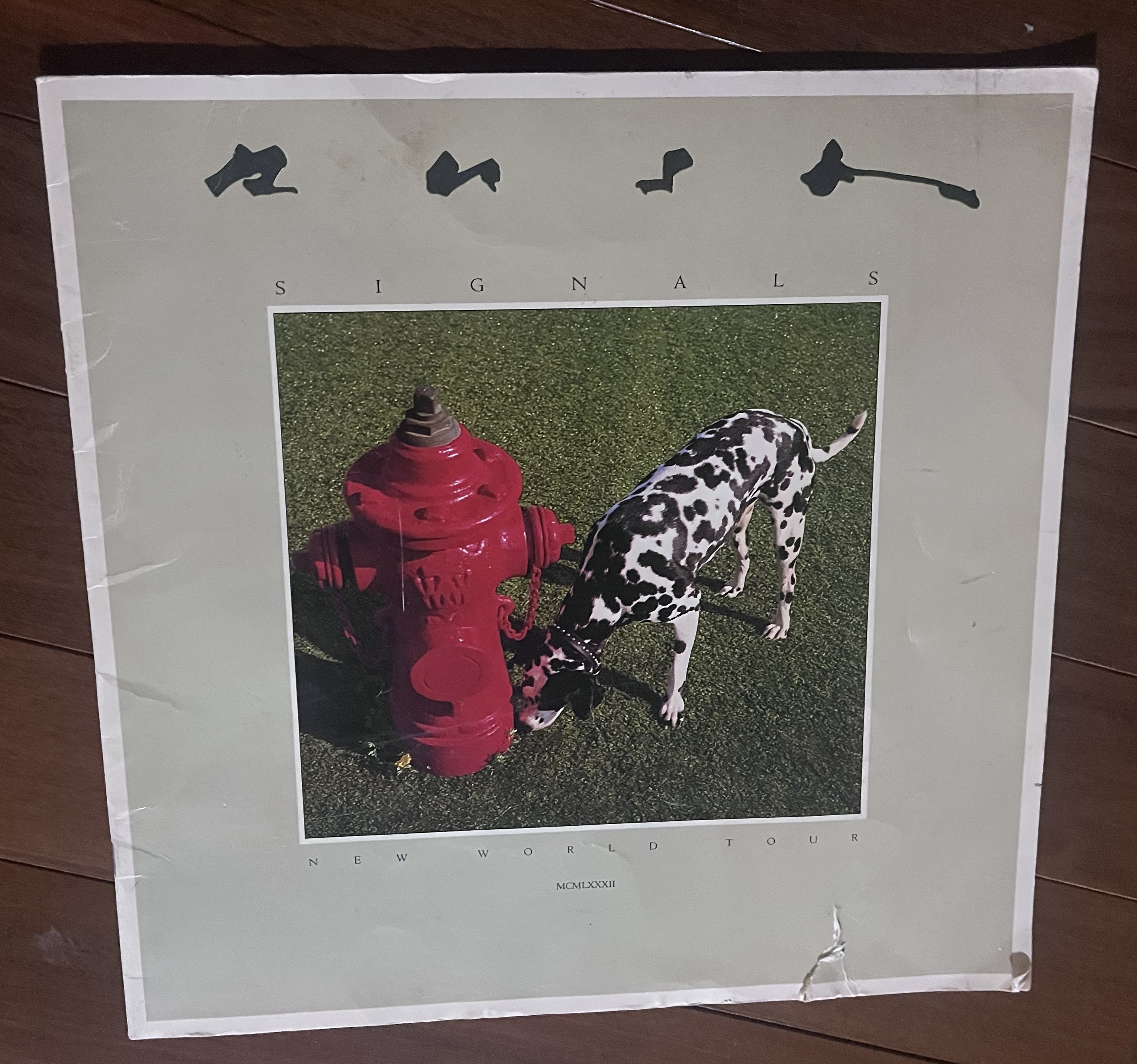
Decades later, that sense of community was still very much alive as we looked for seats at the communal tables in The Armory. Before we could even ask, another couple wearing Rush shirts motioned us toward an available space.
In other circumstances, the volume of the band playing at the Turkish cultural festival would have been a welcome excuse to avoid conversation with strangers. Here, I wished we’d had the chance to talk with our tablemates.
Walking into the arena, we experienced the same goodwill as people made room for my wife to navigate the crowd in her motorized scooter. There was a sense of celebration. It’s been a long time since I last set foot in a church, but this feeling of belonging reminded me of what I had experienced in childhood.
As the band’s lengthy introduction video played, the crowd’s reaction was different from what I remembered at the tour opener in Los Angeles back in June. Then, there was a sense of discovery as the scenes unfolded. This time, the key moments and punchlines seemed familiar to the audience.
Some fans had probably followed the tour to other cities, but I suspect the internet had also spoiled a few surprises. Ghost may have been onto something when they locked up our phones at their show.
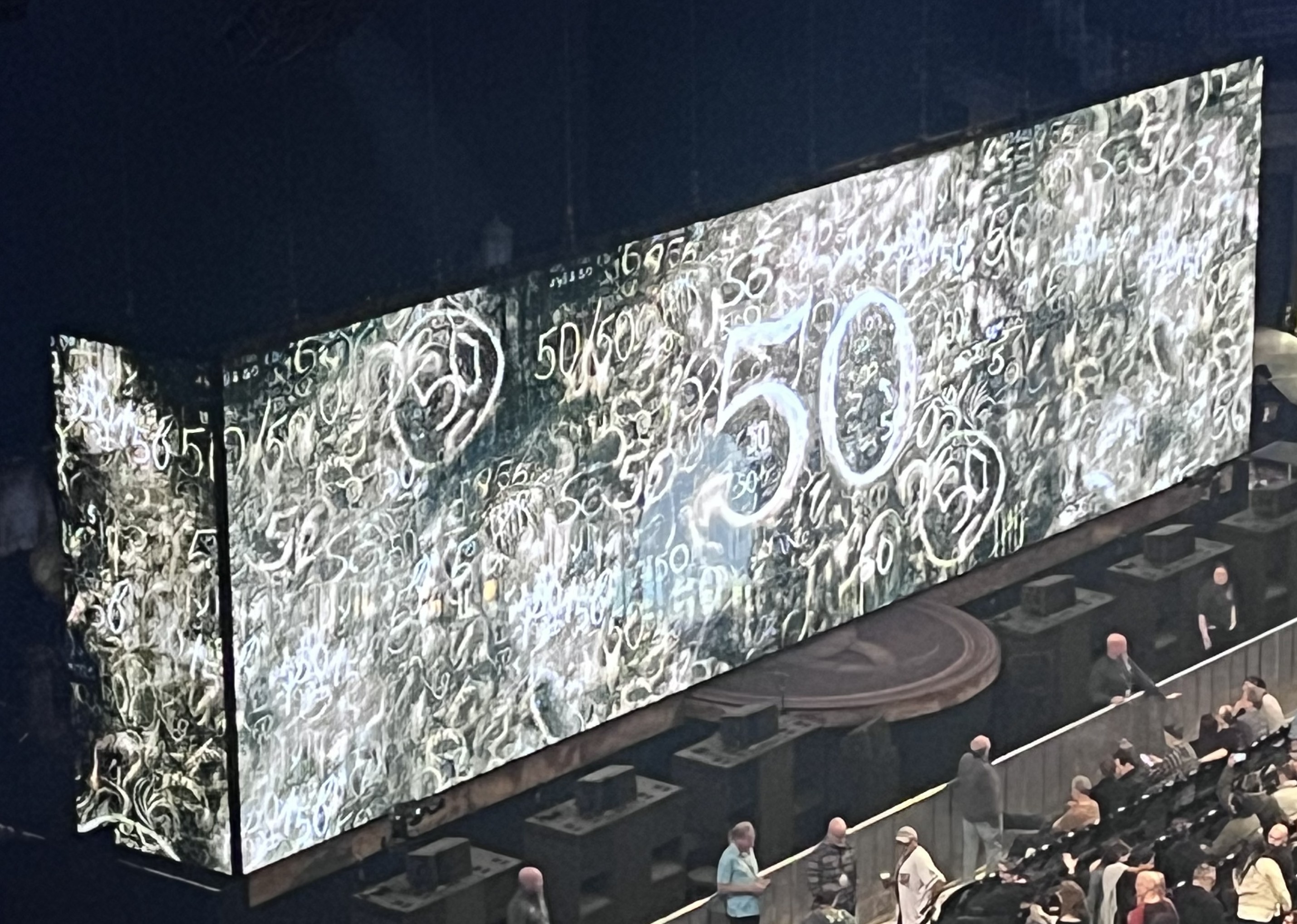
In June, I could feel the emotion swell inside me as the band took the stage. I jokingly denied it to my wife, but I’d gotten teary-eyed. She knew I was lying.
When we lost Neil in 2020, the thought of Rush taking the stage again seemed impossible. I had missed what turned out to be their final tour with Neil, R40, and regretted losing the opportunity to say goodbye to a band I’d seen multiple times since that first show in 1982. This was an unexpected chance to experience the music live again, celebrate Neil’s legacy, and watch the band forge a new path forward.
This time, I still felt the emotion, but I also found myself enjoying the feelings of those around me, people welcoming the band back into their lives for the first time.
When writing about the June show, I described drummer Anika Nilles as displaying a “mix of nervous confidence.” With a few months of touring under her belt, the nervousness seems to have evaporated, replaced by fierce intensity.
Geddy Lee and Alex Lifeson had also seemed a little nervous when they took the stage at the tour opener, but that appeared to dissipate as they realized the crowd was embracing their new drummer. On the first night of their Seattle stand, they just seemed… happy. My body gets stiff if I sit too long, but Geddy, at 73, was hopping across the stage throughout the night.
This time, our seats gave us a better view of the touring keyboardist, Loren Gold. Musically, he plays an important role, freeing Geddy and Alex from some of the backing parts they previously had to juggle themselves. But, to be honest, he looked bored. Maybe that’s why so many hair metal bands used to hide their keyboardists backstage.
My emotions swelled five songs in when the band launched into the keyboard intro of “Subdivisions.” This is the song that grounds me in the Rush legacy, and it was executed perfectly. The video screens interspersed snippets from the original music video with live shots, creating a blend of looking back while remaining planted firmly in the present.
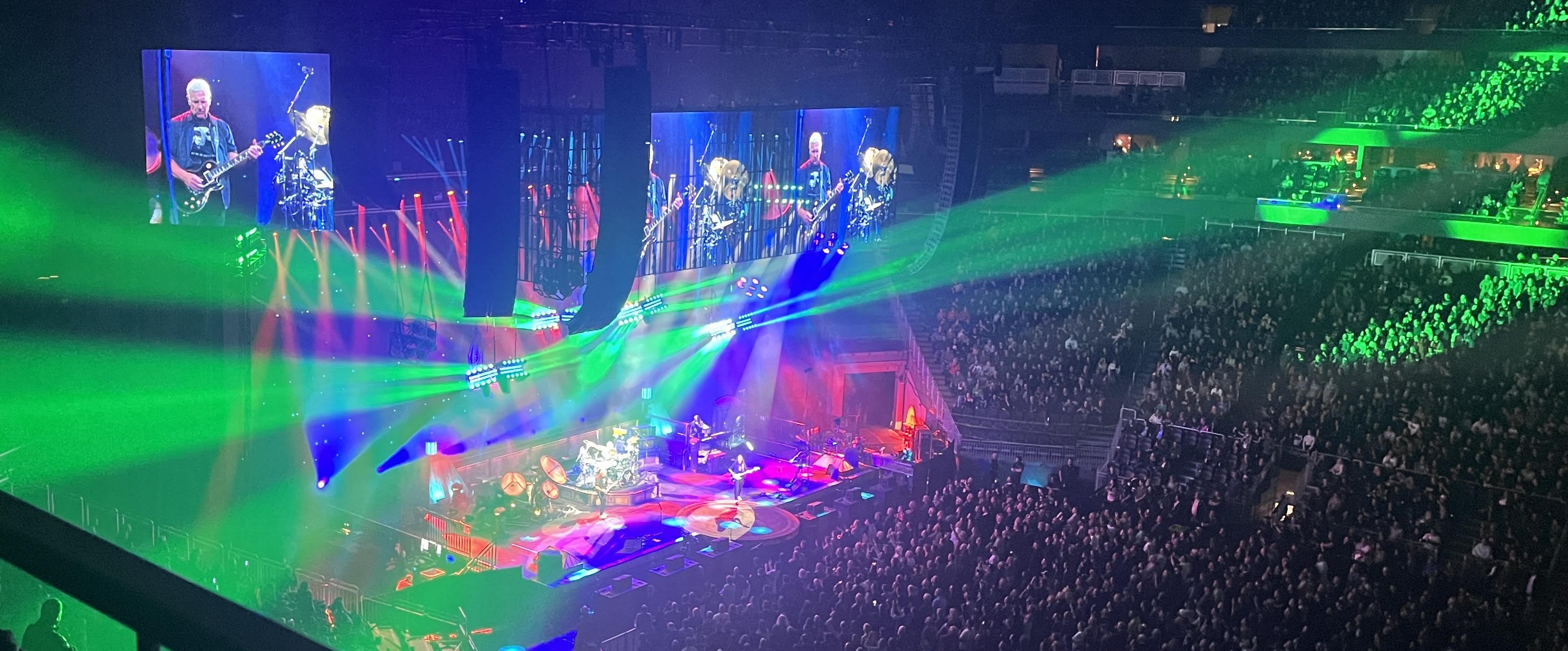
Having recently transplanted to the Seattle area, this was only my third concert at Climate Pledge Arena and the first where I wasn’t seated directly opposite the stage. I’m not sure whether it was the fresh vantage point or the way the sound was mixed, but there seemed to be more echo than I’d noticed at previous shows. It was noticeable at times, but it didn’t ruin the night by any means.
The sound was also a little muddier than I’m used to at Rush shows, where everything is usually crisp to the point of perfection. I liked the effect this had on the band, bringing them closer to their hard-rock roots. A synthesizer-heavy song like “Subdivisions” can sometimes sound sterile, but with this mix, it had surprising depth.
Adding to the freshness of this tour, the band has freed itself from the need to play the same setlist every night. While certain songs are cemented in place (for example, “Xanadu” connects to the opening video, making it a fixture as the first song), others rotate in and out of the set.
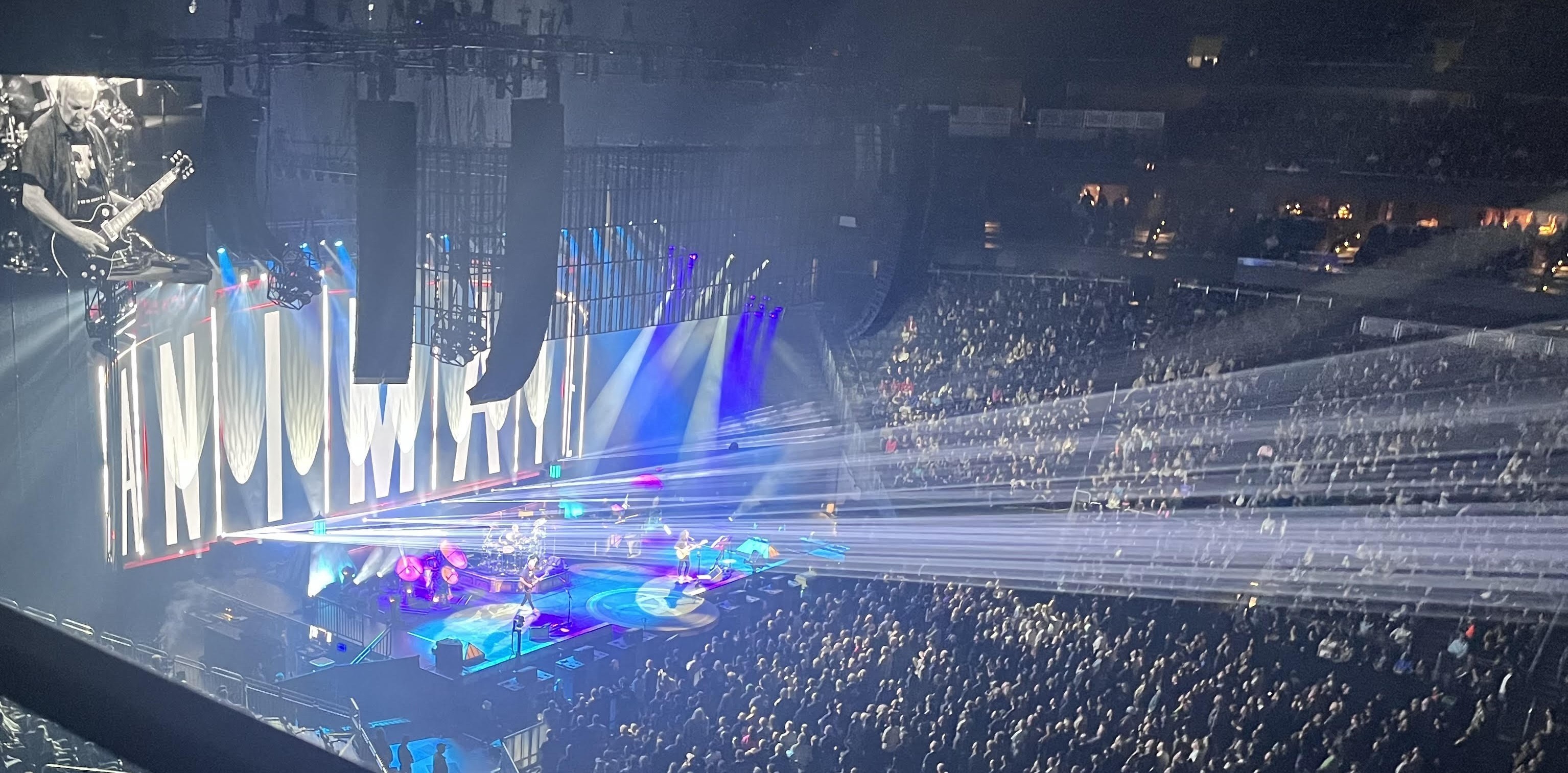
As has been the case in many of the dates, “2112” followed the intermission (which Geddy jokingly said was necessary because the younger guys needed a break). The open question was how much of it the band would play.
As Alex played the first notes of the “Discovery” section, a smile lit my face. I would finally hear the entire song live.
I loved how the guitarist didn’t just play the song; he acted it out. The song tells the story of someone in the future discovering a guitar, and Alex strummed his as if he were picking it up for the first time.
“Freeze this moment
— Rush, “Time Stands Still”
A little bit longer
Make each sensation
A little bit stronger”
Another highlight was “Time Stands Still,” played immediately after a second video tribute to Neil. In Los Angeles, Aimee Mann, the recording’s guest vocalist, made an unexpected appearance. Although she wasn’t in Seattle, footage of her performing with the band was incorporated into the video screens alongside the live feed, allowing her to remain part of the performance.
“A Passage to Bangkok” was an unexpected inclusion in the set, but one that nicely showcased the band’s playful side. It also gave Anika a chance to show that she can lay down a groove.
“Tom Sawyer” once again proved to be the pinnacle of the night. By this point in the tour, Anika had amply demonstrated that she can handle the solo sections, yet the roar of the crowd still grew as she completed each one. In Los Angeles, the reaction seemed to be a release of tension from a crowd that expected the best but feared she might not live up to the high standards Neil had set. In Seattle, it felt more like a warm welcome.
The smile on the drummer’s face showed how much she appreciated the gesture. The one on Alex’s face was heartwarming. I can’t imagine the pain he and Geddy felt at not only losing a friend but also knowing their band would never be the same and might have reached its end. Now they were back.
As the concert ended, there was one more major change from the Los Angeles debut. At the first show, the tradition of Geddy and Alex being the ones to take a bow was maintained. Perhaps out of respect for Neil, who had made a rare appearance for the final bow at their very last concert at that same venue, or perhaps because she wasn’t yet sure she had earned her place, Anika went straight backstage after leaving her drum kit.
In Seattle, all four musicians said goodbye to the crowd together. This was a band that, in the process of honoring its past, was willing to forge new paths.
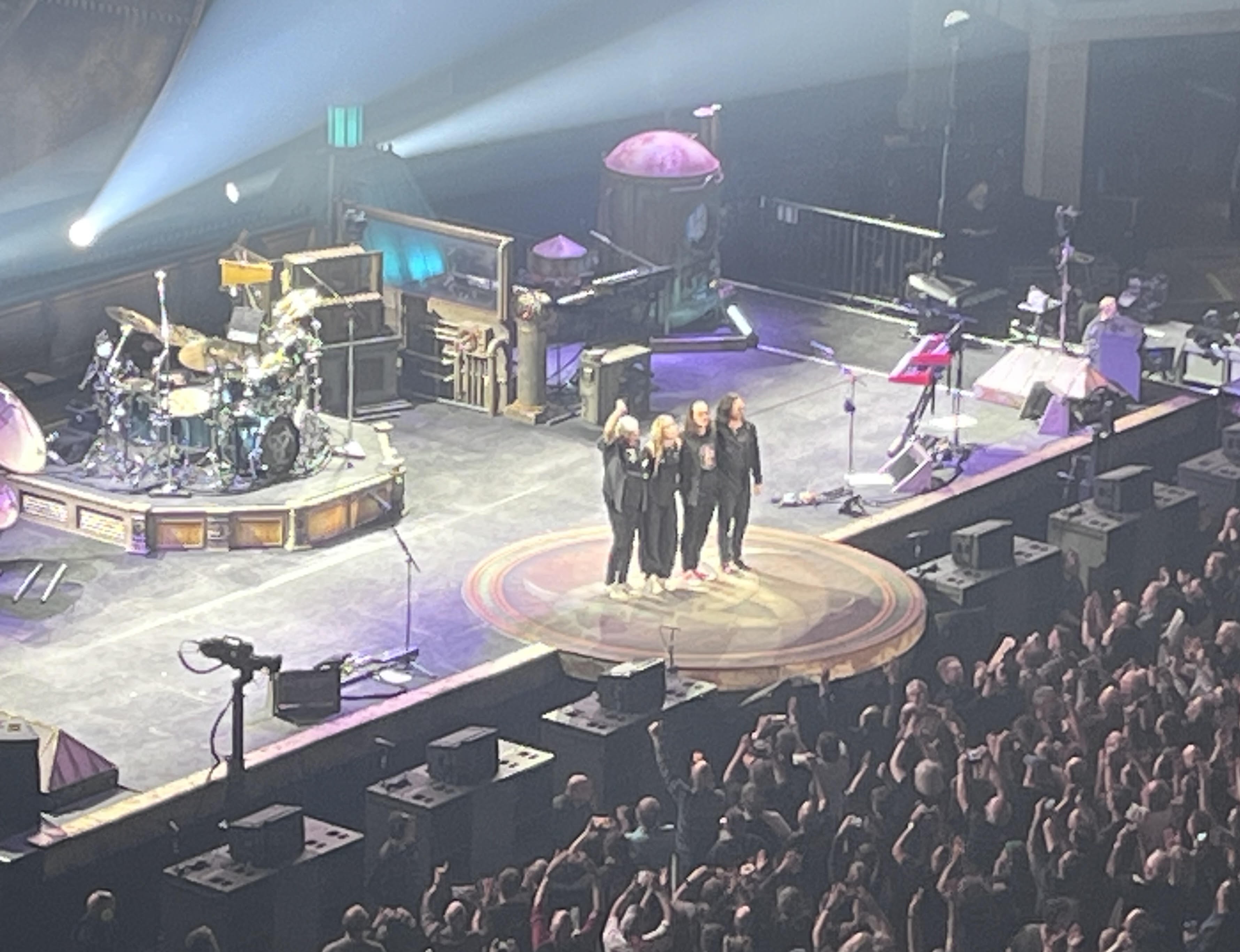
Just a few days earlier, Queen’s Brian May announced that his touring days are over. The thought that this might be the last time I would see Rush live did not escape me. Neil’s loss was a reminder that we all eventually lose our race with time. At least on this night, we got a reprieve, as time seemed to stand still.
“Learning that we’re only immortal
— Rush, “Dreamline”
For a limited time”
About the Creator
Carl J. Petersen
Carl Petersen is a former Green Party candidate for the LAUSD School Board and a longtime advocate for public education and special needs families. Now based in Washington State, he writes about politics, culture, and family.
Enjoyed the story? Support the Creator.
Subscribe for free to receive all their stories in your feed.
Comments
There are no comments for this story
Be the first to respond and start the conversation.