
The Free States and the Joy of Not Quite Knowing
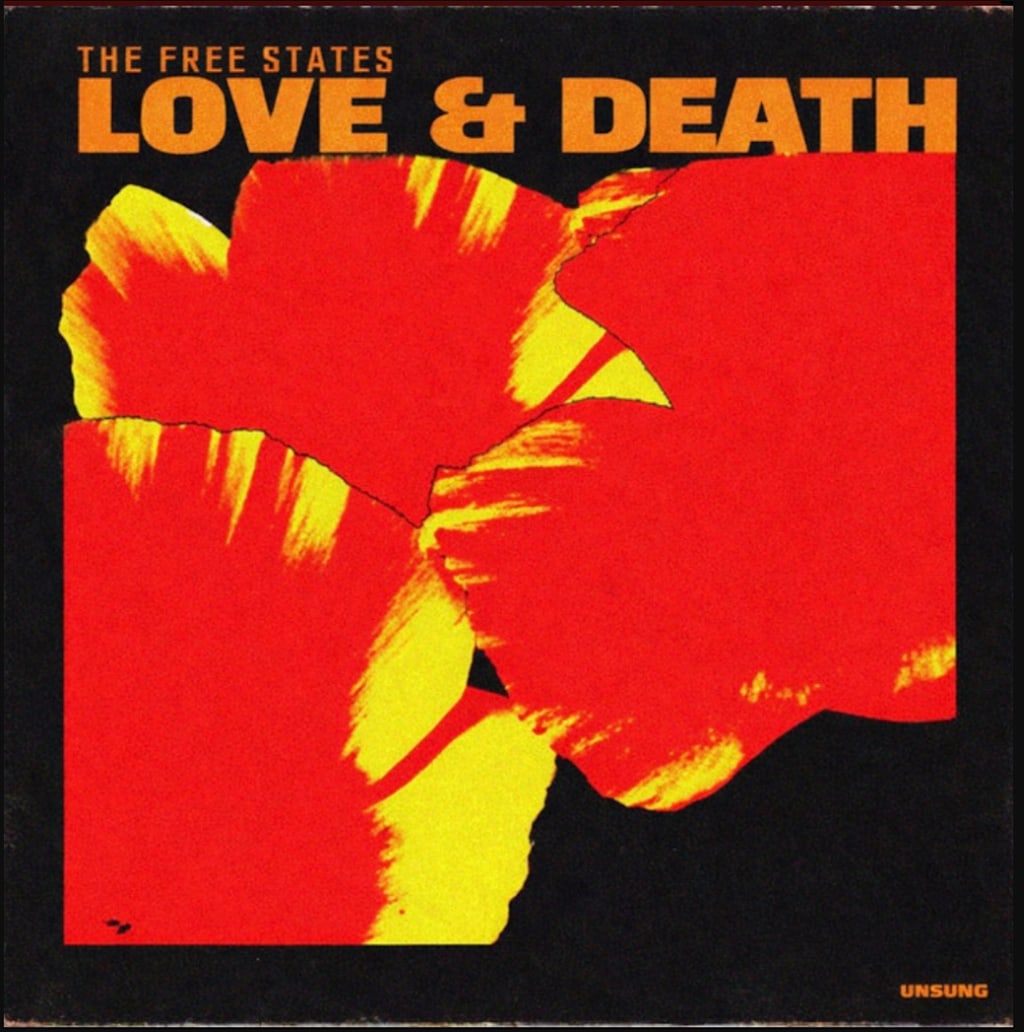
The Free States embrace uncertainty, instinct and happy accidents on the wonderfully unpredictable "Love & Death".

There is something liberating about not knowing exactly what you are doing. I know that sounds like a terrible thing to say about an album, particularly when the modern music industry seems to demand that everyone has a five-year plan, a recognisable brand and a perfectly rehearsed explanation for why every creative decision was made.
But some of the best music comes from the opposite direction. Follow the idea, see where it goes and keep the mistakes that sound better than the things you intended, and perhaps, most importantly, don't ask too many questions along the way.
This seems to be one of the guiding principles behind The Free States and Love & Death, the third album from American songwriter Shaun Lyons, now based in Athens, Greece. Lyons is clearly a musician who thinks deeply about music, but he is also perhaps suspicious of thinking too much about it. He has talked about songwriting as something that needs to happen before consciousness starts interfering, and there is something beautifully contradictory about an artist who can be fascinated by time signatures, structure and musical theory while simultaneously admitting that he doesn't necessarily know what his own songs are about.
Perhaps that is why the album feels so alive.
“Most of All”, written at three in the morning with an electric guitar lying beside Lyons and the amplifier switched on. There are worse ways to spend the small hours. The song develops around longing and the sensation of being pulled in different directions, with strings from Vitaliy Fesenko adding another layer to the arrangement. It is one of those songs that seems to grow rather than arrive fully formed, and that feels appropriate for an album so interested in what happens when you let an idea breathe.
“Definite” is about indecision at a crucial point in a relationship, which is already a suitably uncomfortable subject, but Lyons places it in 7/4, because apparently ordinary emotional uncertainty wasn't quite enough. The rhythm is not a clever trick. It simply becomes part of the song's character, subtly pulling against the listener in much the same way that indecision pulls against anyone unfortunate enough to be experiencing it.
“Man the Baddies” takes us somewhere rather more muscular. The song began with thoughts about war and friends being conscripted. It could easily have become a straightforward political song, but instead it keeps moving, refusing to settle into an easy answer. It is energetic, rhythmically odd and probably the heaviest thing The Free States have recorded.
Even the music itself refuses to sit still for too long. Much of the album lives in 3/4, with excursions into 5/4 and 7/4, while influences ranging from Radiohead and The Clash to Marvin Gaye, Aretha Franklin and Fela Kuti drift in and out of the picture. But this isn't one of those albums where you can play spot the influence and award yourself points for identifying the reference before the end of the song.
There is also a lack of preciousness about the process. Lyons makes much of the music himself, working from a MacBook and bringing in trusted musicians when the songs need them. The drums on Love & Death were recorded in several different rooms, while the vocals were captured together in one place, and the emphasis is clearly on finding the right performance.
Which brings us to something that perhaps matters more than any of the technical detail: these songs sound like they were allowed to happen.
Lyons is clearly not interested in making music by committee. His refusal to use AI in the creative process comes from much the same place. For him, the interesting thing about making music is the personal vision, the decision that only one person would have made, the accidental note that somehow turns out to be the right one. AI can calculate the middle of the road beautifully, but music has always been at its most exciting when somebody wanders off it.
That wandering spirit is all over Love & Death. It is an album about love and death, certainly, but also uncertainty, movement, memory, rhythm, relationships and the peculiar business of being human. And perhaps that is why the songs don't feel diminished by their ambiguity. Quite the opposite. They have somewhere for the listener to go.
I'm reminded of the old idea that a painting isn't finished when the artist puts down the brush, but when the viewer brings something of themselves to it. The same is true here. Lyons may not always know exactly what his songs mean, but that is perhaps not a problem for him to solve.
About The Free States
The Free States is the musical project of American songwriter Shaun Lyons, now based in Athens, Greece. Lyons began playing guitar at fifteen and quickly developed a fascination with recording, finding himself more drawn to building songs piece by piece than to the pressures of performing live.
After growing up around Gainesville, Florida, he stepped away from live music, joined the Peace Corps and moved to Ukraine, continuing to make music without performing. He later survived stage four cancer before eventually returning to the stage with a renewed desire to perform.
Three albums followed in three years: The Law of Entropy (2024), The Free States (2025) and Love & Death (2026), each exploring a different side of his songwriting.
Lyons makes much of his music independently on a MacBook, without AI, working with trusted collaborators where needed. He sees the album as the fundamental unit of musical work, deliberately keeping each record around thirty to forty minutes and treating the process much like writing a book: personal, self-directed and given the space to develop on its own terms.
About the Creator
Whitney Miller
🌎 Adventurous & Musical
Stories shaped by places, music & life
Poetry, fiction, memoir & lived experience
Written without A.I.
© Whitney Miller
Enjoyed the story? Support the Creator.
Subscribe for free to receive all their stories in your feed.
Comments
There are no comments for this story
Be the first to respond and start the conversation.