
The End of Passive Listening: Why People Want to Feel Something Again
Streaming gave us everything. It also made most of it forgettable.

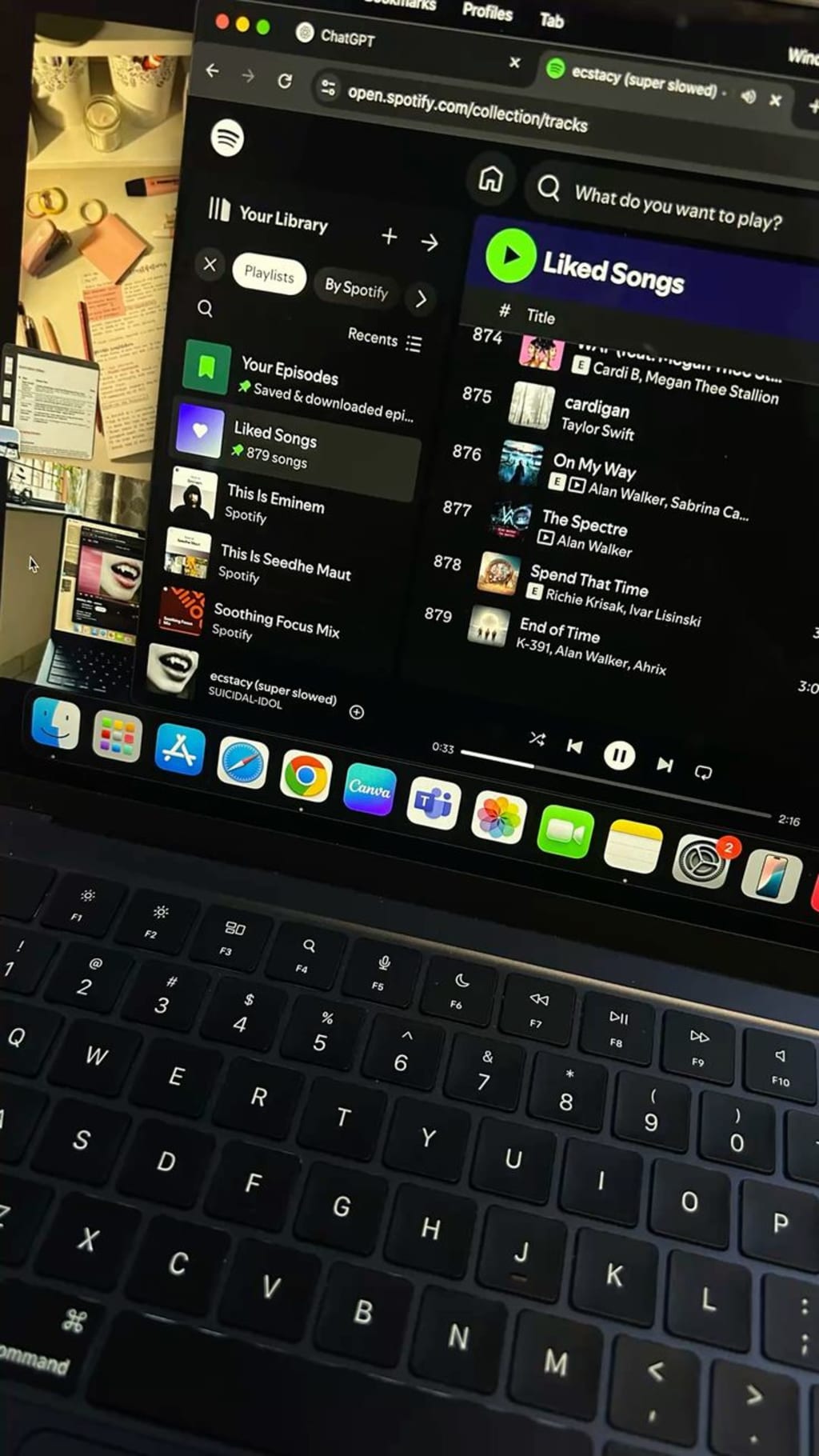
Streaming made access easier. Playlists became infinite. And somewhere in that convenience, listening turned into consumption. Songs started blending into each other, designed to fit a mood without interrupting it. Smooth. Continuous. Replaceable.
You didn’t need to feel anything specific. You just needed something on.
But something has been shifting.
Not loudly, not all at once. More like a slow discomfort people are starting to notice.
Because background music does its job too well.
It fills silence, but it doesn’t leave anything behind.
You finish a playlist and can’t remember what you heard. You recognize the vibe, but not the moment. The sound was there, but the connection wasn’t.
And after a while, that starts to feel empty.
People don’t talk about it like this, but listening is not just about sound. It’s about attention.
And attention has changed.
We’ve trained ourselves to divide it. To keep something playing while doing something else. To avoid stillness. To avoid the kind of quiet where thoughts start showing up uninvited.
Passive listening fits perfectly into that.
It gives you just enough stimulation to not feel alone, without asking anything back.
But that’s also the problem.
Because the moments that stay with you are never passive.
They’re the ones where something interrupts you. A line that lands too close. A sound that pulls you out of whatever you were doing. A song you restart, not because it ended, but because you weren’t done with it.
That kind of listening demands presence.
And presence is something people are starting to miss.
There’s a reason more listeners are gravitating toward music that feels slower, more exposed, sometimes even uncomfortable.
Minimal production. Space between sounds. Voices that don’t try to hide imperfections.
Not because it’s “better,” but because it’s harder to ignore.
It asks for something in return.
You can’t just let it sit in the background. It either pulls you in, or you skip it.
And when it pulls you in, it does something playlists rarely do.
It creates a moment.
This is where artists like Hoopper exist.
Not built for passive listening, but for people who are willing to sit with something a little longer than usual. Music that doesn’t resolve quickly. That doesn’t try to smooth everything out.
It’s not about complexity. It’s about intention.
Letting a line breathe instead of rushing to the next one. Leaving space where something could have been added. Trusting that the listener will meet the song halfway.
That kind of approach doesn’t work if you’re only half listening.
What’s interesting is how this shift shows up outside of headphones.
In smaller rooms. In live settings where distance disappears and there’s no buffer between the sound and the person receiving it.
There’s no algorithm there. No skipping. No multitasking.
Just a shared moment that either connects or it doesn’t.
And when it does, it’s immediate.
You can feel it in the way a room reacts without overreacting. In the silence that follows a line that lands deeper than expected. In the fact that no one needs to explain what just happened.
That kind of experience doesn’t scale easily.
But it stays with you.
Passive listening isn’t going anywhere.
It’s too convenient. Too integrated into how people move through their day.
But alongside it, something else is growing.
A quieter, more intentional way of listening.
Not all the time. Not for every situation.
But enough to notice the difference.
Enough to remind people that music was never just meant to fill space.
It was meant to create something inside it.
About the Creator
Hugo Valquez
R&B and alt-pop lover.
Enjoyed the story? Support the Creator.
Subscribe for free to receive all their stories in your feed.
Comments
There are no comments for this story
Be the first to respond and start the conversation.